
Naples in Florida got its name because the bay was said to surpass that of the Bay of Naples. Today it is the most orderly town on the Gulf Coast: ten blocks of shops on Fifth Avenue South, the town's oldest shopping street on Third Street, and a pier that has been rebuilt after every hurricane since 1888.
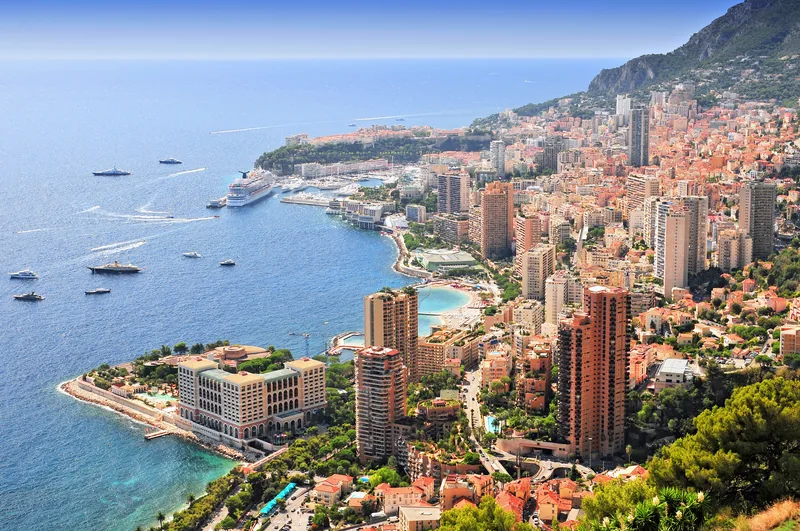
Naples in Florida is located on the Gulf of Mexico in Collier County and had 19,115 inhabitants at the 2020 census. During the 1870s and 80s, newspapers and magazines wrote about the area's mild climate and rich fishing, comparing it to the Italian peninsula; the name stuck when advocates described the bay as "surpassing the bay in Naples, Italy". The city was founded in 1886 by the former Confederate general and senator from Kentucky, John Stuart Williams, and the newspaper publisher Walter N. Haldeman from Louisville.
Naples calls itself the "Golf Capital of the World" and has more golf holes than any other city in Florida. But it is the old town centre, Old Naples, between Fifth Avenue South and the pier, that is the reason to stay for a day.
A city that took time
In 1888, Naples had around 80 inhabitants. Major expansion plans came with the formation of Collier County in 1923, the railway in 1927 and the Tamiami Trail, the road to Miami, in 1928 – but the stock market crash, the depression and the Second World War pushed development back. The town was not formally incorporated as a city until 1949, the same year as the town's first bank, Bank of Naples, opened on Fifth Avenue.
The person who shaped present-day Naples was John Glenn Sample, a radio advertising pioneer from Chicago who came here in 1938. He had read about Palm Beach but preferred the tranquillity of the Gulf Coast and bought up land south of Fifth Avenue and along Naples Bay, mostly marshland. In the early 1950s he had peninsulas and canals dredged with plots facing the water and named the project Port Royal, after the Jamaican town from the 1600s. The streets were given names in pirate tradition – Gin Lane, Rum Row, Treasure Lane and Galleon Drive.
Fifth Avenue South – the city's main street
Fifth Avenue South is around ten blocks long and Naples' most exclusive shopping street, with shops, galleries and restaurants in low-rise buildings. Local history guides like to compare it to Worth Avenue in Palm Beach. Start at the eastern end, at Naples Depot at Fifth Avenue South 1051, near US 41. The station dates from 1926; passenger traffic ceased in 1971 and the building is today a museum and listed on the US National Register of Historic Places.
Third Street South – the oldest quarter
Head west towards the gulf and turn south onto Third Street South, the town's oldest commercial quarter. The Naples Mercantile Building at 1171 Third Street, from 1919, is a two-storey timber house clad in render. The pine-built Olde Naples Building at number 1167, from 1922, housed the Naples Improvement Company's head office and was also the village's first town hall and its first cinema. Around the blocks lie shops and restaurants, and on 11th Avenue stands Martha's Cottage from 1922, clad in weatherboard.
At 12th Avenue 137 stands Palm Cottage, which Haldeman built in 1890 in tabby – a mixture of lime, sand and seashells – and which today is a museum. It is one of the oldest houses in the city.
The Pier – the city's meeting place since 1888
At the end of 12th Avenue lies the pier. As early as 1885, Williams and Haldeman had built a hotel with sixteen rooms and a 1,000-foot dock to attract steamboats. The pier began as a passenger dock in 1888 and has been rebuilt several times – after a fire in 1922 and after hurricanes in 1910, 1926 and 1960. It is Naples' obvious spot for the sunset over the gulf.
Beyond the city centre – the garden and the art
Naples Botanical Garden was founded in 1993 and covers 69 hectares of cultivated gardens and natural land, with around 50,000 plants and seven different natural habitats. The focus is on the ecosystems between latitude 26°N and latitude 26°S. In 2017, it became the youngest garden to receive the American Public Gardens Association's Award for Garden Excellence.
In the north of the city, on Pelican Bay Boulevard, is The Baker Museum, part of Artis–Naples, which is also home to the Naples Philharmonic. The museum opened in 2000 and holds more than 3,500 works of 20th- and 21st-century art, with an emphasis on American modernism and Mexican art – among them Ahmet Ertegun's collection of modernists and Harry Pollak's collection of works by Diego Rivera, Rufino Tamayo and Leonora Carrington. An extension designed by Weiss/Manfredi was completed in 2020.
Property data for the city can be found in VERA PI's guide to Naples, Collier County and Florida. More destinations can be found among Metro Mode's destinations.
Monaco, every street of it
Every MICHELIN table and the grand hotels – Metro Mode with VERA PI.