In this story · 6 sections
Anima occupies the ground floor of Milano Verticale, the design hotel on Via Rosales in Milan's Porta Nuova district, close to the towers of Piazza Gae Aulenti. Enrico Bartolini opened the restaurant at the end of May 2021 as one of three dining concepts inside the hotel, alongside the contemporary osteria Vertigo and a garden bar. Since October 2021 the kitchen has belonged to Michele Cobuzzi, a chef shaped by the olive groves and vegetable gardens of his native Foggia countryside, whose cooking now folds Apulian instinct into Milanese tradition. The restaurant holds one MICHELIN Star, awarded in November 2022. Seven tables, open in the evening to outside guests as well as hotel residents, give Anima the compact, serious feel of a chef's own project rather than a hotel add-on – though a private garden of a thousand square metres lies just beyond its door.
Anima
Restaurant · Porta Nuova / Garibaldi
© OpenStreetMap contributors · OpenFreeMap
- Address
- Via Rosales 4, 20124 Milano
- Cooking
- Contemporary, Apulian-Milanese
- Chef
- Michele Cobuzzi
- Run by
- Enrico Bartolini Group
- MICHELIN Guide
- One MICHELIN Star
- Tasting menu
- Le mie certezze (5 courses) / Intensità (8 courses)
- Price
- Spare no expense
- Open
- Closed Mon & Sun; 12:30–14:00, 19:30–21:30
- Setting
- Fine dining inside Hotel Milano Verticale; seven tables
- Nearest station
- Milano Porta Garibaldi
- Telephone
- +39 02 6227 8500
- Website
- enricobartolini.net/i-ristoranti/milano-verticale
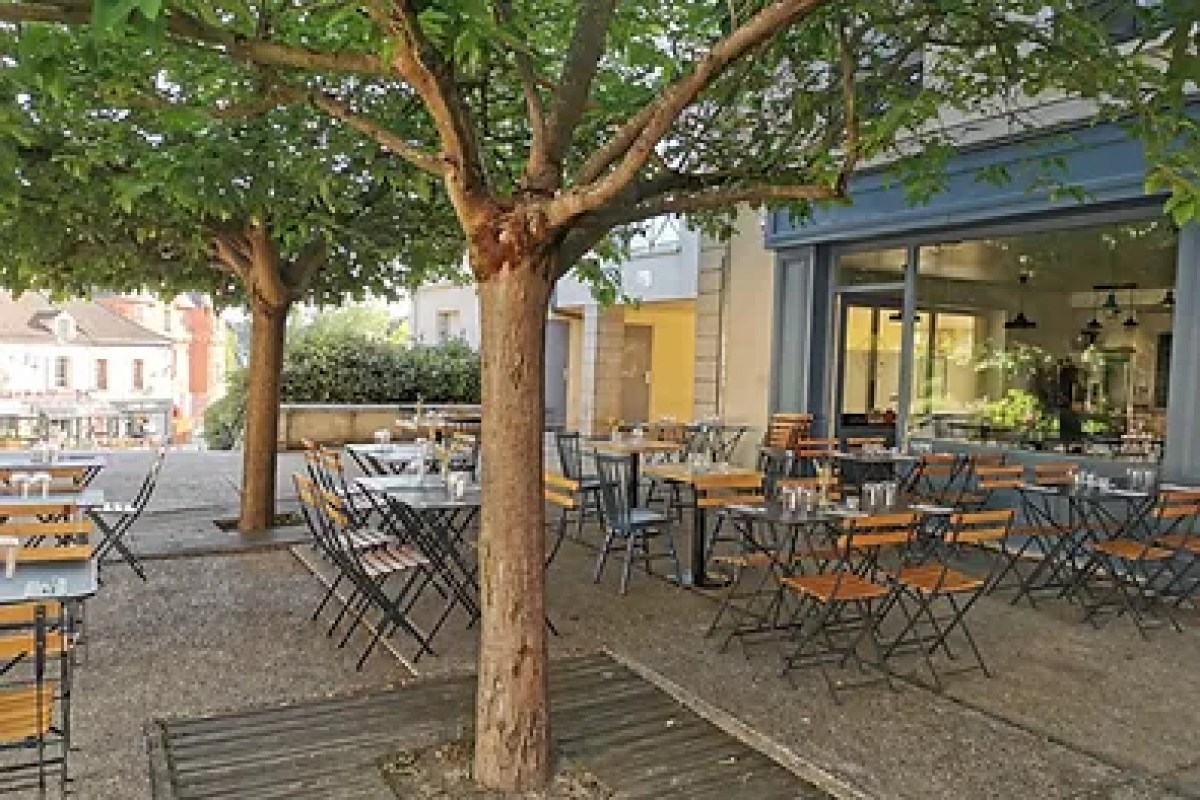
Anima sits on the ground floor of the Milano Verticale hotel, between glass towers and a 1,000 sqm private garden threaded by a canal.
01The room and the setting
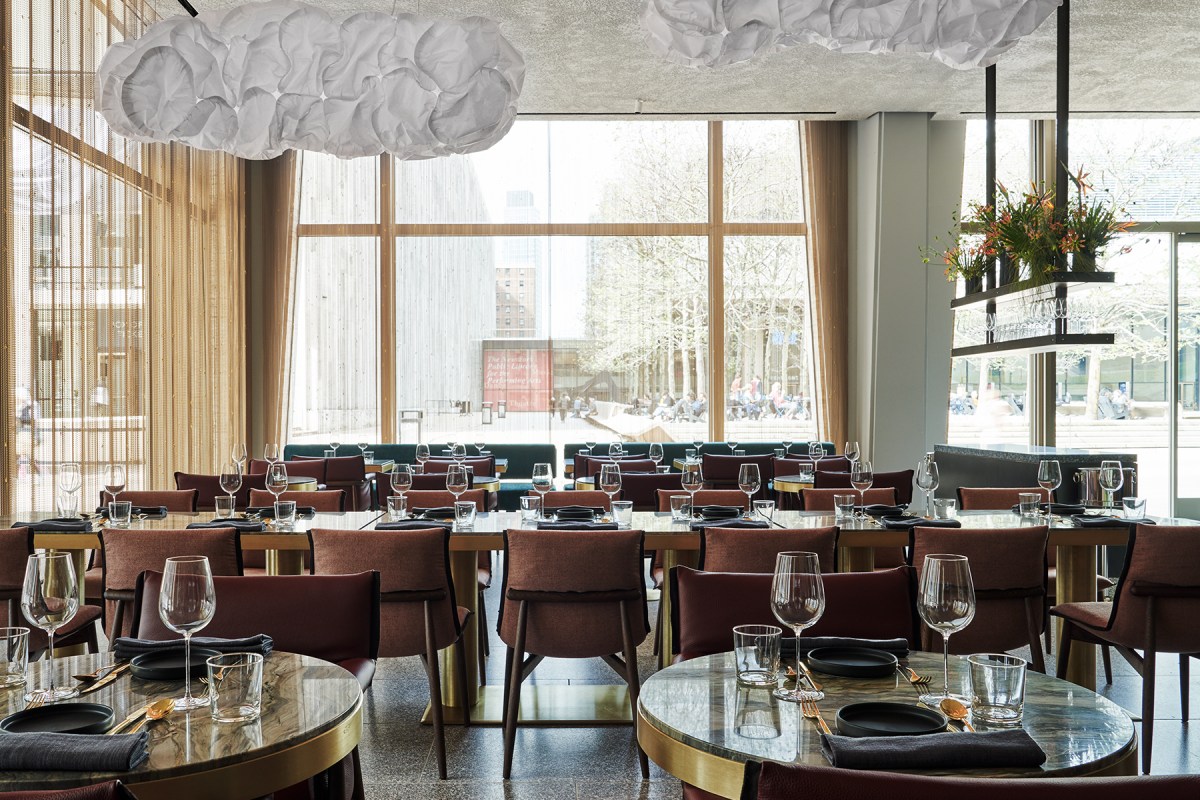
Milano Verticale's interiors were designed by Vudafieri-Saverino Partners, who built the hotel's identity around polychrome marble walls and ceilings that recall the elegant modernity of post-war Milanese architecture, with room balconies echoing the city's old case di ringhiera. The pre-existing building on Via Rosales, between Viale Monte Grappa and Via De Cristoforis, was reworked by Asti Architetti, who redrew the original façades to restore the tower's sense of verticality.
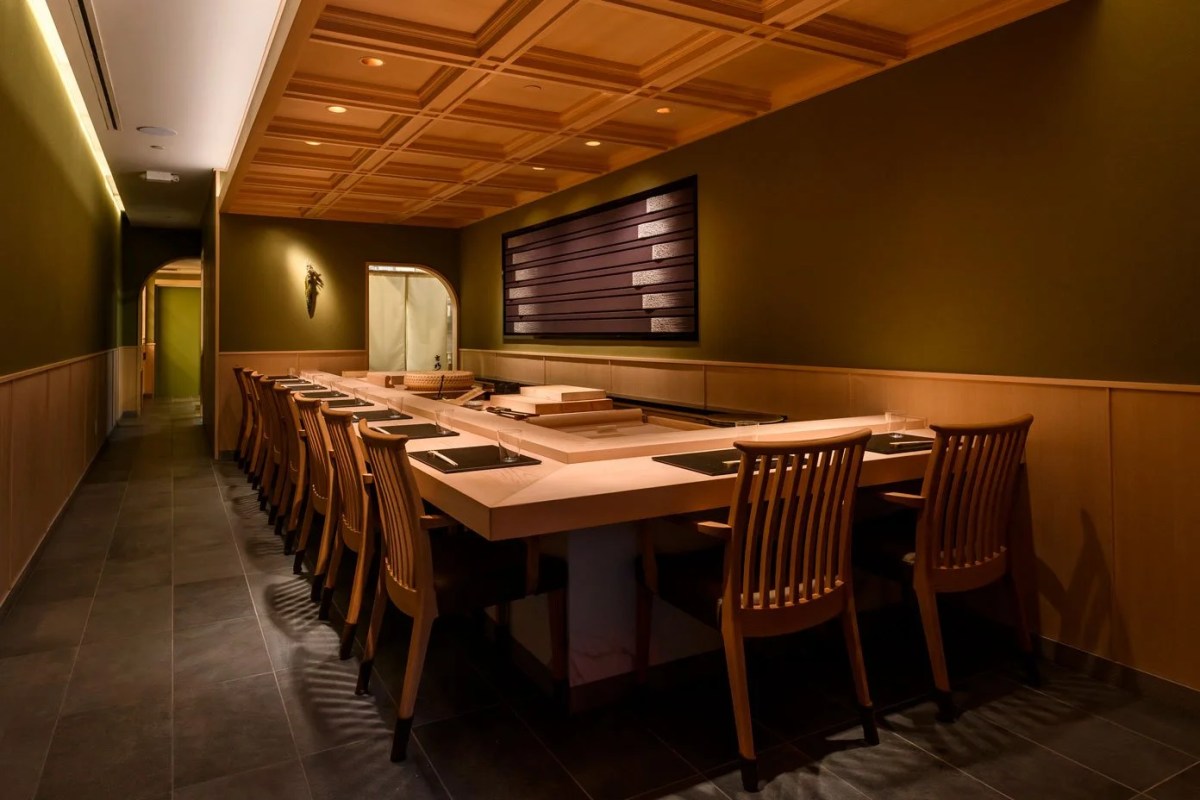
Beyond the dining room lies what the hotel calls its secret garden: a peaceful space of a thousand square metres crossed by a small canal conceived as a nod to Milan's Navigli. The whole complex sits in the Porta Nuova–Garibaldi–Corso Como district, an area the hotel's own architects describe as representative of the city's urban rebirth. Anima's own dining room plays on the same eclectic contemporaneity, with furnishings chosen for their detail rather than for spectacle.
02The chef
Michele Cobuzzi was born in 1989 and grew up in the Foggia countryside, where a family smallholding of olive trees and vegetable plots shaped his sense of what an ingredient is worth before it reaches a plate. Before taking charge of Anima's kitchen he trained at Il Luogo di Aimo e Nadia and at Enoteca Pinchiorri, two of Italy's most demanding dining rooms, and arrived in Milan as Resident Chef in October 2021.
Insider tipClosed Monday and Sunday; booking advisable, as the dining room holds only seven tables.
Bartolini, who oversees the project rather than cooking in it day to day, chose Cobuzzi for his solidity and technical grounding, and gave him room to express a personal, Apulian-inflected voice within the group's Milanese house. The MICHELIN Star followed a year later, in November 2022, recognition Cobuzzi has called the result of the whole team's work rather than his alone.
03The cooking
Vegetables, not proteins, sit at the centre of Cobuzzi's menus, in constant dialogue with the seasons; he treats Milanese tradition and his own Foggiano roots as starting points rather than limits. Two tasting menus structure the evening: Le mie certezze – un percorso di piccole grandezze, a five-course route built on comfort and confidence, and Intensità – otto assaggi della mia cucina, an eight-course itinerary for guests willing to be led somewhere less familiar.
The kitchen's signatures run from a Royale of foie gras with scampi and passion fruit to a turbot dressed table-side with a mussel, lemongrass and vanilla sauce – dishes that show Cobuzzi's taste for pairing richness with acidity and herbal lift.
04What to order
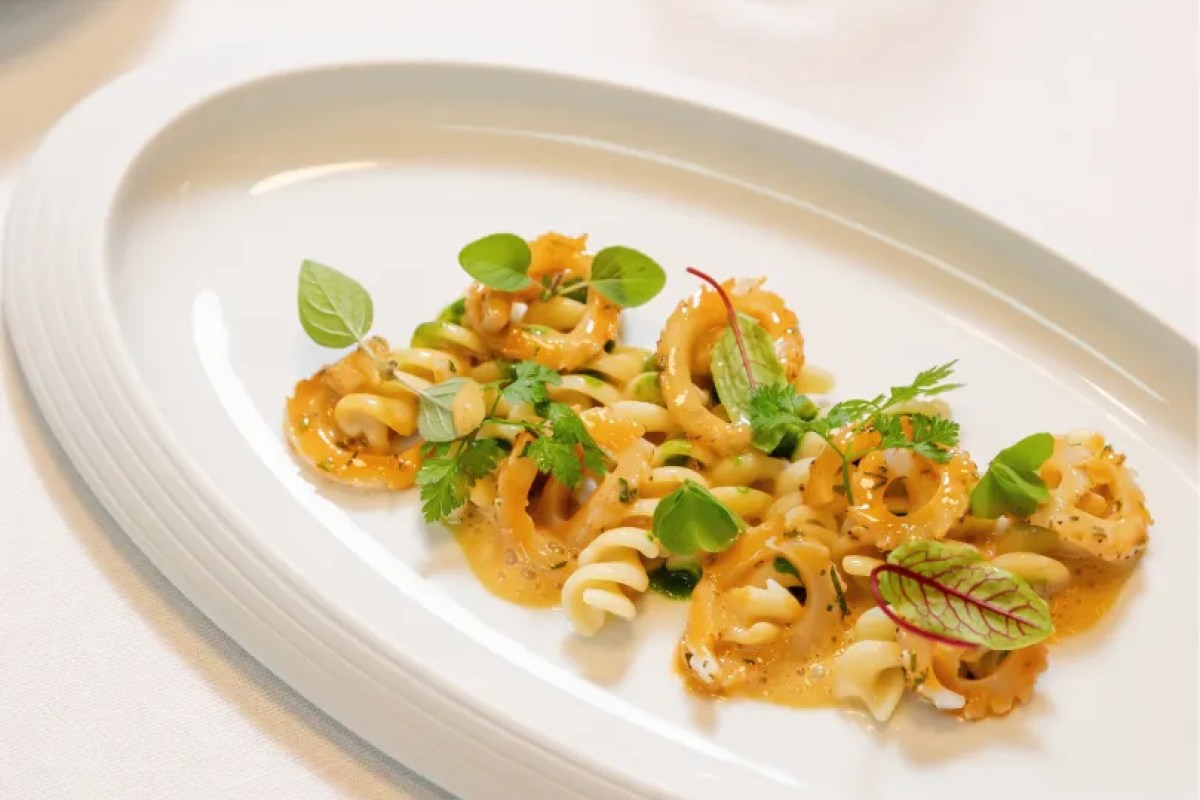
Among the dishes currently on Anima's menu are a crisp red prawn with salted water and beetroot, and hen's egg-yolk bottoni with bitter herbs, lemon and Parmesan – a plate that reworks Milanese comfort food into something lighter. Roast Gargano lamb, cooked to use every part of the animal across different textures, remains one of the kitchen's steadiest dishes, alongside a grilled Carmagnola pepper treated with enough precision to taste almost like a cut of meat.
Dessert tends toward Cobuzzi's own childhood table: a dish he calls Colazione Pugliese – glazed figs, sheep's-milk ricotta and yuzu – stands in for a Puglia breakfast reimagined as a tasting-menu finale.
Don't miss
Don't miss
- 01
Roast Gargano lamb, cooked across several textures from the same animal
- 02
Hen's egg bottoni with bitter herbs, lemon and Parmesan
- 03
Turbot finished table-side with mussel, lemongrass and vanilla sauce
- 04
"Colazione Pugliese" dessert of glazed figs, sheep's ricotta and yuzu
- 05
The hotel's thousand-square-metre garden, crossed by a canal recalling the Navigli
05Wine and drinks
Anima's cellar is listed among its notable features in the MICHELIN selection, and the bottle list has long paired well-known Italian appellations with smaller, more exploratory producers. The restaurant's sommelier team, now led by Cristina Pinciroli, uses wine as a connecting thread through the tasting menus rather than a simple accompaniment; in the restaurant's earlier years sala and cellar were in the hands of Giacomo Morlacchi, who built a list praised for being broad, well chosen and fairly priced.
Champagne house Krug and San Pellegrino and Moët both appear among the partners acknowledged by the restaurant, a detail of the kind of sourcing that sits behind the wine service rather than in front of it.
06The neighbourhood
Anima sits in Porta Nuova, the glass-and-steel quarter that has become shorthand for Milan's twenty-first-century skyline, a few minutes' walk from Corso Como and the office towers of Piazza Gae Aulenti. MICHELIN's own description of the hotel places it in the ultramodern Porta Garibaldi district, among steel-and-glass skyscrapers that did not exist two decades ago.
It is a part of the city built on speed and finance, which makes the restaurant's slower, land-rooted cooking – and its thousand-square-metre garden behind glass walls – feel like a deliberate counterpoint rather than an accident of geography.