In this story · 7 sections
Behind the Romanesque and Renaissance stone of Cáceres' walled old town, two friends with no training in hospitality opened a small restaurant in the city's newer quarter, financed by a loan stretched to its limit. Toño Pérez could barely cook and José Polo knew wine; the one professional in the kitchen that first Christmas Day in 1986 had come from Málaga. What followed reads like a fable of Extremadura: a first MICHELIN Star in 1994, a second a decade later, and in 2023 the third, elevating Atrio into Spain's smallest circle of restaurants. The MICHELIN Guide now also awards the hotel itself Three Keys. Around that original dining room, Pérez and Polo have since built an entire corner of the old town — a hotel called La Casa, the restored sixteenth-century Palacio Paredes Saavedra, a circular wine cellar, and a separate, more informal eatery — all woven into a UNESCO World Heritage townscape of Gothic churches and granite palaces.
Atrio Restaurante Hotel
Hotel · Casco Antiguo (old town), Cáceres
© OpenStreetMap contributors · OpenFreeMap
- Address
- Plaza de San Mateo 1, 10003 Cáceres
- Opened
- 25 December 1986
- Rooms
- 25
- Restaurants
- Atrio (Three MICHELIN Stars), Torre de Sande
- Telephone
- +34 927 242 928
- Website
- atriocaceres.com
- MICHELIN Guide
- Three MICHELIN Keys
Twenty-five rooms spread across a contemporary hotel and a restored sixteenth-century palace, built around a three-star restaurant.
01The house
Atrio began life as a restaurant project financed by a loan its owners later described as stretched to the edge of what was possible, opened in Cáceres on Christmas Day 1986 with a single trained cook brought in from Málaga while Pérez and Polo learned on the job. The gamble paid off with startling speed: a first MICHELIN Star arrived in 1994, a second ten years later in 2004, and in 2023 Toño Pérez received the third, the Guide's highest distinction, during the Spain & Portugal gala in Toledo.
The hotel that grew around the restaurant carries its own architectural weight. La Casa, on Plaza de San Mateo, wears an angular, ribbed facade that reads as an emphatically contemporary insertion into the labyrinth of World Heritage churches, monasteries and Renaissance palaces around it — the final legacy of architect Luis Mansilla, who died in 2012, and his partner Emilio Tuñón. Years later the pair's architectural studio, by then Tuñón and Carlos Martínez-Albornoz, restored a sixteenth-century fortified palace a few streets away to create the eleven-suite Casa Palacio Paredes Saavedra, complementing the fourteen rooms already open at the original hotel — twenty-five rooms in total under one ownership.
02Rooms and suites
At La Casa the fourteen rooms are arranged across categories from Superior Double to Superior Suite, each set behind the stone facade with works of art and views over the old town. A short walk away, down Calle Ancha, the Palacio Paredes Saavedra holds its eleven suites across three floors, each one different: marble bathtubs, 1950s-style bar cabinets, and mixed-technique paintings by Jorge Galindo sit inside vaulted sixteenth-century rooms finished in pale wood and polished concrete.
Insider tipBook the restaurant and rooms well in advance; the palace suites sit a short walk from the main house.
The palace's vaulted entrance hall holds a site-specific work by the Portuguese artist José Pedro Croft, and one of the tower rooms is decorated with facsimile prints of Goya's Caprichos, a gift from the art collector Helga de Alvear. Guests at the palace have access to a round-the-clock butler and breakfast served in Limoges porcelain from Atrio's own table.
03Where to eat
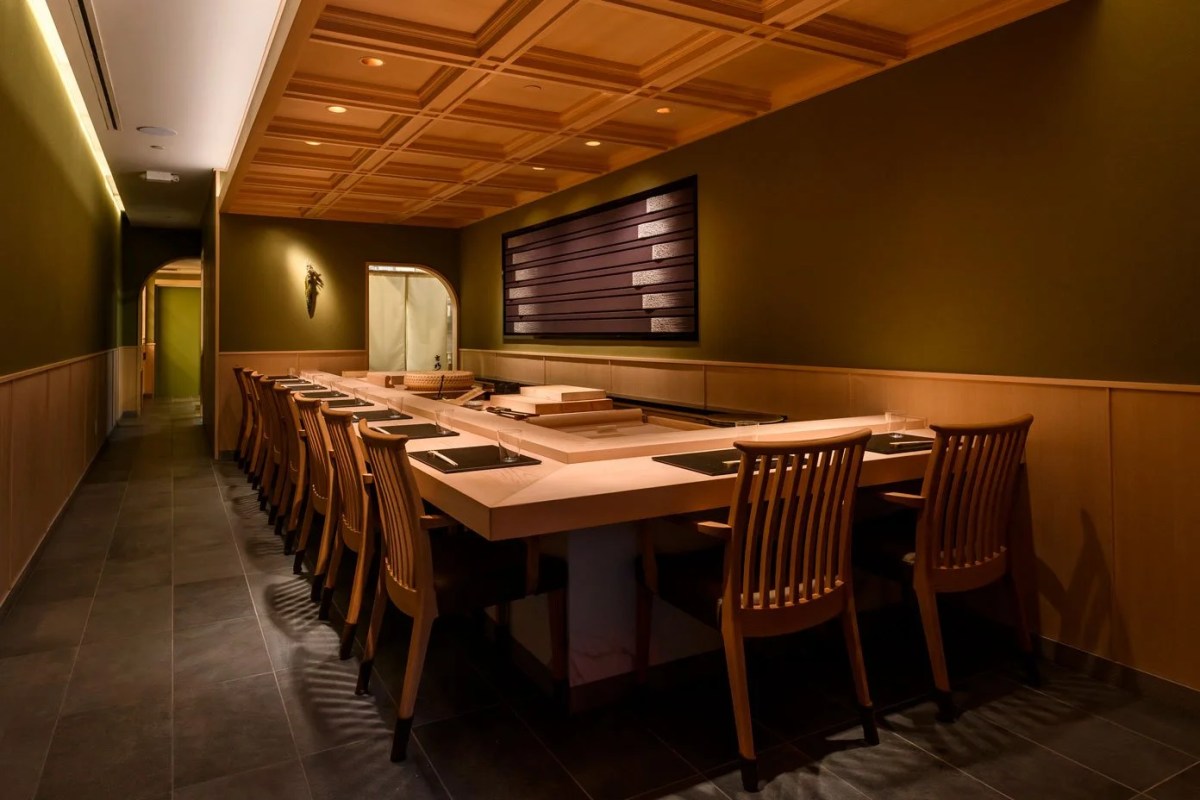
Atrio itself, run for more than three decades by Toño Pérez in the kitchen and José Polo in the dining room, holds Three MICHELIN Stars and has also been recognised with Spain's National Gastronomy Award. Pérez's cooking is a contemporary reworking of Extremaduran tradition — Iberian pork is a recurring protagonist on the tasting menu — shaped, he has said, by nostalgia for his mother's cooking.
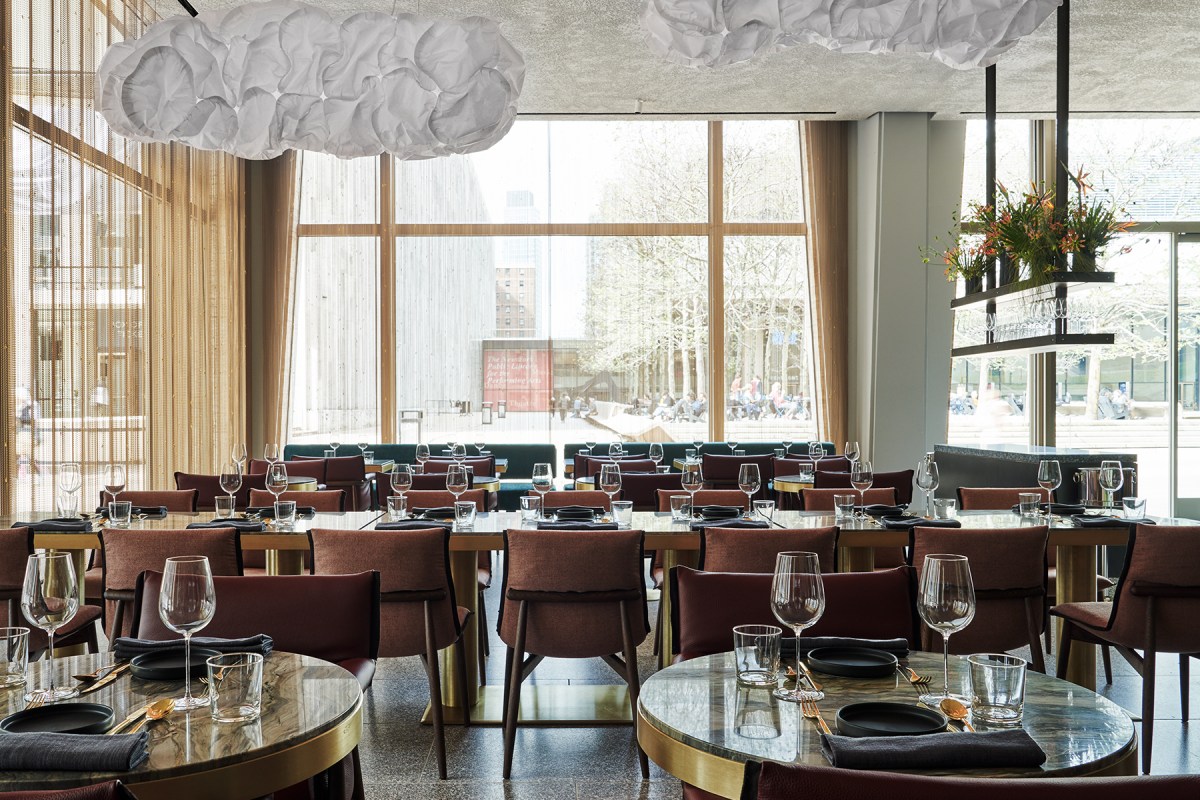
For a more relaxed meal, Torre de Sande sits in a former fifteenth-century palace beneath its own ivy-covered tower, a short stroll from the main house: an informal dining room built around traditional stews and regional produce rather than tasting-menu theatre.
04The wine cellar
Beneath La Casa, a circular, windowless cellar holds the collection José Polo has built over the life of the restaurant: around 40,000 bottles, among them Petrus, Lafite-Rothschild, Margaux and a bottle of Château d'Yquem dating to 1806. It is less a storeroom than a temple, and a visit to it — followed by a glass somewhere in its hushed centre — is as much a part of staying here as the tasting menu upstairs.
05Spa and pool
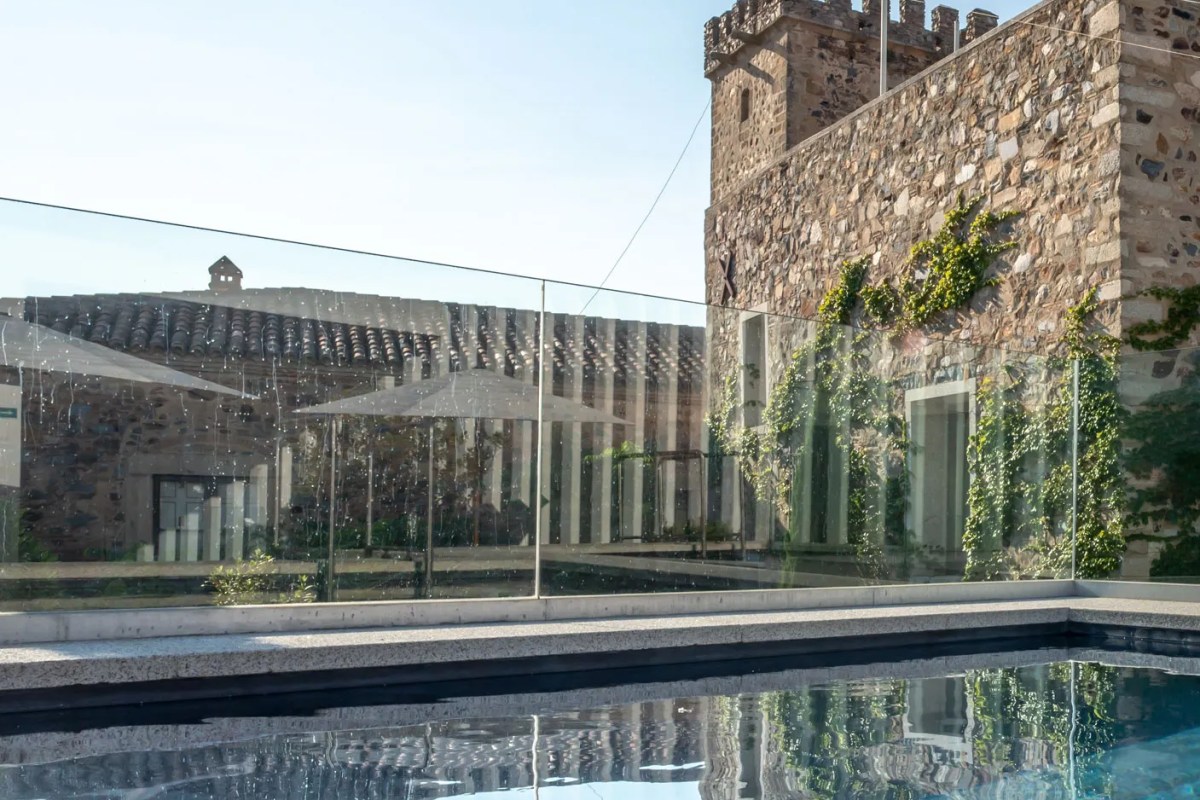
La Casa's rooftop keeps things understated rather than elaborate: a sun terrace with two granite plunge pools above the rooftops of the old town, used for a quiet swim or a drink at the end of the day rather than as a full spa circuit.
06The neighbourhood
Atrio stands on Plaza de San Mateo, inside the walled centre of Cáceres that UNESCO declared a World Heritage Site in 1986 — the same year the restaurant opened its doors. The surrounding streets hold one of Europe's best-preserved ensembles of Gothic, Renaissance and Moorish stone, a labyrinth of churches, convents and noble palaces largely untouched since the sixteenth century, with the contemporary lines of Atrio's own facade standing out deliberately among them.
07Making the most of a stay
Atrio belongs to Relais & Châteaux, and its various addresses are designed to be combined rather than chosen between: a night at La Casa or at Paredes Saavedra, a tasting menu at Atrio, a more casual dinner at Torre de Sande under its tower, and a walk through the wine cellar in between. The hotel's own Fundación Atrio Cáceres extends that same world outward, backing cultural, social and educational projects in the region built around music and gastronomy.
Because the Palacio Paredes Saavedra sits barely thirty metres from the restaurant itself, it suits guests who want the privacy of a separate house while still walking to dinner — useful to know when booking, since the two properties are run as one but feel distinctly different in character.
Don't miss
Don't miss
- 01
Dinner at Atrio, where Toño Pérez reworks Extremaduran classics with Iberian pork as a recurring lead
- 02
A visit to the circular wine cellar and its 1806 bottle of Château d'Yquem
- 03
A suite in the vaulted sixteenth-century Palacio Paredes Saavedra, with art by José Pedro Croft and Jorge Galindo
- 04
A relaxed dinner at Torre de Sande beneath its ivy-covered medieval tower
- 05
A swim in the rooftop granite plunge pools above Plaza de San Mateo