In this story · 6 sections
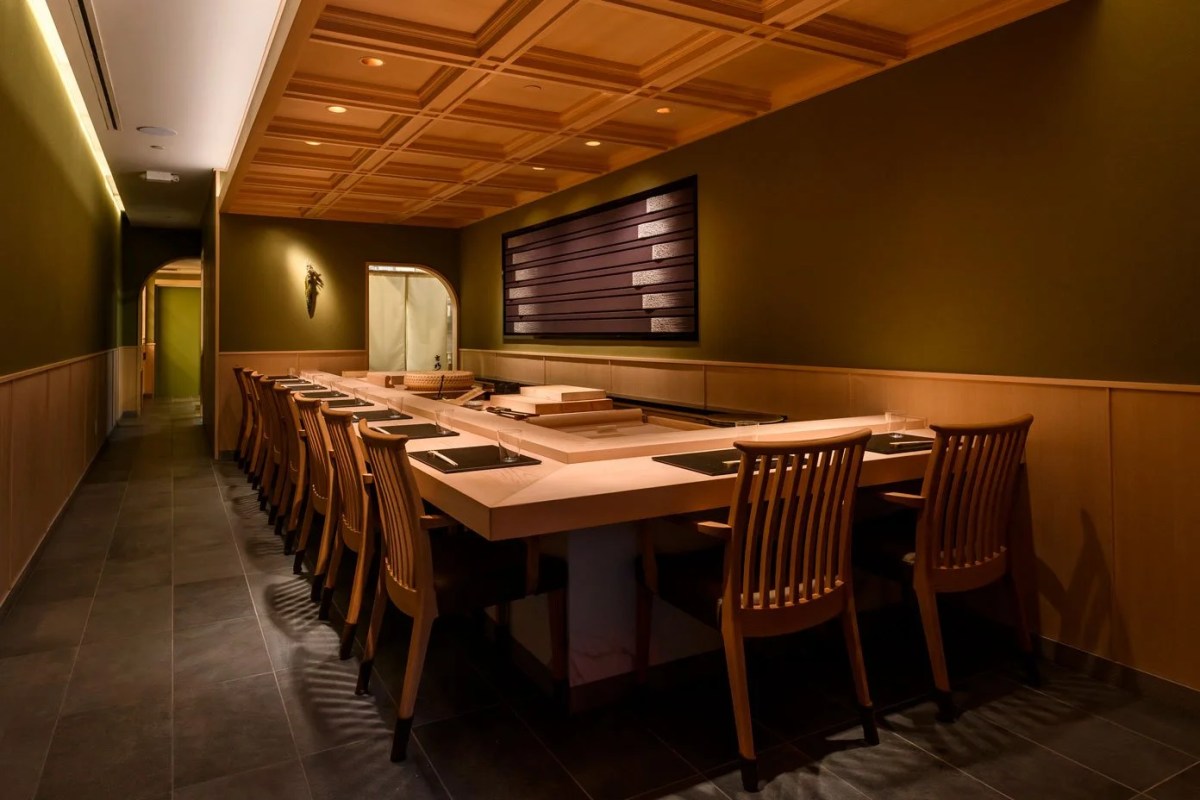
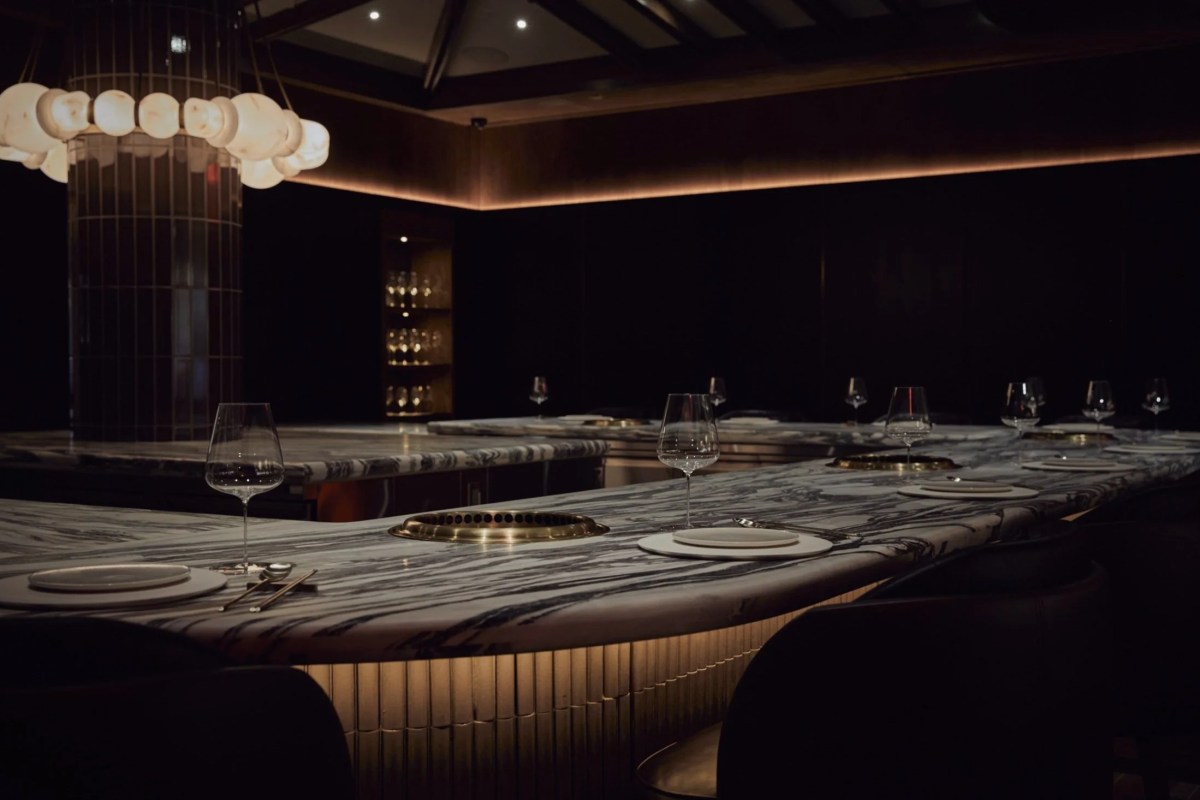
Behind an unmarked door at 17 West 19th Street, in the Flatiron District, a second restaurant hides inside the first. bōm occupies the back room of Oiji Mi, chef Brian Kim's modern Korean dining room, and its name is a quiet joke on that address: in Korean bōm means spring, but it is also shorthand for behind Oiji Mi. Guests who find their way past the main room arrive at a violet marble, U-shaped counter built for seventeen, fitted with custom grills and a dry-aging chamber kept in full view. It holds one MICHELIN Star, won in its first year of trading, 2023, and has become one of the city's more closely guarded Korean reservations. Kim built his reputation on Oiji, the East Village restaurant he opened in 2015, before closing it to launch Oiji Mi in 2022 and, within a year, this smaller, more intense sibling behind it.
bōm
Restaurant · Flatiron District, Manhattan
© OpenStreetMap contributors · OpenFreeMap
- Address
- 17 W 19th Street, New York, NY 10011
- Cooking
- Korean, contemporary
- Chef
- Brian Kim
- MICHELIN Guide
- One MICHELIN Star
- Tasting menu
- 10-course chef's tasting menu
- Price
- $295 per person (October 2026)
- Open
- Tue-Sat 5:30pm-11:30pm, Sun 5pm-11pm
- Covers
- 17-seat marble chef's counter
- Setting
- Back room of sister restaurant Oiji Mi
- Telephone
- +1 212-256-1368
- Website
- bom-nyc.com
- Pastry chef
- Celia Lee
Seventeen seats at a violet marble counter, built-in grills and a visible dry-aging chamber, in the Flatiron District.
01The room and the setting
The design plays deliberately on contrast with the brighter room out front. Korean aesthetics merge with sleek contemporary design and regal touches of purple, with a spacious U-shaped violet marble counter holding custom built-in grills and a prominently displayed dry-aging chamber, every detail curated from the beamed ceiling mimicking traditional Korean architecture to the bangjja hand-forged bronzeware dinnerware. Bangjja, as Korea's royal courts once used it, carries a particular tin-to-copper ratio that gives the metal a self-sterilising quality, which is why Kim commissions it specifically rather than settling for conventional service pieces.
Guests sit on oversized stools directly across the counter from an assigned chef, close enough to watch each plate finished by hand. At the stylish, 17-seat, violet marble chef's counter behind the restaurant, guests, each assigned their own personal chef, enjoy a prix fixe menu of seafoods, meats, vegetables, and sweets. The restaurant feels larger than its dimensions due to its vaulted, beamed ceiling and generously sized seating arrangement.
02The chef
Kim, celebrated for his innovative approach to Korean cuisine, draws from his diverse cultural background, having been raised in Seoul and Los Angeles. After graduating from the Culinary Institute of America, he opened his debut neighbourhood restaurant, Oiji, in the East Village in 2015. He closed that spot in the spring of 2022 to open OIJI MI in May that same year, and just five months later, the restaurant already had a MICHELIN Star. The counter-only bōm, tucked behind OIJI MI, followed in February 2023 and secured its own coveted Star later that year.
Insider tipEntrance through Oiji Mi; book via OpenTable with full pre-payment and two nightly sittings.
A James Beard semifinalist, Kim accomplished something exceedingly rare in the restaurant industry: opening two MICHELIN-Starred restaurants in just over a year. He has described the two rooms as deliberately different in temperament: at bōm, as he put it in one interview, the room is moodier and the food more austere, built around a traditional chef's-counter format with beef-centred courses running through the menu. Desserts come from the kitchen's executive pastry chef, Celia Lee, a French Pastry School graduate who had previously worked at The Modern and Atomix.
03The cooking
bōm is built as an immersive dining experience for the senses, a progressive Korean tasting menu served at an intimate chef's counter with custom built-in grills, integrating a steakhouse concept with a first-row view of the chefs' work. Led by chef Brian Kim and the OIJI MI team, guests are invited to a heightened sensory experience that integrates a unique steakhouse concept.
The menu, currently run as ten courses, is built in three movements. As the restaurant's own menu page describes it, bōm is an immersive dining experience for the senses, featuring a progressive Korean tasting menu at an intimate chef's counter with custom built-in grills. The structure moves from delicate seafood and vegetable courses into a sequence of grilled meats of varied ageing, before closing with hansang charim — rice, banchan and soup served as one shared, traditional table — ahead of dessert.
The signature technique is a dry-ageing method unique to the kitchen: tenderloin and ribeye are first wet-aged, then dry-aged for seven to ten days under a coating of koji and nuruk, a pairing of Japanese and Korean fermentation starters, intended to deepen flavour without drying out the meat. Bōm's signature steak is wet-aged, then dry-aged 7-10 days under a protective layer of koji and nuruk, the goal of which is to intensify flavors without drying out the beef. Kim has explained that the idea grew out of tenderloin specifically — air-drying alone risked turning the cut to jerky, so koji was used instead to seal in moisture during the process, before the same method was extended to a longer, 21-day treatment for ribeye.
04What to order
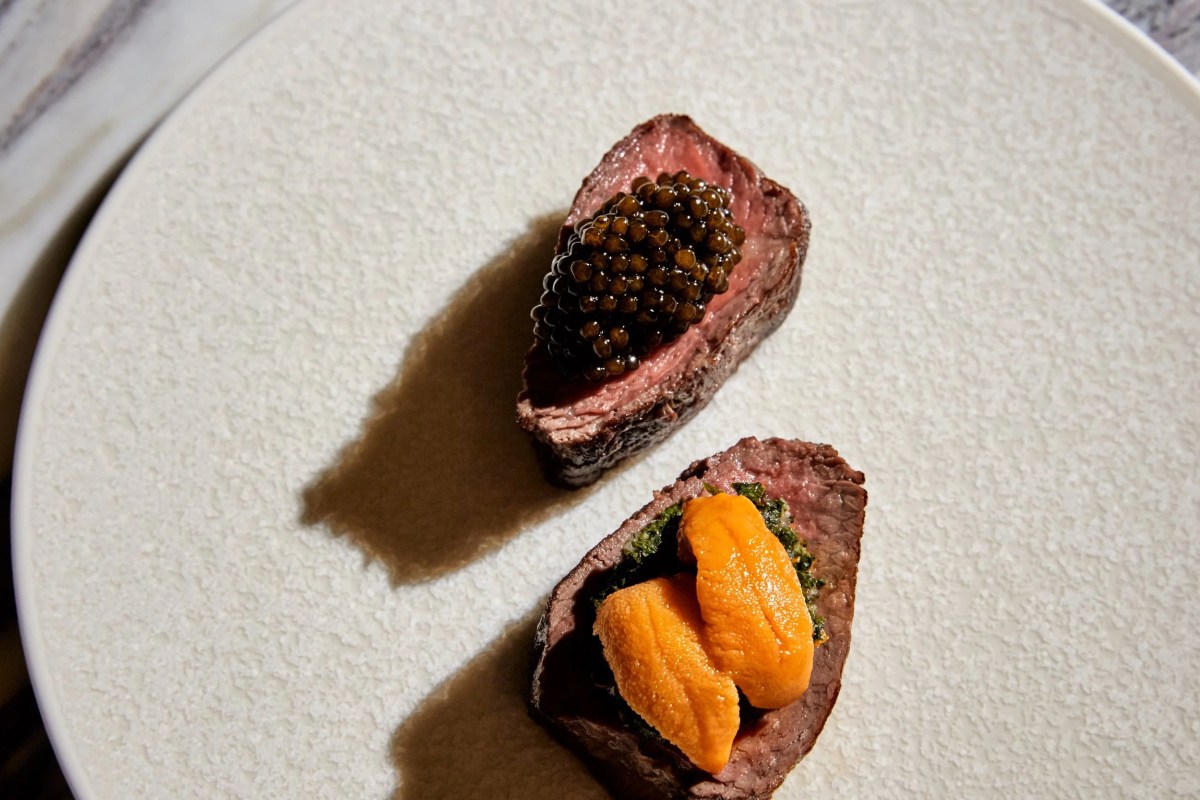
The highly curated courses offer a modern perspective on Korean traditional cuisine with a creative angle, highlighting the essence of each seasonal ingredient. Among the dishes that have defined recent menus: a thirty-day dry-aged ribeye served with optional Périgord truffle, celeriac and nabak kimchi, A5 Miyazaki beef with pickled cucumber, chive and spicy cucumber salad, and the two tenderloins served side by side — one simply wet-aged, the other finished under koji — so the contrast in texture and funk can be tasted in one sitting.
The kitchen's own favourite is less showy: a king crab gyeranjjim, a soft-steamed egg custard topped with crab cooked in a rich anchovy broth, which Kim has called an interpretation of a recipe from his mother and a dish that will not come off the menu. The closing hansang charim changes its rice, soup and banchan with the seasons but, as a course and a ritual of shared Korean dining, remains fixed.
Don't miss
Don't miss
- 01
The two tenderloins served side by side, wet-aged and koji-dry-aged, for direct comparison
- 02
The thirty-day dry-aged ribeye with Périgord truffle, celeriac and nabak kimchi
- 03
King crab gyeranjjim, Kim's own steamed-egg dish built on his mother's recipe
- 04
The closing hansang charim, Korea's shared table of rice, banchan and soup
- 05
The bangjja bronzeware itself, hand-forged in the tin-rich alloy once used at the royal court
05Wine and drinks
A dedicated wine list runs alongside the tasting menu, available to view separately from the food menu on the restaurant's own site, and the room keeps a sommelier on the floor through service. Kim's own advice to diners is to take the pairing rather than order by the glass, since it is built specifically to show the range of the cellar across ten courses rather than treat wine as an afterthought.
06When to go and booking
Reservations are available to book directly through OpenTable, with two seating times offered for a limited party size of one to six guests: Tuesday to Saturday at 5:30pm and 8:30pm, and Sunday at 5pm and 8pm. A pre-payment of the full dinner menu price is required to book any reservation, and the kitchen is unable to accommodate dietary restrictions or allergies due to the nature of the tasting menu, so it is worth declaring any concerns before paying the deposit. The restaurant seats a maximum of around seventeen at the counter each service, so tables for the sought-after Friday and Saturday evening slots tend to move quickly once released.