In this story · 6 sections
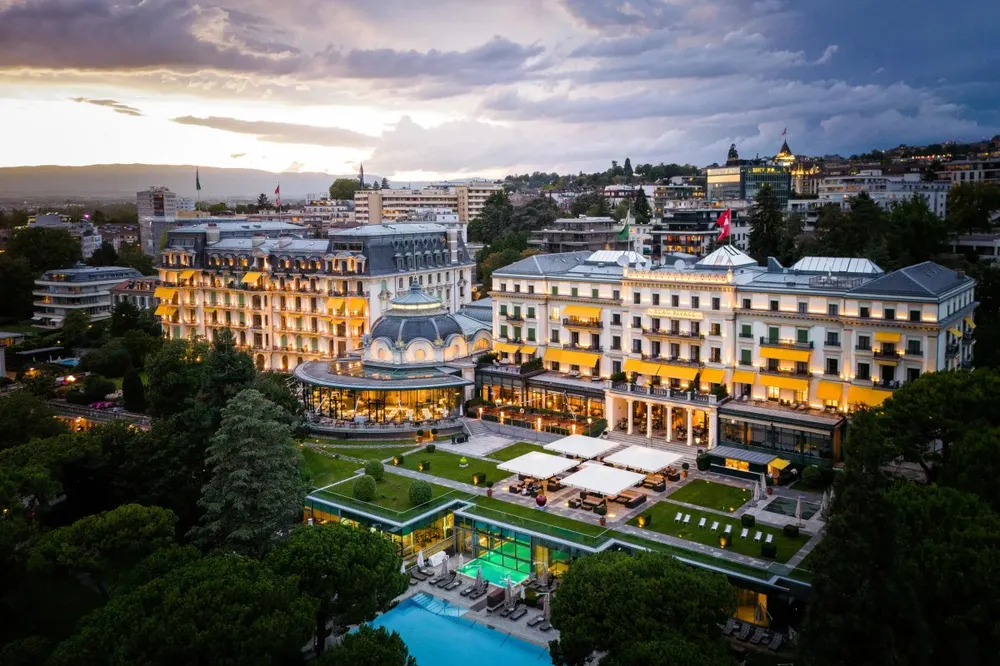
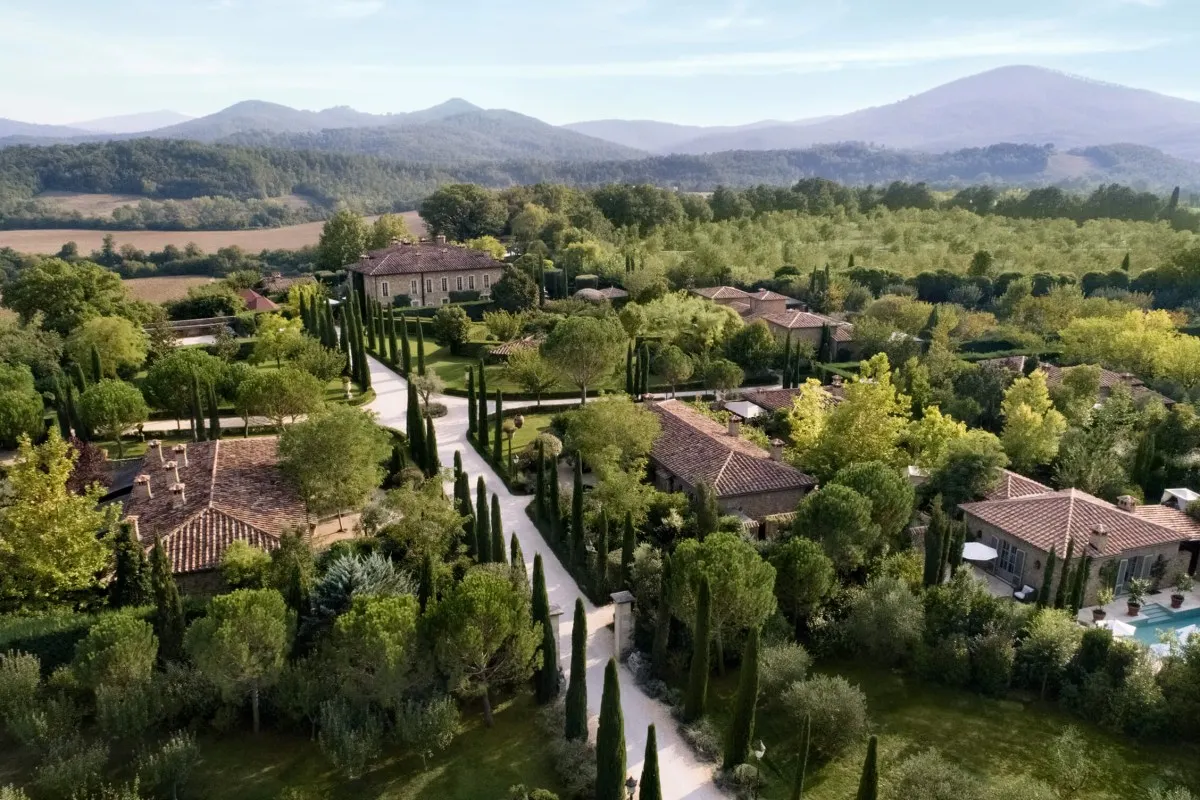
South-west of Siena, in wooded hills close to the Via Francigena pilgrim road, Borgo Santo Pietro grew out of a derelict farmhouse that a Danish couple, Claus and Jeanette Thottrup, bought and spent years rebuilding into the estate it is today. Relais Borgo Santo Pietro was once a healing stopover for medieval pilgrims, and the dilapidated 13th-century building they found had to be rehabilitated almost from nothing. Today the 22 rooms and suites sit inside a 300-acre estate with its own organic farm, vineyards and dairy, and the kitchen answers to a Michelin star at Saporium, the estate's flagship restaurant set inside a restored twelfth-century wing of the villa. The MICHELIN Guide awards the house itself Three Keys, its highest distinction for a stay, recognising not just the rooms but the completeness of an estate that also runs a spa, a skincare laboratory and a working dairy. The result feels less like a hotel than a self-sufficient hamlet, rebuilt piece by piece, where medieval Tuscan countryside and contemporary luxury sit unusually close together.
Borgo Santo Pietro
Hotel · Val di Merse, Province of Siena, Tuscany
© OpenStreetMap contributors · OpenFreeMap
- Address
- Località Palazzetto 110, 53012 Chiusdino (SI)
- Rooms
- 22
- Restaurants
- Saporium (1 MICHELIN Star, Green Star); La Trattoria sull'Albero
- Spa
- Seed to Skin Spa
- Telephone
- +39 0577 75 12 22
- Website
- borgosantopietro.com
- MICHELIN Guide
- Three MICHELIN Keys
An 800-year-old hamlet rebuilt into a 22-room estate with its own farm, dairy and Michelin-starred kitchen near Siena.
01The house
Long before it became a hotel, Relais Borgo Santo Pietro was once a healing stopover for medieval pilgrims, standing in the Val di Merse not far from the Via Francigena. By the time Claus and Jeanette Thottrup found it, the backstory reads like a familiar tale of an expat Danish couple moving from London to rehabilitate a dilapidated 13th-century farmhouse, and the pair spent years doing exactly that before opening the doors to guests.
What they built keeps faith with the age of the place rather than disguising it. The antiques are genuine, sought out across Italy along with much of the building material, and the MICHELIN Guide notes that the result looks more authentically old than many longer-established Italian luxury hotels, whose owners refuse, in the name of authenticity, to move so much as a single painting. Pass through the entrance hall, with its worn leather armchairs and open fireplace, into an ancient weathered brick wine cellar holding around 1,200 labels, and the effect is closer to a lived-in Tuscan country house than a designed hotel.
02Rooms and suites
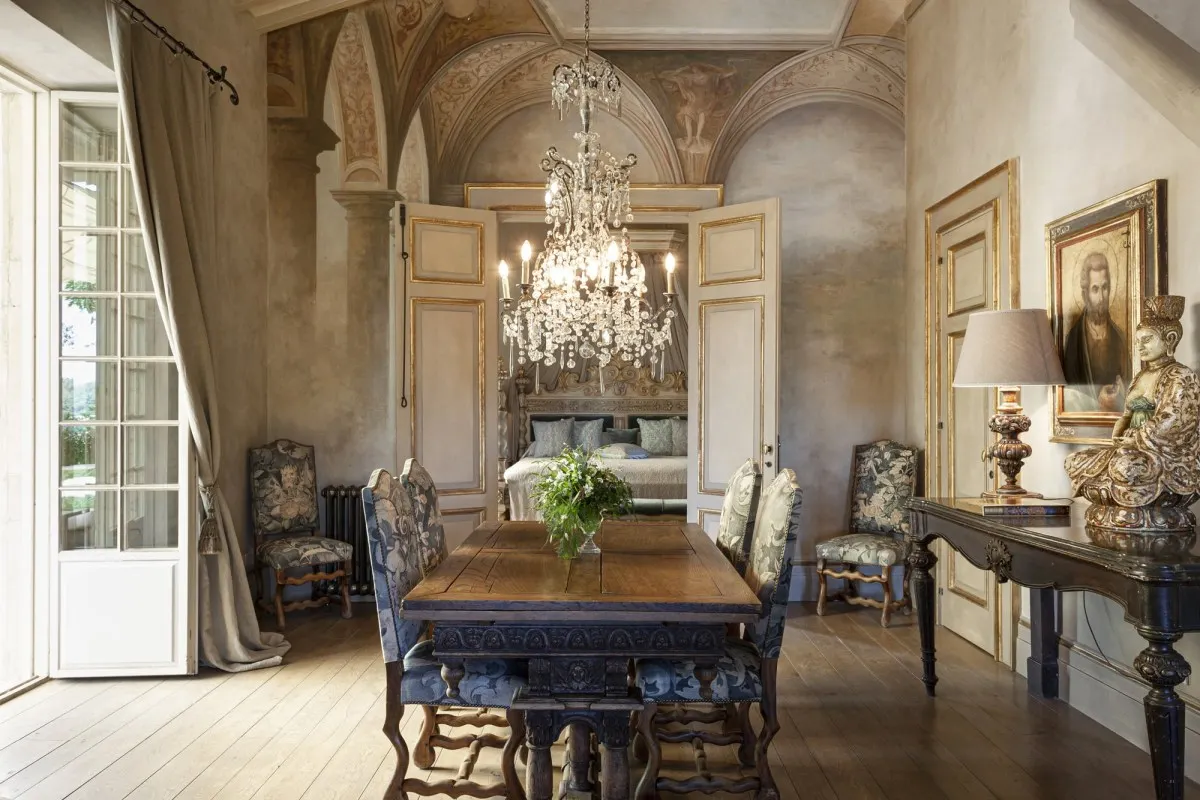
The estate holds 22 rooms and suites in total, a handful inside the main villa and the rest scattered through the grounds, each individually styled and inspired by the villa's history, with bespoke details carried out by local craftsmen and in-house artisans. The design combines contemporary sophistication with the romantic charm of the Tuscan countryside rather than choosing one over the other.
Insider tipSix minutes from the Abbey of San Galgano; Siena around 40km, Florence's airport around 100km away.
Inside the twelfth-century villa itself, suites come with exquisite furnishings and chandeliers, antique art, bespoke beds and well-appointed bathrooms. Further into the gardens, suites open onto private Mediterranean courtyards; at the quietest edges of the property stand the most secluded villas, each with its own pool, precious fabrics and handmade furniture.
03Where to eat
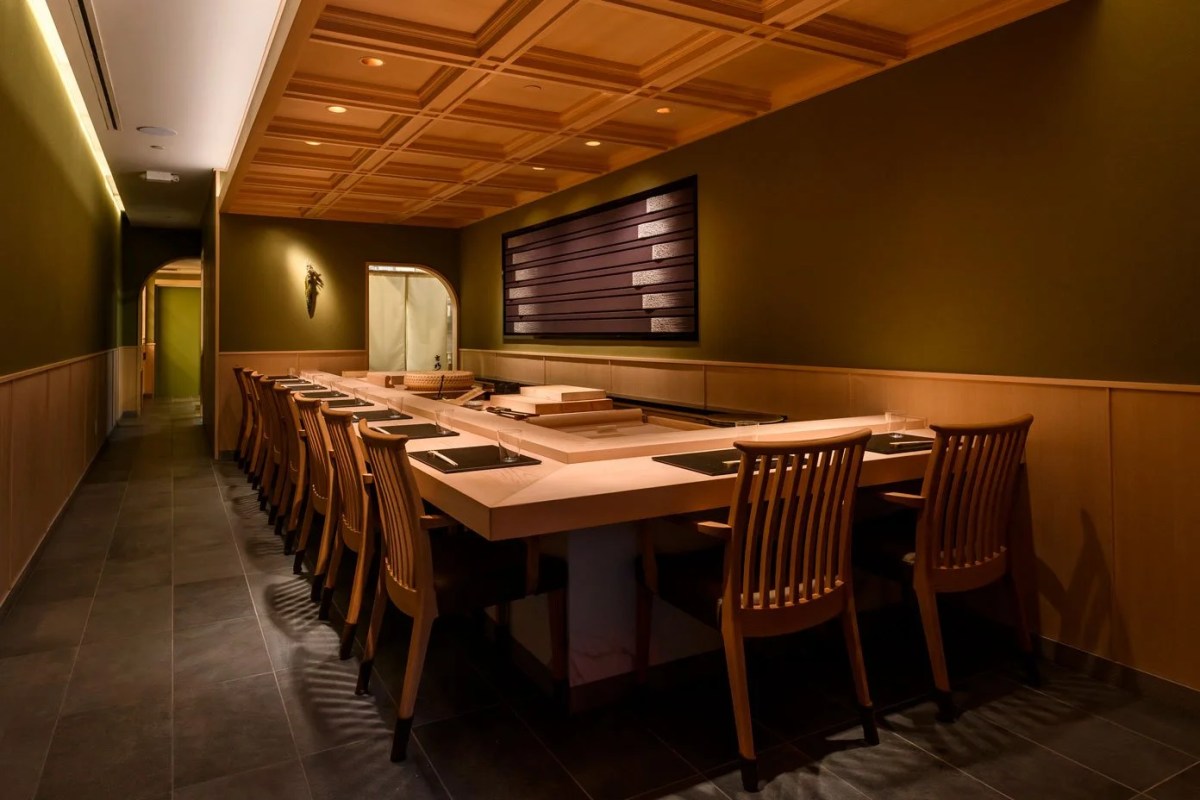
Saporium, the estate's fine-dining restaurant, occupies a restored twelfth-century wing of the villa and holds a Michelin star under Florentine-born executive chef Ariel Hagen, who trained alongside Norbert Niederkofler during the three-star years at Hubertus and worked as sous chef to Gaetano Trovato at Arnolfo in Colle Val d'Elsa before taking charge of the Borgo's kitchens. His cooking, built around a philosophy he calls "The Season That Doesn't Exist," leans on the estate's own biodiversity, and the restaurant holds a Michelin Green Star for sustainability alongside its star. Dishes have included pigeon with langoustine, built almost entirely from the farm and gardens outside the kitchen door.
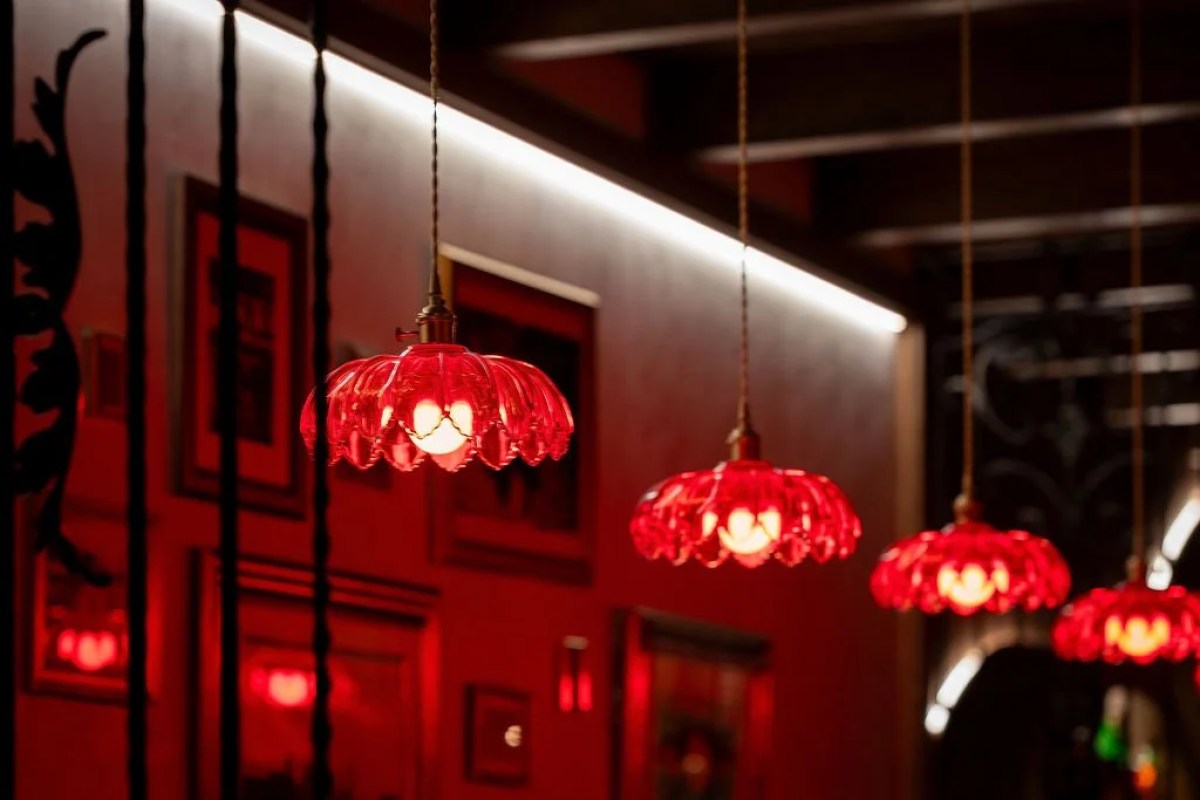
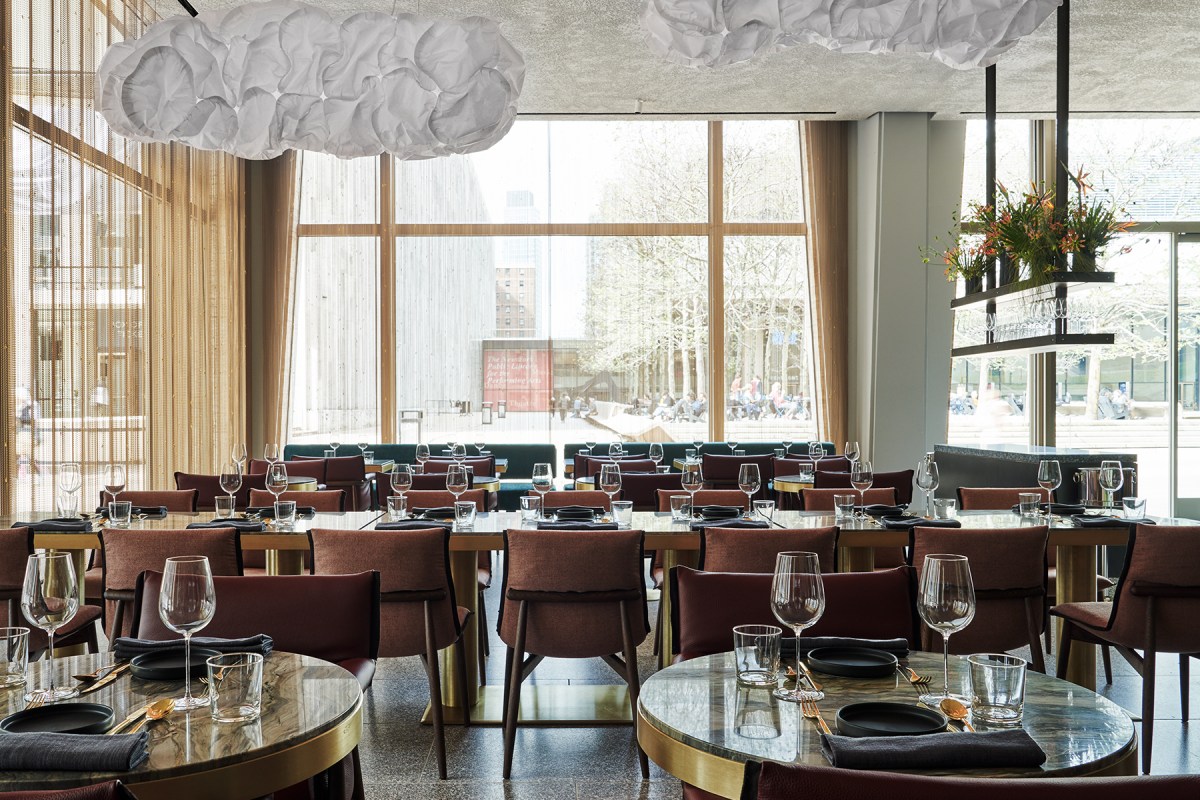
A gentler alternative is La Trattoria sull'Albero, built quite literally around a centuries-old oak tree, serving contemporary Tuscan dishes drawn from the same farm. Saporium has since opened a second address on Florence's Lungarno, giving the estate's cooking a city counterpart beyond Chiusdino.
04Spa and wellbeing
The Seed to Skin spa, named after the estate's own organic skincare line, was named the world's best country house hotel spa at the 2024 World Spa Awards and was included in the Tatler Spa Guide the same year. Treatments draw on the same 300-acre organic farm, with its vineyards, dairy and 13-acre gardens, that also supplies the kitchens — a single philosophy of ingredients grown rather than bought running through both the restaurant and the treatment rooms.
05The neighbourhood
Chiusdino's wider draw is medieval rather than culinary. Six minutes from the gates stands the Abbey of San Galgano, a roofless ruin in the Val di Merse and a notable example of Gothic-Cistercian architecture, built by Cistercian monks. A short climb further up the hill reaches the Montesiepi Hermitage, where legend holds that the knight-turned-hermit Galgano Guidotti, a native of Chiusdino, retired from the world and drove his sword into a rock to make it a cross — the "sword in the stone" still set there today. Siena is around 40 kilometres away, with Florence's airport roughly 100 kilometres to the north and Pisa's around 136 kilometres distant.
06Making the most of a stay
Beyond the restaurants and spa, the Borgo Santo Pietro group is a collection of lifestyle businesses: a cooking school and fermentation lab on the estate itself, and Satori, a charter yacht available in the Mediterranean, alongside the Seed to Skin skincare line produced in its own laboratory. Guests can combine a spa morning with a farm walk, a cooking class, or simply time in the 13-acre gardens that took years to plant out across the estate.
Don't miss
Don't miss
- 01
Dinner at Saporium under Michelin-starred chef Ariel Hagen
- 02
A treehouse-style meal at La Trattoria sull'Albero, built around a centuries-old oak
- 03
A treatment at the award-winning Seed to Skin spa
- 04
A short drive to the roofless Abbey of San Galgano and the sword in the stone at Montesiepi
- 05
A cooking-school session or farm walk across the 300-acre estate