 The Metro Mode 55
In this story · 4 sections
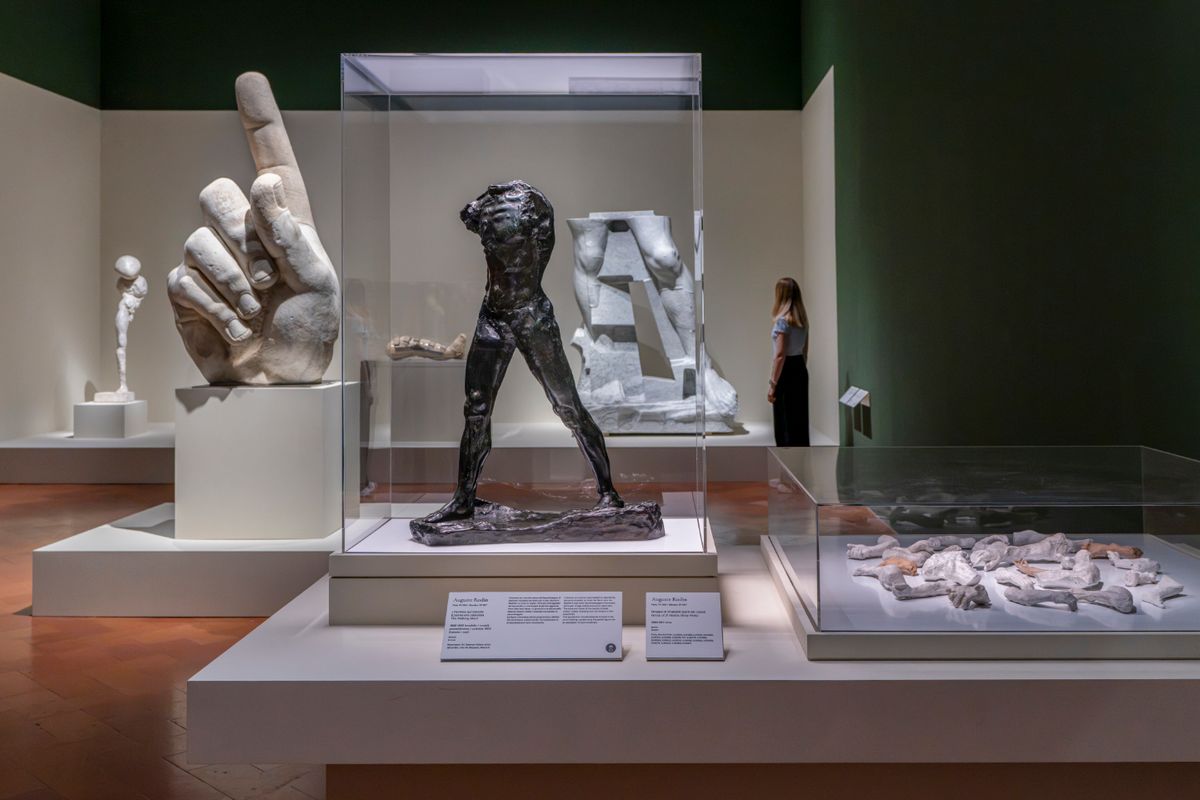
A nose and a pair of lips, carved in Egypt some three thousand three hundred years ago, are the emblem of this autumn's exhibition at Palazzo Strozzi. Broken. The Power of the Fragment, which opened on 25 September 2026 and runs until 24 January 2027, is given over to sculpture that has lost part of itself – and to the argument that what remains can stand on its own. The Fondazione Palazzo Strozzi has organised it with the National Gallery of Art in Washington, and it brings more than eighty works and artefacts to Florence, lent by museums that include The Metropolitan Museum of Art in New York, the Louvre in Paris, the British Museum in London and the Museo Nacional de Antropología in Mexico City. The range runs from Ancient Egypt to Michelangelo and from Classical Greece to Rodin, and on to artists at work today. It occupies the Piano nobile and spills into the Renaissance courtyard below.
Palazzo Strozzi
Exhibition · Historic centre
© OpenStreetMap contributors · OpenFreeMap
- Until
- 24 January 2027
- Dates
- 25 September 2026 – 24 January 2027
- Venue
- Palazzo Strozzi, Courtyard and Piano nobile
- Open
- Daily 10:00–20:00, Thursdays until 23:00 (Nov 2026)
- Tickets
- €15 dated, €20 open date, €12 reduced (Nov 2026)
- Curator
- C. D. Dickerson III and Andrew Sears, with Arturo Galansino
- Works
- More than eighty
- Address
- Piazza Strozzi, 50123 Florence
- Telephone
- +39 055 26 45 155
- Website
- palazzostrozzi.org
More than eighty works on the fragment in sculpture, organised with the National Gallery of Art in Washington.
01The exhibition
The premise is that a fragment is not only the remnant of a lost whole. It can be an object in its own right, one that carries the memory of what happened to it. Some fragments are the result of an artist's deliberate choice. Others record a history: iconoclasm ancient and modern, wars, revolutions, acts of vandalism, and natural disasters – among them the flood that struck Florence in 1966.
From there the exhibition asks what a sculpture gains, artistically, politically and symbolically, once it has been broken, and how a fragment continues to work on the imagination of those who look at it.
Don't miss
Don't miss
- 01
Nose and Lips of Akhenaten, from Amarna, lent by The Metropolitan Museum of Art
- 02
Mark Manders's new installation in the Renaissance courtyard
- 03
Giovanni Pisano, Michelangelo and Rodin in the same exhibition
- 04
Contemporary sculpture by Louise Bourgeois, Huma Bhabha and Robert Gober
- 05
Joanna Piotrowska's BURROWED in the Project Space, also until 24 January 2027
02What you see
The route crosses places as well as periods. The ancient civilisations of Egypt, Etruria and the Greco-Roman world are joined by the premodern cultures of present-day Mexico, Mali, Peru and Cambodia. Masters of European sculpture – Giovanni Pisano, Michelangelo, Auguste Rodin – are shown beside contemporary artists who have taken the fragment as a point of departure: Louise Bourgeois, Huma Bhabha, Robert Gober, Francesco Vezzoli and Danh Vo.
Insider tipDaily 10:00–20:00, Thursdays until 23:00. Last admission one hour before closing.
In the courtyard, the Dutch-Belgian artist Mark Manders has made a new installation for the occasion. The work that fronts the exhibition is the Egyptian Nose and Lips of Akhenaten, from Amarna, dated to about 1353–1336 BCE and lent by The Metropolitan Museum of Art.
03The curators
The exhibition is curated by two scholars from the National Gallery of Art: C. D. Dickerson III, Dean of the Center for Advanced Study in the Visual Arts, and Andrew Sears, Assistant Curator of Northern European Paintings. They have worked with Arturo Galansino, Director General of the Fondazione Palazzo Strozzi. After Florence the exhibition travels to Washington, where the National Gallery will present it in a newly conceived version from 3 March to 27 June 2027.
04How to visit
Palazzo Strozzi is open every day from 10:00 to 20:00 and until 23:00 on Thursdays, with last admission one hour before closing (Nov 2026). A dated full-price ticket costs €15 and an open-date ticket, valid on any day and at any time, €20; the reduced ticket is €12 and a family ticket €25. Children under six go free. The palace's own audio guide lasts about an hour, is available in Italian and English and costs €4 (all prices Nov 2026).
Thursday evenings, when the doors stay open three hours longer, are the natural choice for anyone who would rather see sculpture after the working day. The information and reservations line answers from Monday to Friday, 9:00 to 18:00.