In this story · 4 sections
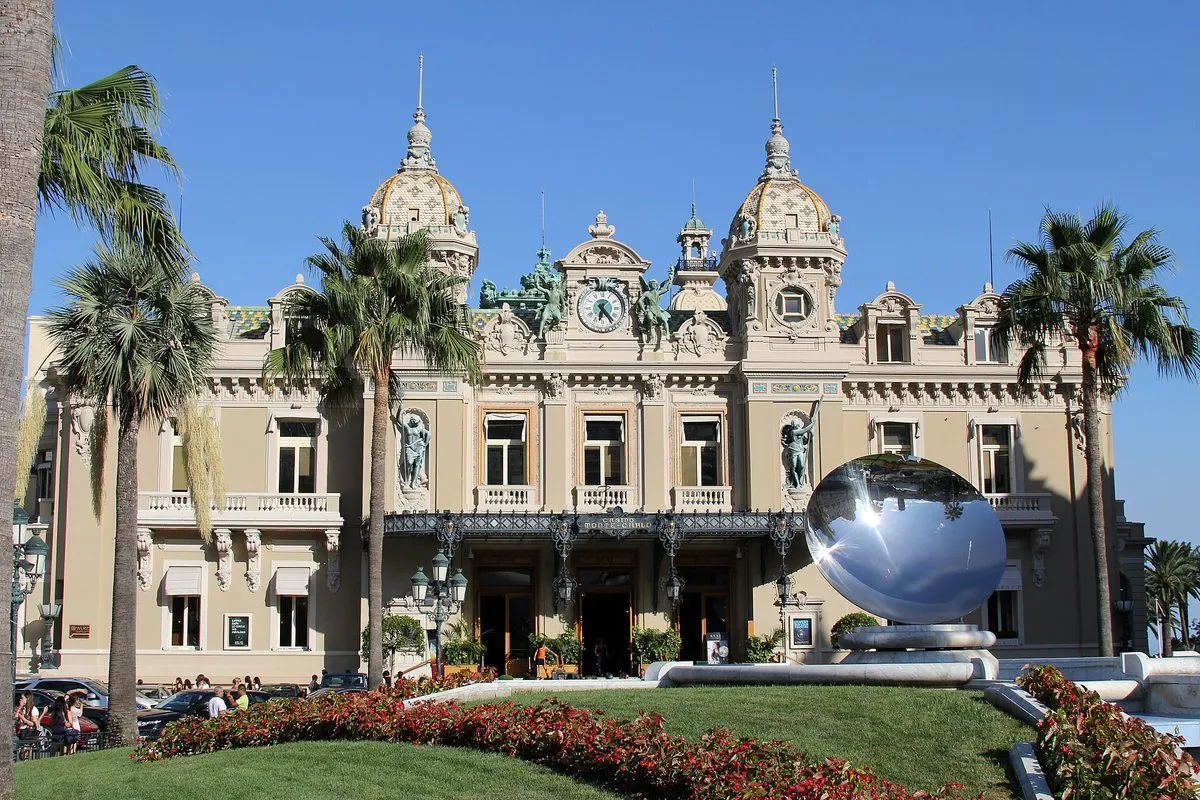
The Casino de Monte-Carlo stands at the heart of Monte-Carlo on the Place du Casino, beside the Hôtel de Paris, its gardens running down to a terrace with a view from Monaco to the point of Bordighera in Italy. It is the most famous building in the principality, and arguably the one that made it: without the casino there would be no Monte-Carlo at all, not even the name.
It is still owned and run by the company founded to create it, the Société des Bains de Mer, now Groupe Monte-Carlo SBM.
3 places
© OpenStreetMap contributors · OpenFreeMap
- 01Casino de Monte-Carlosee · Monte-Carlo
- 02Place du Casinosee · Monte-Carlo
- 03Terrasses du Casinosee · Monte-Carlo
- 1856
- Charles III authorises a casino
- 1863
- Concession to François Blanc; SBM founded
- 1866
- Les Spélugues renamed Monte-Carlo
- 1868
- Railway and Monte-Carlo station open
- 1879
- Garnier's hall inaugurated, 25 January
- 1987
- Gaming law confirms the ban on Monegasque players
A prince in need of money
In 1848 Menton and Roquebrune, which made up around 80 per cent of Monaco's territory, broke away as Free Cities; they became French in 1861. With its farming revenues gone, Prince Charles III decided to turn what remained into a resort for wealthy foreigners. He authorised a casino in 1856, and the first gaming room opened in a house in La Condamine, the Villa Bellevue. It failed, as did a second attempt at the Hôtel de Russie on the Rock in 1862.
So the prince turned to François Blanc, who had made a fortune with the casino at Homburg. By Sovereign Ordinance of 2 April 1863, Blanc obtained the gaming concession for 50 years, for 1.7 million francs plus 50,000 francs a year and 10 per cent of net profits. Charles III founded the Société des Bains de Mer the same year and made Blanc its president.
From Les Spélugues to Monte-Carlo
Blanc chose a site that seemed hopeless: Les Spélugues, the caves, a barren hill far from old Monaco. As his contract required, he built the Hôtel de Paris in 1864, opened the casino and the garden of the Place du Casino with its fountain and palms, and in 1868 the Café Divan. That same year the Nice–Ventimiglia railway reached a new Monte-Carlo station, and success followed within three years. In 1866 Charles III renamed the district in his own honour: Monte-Carlo, Mount Charles.
The casino and the property boom that followed made the fortunes of the Blanc family and of the princely house, and Charles III abolished taxation in Monaco. In 1878 Marie Blanc, François's widow, called in Charles Garnier, architect of the Paris Opéra. Four hundred workers laboured day and night under electric floodlights, and the new hall was inaugurated on 25 January 1879 with Sarah Bernhardt reciting a poem. Garnier's 1878–1880 rebuilding gave the casino the Belle Époque façade it wears today.
The house rules
Charles III feared his subjects would gamble away their modest means, so he forbade them to play, and the rule stands to this day. Law no. 1103 of 12 June 1987 bars Monegasques, as well as civil servants and state employees, from taking part in games. The same law refuses entry to anyone under 18, to members of the clergy and religious orders, to soldiers in uniform and to anyone drunk or likely to cause a scene. Identity documents are checked so that winnings can be paid, which is precisely what is refused to Monegasque citizens.
Pigeons, racing cars and James Bond
Long before Formula 1, Monaco's most famous Grand Prix was a pigeon-shooting contest. Held from 1872 to 1965, it was the most prestigious event of its kind, and the casino terrace was given over to it. Today the Grand Prix circuit passes right in front of the casino, with a grandstand facing the façade.
Film-makers have never resisted it. James Bond played here in Never Say Never Again (1983) and GoldenEye (1995), and the casino has also appeared in Fast Five (2011). Inside, beyond the marble atrium, lie the gaming rooms with their tables of roulette and trente et quarante.
Casino de Monte-Carlo
Garnier's Belle Époque casino
The casino that created Monte-Carlo, still run by the Société des Bains de Mer.
Place du Casino, 98000 Monaco
Insider tipBring ID: entry is 18+ and documents are checked.
Place du Casino
The square of fountains and palms
The garden square laid out by François Blanc, framed by the casino and the Hôtel de Paris.
Place du Casino, 98000 Monaco
Insider tipBest at dusk, when the façade is lit.
Terrasses du Casino
The sea terrace behind the casino
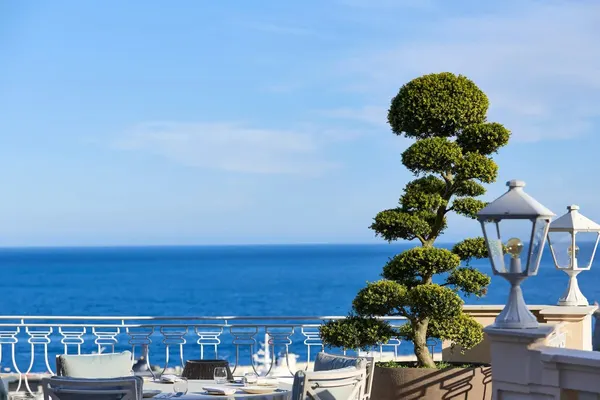
Views along the coast from Monaco towards Bordighera in Italy.
Avenue Princesse-Alice, 98000 Monaco
Insider tipOnce the stage for the pigeon-shooting Grand Prix.
Explore the district on VERA PI Monaco, neighbouring Beausoleil on VERA PI France, and more Monaco stories on metromode.co.