In this story · 6 sections
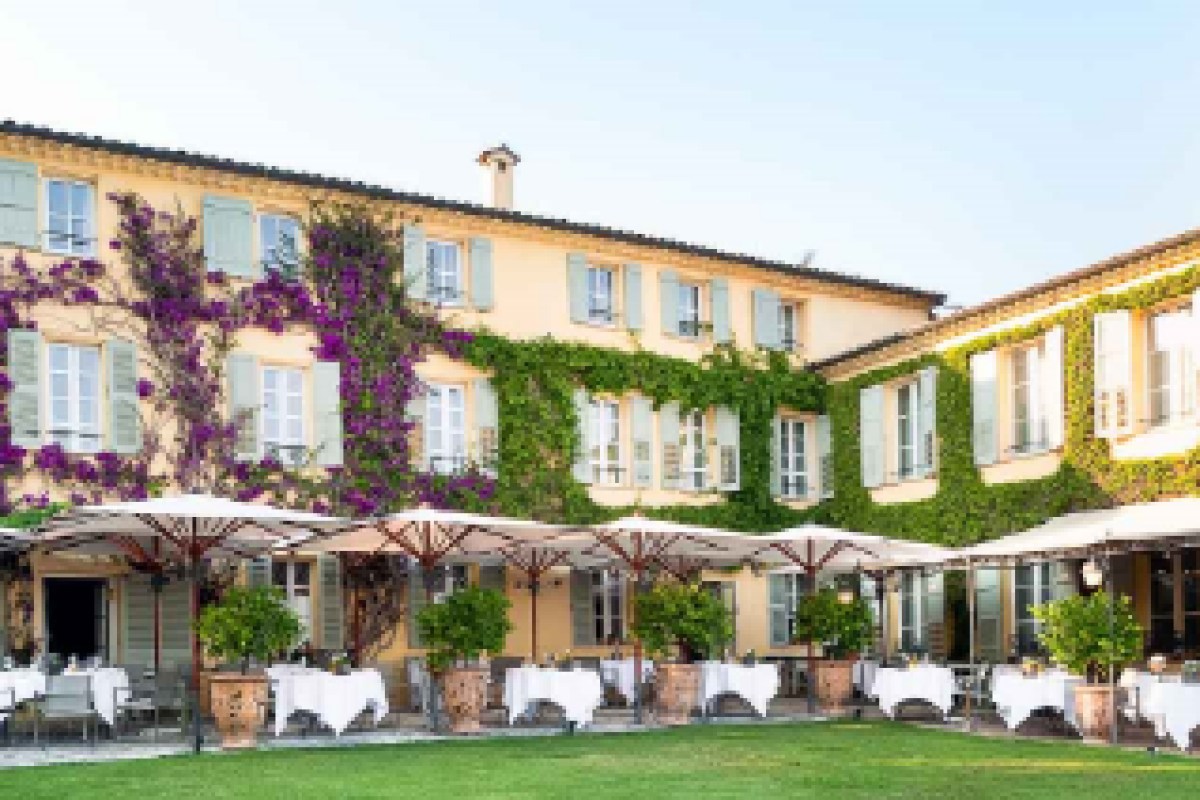
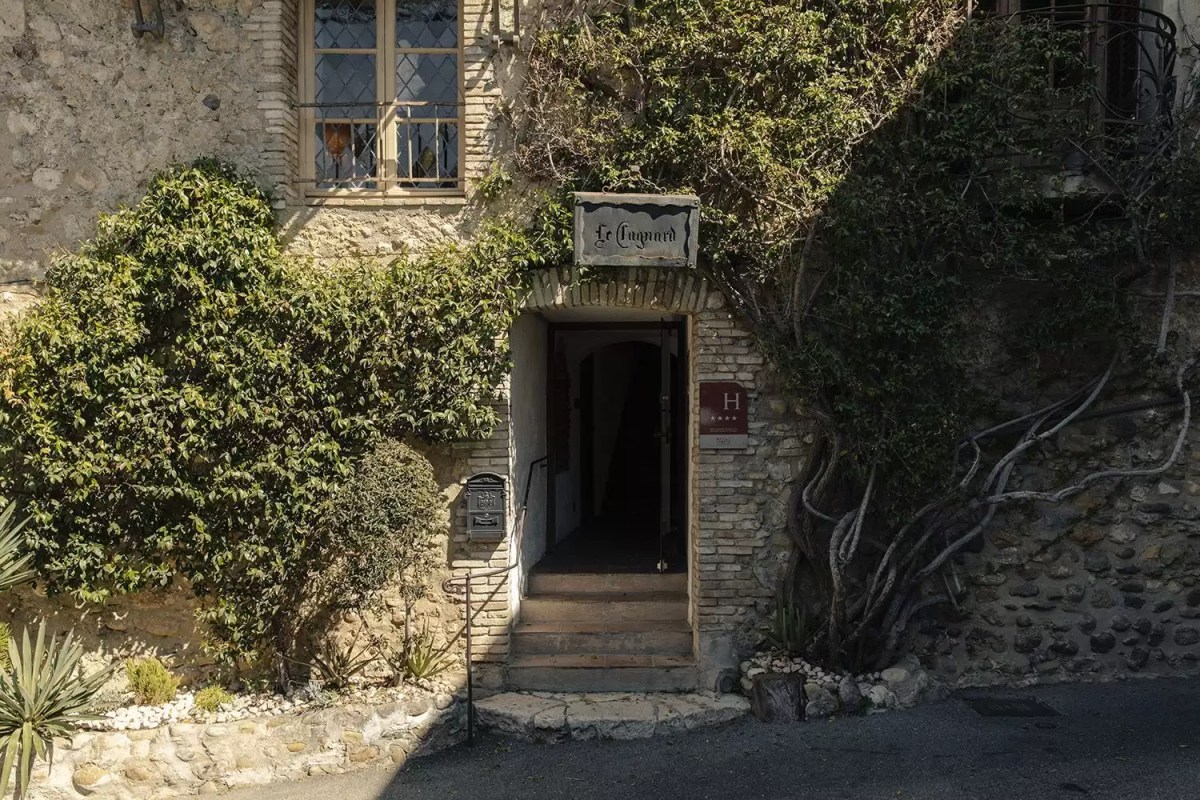
High on the ramparts of Haut-de-Cagnes, a few minutes' walk from the square where the Grimaldi counts once held court, Château Le Cagnard occupies a thirteenth-century stone dwelling built into the village's own fortified wall. Thirty-six rooms and suites are scattered through the old houses of this hilltop village, each one named for a painter who found light here – Renoir, Soutine and Modigliani among them – a quiet homage to the years when Haut-de-Cagnes styled itself the Montmartre of Provence. The signature of the house sits upstairs, in a dining room roofed with 200 hand-painted panels that part to reveal the night sky, a piece of theatre unchanged since the 1980s. The MICHELIN Guide lists Château Le Cagnard among its selected addresses on the French Riviera. Under the Ivarsson family, who bought the house in 2011 and restored its frescoes room by room, Le Cagnard keeps the manner of a private home rather than a grand hotel – small, idiosyncratic, and still very much of its village.
Chateau le Cagnard
Hotel · Haut-de-Cagnes, Cagnes-sur-Mer
© OpenStreetMap contributors · OpenFreeMap
- Address
- 54 rue Sous-Barri, Haut-de-Cagnes, 06800 Cagnes-sur-Mer
- Opened
- 13th century; fully renovated 2012
- Building
- 13th-century stone house, part of Haut-de-Cagnes's ramparts
- Architect
- Philippe Roberti (1986 sliding ceiling panels)
- Interiors
- Frida Ivarsson
- Rooms
- 36
- Suites
- Junior, Luxury and Prestige Suite (up to c. 80 m²)
- Restaurants
- Château Le Cagnard (Selected, MICHELIN Guide)
- Spa
- Wellness space: whirlpool, massage, walled garden
- Pool
- Heated outdoor pool
- Setting
- Medieval village of Haut-de-Cagnes, Côte d'Azur
- Group
- Small Luxury Hotels of the World (since 2015)
- Telephone
- +33 4 93 20 73 22
- MICHELIN Guide
- Selected in the MICHELIN Guide
Château Le Cagnard occupies a stone dwelling built into Haut-de-Cagnes's city wall, above the Mediterranean.
01The house
The building itself is part of the medieval city wall of Haut-de-Cagnes, a thirteenth-century stone dwelling whose fortunes have always run alongside those of the neighbouring Château Grimaldi, built in the following century. Inside, the old Guard Room still carries the marks of that military past: its arched fireplace is evidence of its Medieval heritage, from a time during which Knights protected the village and its château. In 1928 the room was given over to the painter Émile Wéry, who covered its vault with a fresco of elephants, lending the space an unexpected touch of the exotic.
The hotel as it is known today took shape slowly. Monsieur and Madame Barel bought the property in 1960; by 1968 Le Cagnard had joined Relais & Châteaux, and it was around this time that the restaurant's celebrated ceiling was built, its two hundred panels hand-painted in 1986 by the architect Philippe Roberti so that they could be drawn back to the open sky. The house changed hands again in 2011, when the Ivarsson family took it on and carried out a full renovation, restoring Wéry's frescoes and the period furniture piece by piece before reopening it as Hôtel & Restaurant Château Le Cagnard. Château le Cagnard has been a member of the International Small Luxury Hotels of the World Group since the summer of 2015.
02Rooms and suites
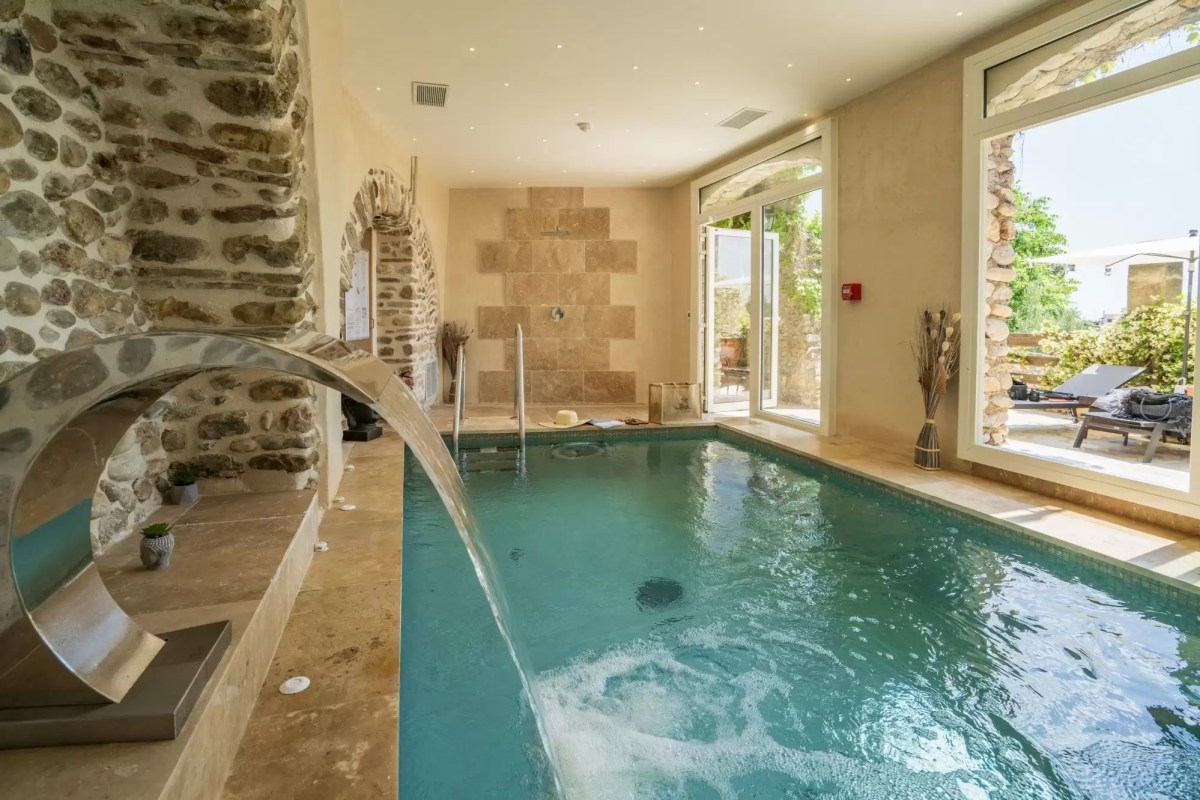
The thirty-six rooms and suites climb across several buildings along the pedestrian lanes of the village, some a short walk from reception, each reached by narrow stone stairs or a small lift. Sizes range from the compact Superior rooms of 14 to 20 square metres, through Deluxe rooms and Junior Suites of up to 36 square metres with balcony options, to Luxury Suites of 50 to 60 square metres and the Prestige Suite, close to 80 square metres, with its own terrace view over the hills or the sea.
Insider tipNarrow medieval streets; arrange arrival with the hotel. Closed part of the winter season.
Every room is dedicated to an artist with ties to Haut-de-Cagnes – guests might sleep in the Renoir, the Soutine, the Modigliani, the Picasso or the Bonnard, each decorated with hand-painted trompe-l'œil work by local painters, with small painted details tucked into the corridors for those who look closely. The decoration favours noble, worn materials – old stone, dark beams, ecru linen – rather than anything glossy, in keeping with a house that trades on patina.
03Where to eat
The restaurant occupies the top of the historic ramparts, its terrace looking out over the Mediterranean and, on clear days, as far as Cap d'Antibes. The dining room's real spectacle is overhead: a historic roof that opens to the sky, its 200 hand-painted panels sliding back so that dinner can be taken under the stars.
The kitchen today is run under a concept built by two Swedish restaurateurs. Behind this culinary experience are Swedish restaurateurs Axel Ohlson and Anton Surtell, who, with a deep love for both Nordic and French flavors, have created a place where the ingredients speak for themselves and the passion for food permeates every dish. The historical stone arches and the charming terrace, where guests can enjoy their meals under the stars in front of the Mediterranean, create a magical setting, with an interior of tasteful French country elegance. In October 2026 the hotel published breakfast from 07.30 to 10.30, drinks and light bites from 16.00 to 18.00, and dinner from 18.00 to 23.00, with reservations recommended and same-day table requests taken by phone.
04Spa and wellbeing
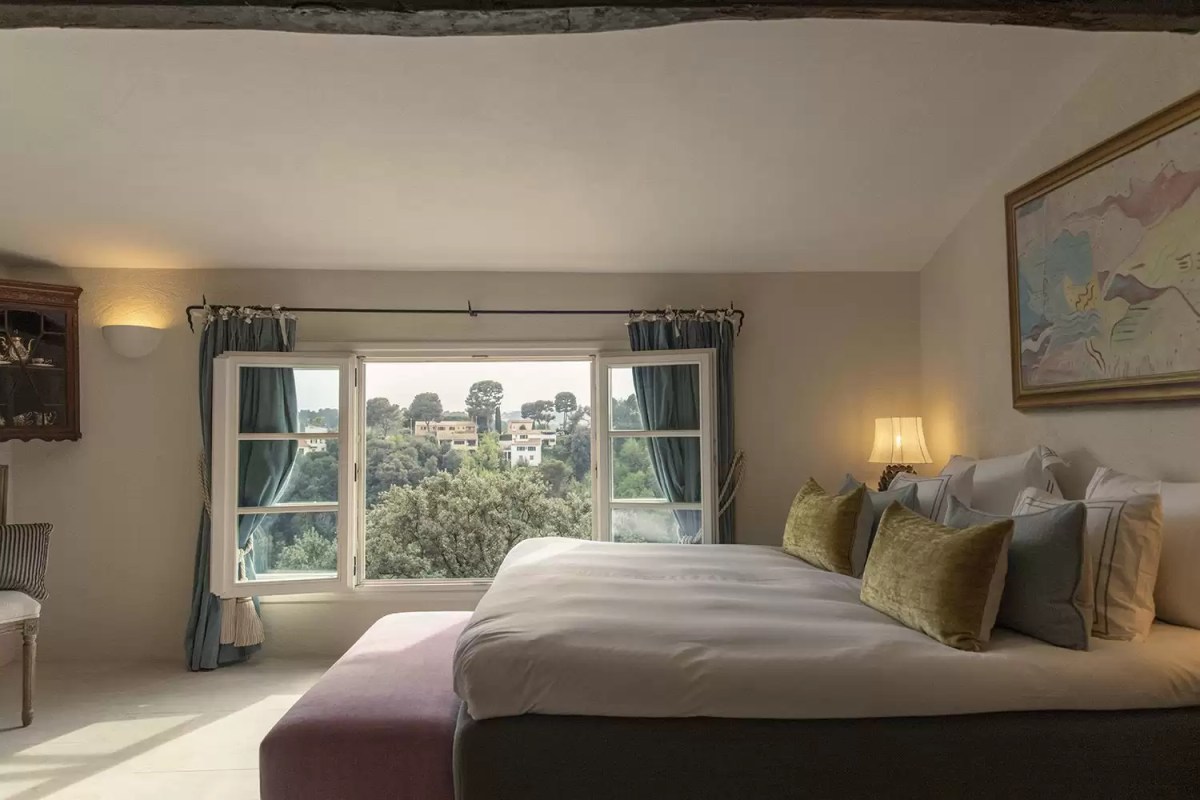
The wellness space is modest in scale and deliberately low-key: a whirlpool pool for easing travel fatigue, massage treatments, and a heated outdoor pool set apart from the village bustle. A small walled garden with loungers, shaded by the surrounding stone and caught by the Mediterranean breeze, gives the house its quieter counterpoint to the view-hunting terrace upstairs.
05The neighbourhood
Step outside the door and the hotel disappears into its village. Haut-de-Cagnes was renowned as the ‘Montmartre of Provence’ at the turn of the 20th century, with winding alleys where bright flowers trail from the houses. At the top of the hill stands the Château Grimaldi, built in 1309 and later transformed into a residence for the Marquis of Courbons; its great hall carries a ceiling painted with the Fall of Phaëton, completed in the 1620s by the Genovese painter Giulio Benso, and the building now houses a museum of modern art and olive culture.
Further afield, the village that drew Renoir still trades on his name – his house and studio at Les Collettes are a short drive away – while Matisse's chapel at Vence and the Picasso museum in Antibes are both within easy reach for a day given over to the painters who gave the region its reputation. Nice airport lies around seven kilometres from the hotel's door.
06Making the most of a stay
Château Le Cagnard leans into its romantic reputation: couples arriving for an anniversary or honeymoon can arrange a welcome of rose petals and champagne, and the house also extends a thoughtful pet-friendly welcome for guests travelling with dogs. Longer stays are rewarded directly – the hotel offers 10 per cent off two-night bookings and 15 per cent off stays of three nights or more.
Like several hotels on this stretch of the Riviera, the house keeps a seasonal rhythm, closing for part of the winter; in October 2026 its booking partner listed the hotel as closed from November to March, so stays are best planned for spring through autumn, when the terrace and the open ceiling are put to best use.
Don't miss
Don't miss
- 01
Book a table when the restaurant ceiling is due to open, for dinner under the stars
- 02
Ask for a room named after Soutine, Modigliani or Renoir and look for its hand-painted trompe-l'œil
- 03
Walk up to the Château Musée Grimaldi to see Giulio Benso's Fall of Phaëton ceiling
- 04
Take a drink on the terrace for the view over the Mediterranean towards Cap d'Antibes
- 05
Spend an hour in the walled garden and whirlpool before the village fills up with day-trippers