In this story · 6 sections
Dhamaka occupies a storefront inside Essex Market, at the foot of the Williamsburg Bridge on the Lower East Side, and it has spent five years refusing to soften Indian food for anyone. The founders, chef Chintan Pandya and restaurateur Roni Mazumdar of the hospitality group Unapologetic Foods, had already built a following with Adda and Rahi before turning to the dishes rarely seen outside Indian homes and roadside stalls — goat kidney, smoked lamb shank, whole rabbit. The restaurant holds a MICHELIN Bib Gourmand, the Guide's mark for cooking of real quality at a moderate spend, and it arrived on a wave of attention: a New York Times critic's pick, a place on Eater's list of the best new restaurants in America, and the James Beard Award for Best Chef in New York State for Pandya in 2022. The name itself, Dhamaka, means explosion in Hindi — a fair description of both the flavour and the noise inside.
Dhamaka
Restaurant · Lower East Side, Manhattan
© OpenStreetMap contributors · OpenFreeMap
- Address
- 119 Delancey St., Essex Market, Store 34, New York, NY 10002
- Cooking
- Regional Indian
- Chef
- Chintan Pandya
- Run by
- Chintan Pandya & Roni Mazumdar, Unapologetic Foods
- MICHELIN Guide
- Bib Gourmand
- Price
- A moderate spend
- Open
- Dinner Mon–Sun 5pm–10pm; brunch Sat–Sun 11:30am–2:30pm
- Covers
- 52 seats indoors, 30 outdoors
- Setting
- Storefront inside Essex Market, designed by Wid Chapman Architects
- Telephone
- +1 212-204-8616
- Website
- dhamaka.nyc
Chintan Pandya and Roni Mazumdar's unfiltered tour of provincial India, from Kashmir to the coast, inside a historic LES market hall.
01The room and the setting
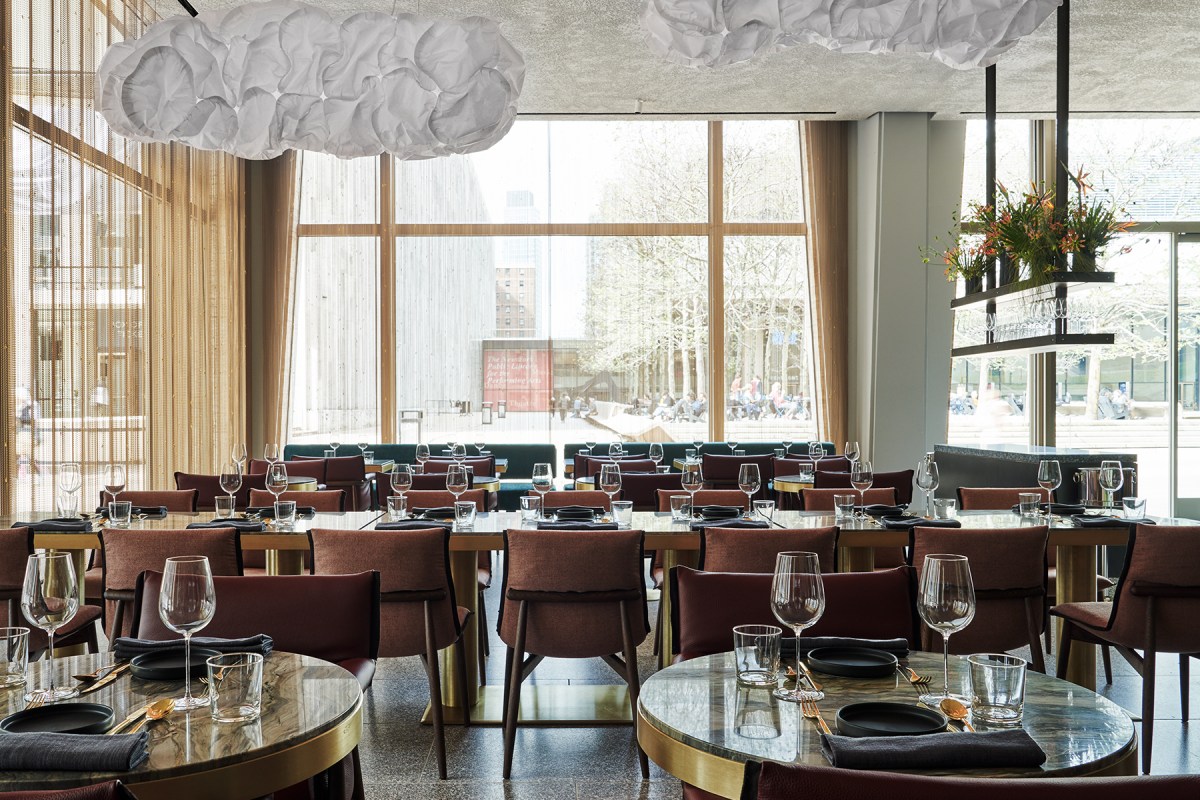
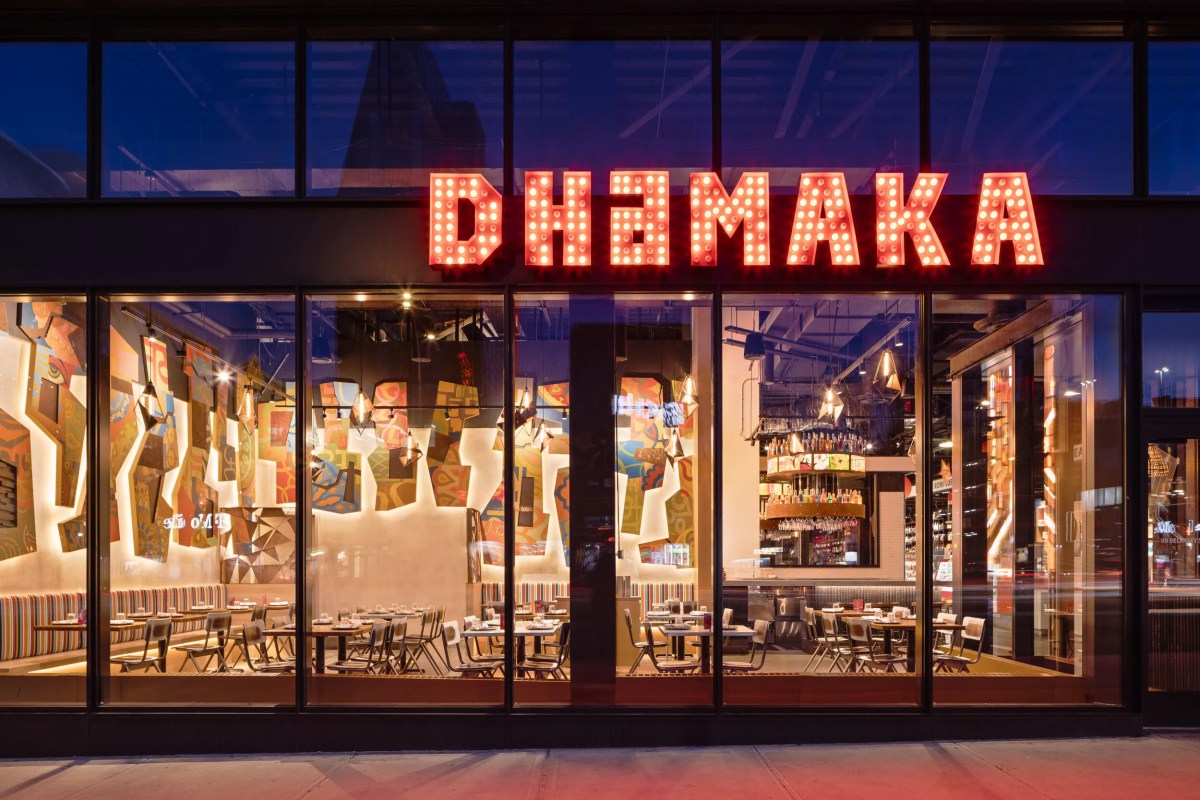
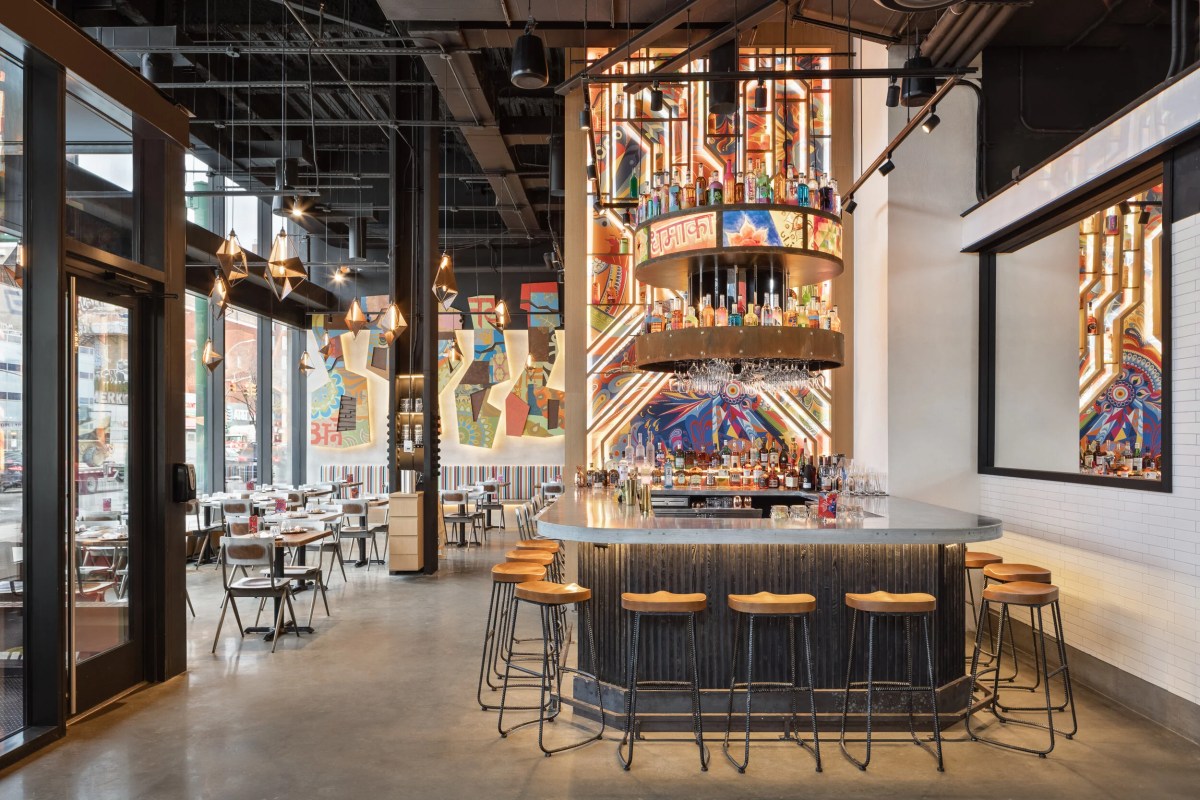
Dhamaka's 1,300-square-foot room was designed by Wid Chapman Architects, with indoor seating for 52 and another 30 seats outside. Wall panels conceived by Chapman and realised by artist Christopher Wynter act as a deliberately shattered canvas — wood cut outs treated to look like metal, backlit so the shapes appear to float off the wall, an idea tied to the Hindi meaning of the restaurant's name.
Behind the bar runs a brightly coloured mural by artist Sean Maze, who also designed the menu artwork; above it hangs a light fixture Chapman describes as a converted oil drum or truck wheel, in keeping with the spirit of jugaad — building with what is on hand. Floor-to-ceiling windows give passers-by on Delancey Street a clear view in, and the restaurant can be entered either from the street or through the market hall itself.
02The chef
Chintan Pandya worked at the Michelin-starred Indian restaurant Junoon in New York before partnering with Roni Mazumdar, first on Adda in Long Island City in 2018 under the newly formed Unapologetic Foods, then on Rahi. Dhamaka was meant to open in 2019, was pushed back twice, and finally opened in February 2021, delayed by the pandemic.
Insider tipBook via Sevenrooms; arrive on time or the table may be released after 15 minutes.
That risk paid off: Pandya won the James Beard Award for Best Chef in New York State in 2022, and Unapologetic Foods has since grown to include Semma, Masalawala & Sons and Rowdy Rooster, making Pandya and Mazumdar one of the most closely watched partnerships in American Indian cooking.
03The cooking
The menu reaches well past the Punjabi and Mughlai dishes most New York diners already know, pulling in Kashmiri lamb loin, Bihari-style smoked goat, and coastal Maharashtrian whole pomfret. Pandya has said his approach is to keep things as nostalgic and unfiltered as possible, cooking the dishes the way they would be eaten at home or at a roadside stall rather than adapting them for a restaurant room.
The boldest dish on the menu is Khad Khargosh, a whole rabbit served with yogurt and paratha, available only one per night and strictly by pre-order — a dish Pandya has described as originally a hunting preparation, cooked with whatever was caught that day. Equally uncompromising is the Gurda Kapoora, goat kidney and testicles with tomato and pao, a dish the kitchen keeps on the menu precisely because it is rarely found anywhere else in the city.
04What to order
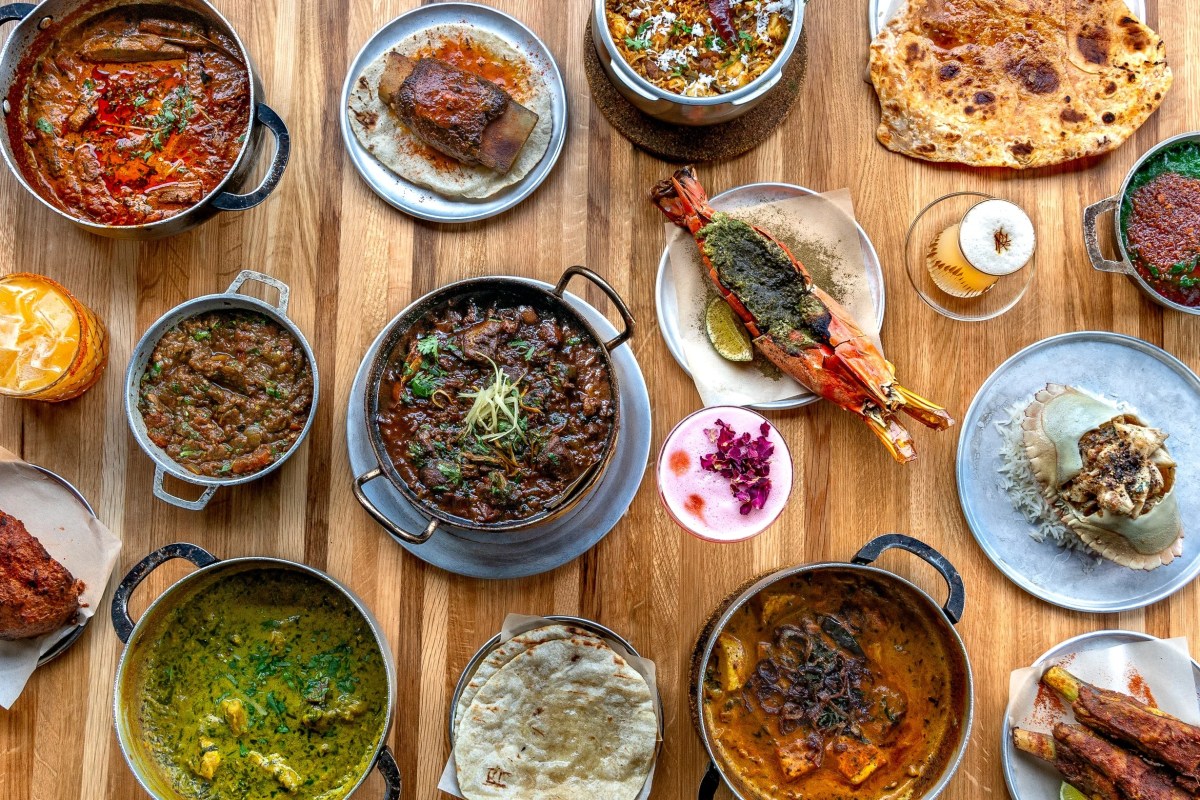
Start with the grills: Tangri Kebab, a chicken leg finished with Amul cheese and saffron, or the Ajwaini Prawn, jumbo shrimp with carrom seeds and yellow chilli. From the starters, the Beef Pepper Fry uses Wagyu flank with curry leaves and Tellicherry pepper, and the Paplet Fry turns whole pomfret into a turmeric-and-chilli coastal classic.
For the table, order rice: the Goat Neck Biryani, made with aged basmati and saffron, or the Short Rib Pulao, built on bone marrow and cilantro. The Butter Pepper Garlic Crab — whole crab with Amul butter, fresh peppercorn and garlic — has become one of the restaurant's most ordered dishes, alongside the Dhungar Gosht, smoked goat with Mathania chilli.
Don't miss
Don't miss
- 01
Khad Khargosh — whole rabbit with yogurt and paratha, one available per night, pre-order only
- 02
Goat Neck Biryani with saffron and aged basmati
- 03
Butter Pepper Garlic Crab with Amul butter and fresh peppercorn
- 04
Gurda Kapoora — goat kidney and testicles, tomato, pao
- 05
Paplet Fry — whole pomfret with turmeric, chilli and coastal spices
05When to go and booking
Dhamaka serves dinner seven nights a week from 5pm to 10pm, with brunch on Saturdays and Sundays from 11:30am to 2:30pm, according to the restaurant's own site. Reservations for parties of six or fewer run exclusively through Sevenrooms — the restaurant does not take phone bookings — and tables are held for fifteen minutes past the booking time before being released.
Given the restaurant's reputation and its modest size inside the market stall, booking ahead is close to essential, particularly for weekend dinners.
06The neighbourhood
Essex Market itself has stood at the corner of Essex and Delancey since 1940, when it replaced the pushcart stalls that had lined the Lower East Side for decades; the market moved into its current building in 2019 as part of the Essex Crossing development. Dhamaka occupies the market's street-facing marquee position, facing Delancey Street at the foot of the Williamsburg Bridge, in a building still full of butchers, bakers and spice vendors.
It is a fitting home for a restaurant built on the idea of forgotten, unfiltered cooking — a market hall with a century of immigrant food history, now with a Bib Gourmand kitchen behind its brightest shopfront.