In this story · 6 sections
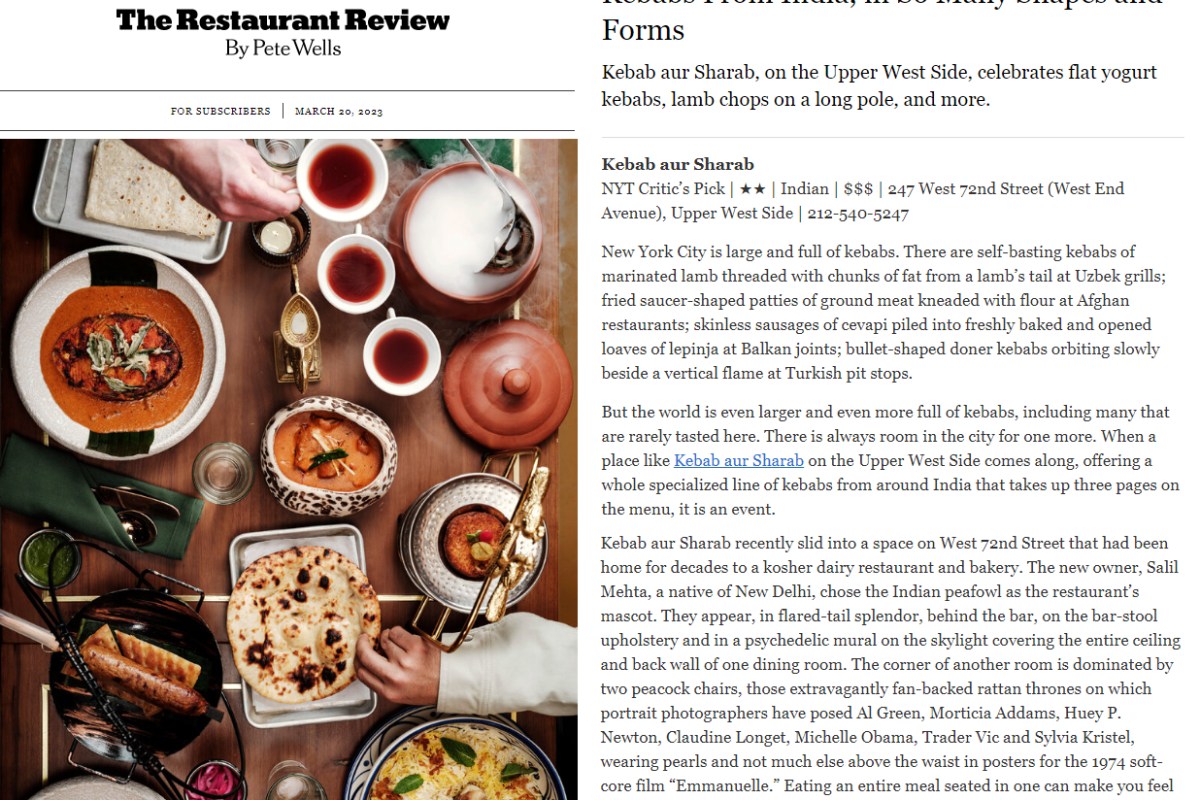
On a stretch of West 72nd Street once home to a kosher deli, Kebab aur Sharab turns a Punjabi kothi, the fortified courtyard house of Punjab, into a dining room of carved teak, vintage artefacts and a peacock mural set into the back skylight. The name translates simply as kebabs and liquor, a nod to the New Delhi custom of pairing smoky tandoor meats with whisky among family at the table. It is the project of Salil Mehta, the restaurateur behind Laut, the first Malaysian restaurant in New York to hold a MICHELIN Star, who returns here to the food of his own Punjabi childhood. The restaurant is Selected in the MICHELIN Guide. Heading the kitchen is culinary director Dipesh Shinde, a Mumbai native who has cooked in some of Delhi's most respected kitchens since the age of seventeen. Together they build a menu around street carts and institutions Mehta grew up eating at, rather than a generic hotel-buffet idea of India.
Kebab aur Sharab
Restaurant · Upper West Side / Lincoln Square, Manhattan
© OpenStreetMap contributors · OpenFreeMap
- Address
- 247 West 72nd Street, New York, NY 10023
- Cooking
- Indian, Regional cuisine
- Chef
- Dipesh Shinde, culinary director
- Run by
- Salil Mehta, Fungi Hospitality
- MICHELIN Guide
- Selected in the MICHELIN Guide
- Price
- Special occasion
- Open
- Daily from 5pm (closes 10.30/11.30pm)
- Covers
- Dining room 55, sidewalk 20, bar 18
- Setting
- Punjabi kothi-inspired interior, teak and peacock motifs
- Telephone
- +1 212-540-5247
- Website
- kebabaursharab.com
Salil Mehta's Indian restaurant pairs tandoor kebabs with whisky, in a room carved from teak and peacock motifs.
01The room and the setting
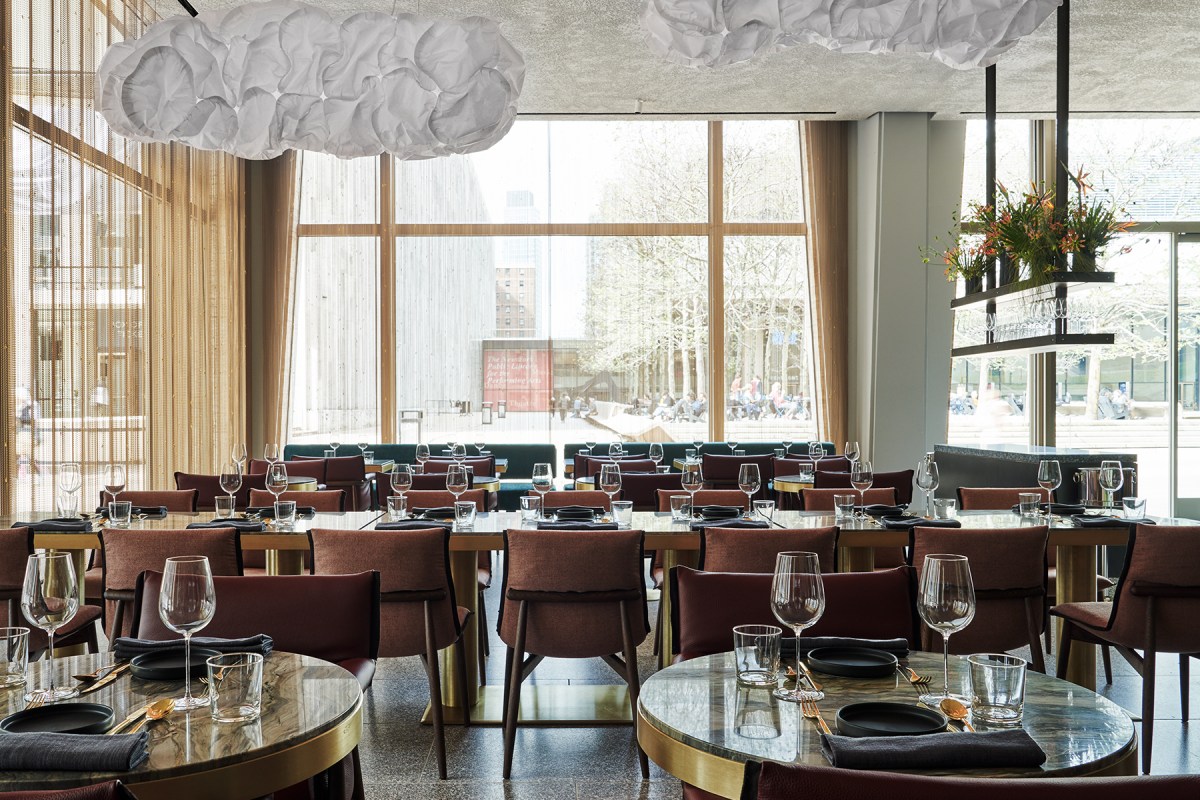
Kebab aur Sharab occupies a corner site on the Upper West Side, its main dining room seating fifty-five guests, with an enclosed sidewalk section for up to twenty and a bar for eighteen more, set across four distinct spaces including a solarium-like room with curved floor-to-ceiling windows.
The decor is built around the idea of the traditional Punjabi kothi or haveli, a vernacular house blending Punjabi and colonial elements with contemporary touches; hand-carved teak wood panelling and vintage wood artefacts brought from India sit against walls where the peacock, India's national bird, recurs throughout, including in a large mural set into the skylight at the back of the room.
02The chef and the kitchen
Salil Mehta is the chef and restaurateur behind Laut, the first Malaysian restaurant in New York City to receive a MICHELIN Star, which it held in 2011 and 2012, and he has gone on to open Laut Singapura, Wau, Singlish and Kanyakumari under his Fungi Hospitality group. Kebab aur Sharab marks his return to the food of his own upbringing in New Delhi, after a career spent largely on Southeast Asian cooking.
Insider tipBook ahead via Resy, especially for Friday and Saturday dinner; dishes are built for sharing.
Running the kitchen day to day is culinary director Dipesh Shinde, who grew up in Mumbai and has worked in Indian kitchens since he was seventeen, including Punjab Grill and Farzi Cafe, one of Delhi's pioneering modern Indian restaurants. His family comes from generations of cooks, and the menu leans on techniques from tandoor-roasting to slow stone-grilling that he brings to New York largely for the first time.
Don't miss
Don't miss
- 01
Aslam's Butter Chicken, named after the Old Delhi street vendor who inspired it
- 02
The Dori Kebab, unwound tableside from its cotton-thread skewer
- 03
Rumali "handkerchief" bread, made to order in the custom clay tandoor
- 04
The Garam Masala Steak Tomahawk, built on a seven-spice blend
- 05
The peacock mural set into the skylight at the back of the dining room
03The cooking
At the centre of the kitchen sits a custom-built clay tandoor, used to produce breads that are hard to find elsewhere in the city, among them rumali, a bread rolled paper-thin and folded like a handkerchief, which gives it its nickname. The "koyle se" section, meaning cooked over coal, includes Kashmiri chilli tandoori chicken, Lal Maans lamb chops marinated in smoked chillies and garlic in the Rajasthani style, and a Garam Masala steak tomahawk built on a ground spice blend of fennel, bay leaf, peppercorns, clove, cumin, coriander and red chilli.
The menu travels well beyond Punjab, into recipes Mehta describes as long lost from Uttar Pradesh and the seafood-rich state of Kerala, alongside curries such as the fiery Andhra Chilli Chicken from India's north-east and a Korma Al Jawahar Jaisa, baby goat in a rich korma sauce inspired by one of Mehta's favourite old Delhi restaurants, Jawahar.
04What to order
Aslam's Butter Chicken takes its name from a celebrated Old Delhi street vendor: tandoor-grilled chicken, marinated and finished crisp. The Dori Kebab, a galawati-style minced kebab bound to its skewer with cotton thread so it never falls into the coals, is a dish with its own history, said to have been created for the Nawab of Awadh.
From Mehta's own childhood come Sardaji ka Fish Tikka, an Old Delhi tandoor classic, and Grilled Tapori Prawns, a dish rooted in Mumbai street food.
05When to go and booking
The restaurant takes reservations through Resy and is best booked ahead, particularly on Friday and Saturday evenings when the main room and bar fill quickly. In October 2026 it was listed as open for dinner Monday to Thursday and Sunday from 5pm to 10.30pm, and Friday and Saturday from 5pm to 11.30pm.
This is food meant for sharing across a table of three or four, in the Punjabi family style Mehta describes growing up with, rather than a solo tasting-menu seat at the bar.
06The neighbourhood
West 72nd Street sits in the heart of the Upper West Side's Lincoln Square pocket, a few minutes' walk from Central Park and the brownstone blocks around Verdi Square, a part of Manhattan better known for bagel counters and old-school delis than for Old Delhi street food, which is part of what makes Kebab aur Sharab stand out on the block.