In this story · 4 sections
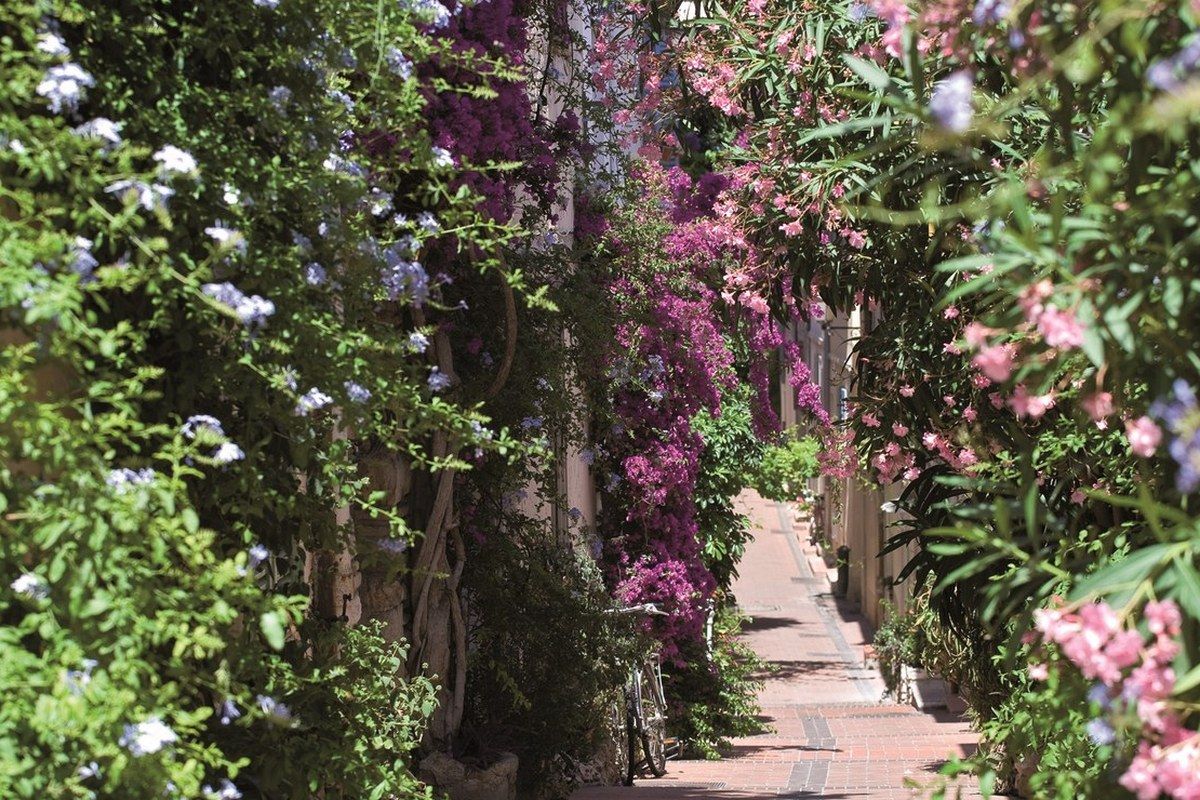
Old Antibes is small enough to cross in ten minutes, and yet in its southern corner, between the covered market and the sea walls, there is a quarter that likes to think of itself as a town of its own. Le Safranier runs from Rue de la Tourraque to Rue du Haut-Castelet, a cluster of narrow stone lanes, steps and tall old houses gathered around the Place du Safranier, just behind the ramparts and within earshot of the sea. In 1966 a group of residents declared it a commune libre – a free commune – not out of politics but to keep the old town's traditions alive and bring neighbours together. It has a mayor, who holds no real power but runs a calendar of festivals through the year, from pistou soup in September to chestnuts in November and a yule log at Christmas. The Greek novelist Nikos Kazantzakis lived here after the war. It takes less than an hour to walk, and it is the part of Old Antibes that still feels most like a village.
7 stops
© OpenStreetMap contributors · OpenFreeMap
- 01Marché Provençal, Cours MassénaStart · Old Antibes
- 02Rue de la PompeStreet · Old Antibes
- 03Rue de la TourraqueStreet · Le Safranier
- 048 Rue du Bas-CasteletStreet · Le Safranier
- 05Place du SafranierSquare · Le Safranier
- 06Rue du Haut-CasteletStreet · Le Safranier
- 07Bastion Saint-André and the Musée d'ArchéologieMuseum · Old Antibes, sea walls
- Distance
- About 600 m, market to sea walls
- Time
- 45 minutes to an hour, with stops
- Best time
- A festival day, or late afternoon
- Start
- Marché Provençal, Cours Masséna
- Finish
- Bastion Saint-André, on the sea walls
- Free commune since
- 1966
- Boundaries
- Rue de la Tourraque to Rue du Haut-Castelet
- Admission
- Free; festivals free
The story
France has a long, cheerful tradition of communes libres, neighbourhoods that elect a symbolic mayor and council for the pleasure of it, and Le Safranier is one of them. The tourist office's own listings describe it as founded in 1966 to preserve local traditions and keep the quarter's residents together; the German guidebook publisher Emons adds that the mayor is elected for life. The commune's festivals are free and open to everyone, and the tourist office lists them in its calendar each year – the clearest sign that the joke has become an institution.
The walk
Start at the covered Marché Provençal on Cours Masséna, ideally in the morning while the stalls are still up. From the market, Côte d'Azur France suggests taking Rue de la Pompe towards the sea. Within a few minutes you reach Rue de la Tourraque, which marks one edge of the commune.
Marché Provençal, Cours Masséna
Start under the market roof
The covered market of Old Antibes, open every morning except Mondays from September to May.
Cours Masséna, 06600 Antibes
Insider tipPick up something for a picnic by the sea walls.
Rue de la Pompe
The lane from the market towards the sea
A pedestrian lane leading from the market area down towards the sea and the Safranier.
Rue de la Pompe, 06600 Antibes
Insider tipFollow it south, towards the sea.
Rue de la Tourraque
One edge of the free commune
The street that marks the eastern edge of the Safranier, according to Côte d'Azur France and Emons.
Rue de la Tourraque, 06600 Antibes
Insider tipFrom here on, you are in the commune.
Turn into Rue du Bas-Castelet. At number 8, according to Emons, lived Nikos Kazantzakis, the Greek author of Zorba the Greek, who settled in Antibes after the Second World War – Greek Reporter dates his arrival with his wife Eleni to 1948 – and spent his last years here. There is nothing to visit; this is a private house on a quiet lane, which is rather the point of the Safranier.
8 Rue du Bas-Castelet
Where Nikos Kazantzakis lived
The Greek novelist Nikos Kazantzakis lived at number 8 after the Second World War and spent his last years here.
8 Rue du Bas-Castelet, 06600 Antibes
Insider tipA private house – look, but do not knock.
A few steps on, the lanes open onto the Place du Safranier, the heart of the commune, close to the sea and sheltered behind the walls. This is where the festivals happen: tables in the square for the pistou soup in September, the press for the grape harvest, the chestnuts in November. Beyond it, Rue du Haut-Castelet marks the commune's other edge.
Place du Safranier
The village square of the free commune
The heart of the Commune libre du Safranier, where its festivals take place through the year.
Place du Safranier, 06600 Antibes
Insider tipFree festivals here through the year – see the table below.
Rue du Haut-Castelet
The commune's other edge
The street that closes the Safranier on its western side.
Rue du Haut-Castelet, 06600 Antibes
Insider tipHead towards the sea from here.
Finish on the sea walls. Côte d'Azur France recommends following the seafront past the commune for the views, and the walk ends at the Bastion Saint-André, a stronghold built by Vauban in the late seventeenth century, which has housed the town's Archaeology Museum since 1963.
Bastion Saint-André and the Musée d'Archéologie
Vauban's bastion at the end of the walk
A late seventeenth-century bastion by Vauban on the sea walls, home of the Archaeology Museum since 1963.
Promenade Pierre Merli, 06600 Antibes
Insider tipThe walls here look straight out to sea.
When to go
Any time is good for the lanes, but the Safranier is at its best on a festival day. The commune's calendar, as listed by the tourist office, runs through the warm months and into winter; on 14 July the square holds its own Bal National des boules carrées, and at Christmas the commune makes a yule log that The Good Life France puts at around 14 metres long. The next date in the calendar is the chestnut festival on Saturday 7 November.
The Safranier year
| Festival | When | What happens |
|---|---|---|
| Journée loisirs en famille | Sat 4 July 2026, from 10am | A family day on the square |
| Bal National des boules carrées | 14 July | Bastille Day on the Place du Safranier |
| Soupe au pistou | Sat 5 Sept 2026, 8pm | The annual pistou soup tasting |
| Fête des Vendanges | Sat 12 Sept 2026, 5–8pm | Grape pressing and the year's juice from the vine |
| Fête de la Châtaigne | Sat 7 Nov 2026, 5pm | The chestnut festival |
| Fête de la Bûche | December (13 Dec in 2025) | The commune's giant yule log |
Around it
The rest of Old Antibes is on the doorstep. The Château Grimaldi, where Picasso worked from mid-September to mid-November 1946 and left 23 paintings, is now the Musée Picasso; the Musée Peynet is devoted to the lovers drawn by Raymond Peynet. The seventeenth-century ramparts, built by the engineer Raymond de Bonnefons with four bastions and two great arched gates, look over Port Vauban and the Plage de la Gravette, and at the end of the port stands Nomade, Jaume Plensa's eight-metre figure of steel letters, which you can step inside.