In this story · 7 sections
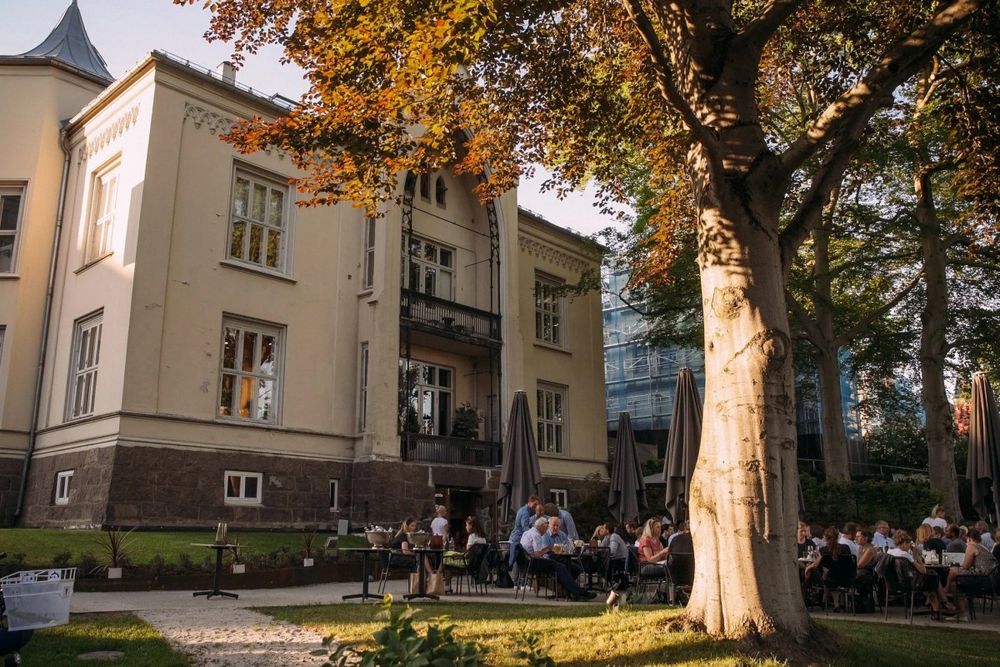
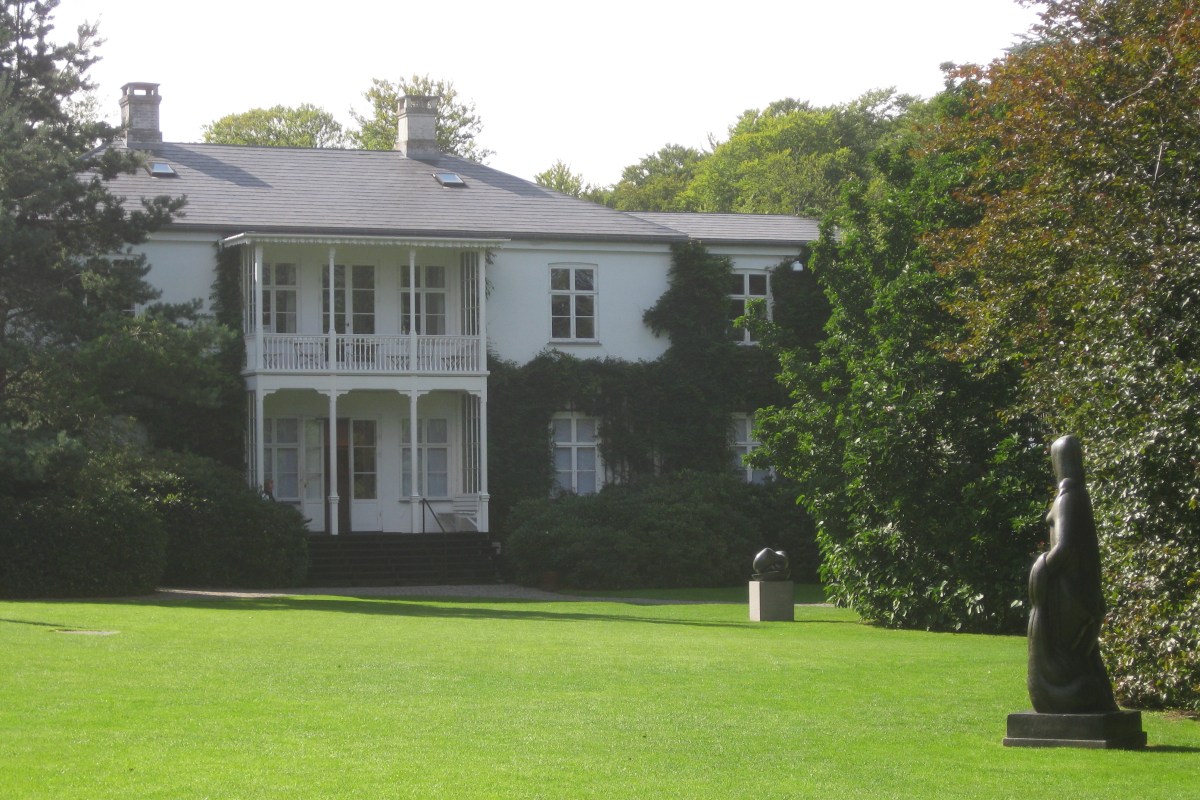
Louisiana Museum of Modern Art occupies a low chalk bluff above the Øresund in Humlebæk, barely half an hour north of Copenhagen by train. Founded in 1958 by the collector Knud W. Jensen, it took its name from the nineteenth-century villa already standing on the site, built by Alexander Brun, who had married three women all called Louise and named his estate after them. Jensen wanted ordinary Danes to encounter modern art somewhere unlike the forbidding National Gallery of his day, so he asked two young local architects, Jørgen Bo and Vilhelm Wohlert, to design a museum led by the lawns, beech trees and sea views rather than against them. What opened as three glass-corridored pavilions wrapped around the old villa has since grown, in seven distinct stages, into one of Europe's most visited art museums: a looping route of white walls and red-tiled floors passing Giacometti bronzes, a Calder-lined terrace and a sculpture park that runs straight down to the water.
Louisiana Museum of Modern Art
Sight · Humlebæk, North Zealand
© OpenStreetMap contributors · OpenFreeMap
- Address
- Gammel Strandvej 13, 3050 Humlebæk, Denmark
- Open
- Tue–Fri 11–22, Sat–Sun 11–18, Mon closed (Oct 2026)
- Tickets
- Adult DKK 145, students DKK 130, under 18 free (Oct 2026)
- Built
- 1958 (North Wing); expanded in seven stages to 2018
- Architect
- Jørgen Bo & Vilhelm Wohlert
- Telephone
- +45 49190719
- Website
- louisiana.dk
- Style
- Danish modernism, Bay Area and Japanese influence
- Collection
- Around 4,000 works, 1945 to present
- Highlights
- Giacometti Gallery, Jorn Gallery, Kusama installation
- Visitors
- Over 700,000 a year
- Nearest station
- Humlebæk Station
Louisiana links glass-corridored galleries to a sculpture park above the Øresund, 35 km north of Copenhagen.
01The story
Jensen bought the abandoned villa and its grounds in 1955. He had first wanted to build on land near Rungstedlund, but the owners there balked at the idea of modern art altogether; he then approached Jørn Utzon, who turned the commission down because he had just won the competition for the Sydney Opera House. Jensen settled instead on Bo and Wohlert, two architects then largely unknown outside Denmark.
The founder's own account, written for the museum's fortieth anniversary, described the brief precisely: the site itself, he felt, became almost an employer, dictating where buildings and sculptures could stand. His architects agreed. When Jensen took over the property in 1955, he imagined the Old Villa simply flanked by a separate pavilion at the cliff edge, but working with Bo and Wohlert he arrived at something more fluid — a plan in which the buildings would be connected so that visitors would feel as though they were on a "covered stroll" through the park. Construction began in 1956 and the museum opened two years later, in August 1958.
The gamble paid off beyond anyone's expectations. Within its first year Louisiana had already drawn some 215,000 visitors, a figure that stunned a board that had worried Jensen's ambitions for an international, rather than purely Danish, collection were too risky.
02What you see
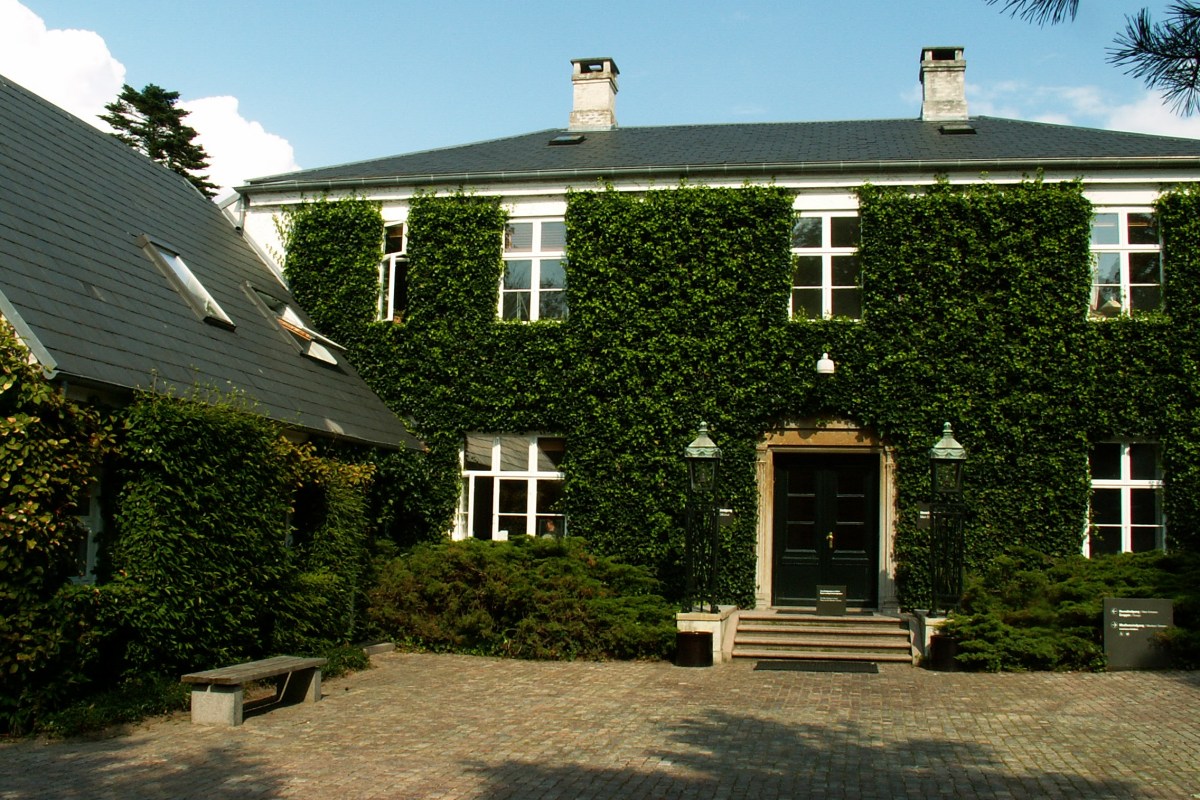
Louisiana has expanded considerably since it opened in 1958, and all seven extensions and alterations have been carried out by Bo and Wohlert, later joined by Claus Wohlert from the East Wing onward. The 1958 North Wing, with its Giacometti and Jorn halls, set the architectural language: long whitewashed walls, laminated wooden ceilings and the large glass panels that dissolve the boundary between gallery and garden. Bo and Wohlert drew on both the timber Bay Area houses Wohlert had studied in California and the restraint of traditional Japanese building.
Insider tipNo booking needed; closed Mondays; ticket required even for café and Sculpture Park.
The West Wing followed in 1966 and 1971, adding two further floors, and in 1976 came the Concert Hall, whose chairs were designed specifically for the room by Poul Kjærholm. The South Wing of 1982 gave the museum its first genuinely tall exhibition space, built into the terrain to keep Louisiana's roofline low; the underground East Wing of 1991, often called the Graphics Wing because daylight-sensitive works can be shown there, finally closed the building into a rough circle around the park. The Children's Wing and an improved shop followed through the 1990s, with a technical modernisation completed in 2006 and a further aesthetic refinement, reopening the pavilion between the South and East wings onto the park, in 2018 to mark the museum's sixtieth anniversary.
Don't miss
Don't miss
- 01
The Giacometti Gallery and its cast of The Walking Man
- 02
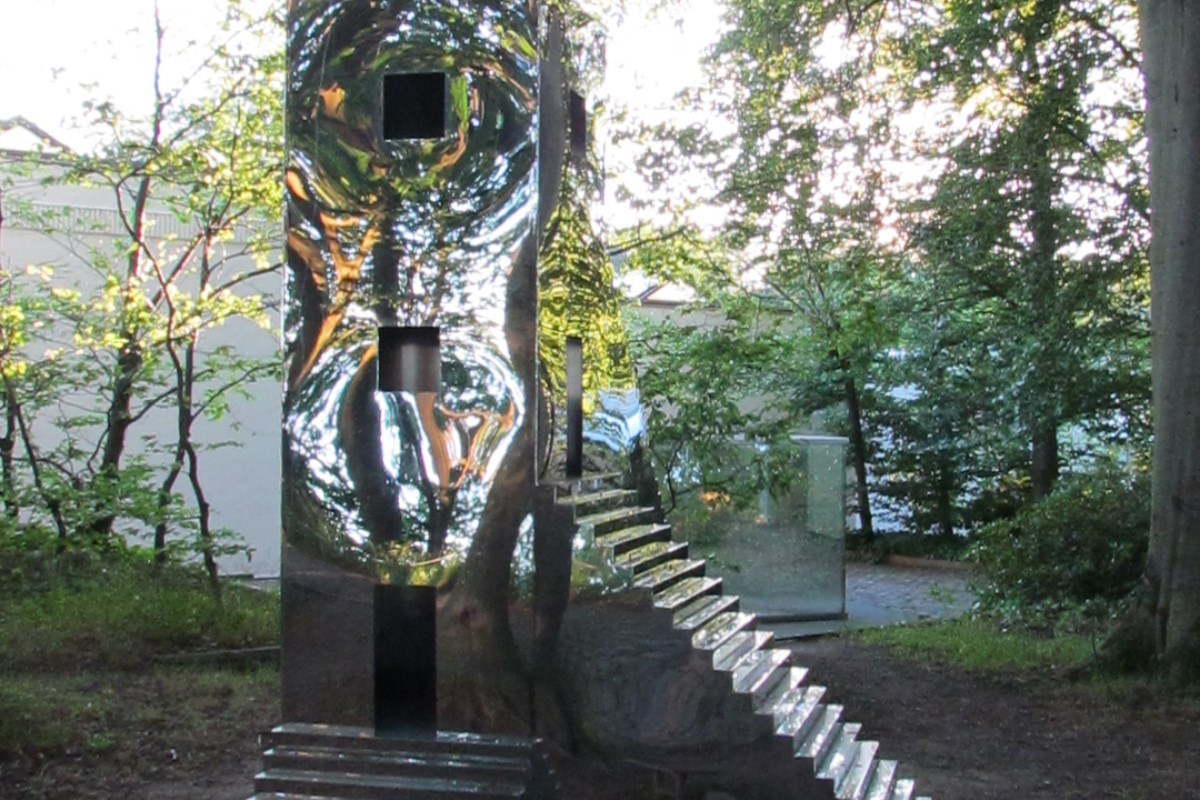
Yayoi Kusama's mirrored installation Gleaming Lights of the Souls
- 03
The Asger Jorn Gallery
- 04
The Sculpture Park's 45 works by Moore, Calder, Arp and Serra
- 05
The Calder Terrace view from Louisiana Café
03The highlights
The Giacometti Gallery is the single room most visitors remember: a skylit, elongated space built expressly for the artist's attenuated bronzes, and among the largest concentrations of his sculpture outside the Giacometti Foundation in Paris. One cast of The Walking Man, made in 1961, has become something close to a symbol of the museum itself. The Asger Jorn Gallery, devoted to the Danish painter who was a central figure of postwar European art, and Yayoi Kusama's mirrored installation Gleaming Lights of the Souls are the other fixtures almost always on view, even as the rest of the 4,000-work collection rotates through selective, changing presentations.
Step outside and the Sculpture Park holds 45 works from the collection, set along the plateau and slope down to the Sound. Henry Moore, Richard Serra, Alexander Calder, Jean Arp and Alicja Kwade are among the names placed so that each piece plays against the view rather than simply occupying it — Calder's mobiles in particular give their name to the terrace outside the café.
04Visiting
In October 2026 Louisiana is open Tuesday to Friday from 11.00 to 22.00 and Saturday and Sunday from 11.00 to 18.00; it is closed on Mondays. Adult entry costs DKK 145, students with a valid card pay DKK 130, and visitors under 18 go in free; groups of 15 or more paying together get a reduced rate at the museum itself. Tickets bought online remain valid for a year and there is no need to book a time slot in advance — visitors simply turn up. A single ticket or membership card is required even to reach the café, shop or Sculpture Park.
Current exhibitions include a major Tracey Emin show running until April 2027, a survey of the Spanish-Mexican surrealist Remedios Varo until January 2027, and a new presentation drawn from the permanent collection, spanning works by more than sixty artists across nearly a century.
05Getting there
Louisiana sits on Gammel Strandvej, roughly 35 kilometres north of Copenhagen on the Øresund coast. The regional Kystbanen train runs directly from Copenhagen's main station to Humlebæk in well under an hour, and the museum is a signposted 10–15 minute walk from the platform — no bus or taxi is needed.
06Around it
Humlebæk's own small harbour, with its lighthouses and marina, is about a ten-minute walk from the museum and makes an easy coda to a visit. Further up the same Kystbanen line, roughly twenty minutes north, lies Kronborg Castle in Helsingør — Shakespeare's Elsinore and a UNESCO World Heritage Site — making Louisiana and Kronborg a classic one-day pairing for visitors staying in Copenhagen.
07Making the most of a visit
An audio guide covers both the architecture and the Park's best-known sculptures, including works by Moore, Calder and the Danish artist Heerup, and is worth picking up before setting off on the building's circular route. The Louisiana Café, overlooking the Sound and the Calder Terrace, serves lunch and dinner from seasonal, increasingly plant-forward menus — the kitchen stopped serving beef and lamb as part of the museum's sustainability drive — and is as much a reason to linger as any single gallery.