In this story · 6 sections
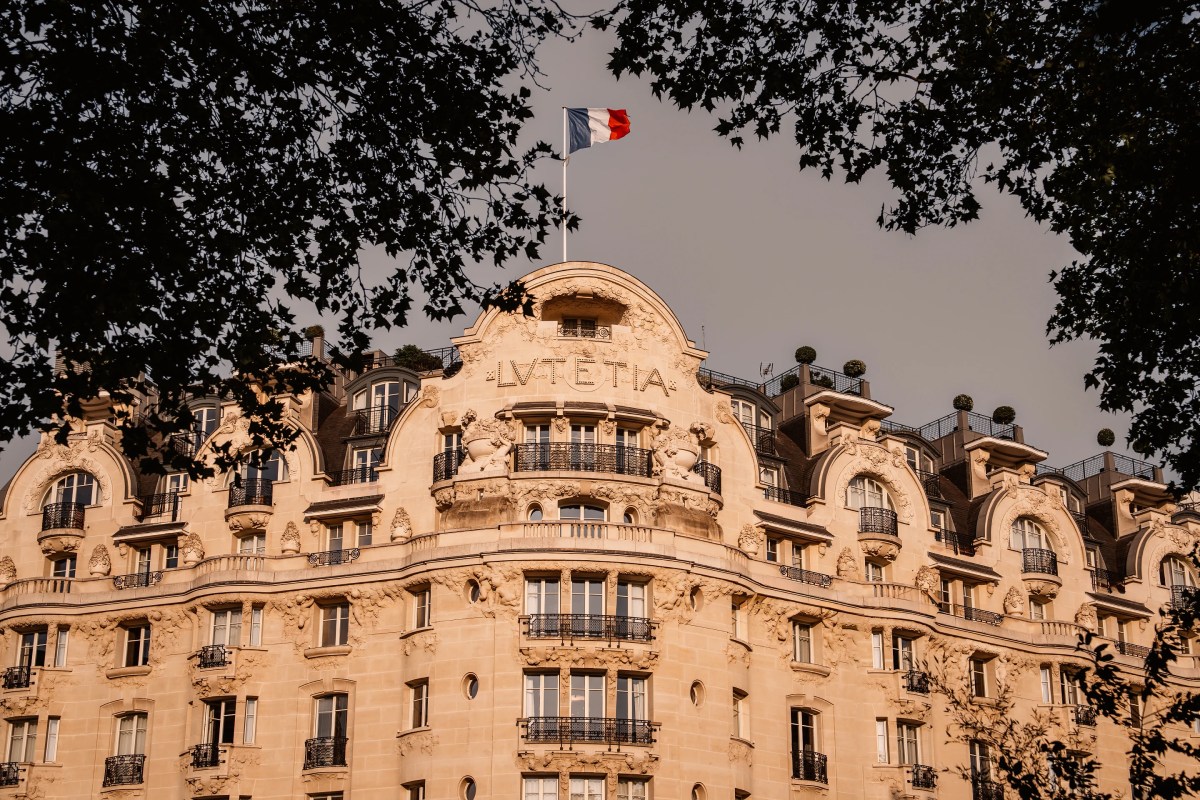
At the corner of Boulevard Raspail and rue de Sèvres, on the fault line between Saint-Germain-des-Prés and Montparnasse, stands the only Palace-classified hotel on Paris's Left Bank. It was commissioned in 1910 by Marguerite and Aristide Boucicaut, founders of Le Bon Marché, as somewhere for their department store's wealthiest clients and suppliers to stay a few hundred metres from the shop floor, and designed by architects Louis-Charles Boileau and Henri Tauzin in a fusion of Art Nouveau and Art Deco that still reads, from across the boulevard, as an ocean liner run aground. Picasso, Matisse, Charles de Gaulle and James Joyce, who finished Ulysses within its walls, all passed through its doors, and after the Liberation it became a repatriation centre for returning deportees and prisoners of war. Closed in 2014 for a four-year restoration by Jean-Michel Wilmotte, it reopened in 2018 and, since April 2025, has flown the Mandarin Oriental flag. The MICHELIN Guide gives it Two Keys.
Mandarin Oriental Lutetia, Paris
Hotel · Saint-Germain-des-Prés, 6th arrondissement
© OpenStreetMap contributors · OpenFreeMap
- Address
- 45 Boulevard Raspail, 75006 Paris
- Opened
- 1910; restored and reopened 2018
- Architect
- Louis-Charles Boileau & Henri Tauzin; Jean-Michel Wilmotte (2018)
- Interiors
- Poltrona Frau, Statuario marble, Murano glass
- Rooms
- 184
- Suites
- 47, incl. 7 signature suites
- Restaurants
- Brasserie Lutetia; Le Saint-Germain
- Bar
- Bar Joséphine; Bar Aristide
- Spa
- Spa (ex-Akasha), ~700 sqm, heated pool
- Setting
- Saint-Germain-des-Prés, 6th arrondissement
- Nearest station
- Sèvres-Babylone
- Group
- Mandarin Oriental (owner: Alrov Group)
- Telephone
- +33 1 49 54 46 00
- MICHELIN Guide
- Two MICHELIN Keys
An Art Nouveau and Art Deco landmark opposite Le Bon Marché, restored by Jean-Michel Wilmotte and run by Mandarin Oriental since 2025.
01The house
The Lutetia takes its name from the Roman settlement that became Paris, and the Boucicaut family gave it the emblem of a ship, a motif still worked into the facade's mosaics and ironwork. Designed by architects Louis-Charles Boileau and Henri Tauzin, the building opened its doors in December 1910 at the hinge point between Art Nouveau and Art Deco, its stone facade carved with vines, grapes and cherubs drawn from the harvest.
The hotel's grandest chapter was also its darkest: during the Second World War it was requisitioned by the occupying forces, and after the Liberation it served as a repatriation centre for people and families returning from the camps, a history later folded into Pierre Assouline's novel about the hotel. The 1980s brought a redesign by Left Bank figure Sonia Rykiel, and later contributions from David Lynch and Serge Gainsbourg kept it tied to the neighbourhood's creative life.
A 2005 plan by new owners to convert the building into a chain hotel provoked a campaign by the self-styled French Friends of the Lutetia, who succeeded in protecting it. It reopened in May 2018 and was classified a Palace hotel the following year. Mandarin Oriental took over the management in April 2025, with the building still owned by the Akirov family's Alrov Group.
02Rooms and suites
The restoration left 184 rooms, including 47 suites, across seven floors, dressed in Poltrona Frau furniture, chevron parquet and brushed oak floors, with Murano glass wall lights and bathrooms carved from Statuario marble, their floors and walls heated, several lit by their own windows onto the street. Standard rooms run to around 33 square metres, generous by central Paris standards, and toiletries throughout are by Hermès.
Insider tipSèvres-Babylone metro is steps away; Café de Flore and Luxembourg Gardens are a short walk.
A handful of signature suites carry the names of the people who shaped them: the Saint Germain Penthouse was designed with Francis Ford Coppola, a suite with Isabelle Huppert, and the Josephine Baker Suite has its own terrace looking towards the Eiffel Tower. General de Gaulle is said to have spent his honeymoon in what is now the Suite Amour, one more entry in a guest book that has also included Antoine de Saint-Exupéry and Catherine Deneuve.
03Where to eat
Brasserie Lutetia, under executive chef Patrick Charvet, occupies the building's Art Deco dining room and its year-round terrace, pairing brasserie classics with contemporary surprises and a seafood counter where shellfish platters are built to order; it opens daily from 7am to 10.30pm and runs a buffet Sunday brunch built around seasonal produce and a signature roast poultry.
Le Saint-Germain sits beneath a stained-glass roof painted by the artist Fabrice Hyber, one of the building's set pieces since the 2018 restoration, serving all-day dining with an Italian-leaning menu from chef Alessio Maselli. On Saturdays and Sundays, from 3pm to 6pm, the same glass-roofed salon hosts Afternoon Tea, its pastries made by chef Nicolas Guercio.
04The bar
Bar Joséphine takes its name from Josephine Baker, once a regular at the hotel, and sits beneath frescoes that were rediscovered under decades of paint during the Wilmotte restoration and restored rather than reproduced. Head bartender Angelo Forte runs the cocktail list here, with jazz filling the room on given evenings.
Below it, Bar Aristide is run as a speakeasy, a low-lit room built for an evening of cocktails to a jazz-electronic soundtrack rather than a passing drink.
05Spa and pool
The hotel's spa was built from scratch below street level during the 2018 restoration, a space of around 700 square metres with a heated pool lit by natural light, a jacuzzi, sauna, hammam, six treatment rooms, a hairdresser and a fitness room equipped with Life Fitness machines and a yoga studio. Long known as Akasha, the spa runs a wellness programme structured around the four elements of air, earth, water and fire, with one-to-one consultations from a nutritionist built into its detox packages.
06The neighbourhood
The hotel stands directly opposite Le Bon Marché and its Square Boucicaut, the department store that brought it into being, and the Sèvres-Babylone metro station sits a few metres from its entrance. Saint-Germain-des-Prés, with its galleries and literary cafés, Café de Flore and Les Deux Magots among them, is a five-to-ten-minute walk away, as are the Luxembourg Gardens.
Don't miss
Don't miss
- 01
Afternoon Tea in the glass-roofed Salon Saint-Germain, Saturday and Sunday, 3pm–6pm
- 02
The seafood counter at Brasserie Lutetia, where platters are built to order
- 03
The restored frescoes above Bar Joséphine, named for Josephine Baker
- 04
The 700-square-metre spa's heated pool, lit by natural daylight
- 05
The ship-shaped Art Nouveau facade on the corner of Raspail and rue de Sèvres