In this story · 6 sections
On the fourth floor of the Time Warner Center, looking down over the roundabout of Columbus Circle, Masa is New York's most deliberate expression of omakase: a single, solid hinoki-wood counter, a 26-seat room, and no printed menu at all. It is the flagship of chef Masayoshi "Masa" Takayama, who apprenticed for eight years at Tokyo's Ginza district under a sushi master before building his name in Los Angeles, and who opened this room in 2004 on the advice of a friend, Thomas Keller, who was about to open Per Se in the same complex. Five years later it became the first Japanese restaurant in the United States to be awarded three MICHELIN Stars, a rating it held from 2009; it currently holds Two MICHELIN Stars. For regulars and first-timers alike, dinner here is less a meal than a ritual of restraint — caviar, truffle and some of the sharpest fish in the city, set down one deliberate course at a time.
Masa
Restaurant · Columbus Circle, Manhattan
© OpenStreetMap contributors · OpenFreeMap
- Address
- 10 Columbus Circle, Ste. 401, New York, NY 10019
- Cooking
- Japanese, sushi (omakase only)
- Chef
- Masayoshi "Masa" Takayama
- Run by
- Masa Takayama, owner-chef
- MICHELIN Guide
- Two MICHELIN Stars
- Tasting menu
- Hinoki Counter / Classic Table omakase
- Price
- From $495 (lunch) to $950 per person
- Open
- Lunch & dinner, Tuesday–Saturday
- Covers
- 26 seats: counter and dining room
- Setting
- 4th floor, Time Warner Center, Columbus Circle
- Telephone
- +1 212-823-9807
- Website
- masanyc.com
Masa occupies the fourth floor of the Time Warner Center, steps from Central Park.
01The room and the setting
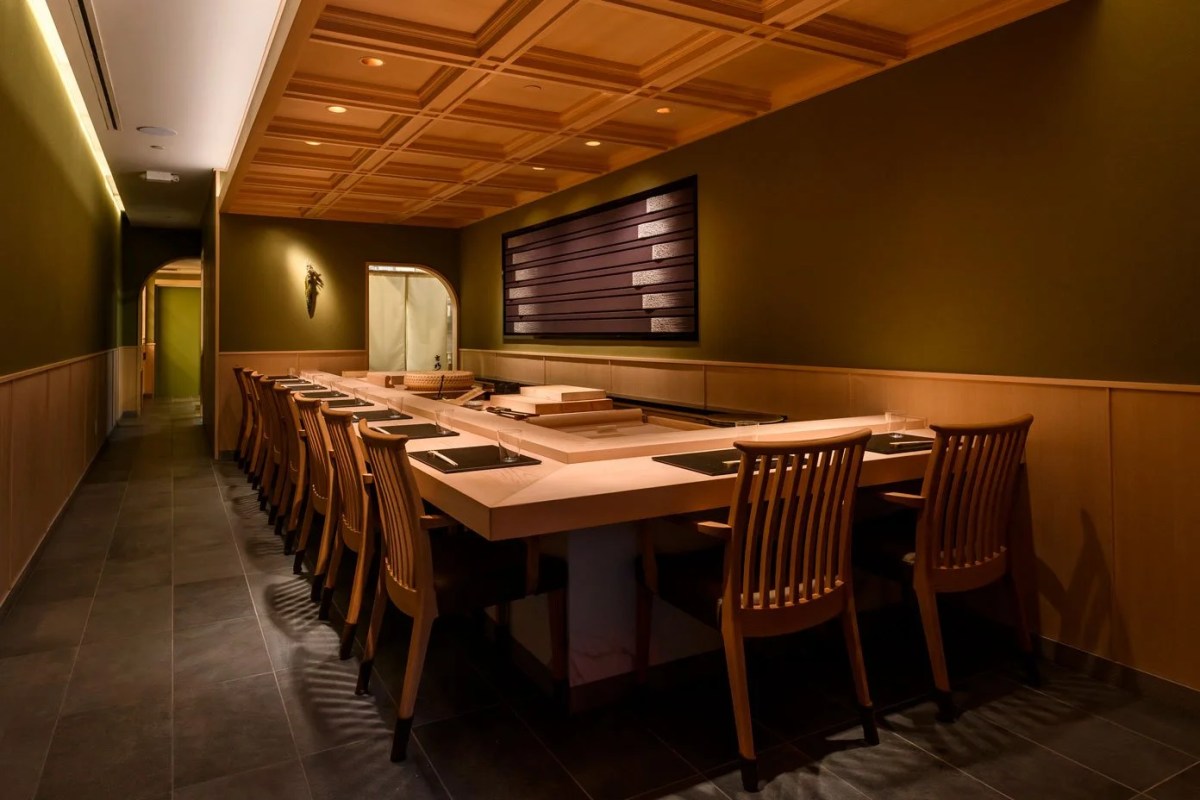
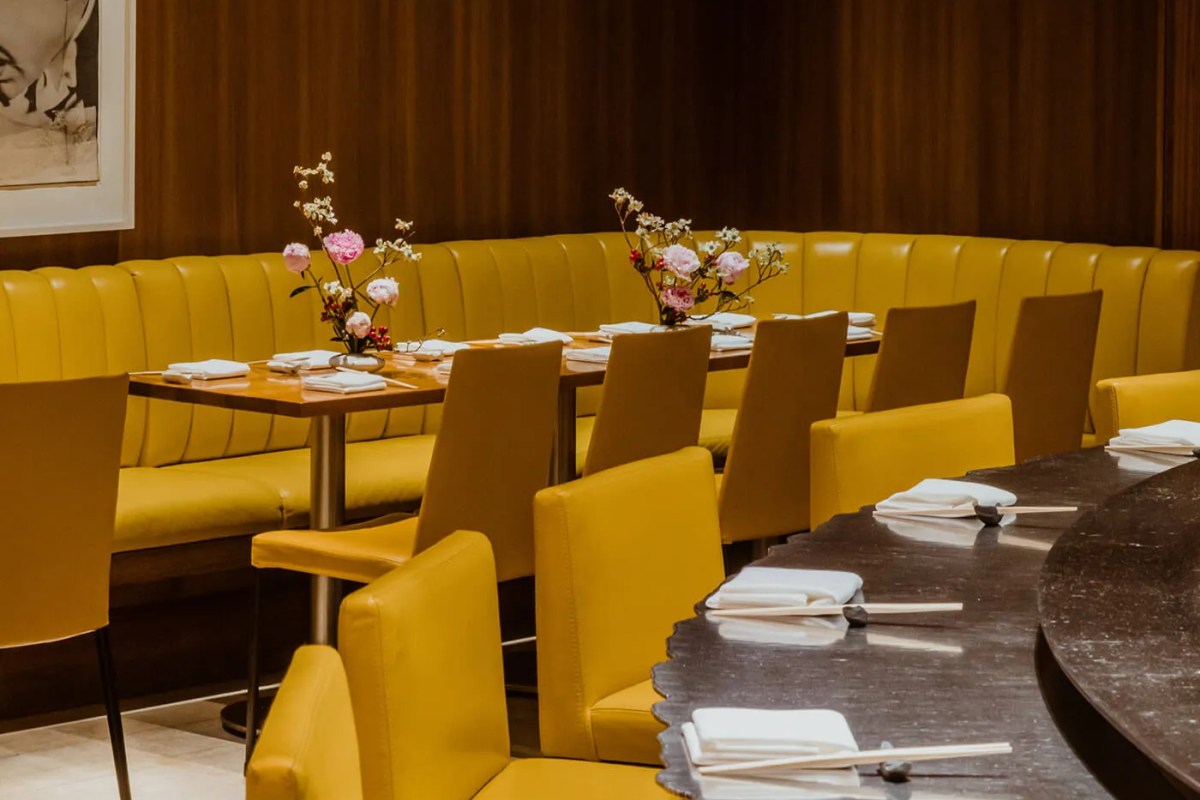
Guests reach Masa by passing through a fabric noren and an intricate wooden door before the room opens into two distinct areas — a small dining room of blonde-wood tables and chairs, and a sushi counter seating ten to twelve guests on oversized leather chairs. The counter itself is the room's only real decoration: a strikingly smooth, solid piece of Hinoki cypress, sanded daily to a soft, almost luminous finish. Beyond it, the design follows two old Japanese principles, shibui and umami — simplicity and honest materials stripped of anything unnecessary, with little more than an oversized clay pot of seasonal branches breaking the stillness.
Outside, Columbus Circle keeps turning — taxis, tour buses, the edge of Central Park — but inside the room the noise falls away into what one critic called a calm, collected ceremony built around that same hinoki counter. Masa sits on the same floor as Per Se and Porter House, part of the small constellation of serious dining rooms that opened with the Time Warner Center itself.
02The chef
Masayoshi Takayama was born in Kuroiso, north of Tokyo, and trained for eight years at the famous Sushiko restaurant in Tokyo's Ginza district, working his way up from the most menial jobs — dishwasher, bathroom cleaner — before he was allowed near the fish. He moved to Los Angeles in 1980, opening his first restaurant, Saba-ya, before founding his own Ginza Sushiko in 1987 in a modest mini-mall on Wilshire Boulevard. In 1992 he relocated that restaurant to Rodeo Drive in Beverly Hills, where its twelve seats made it one of the most difficult reservations in the city.
Insider tipOpen Tuesday to Saturday for lunch and dinner; omakase only, reservation required.
In 2004 Takayama left Los Angeles for New York on the advice of his friend Thomas Keller, who was about to open Per Se inside the newly built Time Warner Center and persuaded him to take space in the same building. Within five years Masa had become the first Japanese restaurant in the United States to be awarded three MICHELIN Stars, a distinction it carried from the 2009 guide.
03The cooking
Masa is omakase only, offered in two forms: the Hinoki Counter Experience, where a sushi chef works directly in front of each guest, and the Classic Omakase at a Table, guided by a dedicated member of the service team. The dinner progression runs through five or six small seasonal appetizers before moving into fifteen to seventeen pieces of nigiri, finishing on a note of light, seasonal fruit rather than a conventional dessert — a structure built entirely around what is freshest that day, much of it flown in directly from Japan.
Every dish arrives on tableware designed by Takayama himself through his own ceramics line, Masa Designs, chosen specifically to suit the look and weight of each course. The kitchen's guiding idea, which the chef calls shibui, is complexity refined down to something that looks effortless — each ingredient sliced, shaved or arranged to preserve its character rather than disguise it.
04What to order
There is no ordering in the usual sense, but the lunch omakase opens with the chef's signature Toro Tartare with Caviar before moving into a seasonal nigiri selection and closing with fruit — a shorter, sushi-and-sashimi-led version of the full dinner. Takayama's toro tartare with caviar has become something of a calling card, built from the richest cuts of tuna belly against the salt of Osetra. For guests who want the fullest version of the experience, the Chef's Reserve Omakase at the counter is offered as an extended reading of Takayama's philosophy, built around the pursuit of purity rather than variety for its own sake.
Don't miss
Don't miss
- 01
The hinoki counter itself — one solid piece of cypress, sanded daily to a soft, pale finish
- 02
Chef Masa's signature Toro Tartare with Caviar, the opening note of the lunch omakase
- 03
Fifteen to seventeen pieces of nigiri served through the dinner omakase
- 04
A light, seasonal fruit course in place of a conventional dessert
- 05
Tableware designed by Takayama himself through his own Masa Designs ceramics line
05Wine and drinks
The beverage list runs to rare and premium sakes alongside a wine list that changes with the seasons and a short run of signature cocktails, with pairings available on request. Guests who prefer their own bottles may bring up to two, at a corkage fee of 300 dollars each, as long as the bottle is not already on Masa's own list.
06When to go and booking
Masa serves lunch and dinner Tuesday to Saturday, lunch from midday to 2.30pm and dinner from 5.30 to 10pm, with each sitting running roughly two hours. In October 2026 the lunch omakase starts at 495 dollars per person, the Hinoki Counter dinner omakase is 950 dollars, and the Classic Table omakase is 750 dollars — all before drinks, tax and gratuity, which is never required but shared equally among the entire floor team when given. Attire is asked to be casually elegant, and guests are asked to avoid strong fragrance or cologne, since the small room is built to carry the quieter aromas of the food itself.