In this story · 7 sections
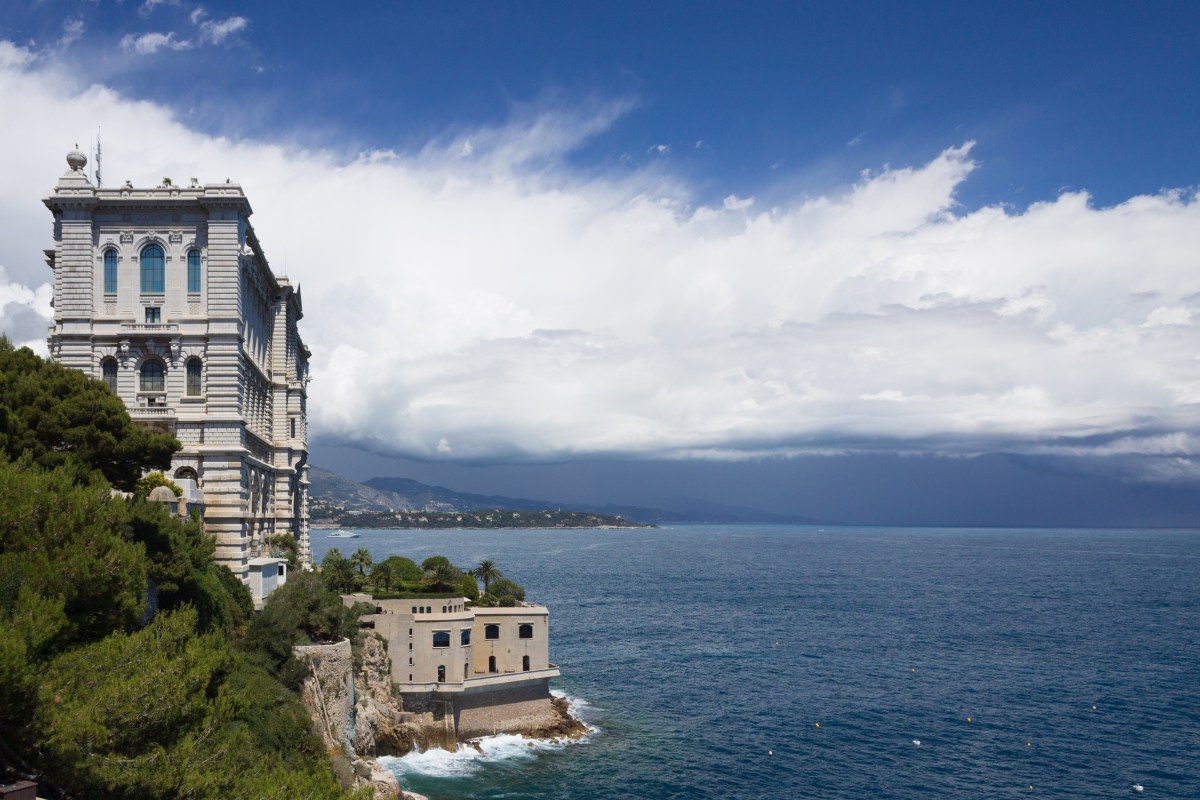
On the sheer cliff face of the Rocher, Monaco's walled old town, a museum rises eighty-five metres above the Mediterranean, its terrace perched at the same height where the prince who built it once stood looking out to sea. The principal facade runs a full hundred metres in pale stone from La Turbie, trimmed with fluted columns capped in blocks from Rezzato. This is the Musée océanographique de Monaco, opened on 29 March 1910 under Prince Albert I, the sovereign nicknamed the 'prince navigateur savant', who led twenty-eight oceanographic expeditions across the Mediterranean and the Atlantic between 1885 and 1915. Jacques-Yves Cousteau later directed the institution from 1957 to 1988, cementing its place in the history of marine science. Today it receives around 675,000 visitors a year, run by the Institut océanographique, a public-interest foundation that has worked for ocean protection since 1906.
Musée océanographique de Monaco
Sight · Monaco-Ville (Le Rocher)
© OpenStreetMap contributors · OpenFreeMap
- Address
- Avenue Saint-Martin, 98000 Monaco
- Open
- 29 March 1910
- Tickets
- Adult €20.50 (October 2026)
- Built
- 1899–1910 (11 years)
- Architect
- Paul Delefortrie (1843–1910)
- Telephone
- +377 93 15 36 00
- Website
- oceano.org
- Founder
- Prince Albert I of Monaco
- Historic director
- Jacques Cousteau (1957–1988)
- Collection
- ~100 tanks, 350 fish species, 6,000+ specimens
- Highlights
- Oceanomania, shark lagoon, sea-turtle odyssey
- Visitors
- ~675,000 per year
Opened in 1910 on the Rocher, the museum pairs a vast aquarium with Prince Albert I's scientific legacy and three decades under Jacques Cousteau.
01The story
Albert I had been dreaming of a marine research institute since his first scientific cruises in the 1880s. In 1906 he formally created the Fondation Albert Ier, pairing a teaching institute in Paris with a public museum on the Rock of Monaco. The design was entrusted to Paul Delefortrie (1843–1910), already the Principality's inspector of architectural works since 1897. The first stone was laid in April 1899, and raising a building of this scale on an almost vertical limestone cliff kept the site occupied for eleven years. When the museum opened on 29 March 1910, Albert I invited not only dignitaries but the world's leading oceanographers of the day, a gathering that helped shape what later became the Mediterranean Science Commission. Dr Jules Richard, the prince's own scientific collaborator, served as the first director from 1900 to 1945; the best-known director came later, when Jacques Cousteau took over in 1957 and stayed until 1988.
02What you see
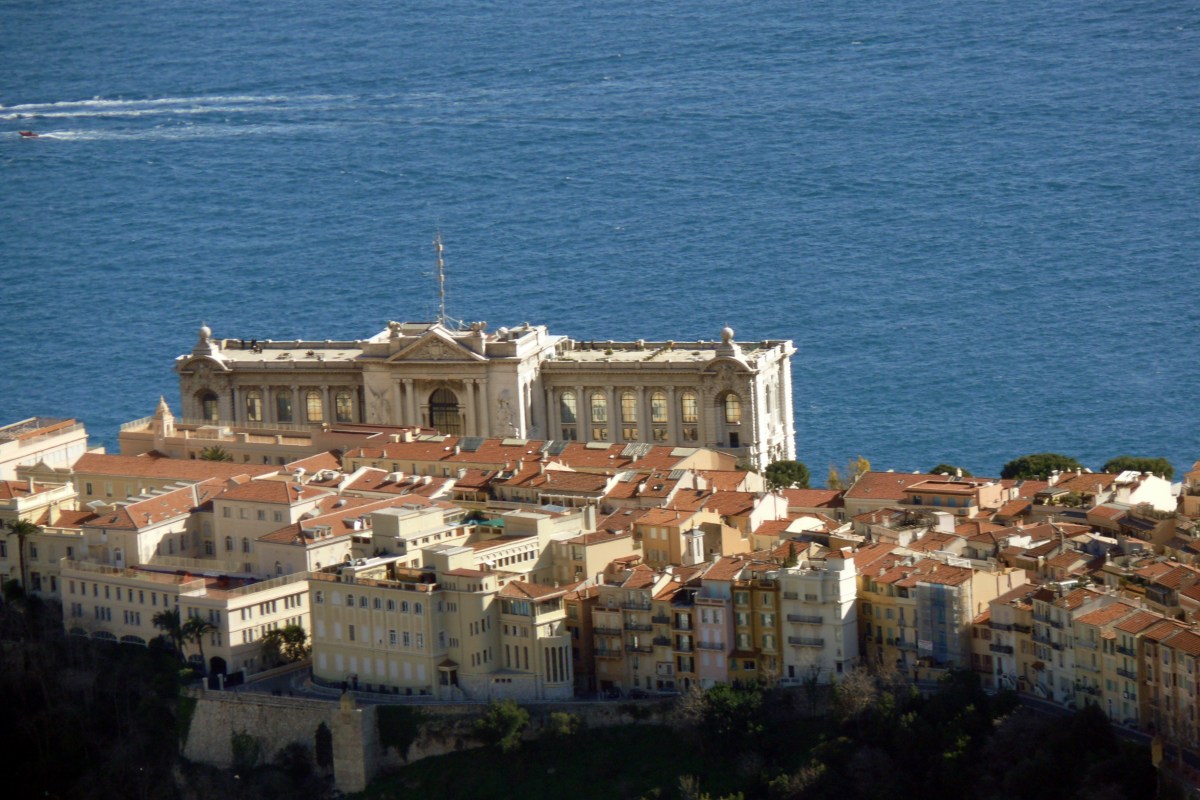
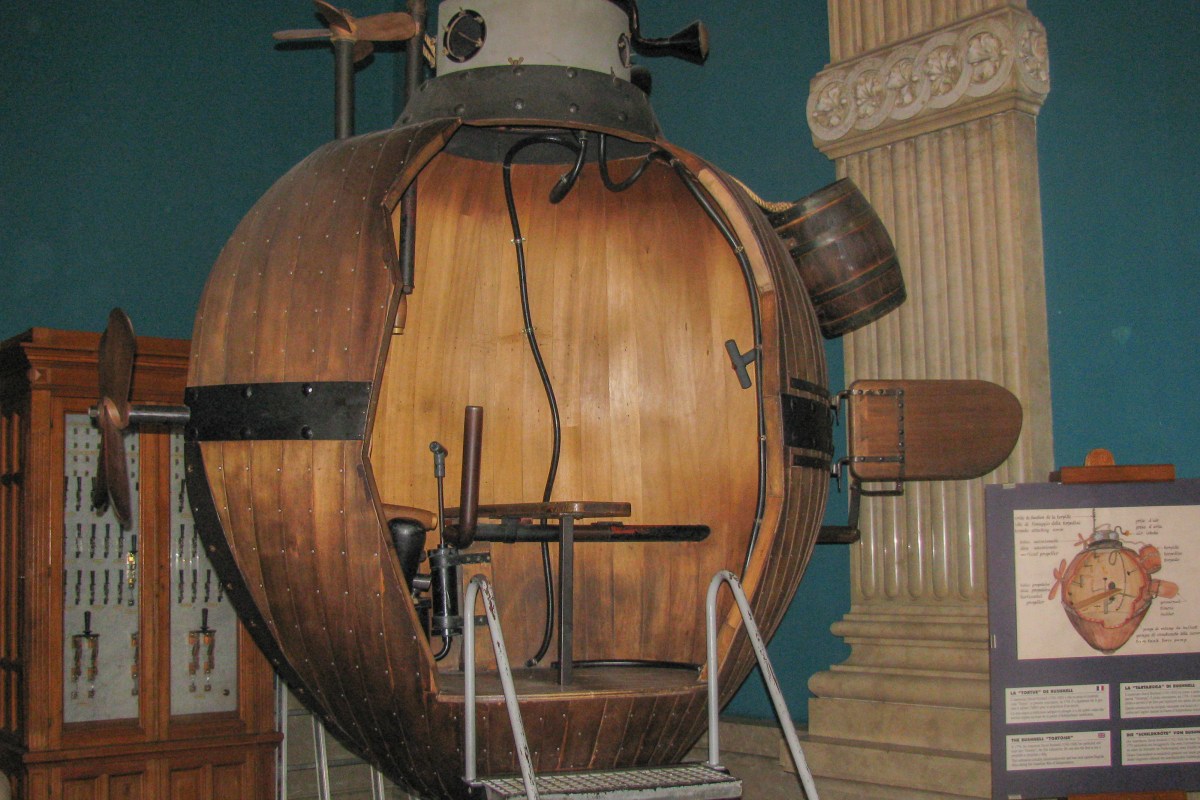
The building itself is part of the exhibition. It is conceived in a neo-Gothic palace style, anchored boldly onto the escarpment of the Rock, its hundred-metre length and eighty-five-metre height raised in white La Turbie stone and Brescia limestone. Inside, roughly a hundred tanks hold a collection of some 350 fish species and more than 6,000 specimens, with the shark lagoon alone, fed by a 450,000-litre tank, showing off the diversity of a coral reef thick with tropical fish and living coral. Outside, a dedicated space follows the life cycle of rescued sea turtles. On the first floor, the American artist Mark Dion built 'Oceanomania', the largest curiosity cabinet of the marine world ever assembled, eighteen metres wide and ten metres high, filled with skeletons, fossils, model ships, diving suits and rare books drawn from the museum's own collections, among them a taxidermied Greenland polar bear and a 1797 diving suit designed by Karl Heinrich Klingert. A further gallery, built around a twenty-seven-metre scenic ship, traces the environmental record of Monaco's sovereigns, and the rooftop terrace, eighty-five metres above the waves, gives a panoramic view back across the Mediterranean.
Insider tipOpen daily year-round except 25 December and the F1 Grand Prix weekend; allow about two hours.
Don't miss
Don't miss
- 01
Oceanomania, Mark Dion's 18m by 10m cabinet of marine curiosities
- 02
The shark lagoon and its 450,000-litre tank
- 03
The outdoor sea-turtle rehabilitation area
- 04
The gallery built around the 27-metre scenic ship
- 05
The rooftop terrace, 85 metres above the Mediterranean
03The highlights
Four things reward a slow visit: Oceanomania, Mark Dion's wall of marine curiosities on the first floor; the shark lagoon and its 450,000-litre tank; the outdoor sea-turtle rehabilitation space; and the gallery built around the twenty-seven-metre ship tracing the principality's engagement with ocean protection.
04Visiting
In October 2026 hours vary across the year: 10am–6pm in January, February and March, 10am–7pm in April, May and June, 9.30am–8pm in July and August, 10am–7pm in September, and 10am–6pm again from October to December. The museum opens every day except the weekend of the Formula 1 Grand Prix and 25 December, with last admission thirty minutes before closing. A standard adult ticket costs €20.50, students pay €13, and children aged four to seventeen are admitted for €14, with under-fours free; a combined ticket with the Prince's Palace, available from 30 March to 15 October 2026, costs €31 for adults. The museum suggests around two hours for a full visit.
05Getting there
The museum stands on Avenue Saint-Martin, in the Rocher quarter. From central Monaco, bus lines 1 and 2 run to the terminus at Place de la Visitation, a short walk from the entrance.
06Around it
The approach does some of the scene-setting. The Jardins Saint-Martin, Monaco's oldest public garden, laid out from 1816 under Prince Honoré V, sit directly between the museum and the Cathédrale Notre-Dame-Immaculée, less than ten minutes' walk from the Prince's Palace.
07Making the most of a visit
The climb up to the Rocher is steep and exposed to the sun, so the number 1 or 2 bus is worth taking at least one way. Reserve about two hours for the museum itself, and buy any combined ticket, with the Prince's Palace or the Jardin Exotique, before arriving, since online booking brings a discount on slots before 11am or after 5pm.