In this story · 6 sections
On a quiet stretch of West 19th Street in the Flatiron District, Oiji Mi occupies a dining room that remembers two pasts at once: the timber-framed hanok houses of Korea and the private social clubs that once crowded this part of Manhattan during the Gilded Age. Chef Brian Kim closed his beloved East Village restaurant Oiji in the spring of 2022 to open this more ambitious second act, bringing his original team with him, and the gamble paid off fast: Oiji Mi earned its MICHELIN Star within five months of opening. It holds One MICHELIN Star today. Inside, Kim and his kitchen reinterpret traditional Korean dishes through a contemporary lens, serving a five-course prix fixe in the main dining room while a looser, à la carte menu runs in the bar and lounge. The restaurant has gone on to a James Beard semifinalist nod for Kim and a spot on Esquire's list of the best new restaurants in America, and it now shares its address with a second starred room, the chef's counter Bōm, tucked behind it.
Oiji Mi
Restaurant · Flatiron District, Manhattan
© OpenStreetMap contributors · OpenFreeMap
- Address
- 17 W. 19th St., New York, NY 10011
- Cooking
- Korean, Contemporary
- Chef
- Brian Kim (Owner & Exec. Chef), Jooho Song (Chef de Cuisine)
- Run by
- Oiji Hospitality Group
- MICHELIN Guide
- One MICHELIN Star
- Tasting menu
- 5-course Prix-Fixe (Main Dining Room)
- Price
- $155 per person (Oct 2026)
- Open
- Dinner only, Sun–Thu & Fri–Sat
- Setting
- AvroKO-designed room inspired by a Korean hanok
- Telephone
- +1 212-256-1259
- Website
- oijimi.com
Chef Brian Kim's five-course Korean tasting menu in a room modelled on a 14th-century hanok.
01The room and the setting
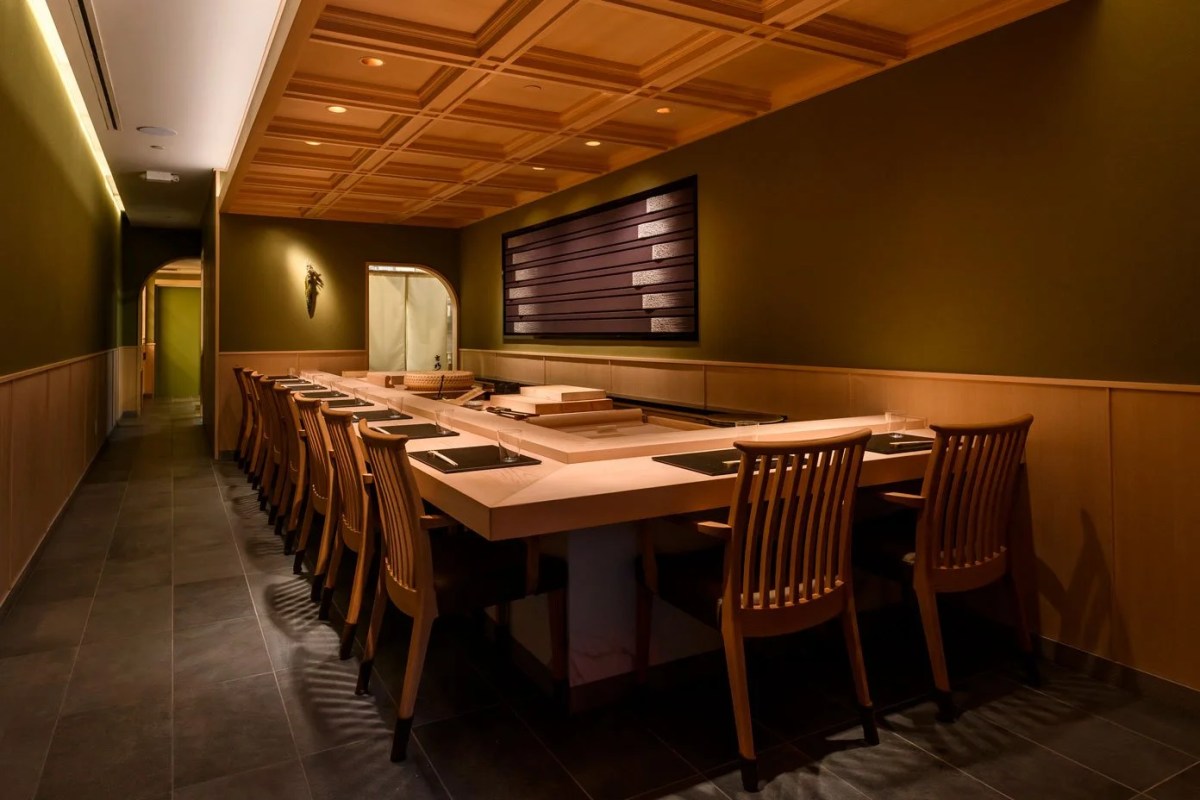
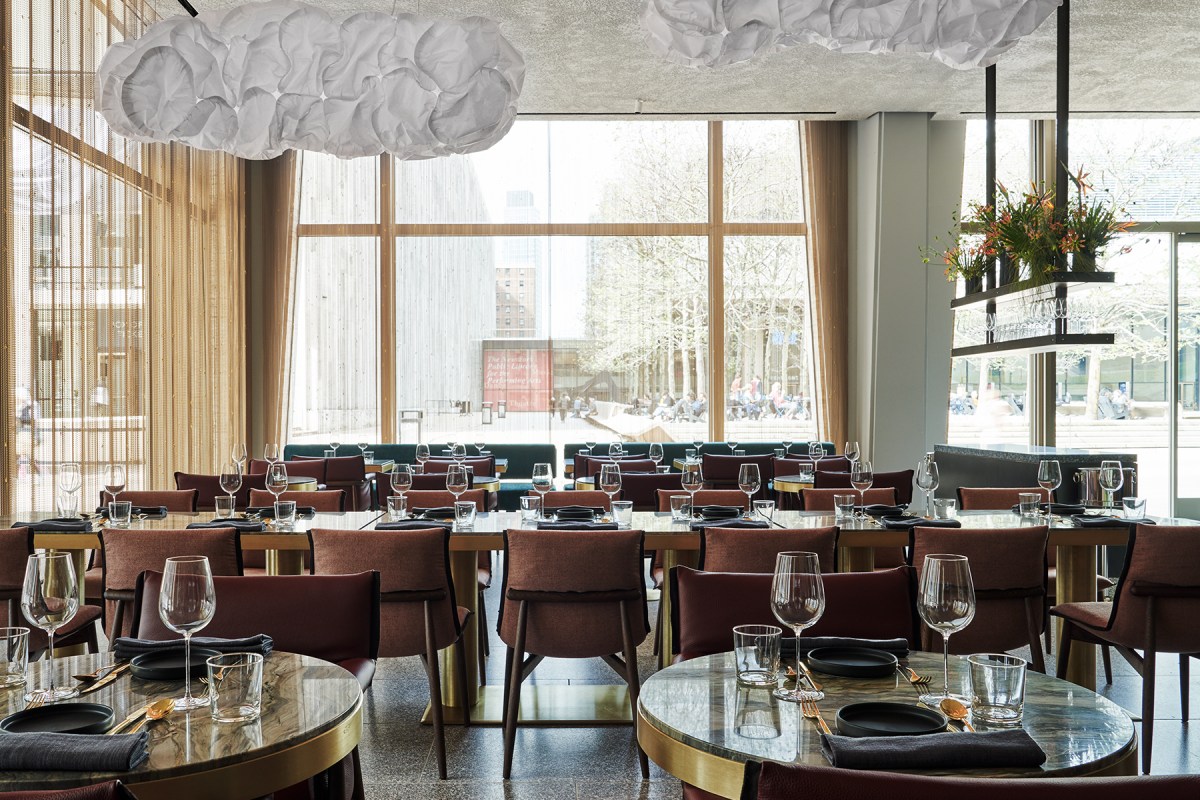
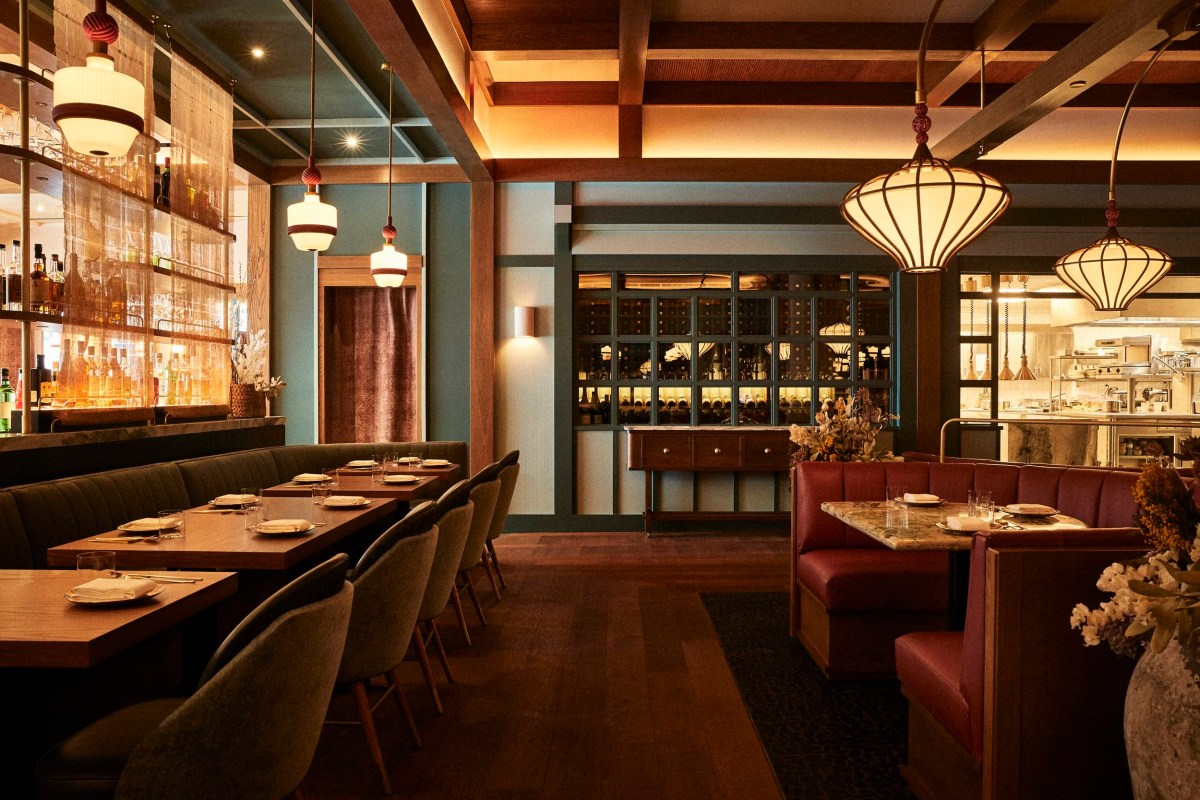
Design studio AvroKO built the interior around a deliberate collision of two eras and two cultures. The main dining room is modelled on a hanok, the traditional Korean home that dates back to the 14th century, with interlocking timber beams across the ceiling and walls and gridded partitions that echo the screens found inside one, while a wooden flooring system called daecheong runs from the bar at the front through to the dining room behind.
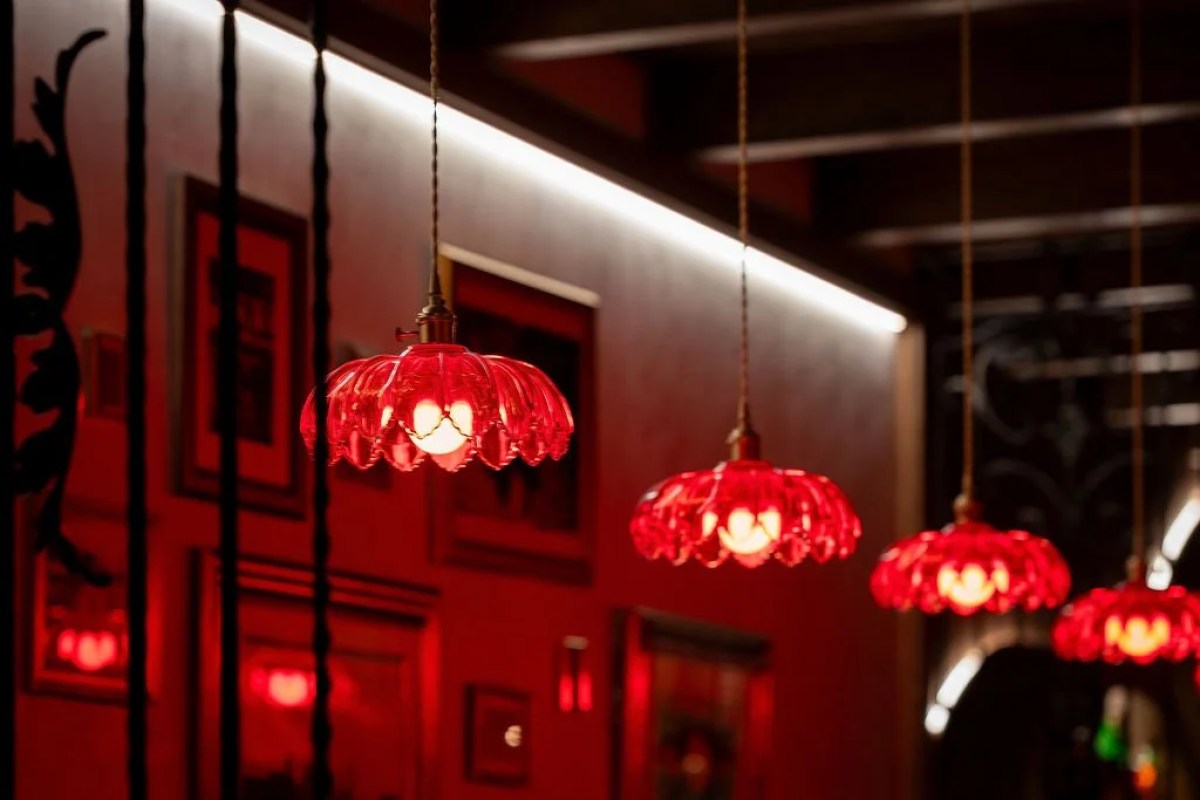
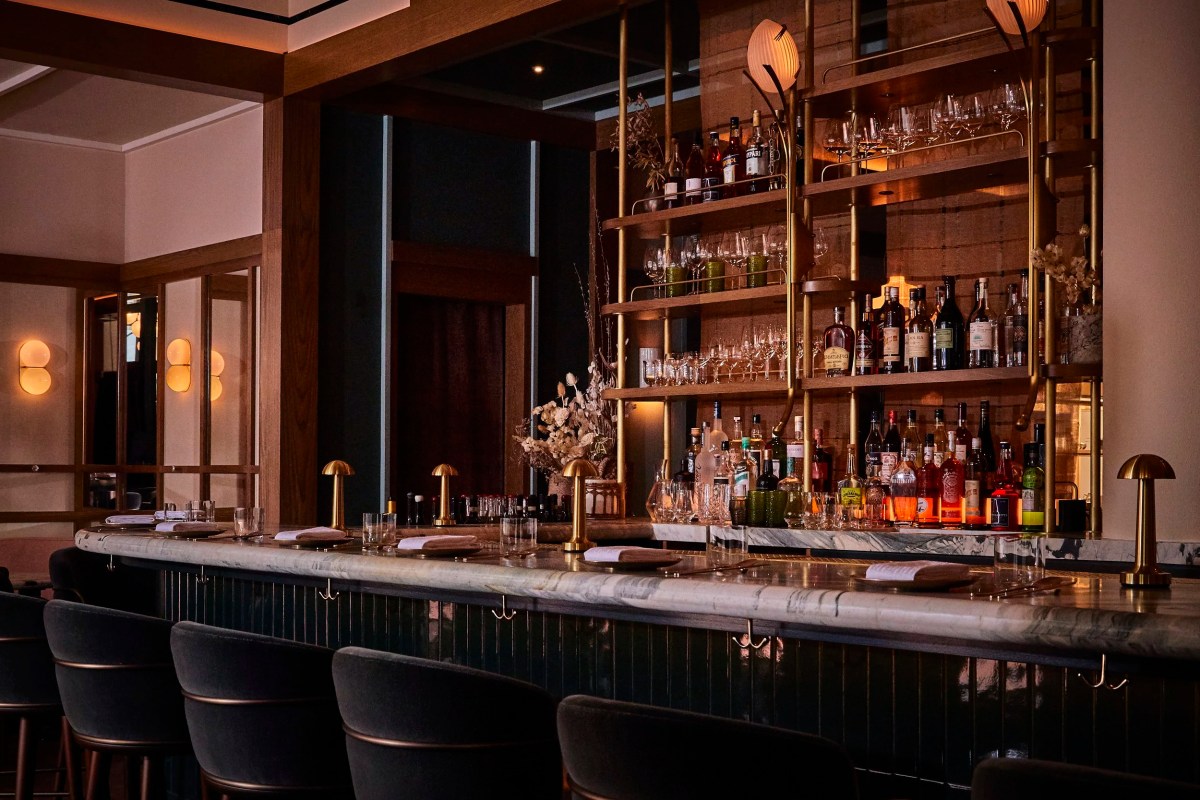
That Korean framework sits inside a shell that nods hard to the Flatiron District's own history as a neighbourhood once dense with Gilded Age social clubs. AvroKO described the result as recalling those clubs through bold marbles, rich leather and velvet upholstery and dark walnut woods, reimagined to represent a fusion of Korean and American culture. The dining room is wrapped in mossy green and terracotta-plum tones, with double ceiling beams connected by brass rods and capped in doorknobs, and custom lighting modelled on binyeo, the ornamental hairpins once worn in traditional Korean dress.
AvroKO has said the aim was to make guests feel as if they were straddling two places in a liminal state, not quite Korea and not quite New York, heightening the senses before the first course of the tasting menu even arrives.
02The chef
Brian Kim is Oiji Mi's owner and executive chef, a Los Angeles-born, Seoul-raised cook who trained at Bouley and Gramercy Tavern before striking out on his own. In 2015 he opened Oiji, a low-key, communal-table restaurant in the East Village that became a neighbourhood favourite and picked up coverage from The New York Times, Eater and Time Out over seven years, before Kim closed it in the spring of 2022 to pursue a more ambitious, design-led concept a short walk north in Flatiron with the same team.
Insider tipDinner only; book ahead for weekends. Sibling restaurant Bōm hides behind the dining room.
That next step turned out to be unusually fast: Oiji Mi opened in May 2022 and had its first MICHELIN Star within five months, a recognition that helped Kim land a James Beard Award semifinalist nod. He followed it, in February 2023, with Bōm, an intimate counter tucked behind Oiji Mi, which went on to win its own Star later that year – giving Kim two MICHELIN-Starred restaurants behind a single Flatiron door within roughly a year of each other.
Day-to-day in the kitchen, Kim works alongside chef de cuisine Jooho Song, who grew up in Seoul watching his mother cook before training in Hawaii and later moving to New York to pursue mentorship in the city's fine-dining landscape.
03The cooking
Oiji Mi's menu takes traditional Korean flavours and resets them for a tasting-menu format: a five-course prix fixe in the main dining room, priced at $155 per person as of October 2026, built around choices at nearly every course rather than a single fixed sequence. The kitchen's ambition has been recognised beyond the Michelin Star too, with the restaurant named to Esquire's Best New Restaurants in America list in 2023.
The structure favours restraint before intensity: delicate opening courses give way to richer, more assertive mains, and desserts built to land hard at the end of the meal. The team is explicit that severe allergies, including to alliums, will significantly limit what the kitchen can offer, a sign of how tightly the dishes are built around specific, non-substitutable ingredients.
04What to order
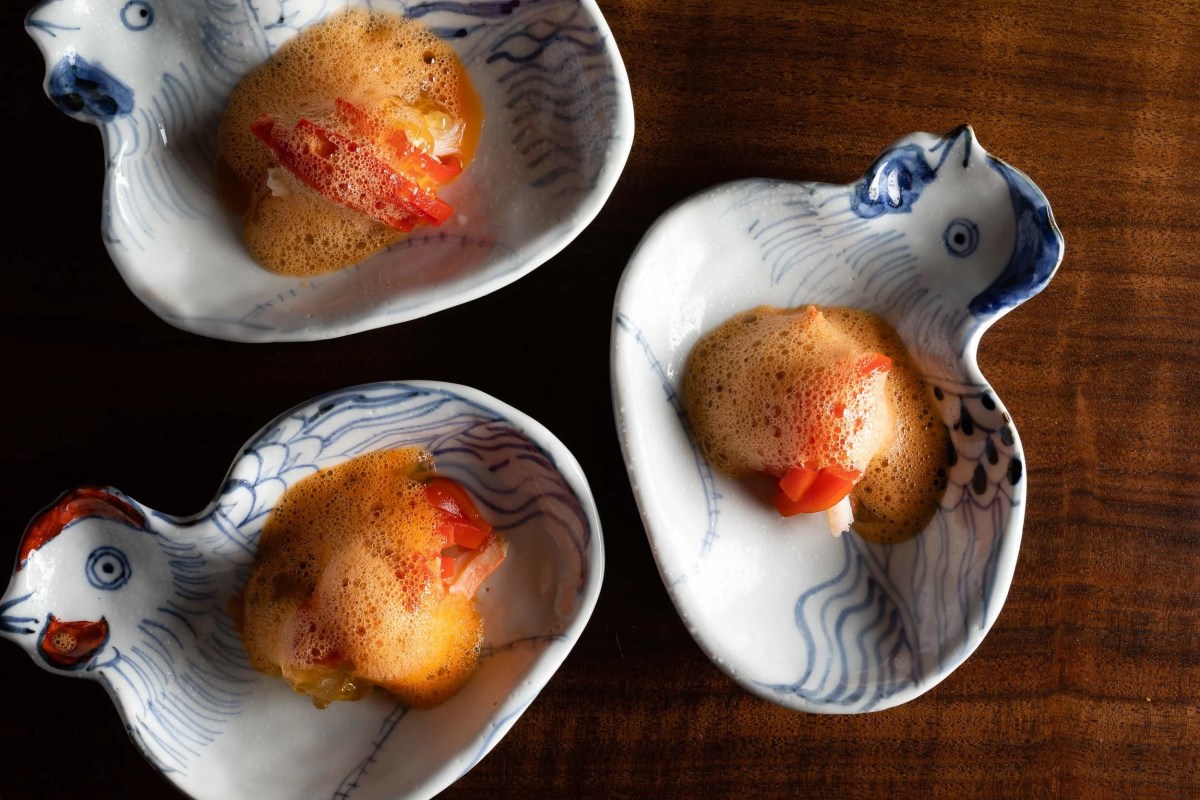
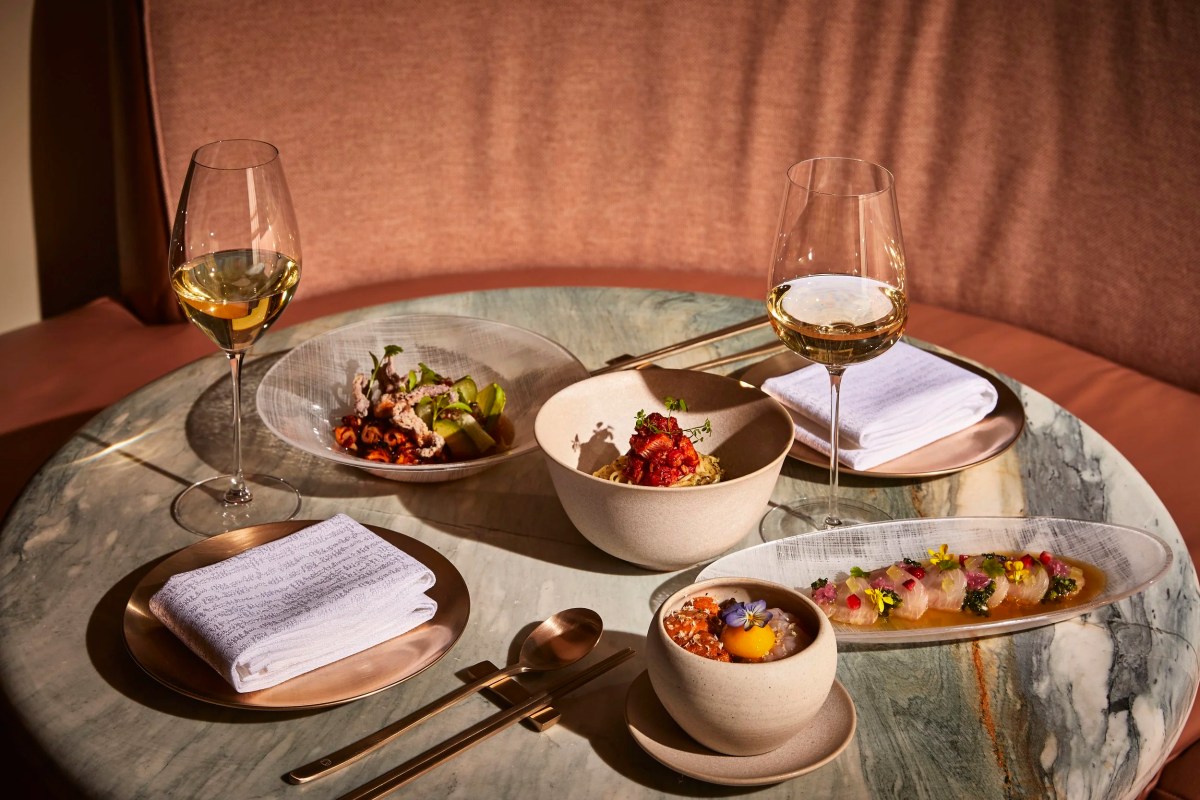
The prix fixe opens with a choice between spotted prawn in a gochugaru vinaigrette with green apple pearl and yuja, a beef tartare (yukhoe) with celeriac, pickled radish and caviar, or a pumpkin hobak-jook finished with sabayon, sourdough and black truffle. Second courses run from a striped jack hwe with granny smith and finger lime to a spicy BBQ squid with tomatillo and sesame tofu.
The third course is where the menu shows its hand: the signature Oiji Bowl layers sea urchin, spotted prawn and ikura over seaweed rice (available with a $35 supplement), set against a lobster ramyun in chili and sesame or a black cod jook with charred allium and preserved ramp. Mains move between sea bass with octopus and truffle seafood broth, lamb with jjajang and shrimp fried rice, or galbi with barley and chayote kimchi, before dessert choices that include chapssal (sweet rice) donuts with gruyère, raclette and crème fraîche ice cream, a black sugar bingsu with boba and black tea cream, or grilled corn with dulce de leche.
Don't miss
Don't miss
- 01
The sea urchin, spotted prawn and ikura Oiji Bowl over seaweed rice
- 02
Beef tartare (yukhoe) with celeriac, pickled radish and caviar
- 03
Lobster ramyun in chili and sesame
- 04
Chapssal donuts with gruyère, raclette and crème fraîche ice cream
- 05
A Martini Royale made with samhae and pine soju, with a caviar option
05Wine and drinks
The beverage programme is run by Chris Clark, an Advanced Sommelier through the Court of Master Sommeliers who previously served as beverage director at Aquavit, the two-MICHELIN-Starred Nordic restaurant in New York, from 2016. At Oiji Mi he has built a list that leans on small, artisanal growers and on Korean ideas of balance and depth.
Cocktails are grouped by style, from the lighter Effervescent list built around soju, makgeolli and Chilsung cider, through Shaken and Stirred categories mixing wheated bourbon, mezcal and sotol with Korean spirits, up to a Reserve section that includes a Martini Royale made with samhae soju and pine soju, offered with a caviar supplement. A short non-alcoholic list runs to house-made kombucha and a pine-nut jatchata.
06When to go and booking
Oiji Mi serves dinner only, Sunday to Thursday from 5pm and Friday and Saturday with a later seating, as published on its own site in October 2026; the à la carte bar and lounge menu is the more flexible way in if the dining room's prix fixe is booked solid. For a tighter, more theatrical evening, Bōm, the 17-seat chef's counter hidden behind Oiji Mi with its own Michelin Star, runs as a separate, harder-to-book experience with its own tasting menu.
Given the restaurant's rapid rise, demand has not slowed, and reservations for Friday and Saturday evenings are worth securing as far in advance as possible, with cancellations more likely to appear midweek.