 The Metro Mode 55
In this story · 4 sections
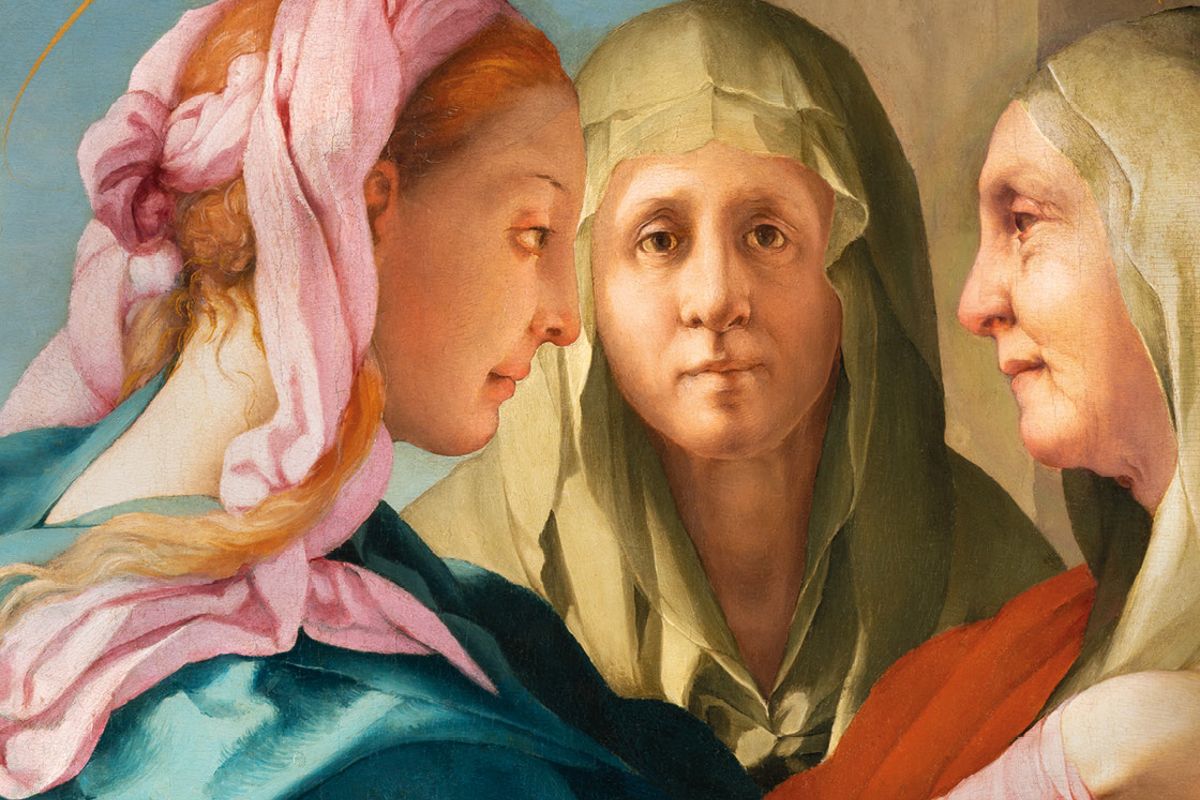
Jacopo Carrucci, known as Pontormo, has never before had a major exhibition devoted to him alone. The Scuderie del Quirinale in Rome opened one on 9 October 2026, and it runs until 7 February 2027. Pontormo stood at the head of the great season of sixteenth-century Florentine painting, at the point where the High Renaissance turned into Mannerism, and he treated the classical models he inherited with a freedom that few painters of his time allowed themselves. That independence is the reason the twentieth century took him up, from Pier Paolo Pasolini to Bill Viola, and the reason collectors around the world still pursue him. The exhibition is promoted by Ales – Scuderie del Quirinale in partnership with the Uffizi Galleries and produced with the publisher Electa. It starts from the painter's best-known work, the Visitation, which has come from the church of San Michele Arcangelo at Carmignano.
Scuderie del Quirinale
Museum · Trevi
© OpenStreetMap contributors · OpenFreeMap
- Until
- 7 February 2027
- Dates
- 9 October 2026 – 7 February 2027
- Venue
- Scuderie del Quirinale
- Open
- 10 am–8 pm, last admission 7 pm (Nov 2026)
- Tickets
- Full price €18, under 30 €12, ages 6–17 €5 (Nov 2026)
- Curator
- Cristina Acidini
- Works
- Paintings and a selection of works on paper
- Address
- Via XXIV Maggio 16, 00187 Rome
- Website
- scuderiequirinale.it
Pontormo, the first major monographic exhibition of the Florentine painter, fills the Scuderie del Quirinale from 9 October 2026 to 7 February 2027.
01The exhibition
The curator is Cristina Acidini, one of the leading authorities on sixteenth-century Florence. She worked with a team of four scholars: Elena Capretti, Philippe Costamagna, Bruce Edelstein and Carlo Falciani. Their route through the galleries is mainly chronological, with thematic pauses along the way, and the organisers present it as the occasion to see the artist's principal masterpieces gathered in one place, together with a selection of his works on paper.
The Uffizi sends a large group of works. Around them hang loans from the Galleria dell'Accademia, the Bargello Museums and the Istituto Centrale per la Grafica, and from further afield: the Louvre, the National Gallery and the British Museum, the Metropolitan Museum of Art, the National Gallery of Art in Washington, the Art Institute of Chicago and the Getty Museum in Los Angeles. Pictures that normally hang an ocean apart can be compared from one room to the next.
Don't miss
Don't miss
- 01
The Visitation (1528–1530), from the church of San Michele Arcangelo at Carmignano
- 02
The group of works from the Uffizi Galleries, the exhibition's partner
- 03
The selection of works on paper shown beside the paintings
- 04
Gae Aulenti's great window, with its view over the roofs of Rome
02What you see
The Visitation sets the tone. It dates from 1528–1530, and its close-pressed figures, draped in pink, blue and sharp green, are the image the Scuderie has chosen to announce the exhibition. From there the hang follows the painter's career in order, paintings and sheets side by side. Rome's tourist office illustrates its own notice of the show with The Resurrection, a detached fresco of 1523–1525 from the Certosa di San Lorenzo at Galluzzo that measures 232 by 291 centimetres.
Insider tipOpen only during exhibitions. Last admission one hour before closing.
The catalogue, published by Electa, places Pontormo in the Florence of his century and in the painting that lies between the mature Renaissance and Mannerism.
03The museum
The Scuderie del Quirinale were the papal stables, built over ten years from 1722 to 1732. They share a piazza with the Palazzo del Quirinale, the official residence of the President of the Italian Republic, and the Palazzo della Consulta, seat of the Constitutional Court. At its centre stand an obelisk, a fountain and the two colossal Roman marbles of the Dioscuri, Castor and Pollux, with their horses. The building sits beside the Colonna gardens and over the remains of the Roman Temple of Serapis, parts of which can still be seen.
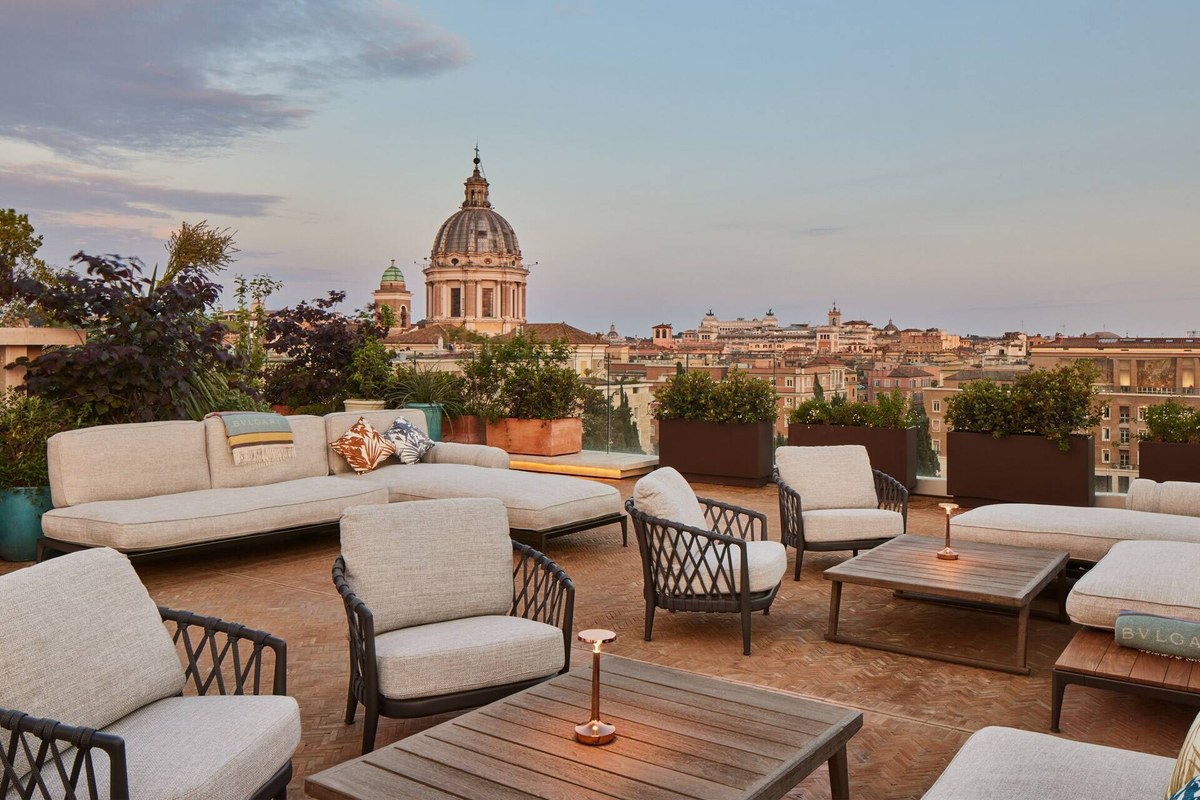
Inside there are about 3,000 square metres over several floors. Exhibitions occupy the open halls of the second and third floors; the bookshop is on the ground floor and the cafeteria on the mezzanine. Gae Aulenti designed the great window as part of her restoration of the building. It looks across the city from the Quirinal, the highest of Rome's seven hills: the Vittoriano on Piazza Venezia, the domes of the churches, St Peter's in the distance, and the Gianicolo, Monte Mario and Pincio hills behind. The Scuderie open to visitors only when an exhibition is on.
04How to visit
The exhibition is open from 10 am to 8 pm, with last admission at 7 pm (Nov 2026). The hours change over the holidays: 10 am to 6 pm on 17 December, 10 am to 3 pm on 24 and 31 December, and 4 pm to 8 pm on 25 December and 1 January. On 26 December and 6 January the normal hours apply. A full-price ticket costs €18, visitors under 30 pay €12, those aged 6 to 17 pay €5 and children under 6 enter free (Nov 2026). A family package for two adults and two under-18s costs €36, and the booking fee is €2.50.
Visitors over 65 pay €12 on Mondays and Tuesdays from 3 pm. Groups must book. Wi-fi and the cloakroom are free to all visitors, and the building is accessible to people with reduced mobility, with one reserved parking space on the pavement opposite the main entrance. The entrance is at Via XXIV Maggio 16.