 The Metro Mode 55
In this story · 6 sections
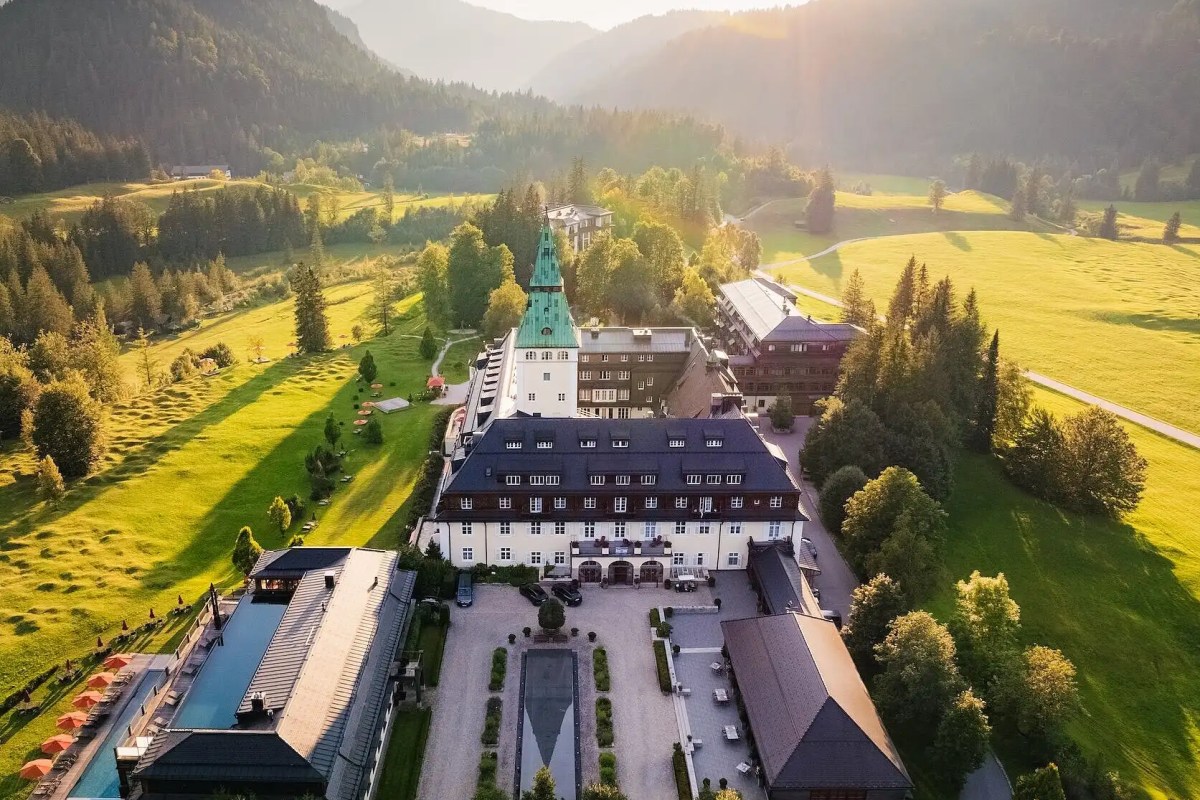
Schloss Elmau sits in a protected high valley of the Bavarian Alps, at 1,000 metres between the Zugspitze and the Austrian Karwendel, a short drive from Garmisch-Partenkirchen. It was built between 1914 and 1916 by the theologian and philosopher Johannes Müller, with his brother-in-law Carl Sattler as architect, as a free, non-denominational meeting place for readers and seminar guests, filled with concerts and dance evenings in its great hall. The house lived through a turbulent century — leased to the Wehrmacht in 1941, later a sanctuary for displaced Holocaust survivors — before re-emerging after 1957 as one of Europe's most storied addresses for chamber music, with the Amadeus Quartet, Benjamin Britten, Yehudi Menuhin and Alfred Brendel among those who played there. A fire gutted much of the building in 2005; Müller's grandson Dietmar Mueller-Elmau rebuilt it, reopening on 21 June 2007 as a Luxury Spa & Cultural Hideaway. It is now the only hotel to have hosted two G7 summits, in 2015 and 2022, and carries Three MICHELIN Keys, with its restaurant IKIGAI awarded two MICHELIN Stars.
Schloss Elmau Luxury Spa Retreat & Cultural Hideaway
Hotel · Elmau Valley, near Krün, Garmisch-Partenkirchen district, Bavaria
© OpenStreetMap contributors · OpenFreeMap
- Address
- In Elmau 2, 82493 Elmau, Germany
- Opened
- 1916; rebuilt 2007; Retreat added 2015
- Rooms
- 140
- Restaurants
- IKIGAI (2 MICHELIN Stars), La Salle, Fidelio, Summit, Summit Pavilion, Tutto Mondo, Kaminstube, Ananda, Ganesha
- Spa
- Six spas, nine pools, Oriental Hamam, Shantigiri Onsen, Nature Spa, TCM & Longevity programmes
- Telephone
- +49 8823 18-0
- Website
- schloss-elmau.de
- MICHELIN Guide
- Three MICHELIN Keys
At 1,000 metres between the Zugspitze and the Austrian Karwendel, near Garmisch-Partenkirchen.
01The house
The first Schloss Elmau opened at Pentecost 1916 as what Müller called a space for personal and communal life, free of ideology — concerts, public readings and dances shaped daily life in its great hall from the start. The building's history darkened in the 1940s: facing possible seizure by the SS, Müller leased the castle to the Wehrmacht in 1941 as a rest centre for troops, and was later convicted in a postwar denazification trial for his wartime writings in support of Hitler. Following the defeat of Germany in World War II, Müller lost control of Schloss Elmau in 1947 and it became a sanatorium for displaced persons and Holocaust survivors.
In 1951 two of Müller's children leased the building back and opened it as a hotel with a music week at Whitsun; a decade later, after the denazification case was dropped for lack of legal basis, they leased the building and established a hotel, before Müller's children Bernhard and Sieglinde became owners of Schloss Elmau in 1961. From 1957, Schloss Elmau became best known for chamber music, with the Amadeus Quartet, Benjamin Britten, Julian Bream, Yehudi Menuhin and Alfred Brendel performing there. A fire on 7 August 2005 destroyed much of the complex; reconstruction began in April 2006 and was completed in time for a reopening on 21 June 2007 as a five-star luxury spa and cultural hotel, with the rebuild costing about €40 million. A second, newly built hotel — the Retreat, standing some 150 metres west of the original house — followed in 2015, just in time to serve as the residence of the Group of Seven heads of state and government that June; the same house welcomed the G7 back in 2022, a distinction no other hotel can claim.
02Rooms and suites
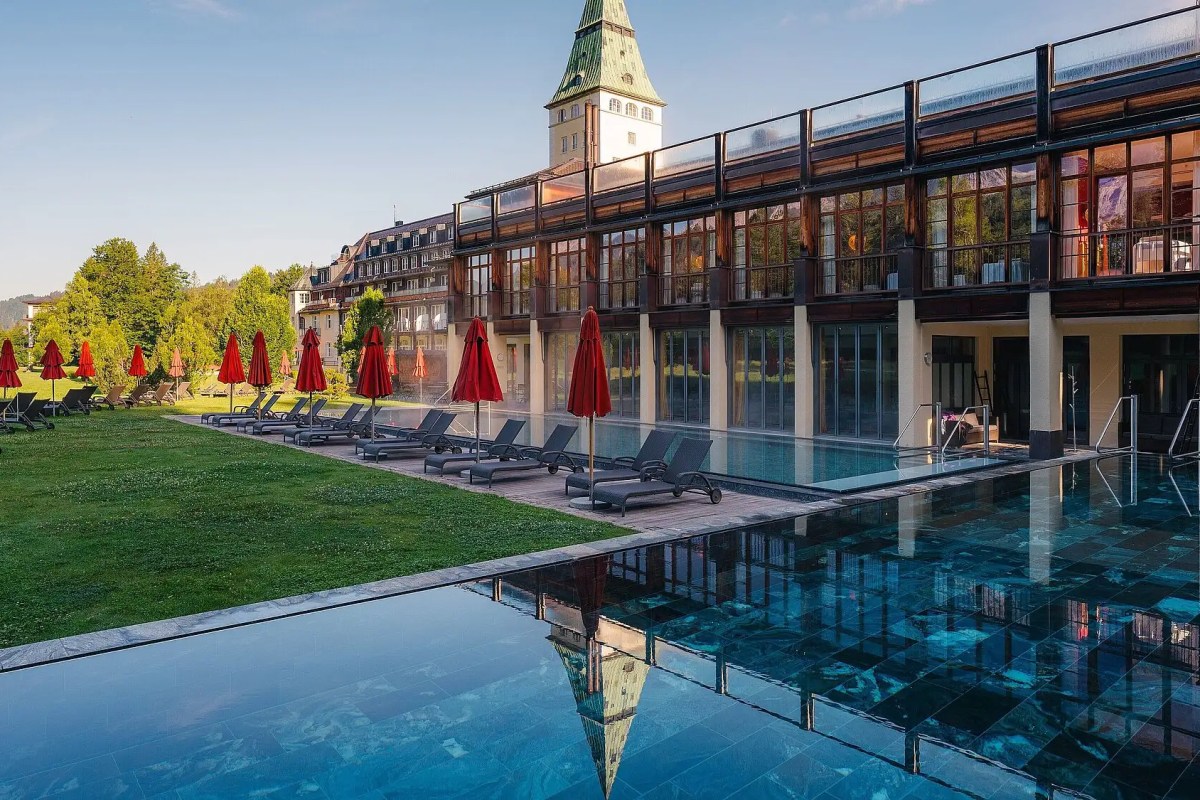
Two hotels share the one resort. The Hideaway was rebuilt in 2007 and features 100 rooms & suites (25 to 110sqm), Badehaus Adults-Spa, Oriental Hamam, Family-friendly Spa, Nature Spa, TCM Spa, Jivamukti Yoga Center, Sports Center, Gym, Kids Club, Shops, Tea Lounge, Jazz Piano Bar, Smokers Lounge, Bookstore, Library, Concert Hall, and five Restaurants, including the Ikigai with two Michelin-Stars. Next door, the Retreat's 47 rooms and suites (55–200 m²), an adults-only spa, a Japanese Onsen, a family-friendly spa, a gym, a yoga pavilion, a library lounge, and four restaurants all blend a cosmopolitan vibe with spectacular views.
Insider tipAbout 1.5 hours by car from Munich Airport; around 45 minutes from Innsbruck Airport.
Throughout both houses, warm light and Indian linens combine a sense of lightness with timeless Italian elegance and precious, natural materials from around the world in grand yet intimate rooms and public spaces with spectacular views of the Alps and a rushing mountain stream. Guests of the Retreat also enjoy access to all available amenities at the Hideaway, so a booking at either address unlocks the whole resort.
03Where to eat
IKIGAI is the house's culinary centrepiece. The Japanese word can be translated as "what makes life worth living", a mindset that guides a kitchen blending French and Japanese cuisine, as well as its treatment of both employees and guests, promoting appreciation, mindfulness and a harmonious atmosphere. Executive Chef Christoph Rainer has for many years been at the helm, in a restaurant awarded two Stars in the Michelin Guide and five toques in the Gault&Millau. It seats only 28 guests a night.
Beyond IKIGAI, the resort counts roughly eight to nine restaurants between its two hotels. La Salle, the family restaurant, seats 120; Fidelio, serving Thai cuisine, 80; the Kaminstube fondue room, 30; Ananda, the spa restaurant, 24; and Summit, the Retreat's Mediterranean dining room, 32, adults-only. Guests can also choose the sushi-focused Summit Pavilion, where chefs combine Japanese precision with Alpine ingredients. Once a year the kitchens join forces for the Culinary G7 Summit, a roaming gastronomic evening where multiple Michelin-starred chefs each host their own live cooking station, orchestrated by Rainer alongside Executive Chef Philipp Schlosshauer — an unprecedented concentration of stars for one evening, with a combined total of 15.
04Spa and wellbeing
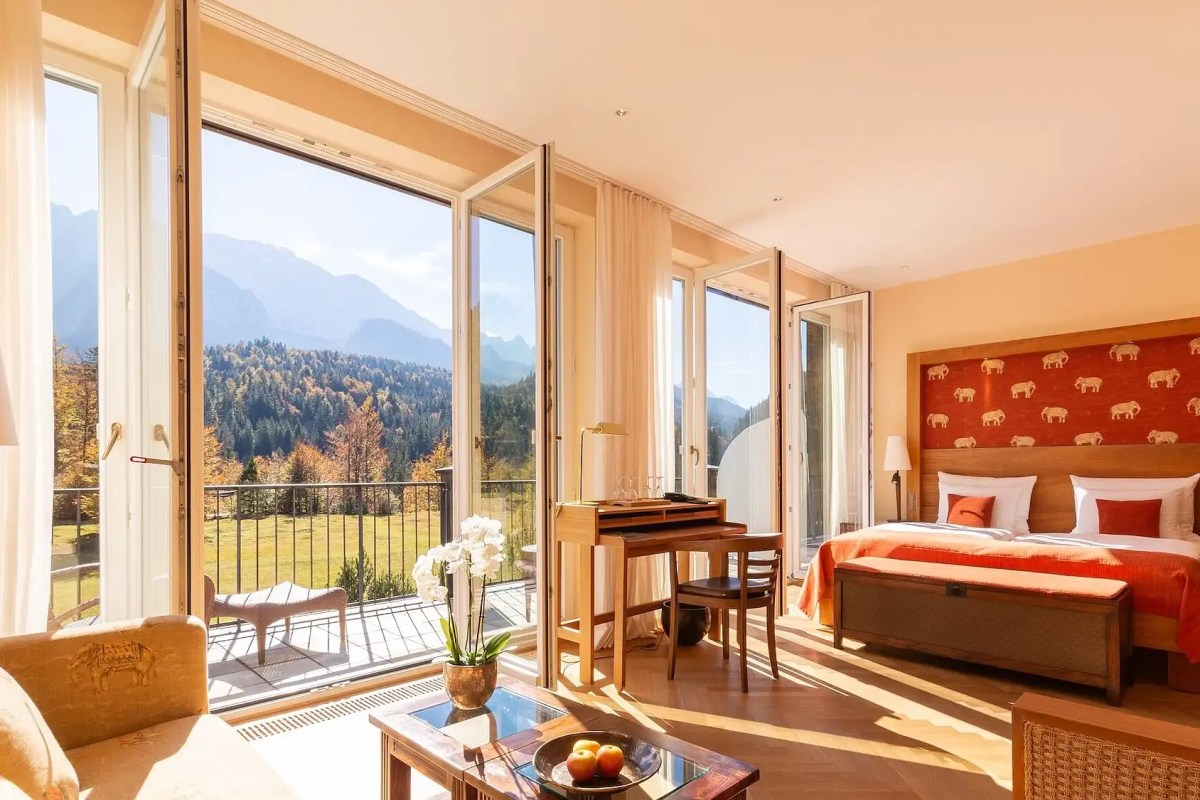
Six spas, nine pools — the arithmetic alone sets Schloss Elmau apart. The adults-only Badehaus offers a 25-metre rooftop infinity pool, heated to 32°C in winter and 30°C in summer, a 20-metre saltwater infinity pool held year-round at 35°C, and an 18-metre sunset infinity pool where guests may also swim without swimwear. Its 500-square-metre Oriental hammam, fitted with Jura stone 60 to 200 million years old, unites three domed rooms, four treatment rooms, two steam baths and a tea lounge in the most ancient form of spa.
Over at the Retreat, the Shantigiri Adult Spa sits in a hillside location with a 20-metre infinity pool heated to 32°C plus a Japanese Onsen at 40°C, an intimate lounge with open fireplace, and two sauna and brine-steam-bath areas, while its family counterpart has a 25-metre infinity pool, a barrel sauna, seven treatment rooms and a state-of-the-art gym. For something wilder, swimming in the unspoiled Lake Ferchensee, which reaches 22–24°C in summer, is the resort's signature outdoor pleasure, reached along the Ferchenbach stream. Longevity retreats weave together TCM, ice-bathing, yoga, taiji, qigong, pilates, intermittent fasting, healthy nutrition and music into personalised programmes.
05Culture in the valley
Few hotels programme like Schloss Elmau. In the legendary concert hall, with its exceptional acoustics, up to 150 concerts, several festivals and recordings take place every year, a tradition traceable to the German-British Chamber Music Week founded in 1957 and still running uninterrupted. The in-house Food for Thought bookstore offers selections for four generations, and the programme extends to author readings, political debates, and symposia on freedom and its challenges.
The valley itself does much of the work: Schloss Elmau is located near the village of Krün in the district of Garmisch-Partenkirchen, about 100 kilometres south of Munich, in a valley in the heart of the Wetterstein Mountains at an altitude of around 1,000 metres. That seclusion, paired with its grand hall, two libraries and purpose-built concert hall, was precisely what recommended it to the German government as a venue — twice — for the G7.
06Making the most of a stay
Because the Hideaway and the Retreat form a single resort, it is worth deciding in advance which base suits the trip: the Retreat for quieter, more private suites and the library lounge, the Hideaway for the concert hall, bookstore and IKIGAI on the doorstep. Either way, guests move freely between both houses' restaurants, spas and sports programmes. The hotel is a member of The Leading Hotels of the World, and for 2026 the MICHELIN Guide named it winner of its Wellness Award in addition to Three Keys and two Stars.
Outside the spa, the valley offers hiking and mountain biking in summer, wild swimming in glacial lakes, and in winter, skiing in nearby Seefeld, Garmisch-Partenkirchen and on the Zugspitze glacier. The resort runs largely on its own eco-power and wood-chip heating, with electric-vehicle charging on site — a practical detail for the growing number of guests arriving, like the G7 motorcades before them, by road from Munich or Innsbruck.
Don't miss
Don't miss
- 01
Dinner at IKIGAI, Christoph Rainer's two-Michelin-Star French-Japanese kitchen
- 02
A soak in the Badehaus rooftop infinity pool at 32°C with Wetterstein views
- 03
The ancient ritual of the 500-square-metre Oriental Hamam
- 04
A summer swim in Lake Ferchensee along the Ferchenbach stream path
- 05
A concert in the century-old acoustics of the legendary concert hall