In this story · 6 sections
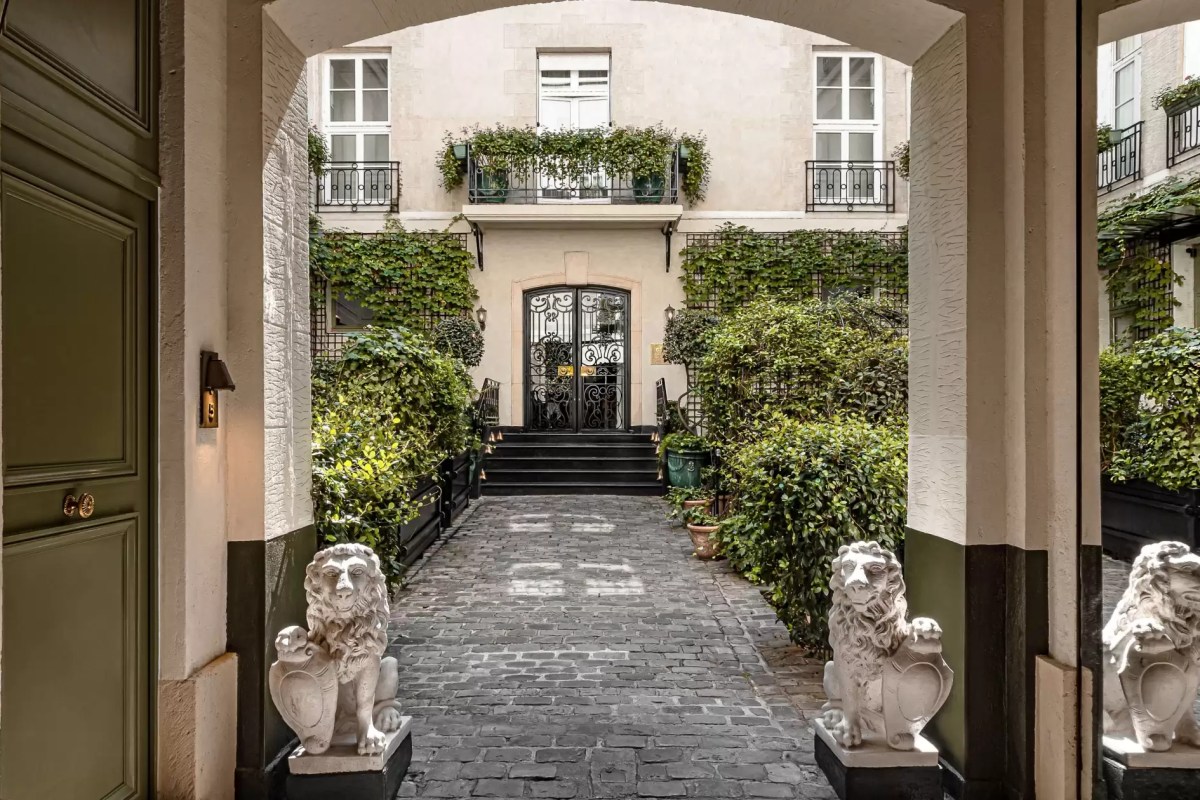
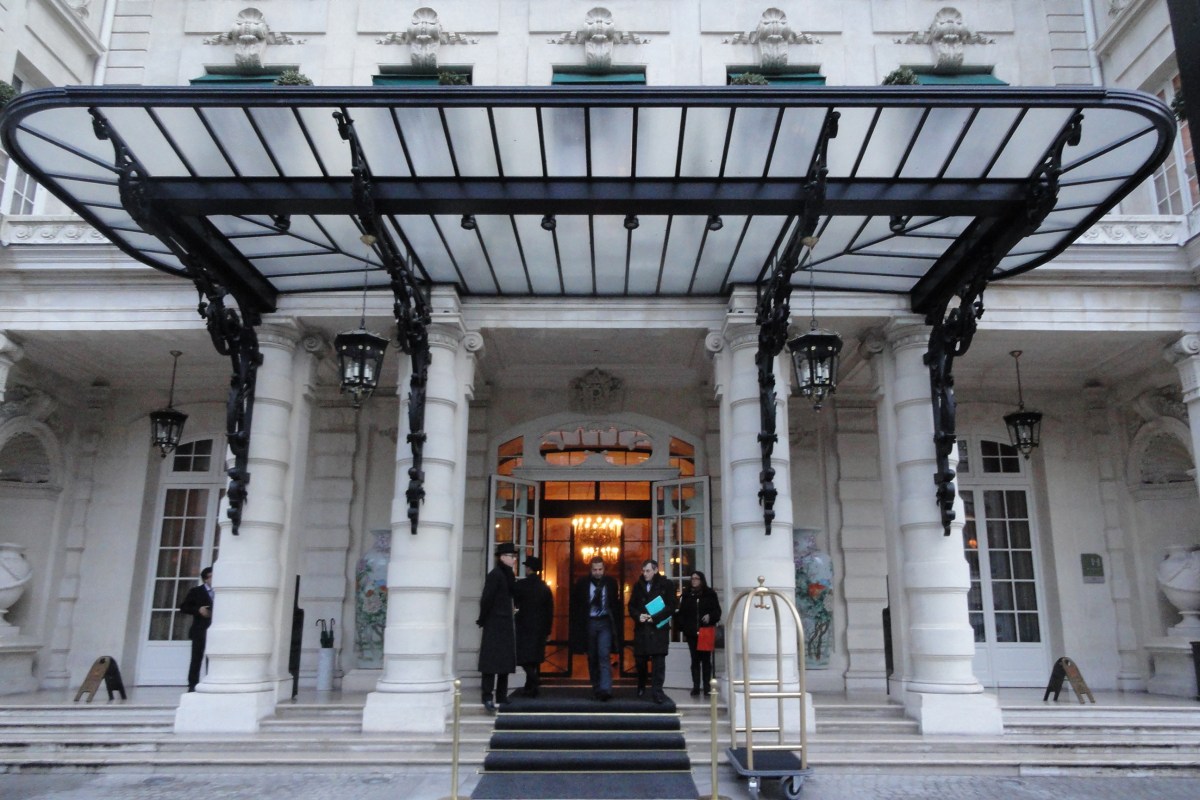
At 10 avenue d'Iéna, where the Chaillot hill drops toward the Seine, the Shangri-La Paris occupies the town house that Prince Roland Bonaparte, the geographer and botanist grand-nephew of Napoleon I, built between 1892 and 1895 to plans by Ernest Janty, an architect who had earlier worked on the reconstruction of the Louvre and the Tuileries. The prince assembled here the world's largest private herbarium and welcomed the Paris of science and politics, before the house passed to Princess Marie Bonaparte and then to the Suez Canal company on his death in 1924. Shangri-La Hotels and Resorts bought the building in 2006 and spent four years restoring it with architect Richard Martinet and designer Pierre-Yves Rochon before opening Europe's first Shangri-La in 2010. Listed as a Monument Historique and carrying the French Palace distinction, it now holds One Key in the MICHELIN Guide, one of relatively few Paris palaces that began life not as a hotel but as a private residence.
Shangri-La Paris
Hotel · 16th arrondissement, Trocadéro
© OpenStreetMap contributors · OpenFreeMap
- Address
- 10 avenue d'Iéna, 75116 Paris
- Opened
- 2010, first European Shangri-La hotel
- Building
- Hôtel particulier, 1892–1896, for Prince Roland Bonaparte
- Architect
- Ernest Janty; restoration by Richard Martinet
- Interiors
- Pierre-Yves Rochon
- Rooms
- 100
- Restaurants
- Shang Palace (MICHELIN Plate), Les Salons du Prince, Maison Roland
- Bar
- Le Bar Botaniste
- Spa
- Chi, The Spa
- Pool
- 17m indoor pool, heated to 30°C
- Setting
- 16th arrondissement, Trocadéro, facing the Eiffel Tower
- Telephone
- (33 1) 53 67 19 98
- MICHELIN Guide
- One MICHELIN Key
Former residence of Prince Roland Bonaparte, listed Monument Historique, now a 100-room Shangri-La palace with a Chinese dining room, a botanical bar and a spa in the old stables.
01The house
The mansion that Ernest Janty raised for Bonaparte is deliberately eclectic, borrowing freely from Louis XIV architecture in what contemporaries called an urban palace approach. The second-floor historic rooms still carry alabaster columns, stained-glass windows and coats of arms bearing bees and the letter B for Bonaparte, while the ground-floor facade is carved with lion heads and blazons behind its iron gates. Inside, the foyer ceiling keeps its painted zodiac, and the former billiard room, now one of the hotel's lounges, shows a Greco-Roman decorative scheme; when restorers stripped back layers of blue lacquer they uncovered mahogany doors that Bonaparte himself had commissioned.
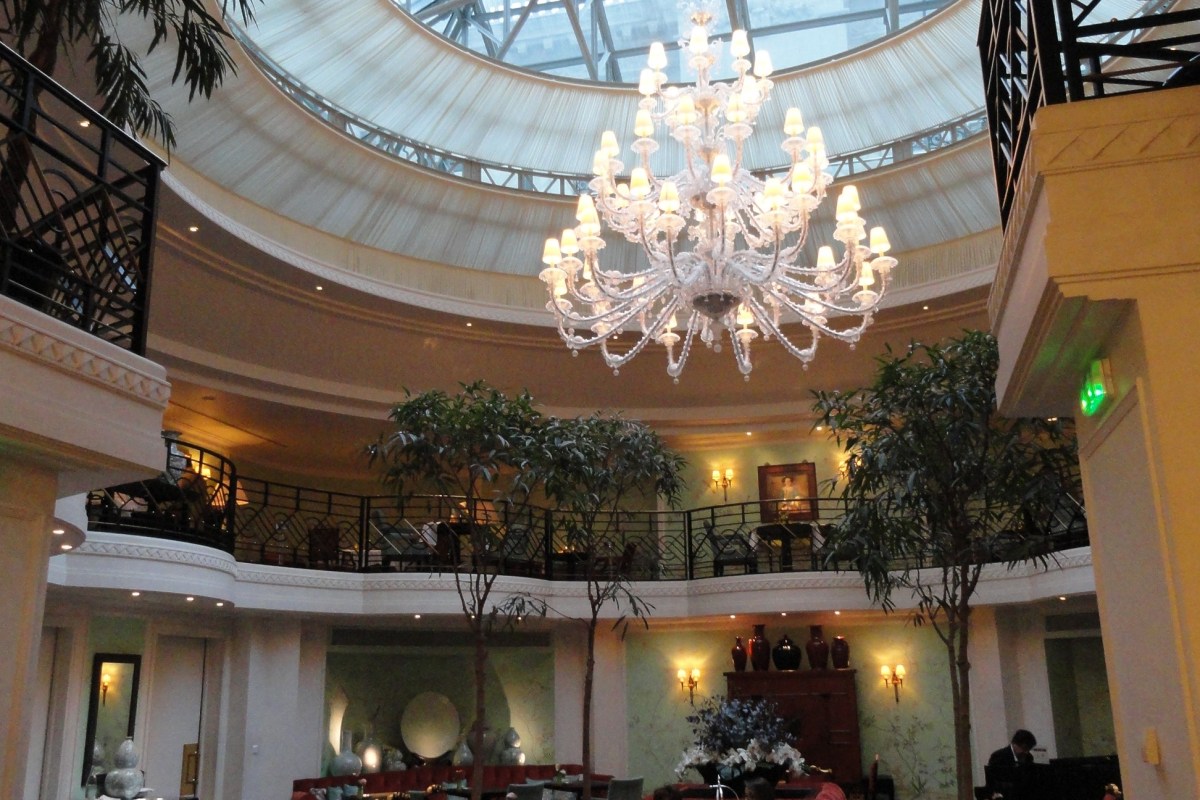
After the prince's death in 1924 the house passed to his daughter Marie before being sold in 1925 to the Suez Canal company, which hired Michel Roux-Spitz to add two further floors and a glass cupola over part of the ground floor, reportedly inspired by Gustave Eiffel. The French Centre of Foreign Trade later used the building for international meetings, before Shangri-La's four-year renovation returned it to hospitality in 2010. The lobby floor today is cut from five kinds of marble sourced from the Pyrenees, the Alps and Tuscany, set beneath the rotunda's archway and world map.
02Rooms and suites
The hotel counts 100 rooms and suites in total, including 36 suites, a deliberately modest number for a house of this scale, since no two floors share quite the same proportions as the original residence. Rooms are dressed in a calming rococo colour scheme that mixes European Empire detailing with Asian restraint, with marble bathrooms, heated floors and Guerlain toiletries throughout. Around 40 per cent of rooms and 60 per cent of suites look directly onto the Eiffel Tower across the Seine.
Insider tipNearest metro: Iéna, a short walk from Trocadéro and the Guimet Museum.
The signature suites carry their own names and histories. La Suite Shangri-La sits on the top floor behind a fourteen-metre bay window, its terrace surveying the Trocadéro, the Grand Palais and Notre-Dame. L'Appartement Prince Bonaparte, at 315 square metres, occupies the prince's own former private quarters, overlooking avenue d'Iéna and the Guimet Museum, and is itself separately listed as a historic monument.
03Where to eat
Shang Palace remains the hotel's signature table, a Cantonese dining room that was, from 2011 to 2024, the only Chinese restaurant in France to hold a MICHELIN star; it now carries a MICHELIN Plate distinction. Alongside it, the hotel has spent 2026 rebuilding its dining around Prince Bonaparte's own story. Les Salons du Prince occupies the ground-floor reception rooms listed as Monuments Historiques, serving a menu built around caviars from Maison Nordique and classic French dishes with contemporary touches, with weekend tea times created by pastry chef Timothy Lam.
In the garden, Maison Roland opened in spring 2026 as a Parisian bistro in the strict sense: white tablecloths, Gien porcelain and a bourgeois repertoire of sole meunière, pepper steak and floating island, with a convivial Sunday lunch built around shared dishes.
04The bar
Le Bar Botaniste has been rebuilt as a cabinet of curiosities around Prince Bonaparte's passion for botany, incorporating Deyrolle herbaria among its décor. Its new card runs to ten signature cocktails, each built around a single plant and presented like a botanical specimen, three of them alcohol-free, served alongside a small menu of dim sum from early evening.
05Spa and pool
Chi, The Spa occupies what were originally the stables of Prince Bonaparte's hotel particulier, and keeps the comparison modest in scale: three treatment rooms built for privacy rather than volume, using products exclusively from The Organic Pharmacy. The centrepiece is a 17-by-6-metre indoor pool heated to 30°C and lit by natural daylight, opening onto a 94-square-metre garden terrace where guests can take a snack or fresh juice after treatment. A fully equipped fitness centre adjoins the pool, and bookings can be arranged for a personal trainer or a private swimming lesson.
06The neighbourhood
The address sits on the Chaillot hill in the 16th arrondissement, between the statue of George Washington and the Eiffel Tower, chosen by Bonaparte in 1891 precisely for its proximity to the Seine and to the social life of the capital. Within a short walk are the Guimet Museum of Asian art, the Palais de Tokyo, the Musée de l'Homme and the Musée d'Art Moderne, with the Trocadéro gardens and the Champs-Élysées a little further on, making the quarter a cultural cluster rather than a shopping strip.
Don't miss
Don't miss
- 01
Dinner at Shang Palace, France's long-reigning Chinese fine-dining address
- 02
A look inside L'Appartement Prince Bonaparte, the 315 sqm former private suite
- 03
A swim in Chi's 17-metre pool, set in the prince's former stables
- 04
A plant-based cocktail at the rebuilt Bar Botaniste, with its Deyrolle herbaria
- 05
Sunday lunch at Maison Roland's shared tables in the garden