In this story · 6 sections
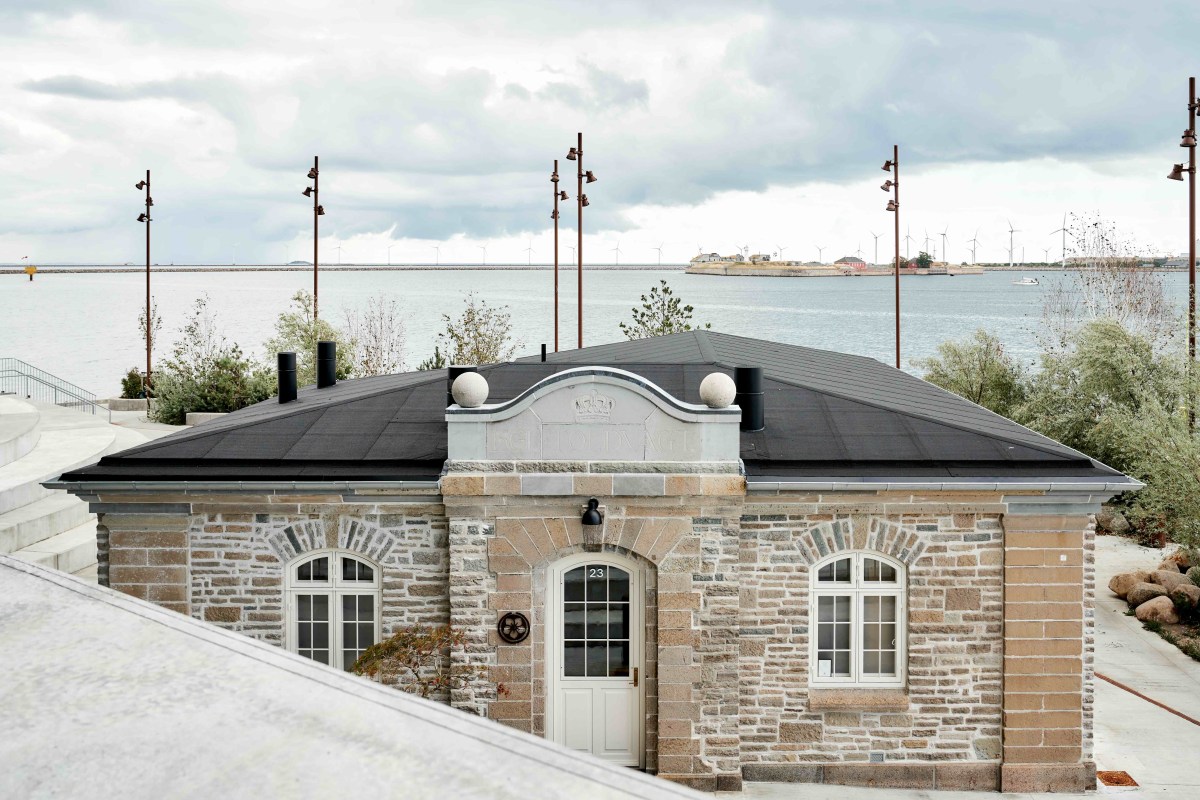
At the far tip of Nordhavn's Redmolen, where the harbour opens out beyond the last apartment blocks, Sushi Anaba occupies a small stone building that was dismantled piece by piece before it was reassembled around it. The restaurant is chef-owner Mads Battefeld's study in Edomae sushi: Tokyo technique applied to seafood drawn almost entirely from Nordic and North Atlantic waters, prepared and handed across a Douglas fir counter to no more than fifteen guests at a time. There is no printed menu to choose from — only the day's omakase, built course by course in front of the room. It holds One MICHELIN Star, awarded in June 2025, the same year the restaurant moved into this rebuilt customs house after several years on the harbour a short walk away. Few addresses in Copenhagen wear their history, and their discipline, quite so plainly.
Sushi Anaba
Restaurant · Nordhavn
© OpenStreetMap contributors · OpenFreeMap
- Address
- Mariehamngade 23, 2150 Copenhagen
- Cooking
- Japanese – Edomae sushi
- Chef
- Mads Battefeld
- Run by
- Chef and co-owner Mads Battefeld
- MICHELIN Guide
- One MICHELIN Star
- Tasting menu
- Nigiri and otsumami – 1,900 DKK
- Price
- Spare no expense
- Covers
- 15-seat Douglas fir counter
- Setting
- 1916 Customs House, Redmolen, Nordhavn
- Telephone
- +45 61 61 51 86
- Website
- sushianaba.com
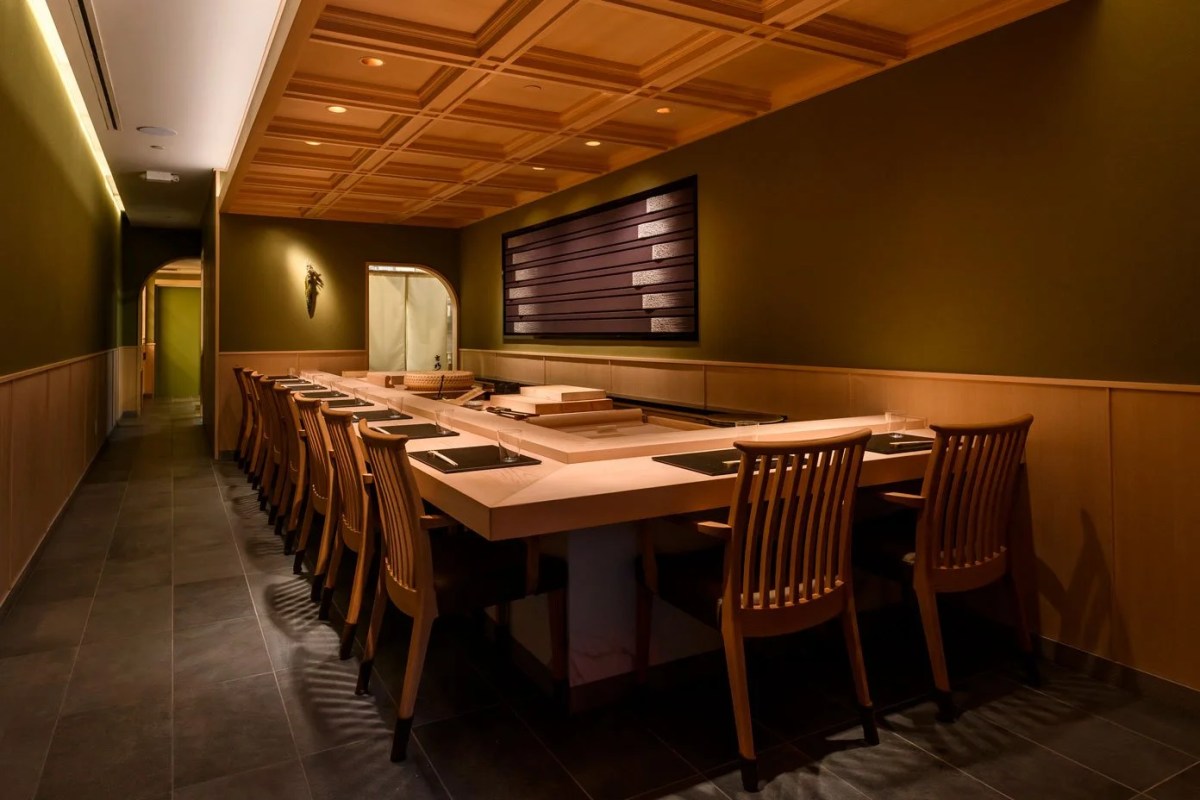
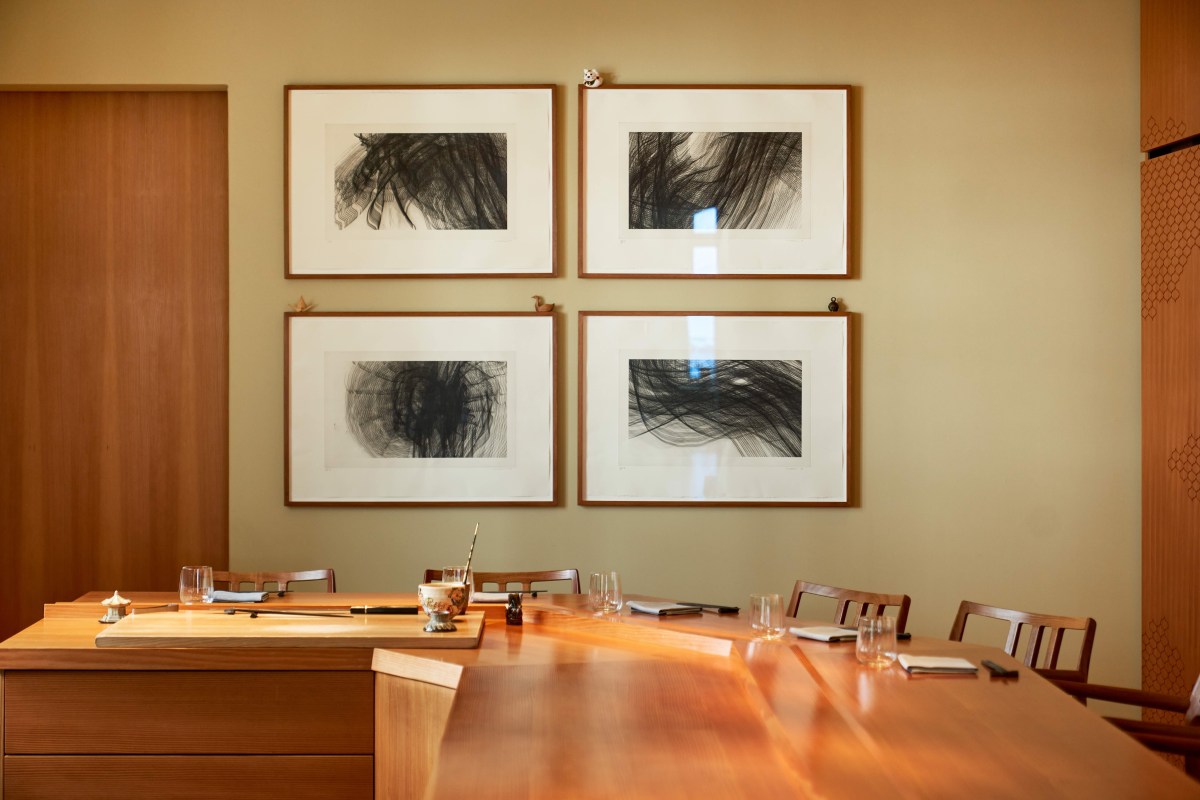
A 15-seat Douglas fir counter inside a dismantled-and-rebuilt customs guardhouse on Redmolen.
01The room and the setting
The building is the former customs guardhouse of Nordhavn, built in 1916 to a design by the architect Osvald Viggo Rosendahl Langballe and used for over sixty years by the harbour's sea patrol, customs assistant and helmsman. When the Nordø development began in 2019, the whole structure was taken apart: its Swedish Öland limestone numbered and packed into more than a thousand wooden crates, its pine roof structures, muntins and window fittings kept aside. Sushi Anaba opened at this address, on the stub of land called Redmolen, in early 2025, once the stone had been put back exactly where it came from.
The dining room turns on a single handcrafted counter in Douglas fir, made by the Danish-Japanese duo Akiko Ken Made and seating fifteen guests — the restaurant's only service area. At one end, a small lounge holds pieces from Finn Juhl's Japan Series, including the Japan Sofa and Japan Chairs in oiled oak, alongside the 48 Sofa Bench in oiled oak and walnut; from the counter, the sightline runs straight through to them, one register of Danish design facing another.
02The chef
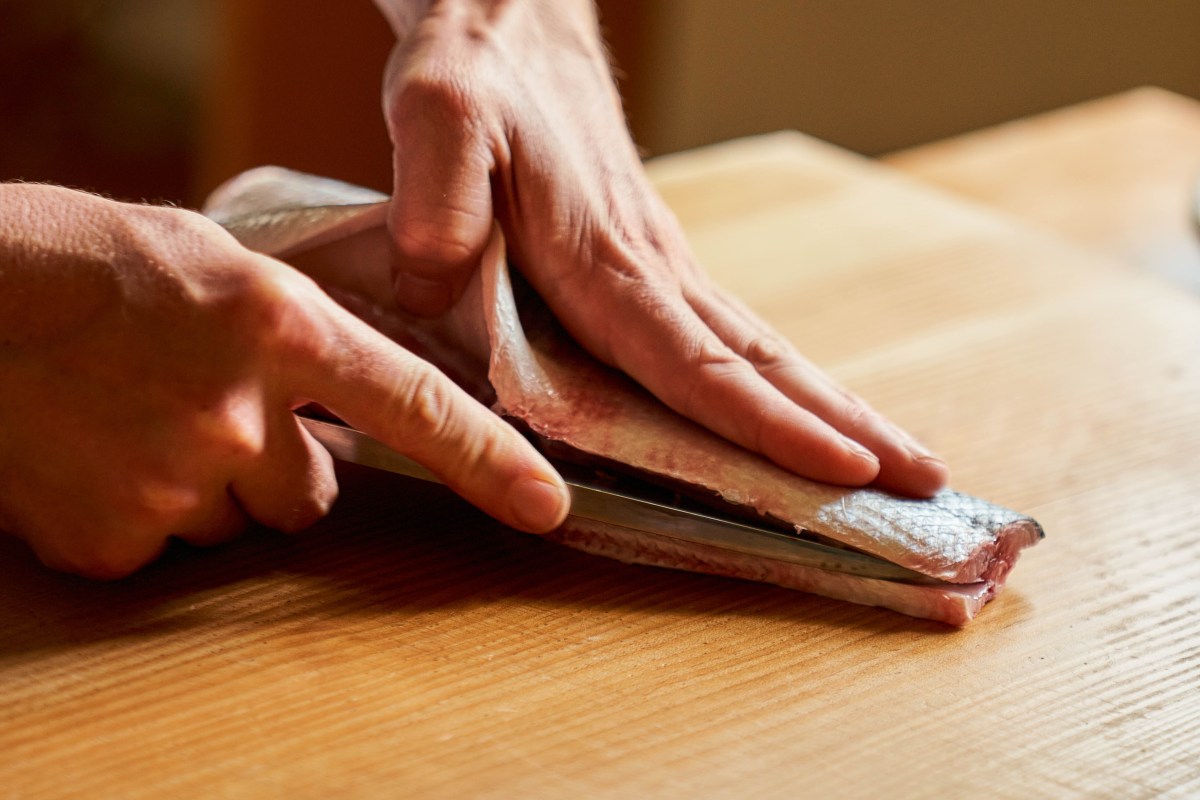
Mads Battefeld is chef and co-owner, and his Tokyo training is the backbone of the place. Before opening it, Mads Battefeld, a previous sous-chef at the Michelin-starred Henne Kirkeby Kro, spent one month every winter in Japan to learn everything about that cuisine and the craftsmanship behind it. He trained under masters Hiroyuki Sato and Izumi Kimura in Tokyo, learning to apply that discipline to a catch that comes from Danish and Norwegian waters rather than Tokyo Bay.
Insider tipSingle Menu of the day; cannot accommodate vegetarian, vegan or most allergy diets.
03The cooking
Sushi Anaba works to the Edomae tradition, the Tokyo method built on four elements — rice, fish, soy and wasabi — rather than invention for its own sake. There is no printed menu: there is no à la carte menu where you point at a laminated sheet; the format is structured and chef-led, which means you are in Battefeld's hands from the start. The ingredients lean deliberately Nordic — Norwegian scallop and Jutland lobster sit alongside garfish, mackerel, monkfish liver and langoustine — cut, cured and seasoned with the same attention a Tokyo sushi-ya would give bluefin or sea bream.
04What to order
All prices include 25 per cent VAT, the restaurant notes on its own menu page, and are subject to change.
Don't miss
Don't miss
- 01
The handcrafted Douglas fir counter by Danish-Japanese duo Akiko Ken Made
- 02
Finn Juhl's Japan Series furniture in the lounge, including the Japan Sofa
- 03
The 1916 customs house, dismantled stone by stone and rebuilt on Redmolen
- 04
The single Menu of the day: nigiri and otsumami, 1,900 DKK
- 05
The Sake Pairing, six glasses drawn from lesser-known producers
05Wine and drinks
The sake list reaches beyond familiar labels into lesser-known producers, treated with the same seriousness as the fish.
06When to go and booking
Seats are limited to the fifteen places at the counter, and the kitchen is candid about what it can and cannot do: it cannot accommodate vegetarians, vegans or most allergies beyond lactose intolerance, cannot cater for coeliac guests because of the soy sauce and miso used, and cannot accommodate fish or shellfish allergies, or guests who do not eat fish or shellfish at all. Anyone with dietary questions is asked to write ahead of booking. Given the single seating around one counter, a reservation made well in advance is the only way in.