 The Metro Mode 55
In this story · 7 sections
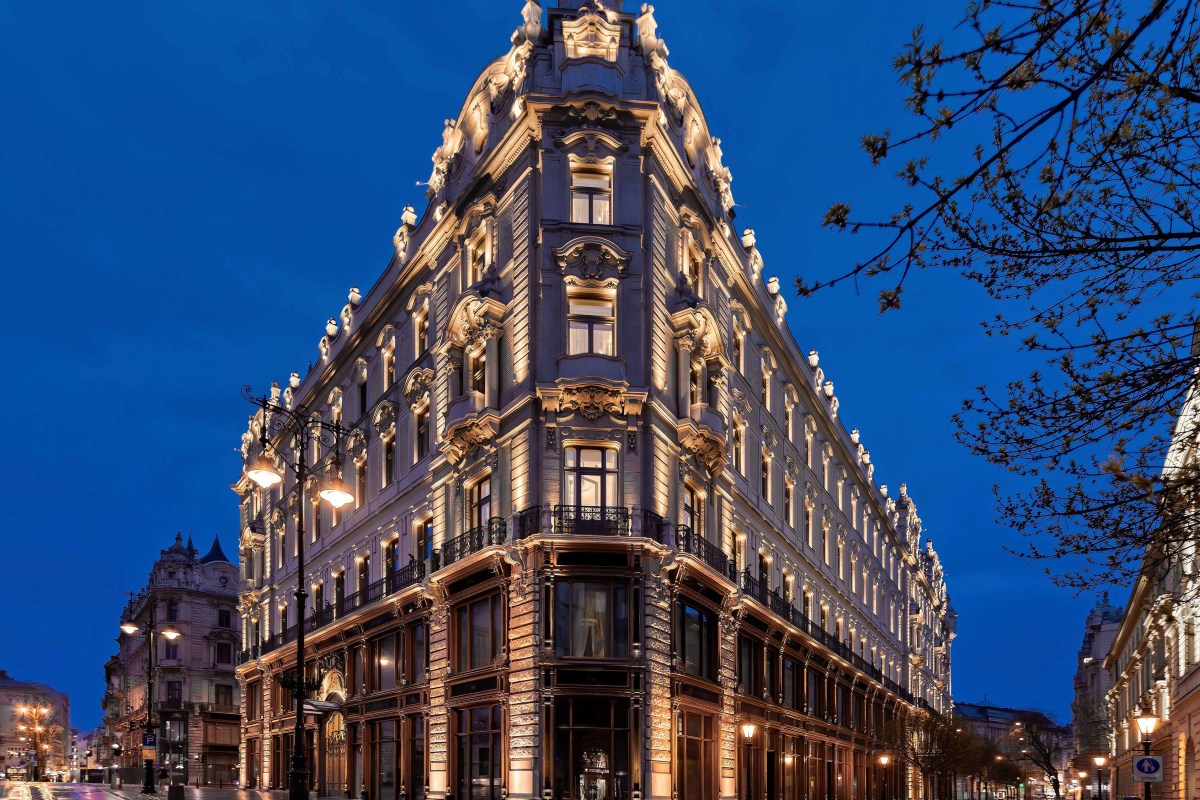
Across from the chestnut trees of Monbijou Park in Berlin-Mitte stands a neo-baroque palace that once handled more state secrets than any embassy in the city: the Haupttelegraphenamt, the German Empire's central telegraph exchange. Government architect Max Lehmann built it between 1910 and 1916, and it stood as Germany's most expensive post office building. Up to 20,000 telegrams left the building daily, a volume that continued until the telegram service closed in 1976, and the exchange served as the nerve-centre of Berlin's telegraph network from its 1916 opening until 1992. An investor acquired the monumental complex in 2001, and years of renovation followed before a hotel finally opened inside it in November 2022. The driving force behind that reopening is Roland Mary, the restaurateur known across Berlin for the celebrity hotspot Borchardt, and his 97-room hotel, private members' club and restaurant group now carries Two MICHELIN Keys from the MICHELIN Guide, alongside five stars and 92 points in the Falstaff Hotel Guide 2026.
Telegraphenamt
Hotel · Berlin-Mitte
© OpenStreetMap contributors · OpenFreeMap
- Address
- Monbijoustraße 11, 10117 Berlin
- Opened
- November 2022
- Rooms
- 97
- Restaurants
- ROOT Bistro, Dieselhaus
- Spa
- 1,200 m² Fitness & Health Club (TechnoGym, Finnish sauna, steam bath)
- Telephone
- +49 (0)30 994 05 90
- Website
- telegraphenamt.com
- MICHELIN Guide
- Two MICHELIN Keys
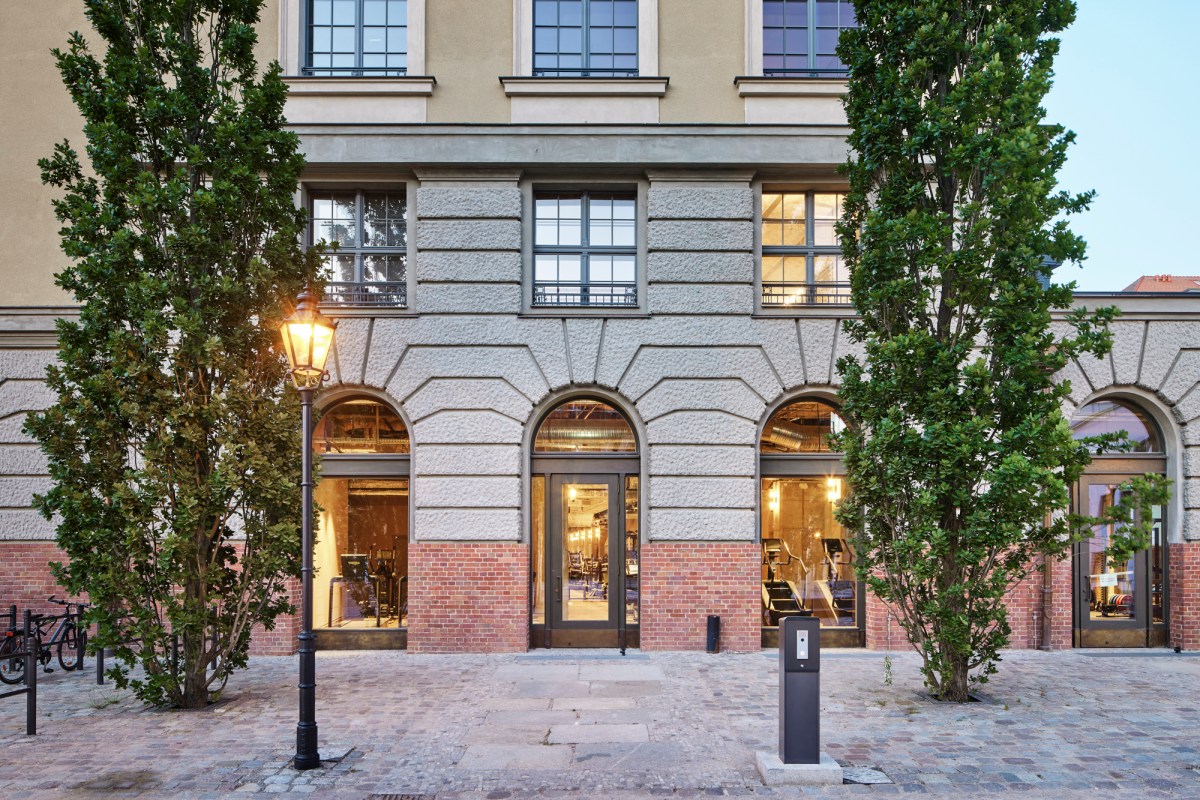
Built 1910–1916 as Germany's most expensive post office, the neo-baroque Haupttelegraphenamt reopened as a hotel in November 2022, steps from Museum Island.
01The house
The building is larger than a single address suggests. A four-wing structure running along Oranienburger Straße, Monbijoustraße and Ziegelstraße, it was built in neo-baroque style, its wings angled slightly off true to follow the existing street grid. It is listed today as an architectural monument, and the hotel occupies the Monbijoustraße wing, sharing the building with a private members' club, bar and restaurant.
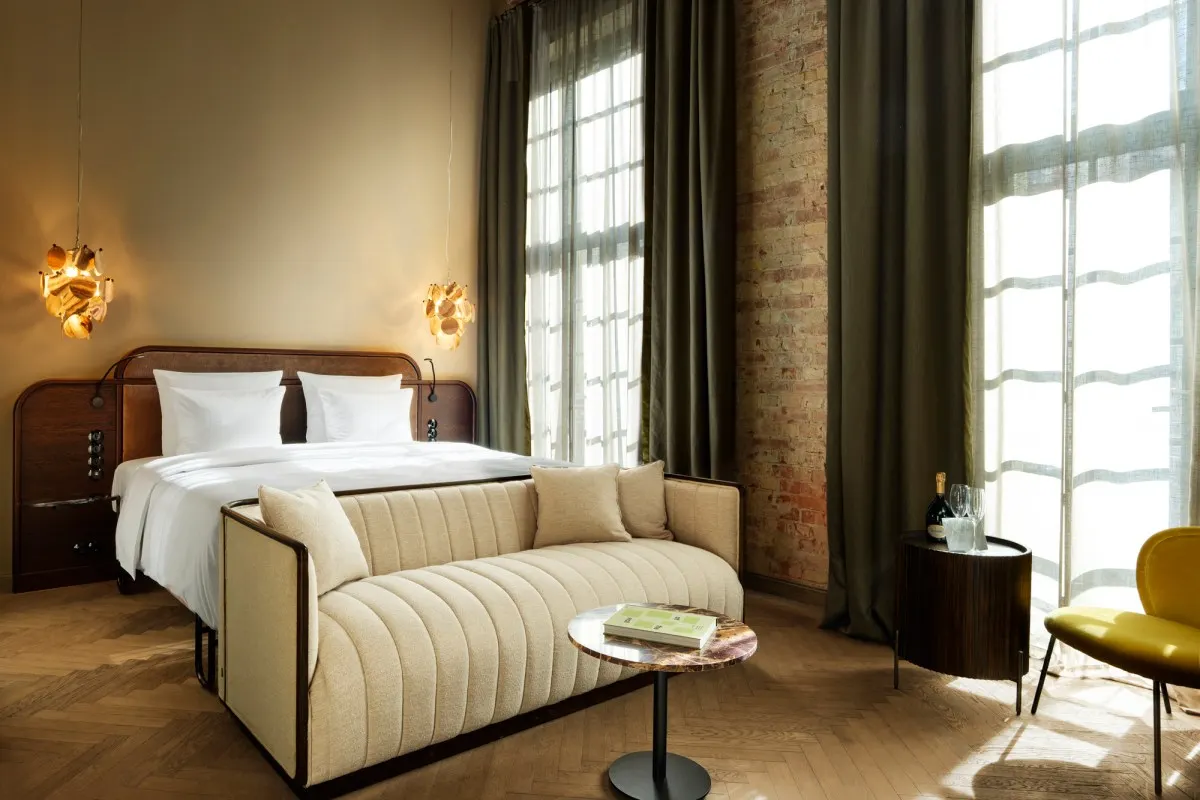
The conversion was entrusted to the award-winning Berlin practice DREIMETA, which layered art deco design with echoes of Babylon Berlin onto the old exchange's bones. Original fabric was kept rather than disguised: exposed brick walls, beamed ceilings and classic columns run through the public rooms, while bedrooms add herringbone-pattern parquet, real wood flooring and custom-made furniture true to the aesthetic of 1920s Berlin.
02Rooms and suites
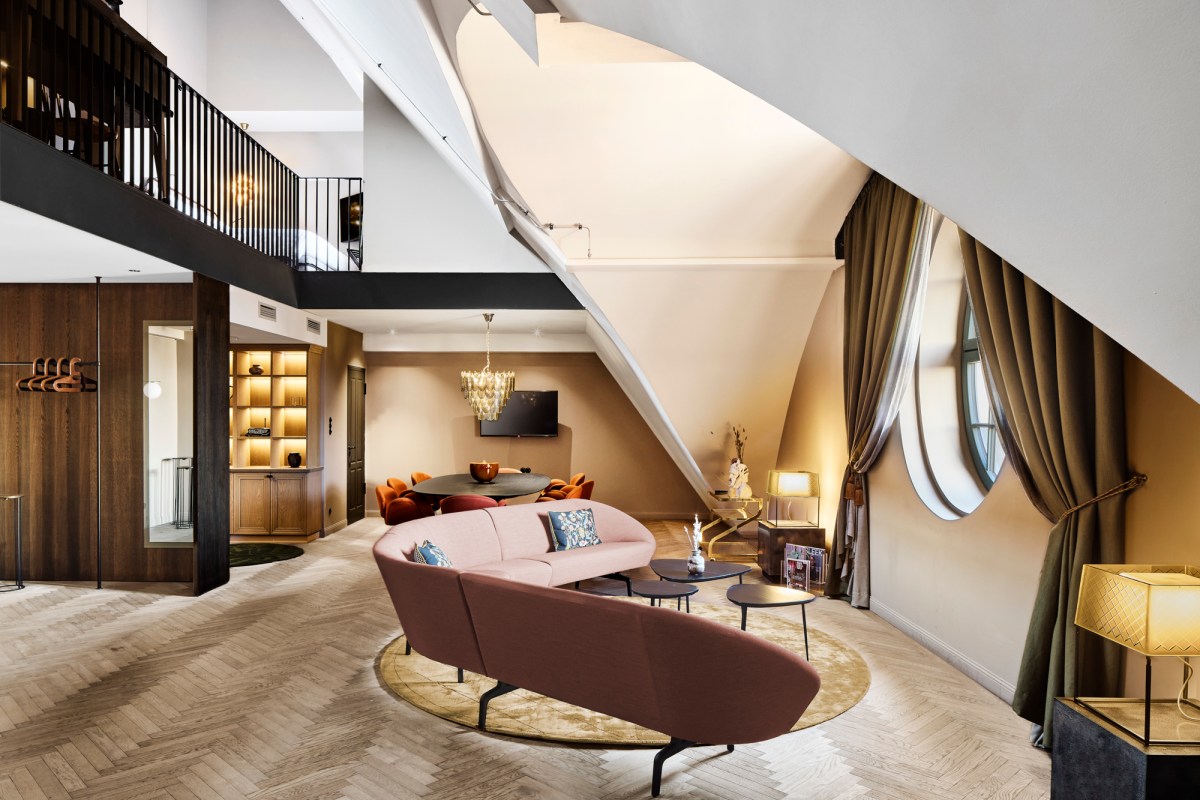
In total the hotel counts 97 rooms, maisonettes and suites, sized from 21 to 140 square metres. Seven of them are full maisonettes, with ceilings reaching 14 feet and windows running floor to ceiling. The top-floor Graham's Residence spans two levels joined by a spiral staircase and adds its own balcony, while Mable's Place Suite unfolds over 100 square metres around a freestanding bathtub and a similar spiral stair — the kind of vertical drama only a former industrial hall can accommodate.
Insider tipTwo MICHELIN Keys; ROOT restaurant sits under the original glass-roofed courtyard; book ahead for park-facing rooms with TV Tower views.
Position matters here. Choose a room facing Monbijoupark and the view takes in the TV Tower, Berlin Cathedral and the red City Hall, while courtyard-facing rooms look down on the glass-roofed restaurant below. Either way, the outlook was built into the structure long before anyone thought to charge for it.
03Where to eat
Breakfast, lunch and dinner happen at ROOT Bistro in the hotel's lobby, open for breakfast from 7 to 11am and then daily from noon to 10pm, with the kitchen closing at 9.30pm. The historic inner courtyard, once part of the telegraph works, now sits beneath its original glass roof as the setting for ROOT, bringing together design, greenery and food under the same light that once lit the sorting hall. Behind the project stands the team of Roland Mary, who also runs Borchardt, the Berlin institution whose guestbook has included George Clooney, Leonardo DiCaprio, Madonna and Barack Obama. In the kitchen, Head Chef Steve Großmann works alongside sushi specialist Ryota Terashima.
A different register arrives with Dieselhaus, a two-floor Bavarian beer hall bringing Hofbräuhaus energy from Traunstein to Mitte, open Monday to Saturday from noon with the kitchen running until 10pm and on Sundays until 9pm. For quieter moments, L'Oui Torcafé serves pastries and coffee from the Berlin social enterprise Coffee Circle on weekday mornings, and petit bijou, overlooking the Spree and the Bode Museum, pours coffee and cake daily from 10am to 6pm.
04The bar
ROOT Bar keeps its own hours, open daily until 11pm, its square central counter and lounge corners drawing as many Mitte regulars as hotel guests. Cocktails lean eclectic rather than classic, in keeping with a room that was never meant to feel like a conventional hotel bar.
05Spa and wellbeing
Wellness here reads closer to a clinic than a spa menu. The Fitness & Health Club spans 1,200 square metres with TechnoGym equipment, a steam bath and a Finnish sauna, open daily from 7am to 10pm. Run under the name concept, the club adds personal training and diagnostic testing — metabolic analysis, spiroergometry, body-composition scans — built for guests who want data alongside relaxation.
It is an unusual pairing with a 1916 telegraph hall, though fitting enough: a building once dedicated to moving information as fast as possible now measures the body with similar precision.
06The neighbourhood
Monbijou Park sits directly opposite, a green buffer between the hotel and the Spree, with the Bode Museum and Museum Island a short walk north. The hotel sits three minutes on foot from Museum Island and six minutes from Hackescher Markt, putting the Pergamon, the Neues Museum and the bars of the Scheunenviertel equally within reach. Art lovers can detour to König Galerie, close by, for contemporary exhibitions staged in a historic setting, while Friedrichstraße station keeps the rest of the city a few stops away.
07Making the most of a stay
Look for the lobby's pneumatic tube system: the hotel skips a conventional front desk in favour of an open, plant-filled lounge that still threads the old tube network through its walls, a working relic of the building's postal years, even if it no longer carries anything more than curiosity. The hotel also runs as a private members' club, so expect a steady flow of Berlin regulars through the lounge and bar rather than only overnight guests. Those wanting a quieter, riverside alternative on a return visit can book the hotel's sister properties, the ABION Spreebogen Waterside Hotel and ABION Villa Berlin, both set directly on the Spree.
Don't miss
Don't miss
- 01
Book a Monbijoupark-facing room for views of the TV Tower, cathedral and red City Hall
- 02
Dinner at ROOT under the historic courtyard's original glass roof, with dishes from Ryota Terashima
- 03
The top-floor Graham's Residence duplex, 140 m² plus balcony, reached by spiral stair
- 04
A Bavarian evening at Dieselhaus, Mitte's own slice of Hofbräuhaus Traunstein
- 05
The lobby's preserved pneumatic tube system, a working relic of the building's postal years