Miami Beach's Art Deco District has 960 historic buildings and was given protected status in 1979 – after a group of activists stood in front of the bulldozers. Here is the history, the architects and the walk along Ocean Drive.
In this story · 4 sections
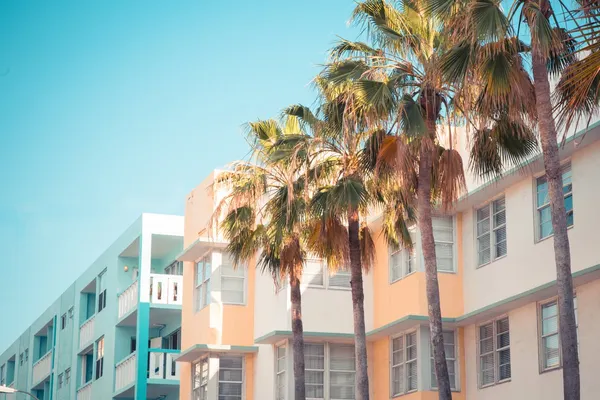
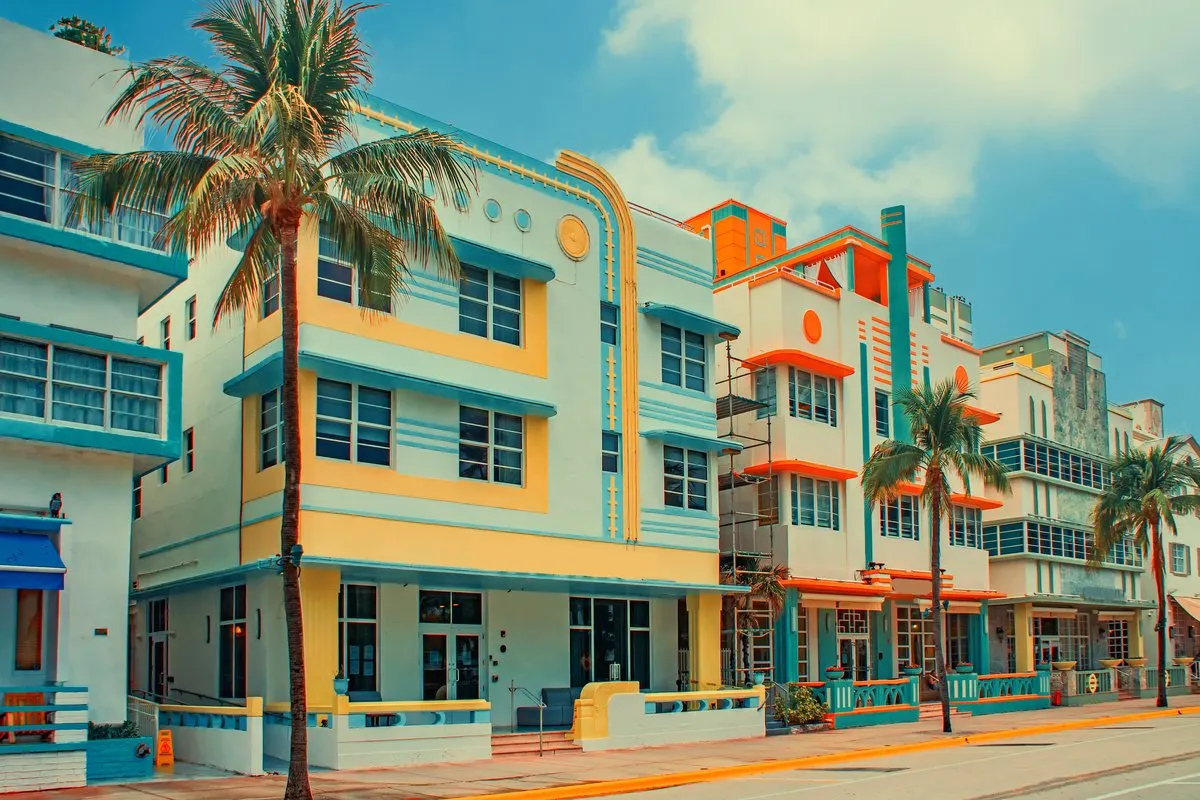
The Art Deco district in Miami Beach, formally the Miami Beach Architectural District, stretches from Sixth Street in the south to Collins Canal and Dade Boulevard in the north, and from the Atlantic to Alton Road. Within its boundaries are 960 historic buildings in pastel colours, with rounded corners, eyebrow-shaped sunshades and neon signs. The district was said for decades to be one of the world's largest collections of Art Deco – but fifty years ago it came close to disappearing.
3 places
The district in figures- Historic buildings
- 960
- Protected since
- 14 May 1979
- Ocean Drive hotels
- 5th–15th Street
- MDPL founded
- 1976
From Mediterranean Revival to Streamline Moderne
The district's oldest houses date from the early to mid-1920s and were mostly built in the Mediterranean Revival style, with tiled roofs and arcades. The great building boom came in the 1930s, from the Great Depression to the early 1940s, and by then the style was Art Deco and Streamline Moderne.
The architects were few but productive. Henry Hohauser designed, among others, the Colony and the Edison in 1935, the Essex House in 1938, and the Cardozo and the Greystone in 1939. L. Murray Dixon designed the McAlpin in 1940, Anton Skislewicz the Breakwater in 1939, and Albert Anis is behind the Majestic, Avalon, Clevelander and Leslie, according to Wikipedia.
Barbara Capitman and the fight for the buildings
In the 1970s, the buildings were dilapidated and threatened by demolition. Barbara Capitman, born in Chicago in 1920 and formerly a reporter and advertising copywriter, moved to Miami Beach in 1973. In 1976, she and a group of preservation activists formed the Miami Design Preservation League. They lobbied politicians and developers, held candlelight vigils and protest marches, and stood in front of bulldozers that were set to demolish the buildings.
Not all the buildings could be saved – the Senator and the New Yorker were demolished – but on 14 May 1979 the district was entered into the National Register of Historic Places. The interest led to an economic and cultural rebirth with new hotels, flats and restaurants. Capitman's son Andrew bought several of the buildings, among them the Cardozo on Ocean Drive. In 1996, 10th Street between Washington Avenue and Ocean Drive was renamed Barbara Capitman Way, and in 2016 a bust of her was unveiled in Lummus Park opposite the Cardozo.
Ocean Drive and Lummus Park
The district's public face is Ocean Drive, where the hotels from 5th to 15th Street face Lummus Park and the beach. This is where the most photographed façades stand, and this is where the neon lights up as dusk falls. One block in runs Collins Avenue, named after John S. Collins, who in 1913 built the first bridge between Miami Beach and the mainland.
The Miami Design Preservation League is still keeping the legacy alive with Art Deco Weekend, the festival that attracted 420,000 visitors in 1990, according to Wikipedia.
The Art Deco walk
Start at 5th Street and walk north along Ocean Drive to 15th Street, with Lummus Park and the beach on your right-hand side. Stop at the Cardozo and the Capitman bust at 13th Street, then walk back south along Collins Avenue to see more buildings from the 1930s. The best light is early in the morning, before the heat and the crowds. See the blocks in VERA PI's Miami guide, on the map of Miami Beach and with VERA PI Camera, and find more city guides among metromode.co's destinations.
Ocean Drive
Art Deco hotels facing Lummus Park
The district's most photographed row of buildings.
Ocean Drive, 5th–15th Street, Miami Beach
The Cardozo
Henry Hohauser, 1939
Opposite Barbara Capitman's bust in Lummus Park.
Ocean Drive at 13th Street, Miami Beach
The Colony
Henry Hohauser, 1935
One of Hohauser's early Art Deco hotels.
Ocean Drive, Miami Beach