In this story · 7 sections
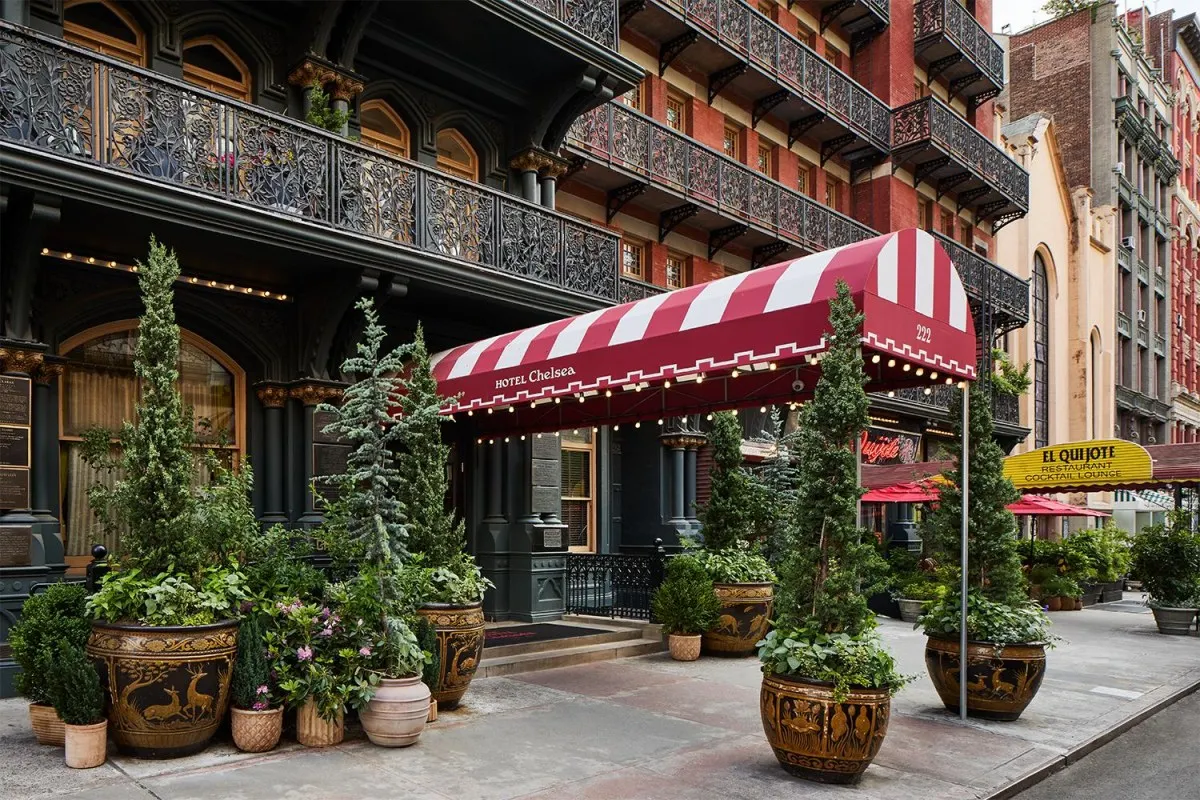
Behind a red-brick façade laced with flower-wrought iron balconies on West 23rd Street stands a building that has never quite settled on being just a hotel. When it opened in 1884, the Victorian Gothic structure was one of the tallest in New York, built by architect Philip Hubert as a kind of socialist commune where tenants split fuel and service costs, tradespeople who built it were given apartments, and the top floor held fifteen artist studios behind walls three feet thick. It became a hotel in 1905 and, over the following century, a byword for bohemian New York, sheltering writers, musicians and painters long before closing in 2011 for what turned into an eleven-year rebuild. It reopened in 2022 with 155 rooms, its wrought-iron staircase and decades of resident-made artwork intact, and today the MICHELIN Guide awards it One Key.
The Hotel Chelsea
Hotel · Chelsea, Manhattan
© OpenStreetMap contributors · OpenFreeMap
- Address
- 222 West 23rd Street, New York, NY 10011
- Opened
- 1884 (hotel from 1905; reopened 2022)
- Building
- Victorian Gothic / Queen Anne Revival, 12 floors
- Architect
- Philip Hubert (Hubert, Pirsson & Co.)
- Rooms
- 155
- Suites
- 30
- Restaurants
- El Quijote, Café Chelsea, Teruko
- Bar
- Lobby Bar
- Spa
- The Spa at Hotel Chelsea, penthouse level
- Setting
- Chelsea, Manhattan, near the High Line
- Nearest station
- 23rd Street (1 train)
- Group
- BD Hotels (MacPherson, Drukier, Born)
- Telephone
- +1 212 483 1010
- MICHELIN Guide
- One MICHELIN Key
Red-brick, iron-balconied landmark between Seventh and Eighth Avenues, steps from the High Line.
01The house
The Chelsea's origins are unusually idealistic for Manhattan real estate. Philip Hubert, a French-American architect who founded Hubert, Pirsson & Company, designed the building as one of the city's first private apartment co-operatives, with the top floor alone containing fifteen artists' studios and thick, soundproofed walls so musicians could live alongside writers without complaint. A part of the building was converted to a hotel in 1905, and it was designated a New York City Landmark in 1966, its long-serving manager Stanley Bard becoming known for letting artists settle their bills in paintings rather than cash — several of which still hang in the public rooms today.
The most dramatic chapter came after 2011, when developer Joseph Chetrit bought out the building's co-owners for roughly eighty million dollars and halted new bookings; the hotel then changed hands twice more, in 2014 and 2016, through a tangle of lawsuits and tenant protections that dragged renovation costs past thirty million dollars. It finally passed to hoteliers Sean MacPherson, Ira Drukier and Richard Born — the team behind The Bowery Hotel, The Jane and The Maritime — who completed a sweeping restoration and reopened the hotel to the public in 2022, eleven years after it closed. Around sixty rent-protected original residents still live in apartments interspersed among the guest rooms, their doors marked by letters rather than numbers, a reminder that the Chelsea remains, in part, still inhabited by the city it helped shape.
02Rooms and suites
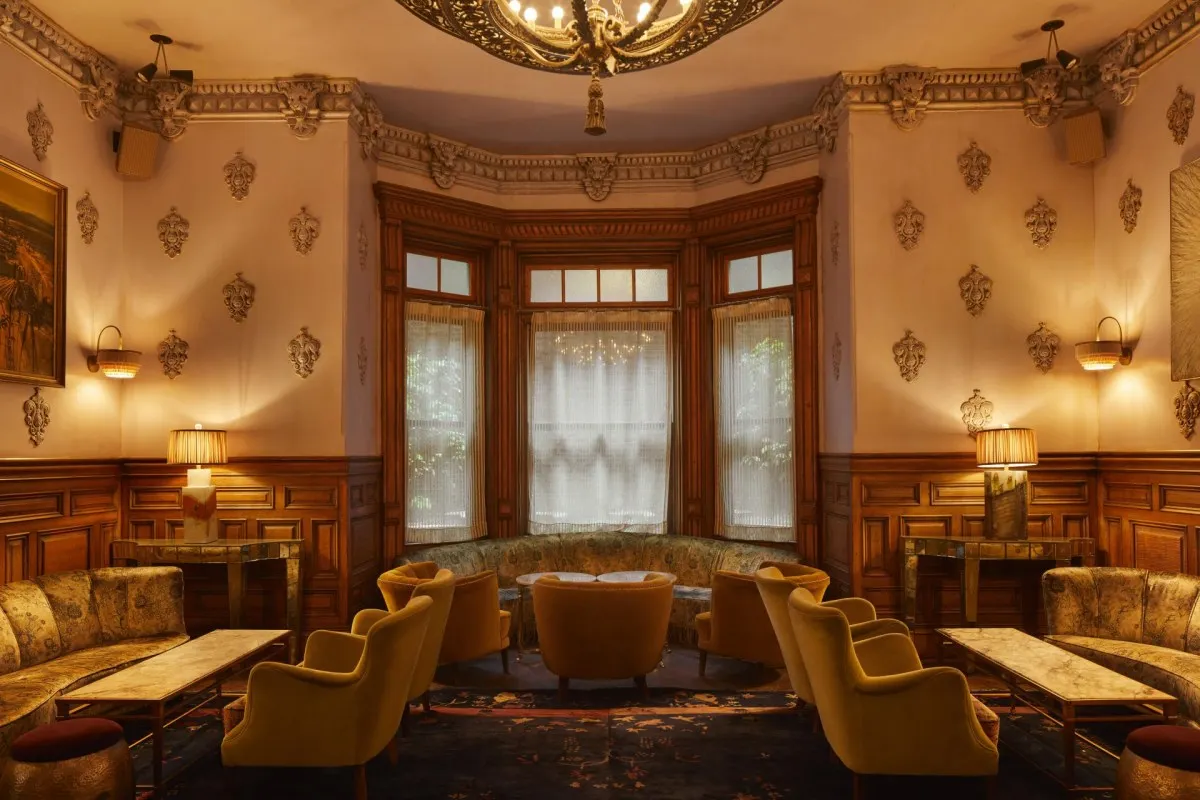
The 155 keys run from compact Petite Chelsea rooms up through The Chelsea, Grand Chelsea and Premier Chelsea categories to lofts and suites — the Chelsea Loft, Chelsea Suite, Chelsea Grand Loft, Chelsea Grand Suite and a Two Bedroom Suite — several of which can be booked as adjoining two-bedroom layouts on request. Wikipedia's architectural record counts 125 hotel rooms and 30 suites across the twelve-floor building. Designers folded in quiet nods to the hotel's rock-and-roll past, including Marshall Bluetooth speakers in the rooms, while keeping the Victorian bones — original moulding, restored floors — that made the building a New York State and National Register landmark.
Insider tipNearest subway: 23rd Street on the 1 train; High Line and Chelsea galleries nearby.
03Where to eat
El Quijote has operated from the hotel's ground floor since 1930, making it New York's oldest Spanish restaurant; reopened under restaurant group Sunday Hospitality, its menu from chef and culinary partner Jaime Young draws on Basque Country cooking, running from pintxos and small plates to heartier entrées beneath the restaurant's long-standing Don Quixote mural.
Café Chelsea, a French-American bistro, was the hotel's first new restaurant concept in roughly ninety years when it opened in 2023, taking over a space once occupied by Capitol Fishing Tackle. By 2026 the kitchen was led by Jaime Young, with a beverage programme from Sunday Hospitality's Brian Evans; the room keeps its vintage Lord & Taylor chandeliers, a zinc bar and decorative moulding across several distinct areas — the formal Petit Café, the sunlit Grand Café, a private Wine Room and a plant-filled Solarium. Pastry chef Paty Zamarripa, previously of the Michelin-starred Pangea, oversees desserts across the property, from soufflés here to other plates at the hotel's Japanese restaurant.
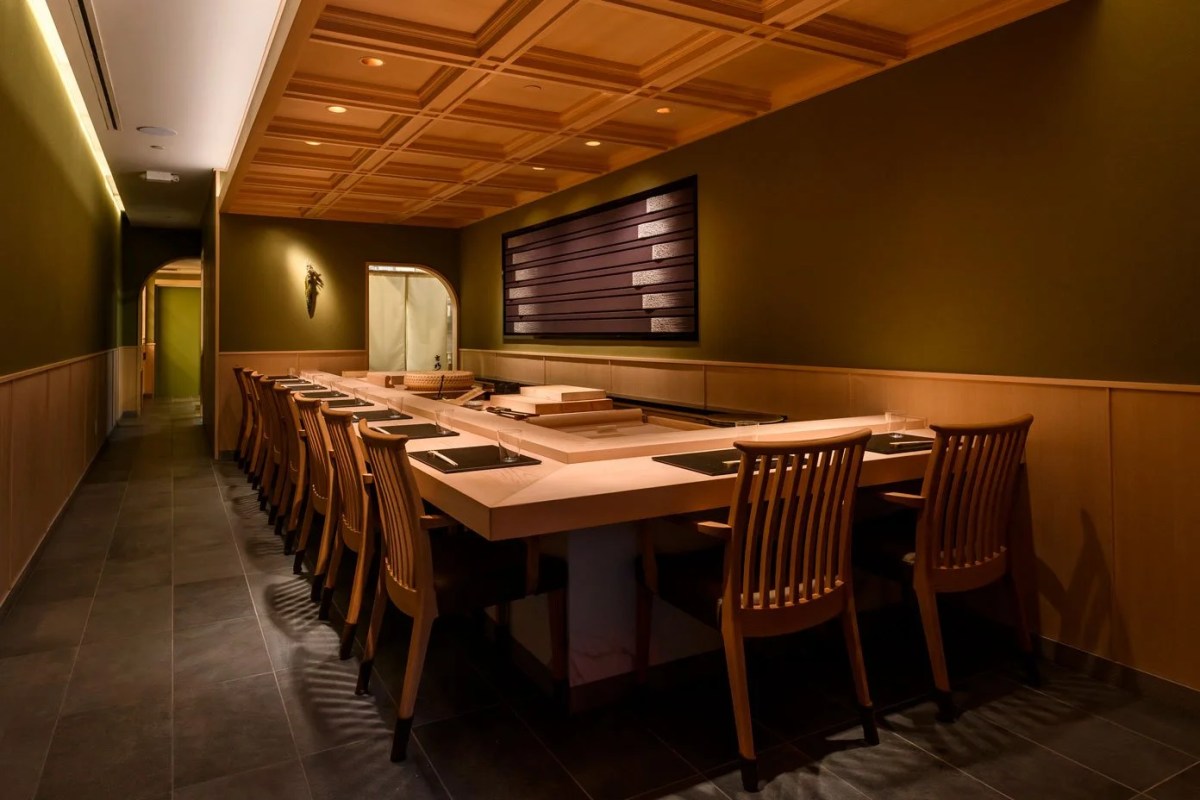
Teruko sits discreetly in the hotel's basement, its room anchored by the salvaged original backbar from the Hotel Okura's famed Orchid Bar in Tokyo. Executive chef Tadashi Ono, previously of Matsuri and La Caravelle, built the menu around traditional Japanese ingredients, while head sushi chef Hideaki Watanabe handles Edomae-style sushi and nigiri; the restaurant is named for the Japanese-Swiss artist Teruko Yokoi.
04The bar
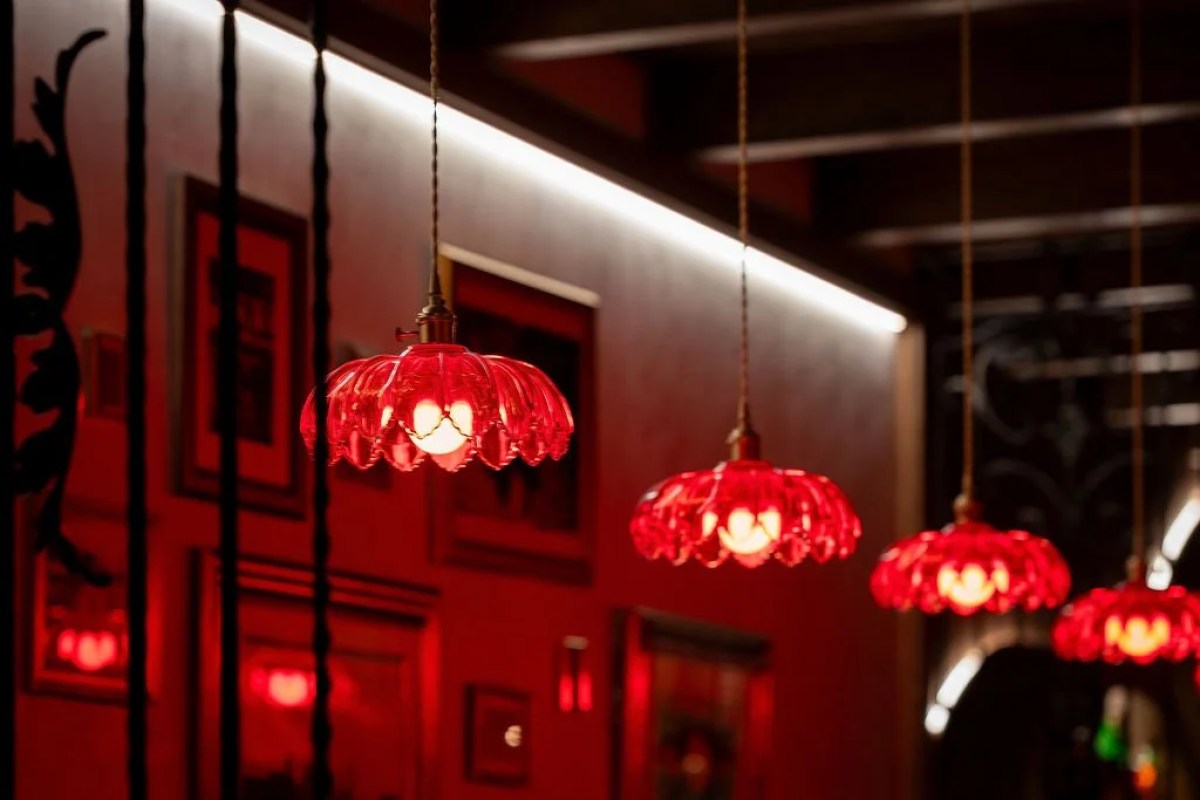
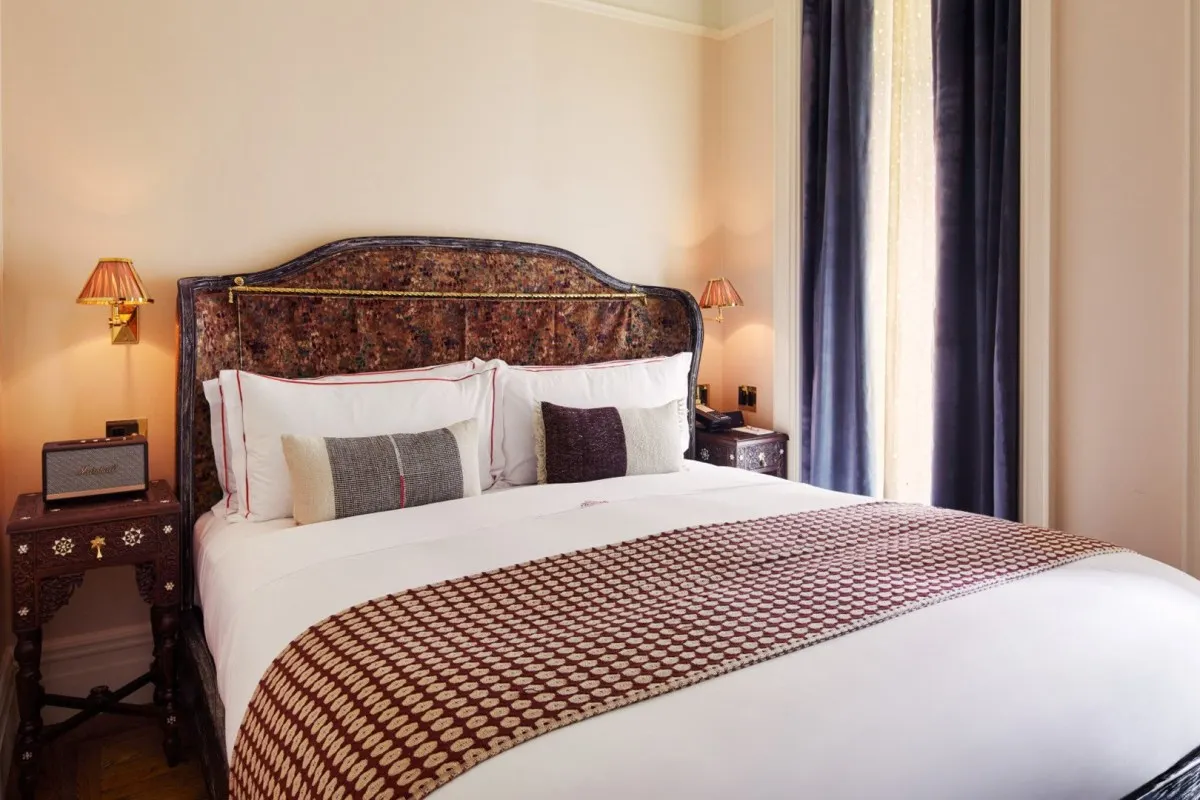
The Lobby Bar anchors the hotel's ground floor as a martini-led room threaded through the same dining revival as El Quijote, Café Chelsea and Teruko, its chandeliers and jewel-toned velvet seating setting a stage-set tone for a lobby that doubles as one of Chelsea's more theatrical places for a drink before dinner.
05Spa and wellbeing
The Spa at Hotel Chelsea occupies the penthouse level, with a private terrace garden and hydrotherapy amenities that include a traditional Swedish sauna, aromatic steam rooms, rain showers and a fireplace lounge; it opens from 9am to 8pm and is available to outside guests as well as hotel residents. The hotel has also hosted artists in residence, among them Athena Hewett, founder of botanical skincare brand Monastery, offering an exclusive Founder's Facial during limited appointment windows. One floor below, a remodelled twelfth-floor gym opens onto a patio with skyline views over the surrounding rooftops.
06The neighbourhood
The hotel sits in the Chelsea neighbourhood between Seventh and Eighth Avenues, within walking distance of the High Line, the raised former rail line turned linear park and outdoor gallery, and the gallery district that has grown up around it. The nearest subway stop is 23rd Street on the 1 train, putting Madison Square Park and the Flatiron District within easy reach on foot.
07Making the most of a stay
Spa treatments and Teruko's dinner service — Monday to Saturday from 5pm — are worth booking ahead given limited covers, and guests wanting a two-bedroom layout should email the hotel directly, since adjoining rooms are arranged on request rather than booked online.
Don't miss
Don't miss
- 01
The original wrought-iron staircase and decades of resident-made artwork throughout the lobby
- 02
El Quijote's century-old dining room, still under its Don Quixote mural
- 03
Teruko's salvaged backbar from the Hotel Okura's Orchid Bar in Tokyo
- 04
The penthouse spa's private terrace garden, Swedish sauna and fireplace lounge
- 05
The twelfth-floor gym's open-air patio with skyline views