In this story · 6 sections
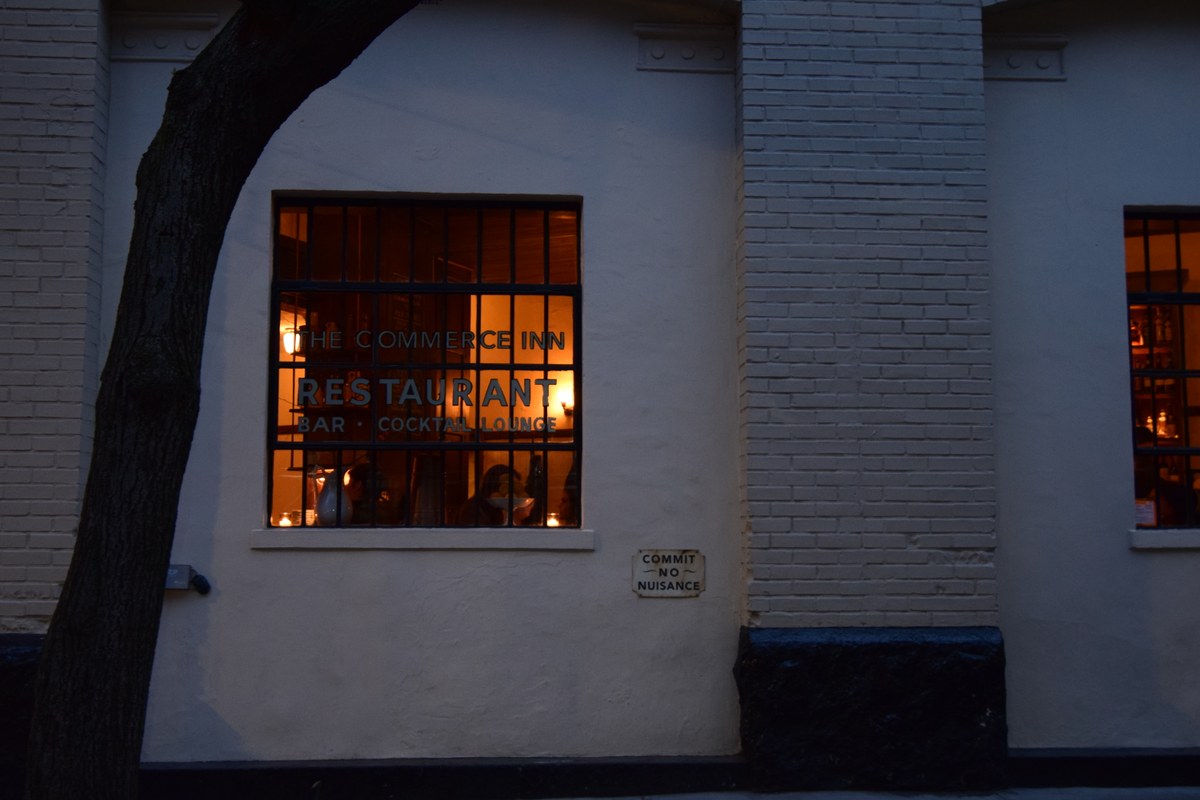
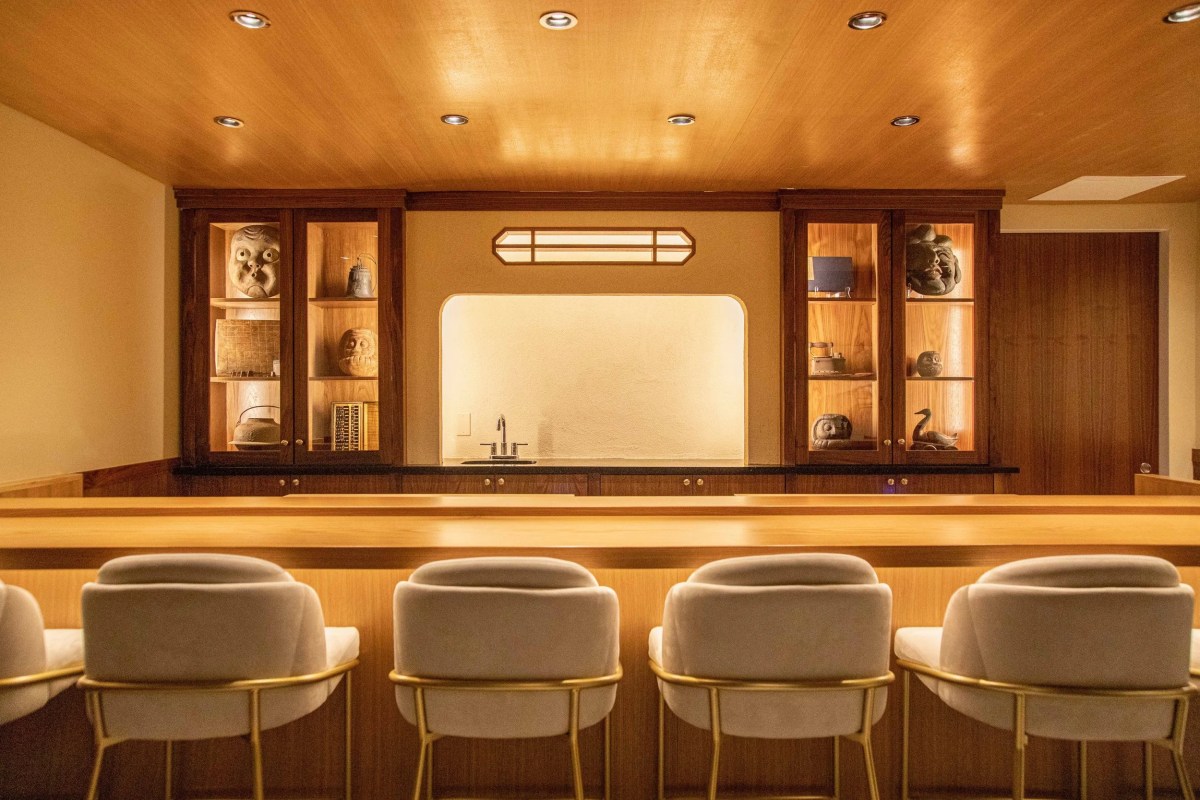
On St Marks Place, between Avenue A and First Avenue, the evening starts with a Victorian mailbox rather than a buzzer. Guests receive a cipher by email, decode it, and key the result into a hidden pad before an unmarked door will open. The Office of Mr. Moto builds its entire evening around an invented nineteenth-century gourmand and art connoisseur said to have sailed to Japan in 1853 aboard the USS Susquehanna as part of Commodore Perry's expedition, returning with Edo-mae sushi as his great discovery. The restaurant opened in early 2023 in a St Marks Place storefront that had cycled through tenants largely unnoticed, and is run by AYS Hospitality, the East Village group also behind the noodle shops TabeTomo and TomoTomo. Only twelve seats divide between a short sushi counter and a handful of tables, set among maps, bond certificates, masks and a model ship said to be collected by its fictional host. It is Selected in the MICHELIN Guide.
The Office of Mr. Moto
Restaurant · East Village, Manhattan
© OpenStreetMap contributors · OpenFreeMap
- Address
- 120 St Marks Pl, New York, NY 10009
- Cooking
- Japanese, Sushi
- Chef
- Toshio Matsuoka (Executive Chef)
- Run by
- AYS Hospitality
- MICHELIN Guide
- Selected in the MICHELIN Guide
- Tasting menu
- Edo-mae omakase (Counter/Gallery); Modernity Menu Mon–Tue
- Open
- Daily, two seatings at 6pm and 8:30pm
- Covers
- 12 seats (6-seat counter + tables)
- Setting
- Coded-entry omakase styled as a 19th-century collector's office
- Telephone
- +1 646-360-4065
- Website
- dearmrmoto.com
Twelve seats behind a Victorian mailbox and a cipher, serving Edo-mae omakase from chef Toshio Matsuoka.
01The room and the setting
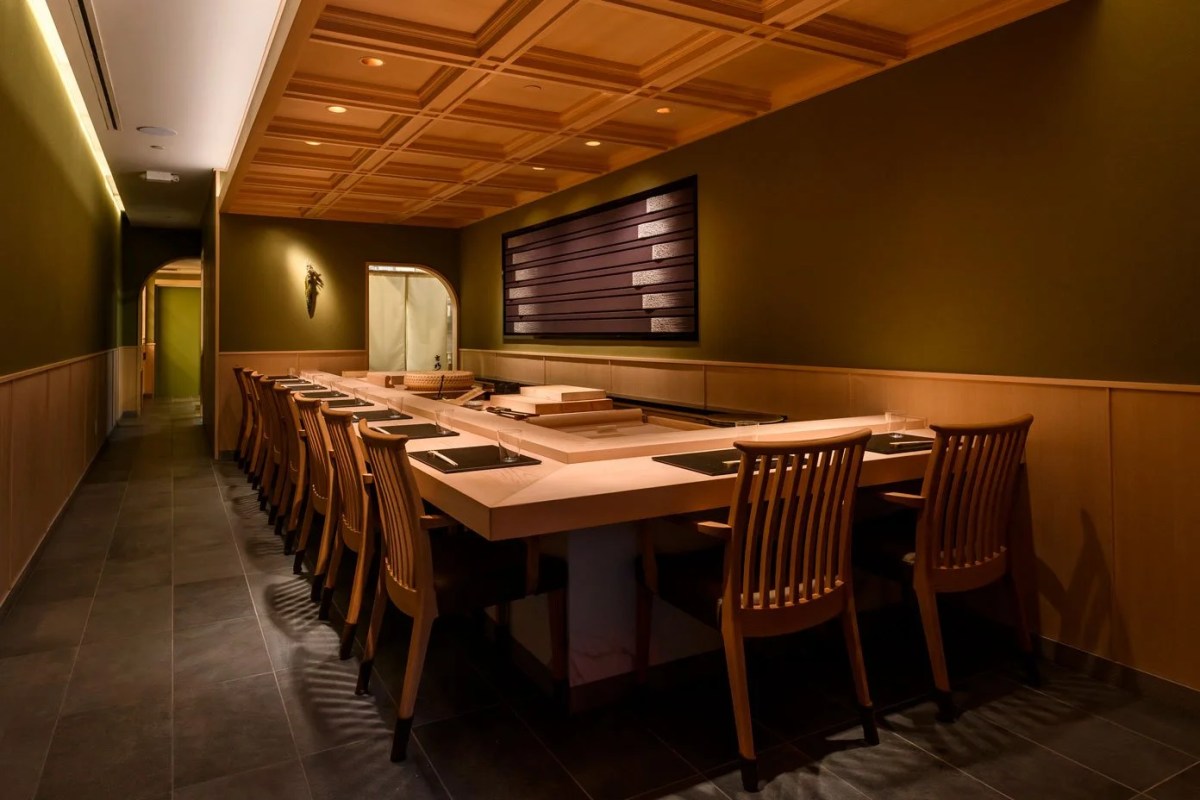
The theatre is deliberate. Once through the coded door, the bi-level room reads as a private museum as much as a restaurant, its shelves holding the ephemera of a voyage that never happened but feels thoroughly documented. The seating itself is split in two: The Counter, a six-seat bar built from a single piece of white oak, and The Gallery, where tables are arranged among the collected curiosities for a more conversational version of the same evening.
Capacity never exceeds twelve people at once, so the room stays hushed even when every seat is filled. The walls carry maps, bond certificates, pottery, masks and a model ship, all attributed to the character of Mr. Moto, whose journeys to Japan are dated to 1853 aboard the USS Susquehanna.
02The chef
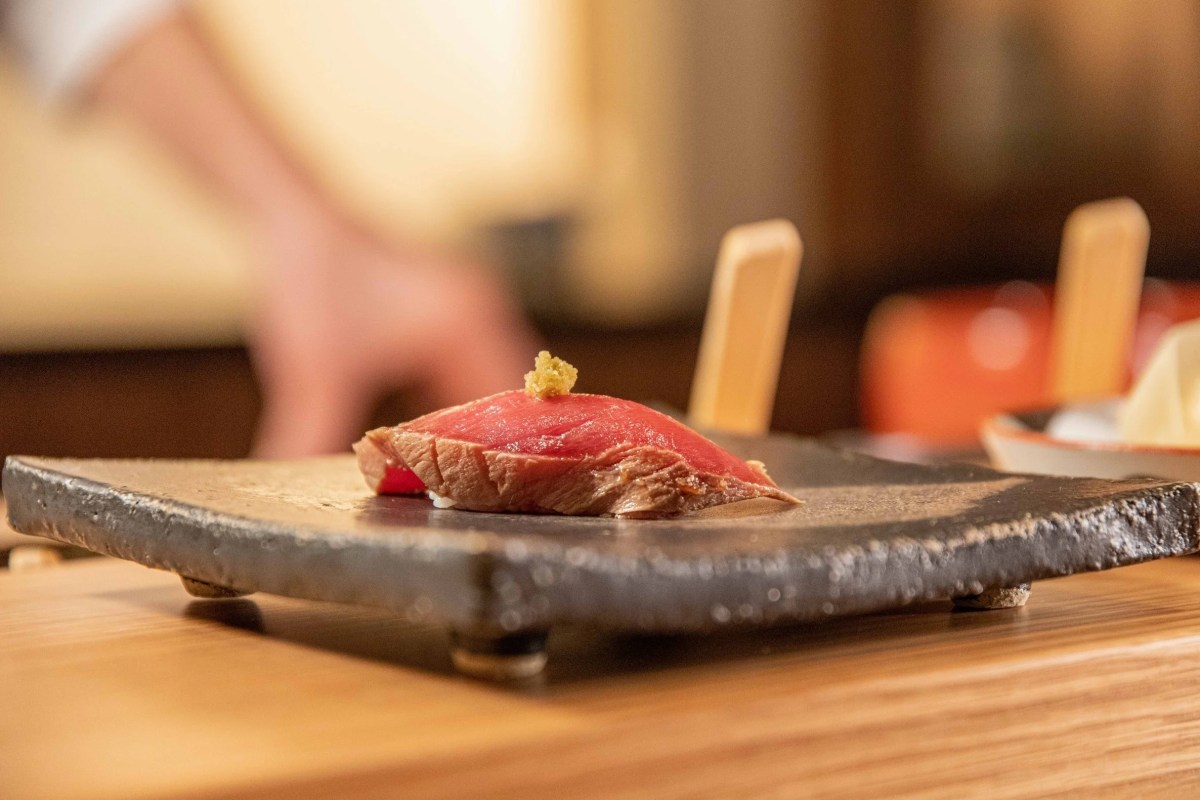
Executive chef Toshio Matsuoka leads the counter, and his technique is rooted in eighteenth- and nineteenth-century Japanese preparation methods rather than any modern shortcut. Regulars who have eaten widely across the city's omakase counters note that he has spent decades, not years, behind a sushi bar, and that experience shows in the unhurried, close-up way each piece is formed and handed across the wood.
Insider tipBook a month ahead; two seatings nightly; cipher arrives by email before your visit.
Matsuoka's sourcing runs through Tokyo's Toyosu Fish Market, with the kitchen built to chase whatever is hyper-seasonal that week rather than a fixed, repeatable list of fish.
03The cooking
The tasting menu opens with a selection of appetizers before a savoury chawanmushi egg custard, then moves into a long run of nigiri built to trace the history and modern interpretation of Edo-mae sushi, before closing with a hand roll, soup and dessert.
Expect the fish list to reach past the usual staples: black-throat sea perch, red gurnard and shima aji have all turned up on the counter, part of what keeps the sourcing feeling genuinely seasonal rather than decorative.
04What to order
There isn't much choosing to do at an omakase built this tightly, which is the point. The sequence itself is the dish worth paying attention to: appetizers first, then the chawanmushi egg custard, then the long nigiri run that forms the spine of the meal, and finally a hand roll, soup and dessert to close.
Diners on the Modernity Menu, offered only on Mondays and Tuesdays, should watch for the torched A5 wagyu and caviar courses that mark the clearest departure from the traditional Edo-mae format.
Don't miss
Don't miss
- 01
Decoding the emailed cipher and keying it into the Victorian mailbox to get in
- 02
The chawanmushi egg custard that opens the tasting menu
- 03
The long nigiri sequence tracing Edo-mae sushi's history
- 04
Uncommon seasonal fish such as black-throat sea perch or red gurnard when they appear
- 05
The hand roll, soup and dessert that close the meal
05Wine and drinks
The room's drinks list is built around sake and Japanese spirits, chosen to sit alongside the purity of the raw fish rather than compete with it. It's a short, considered list rather than an exhaustive one, in keeping with a dining room that seats no more than twelve at a time.
06When to go and booking
Two seatings run each evening, at 6pm and 8:30pm, every day of the week. Reservations are released roughly a month out and tend to sell out almost as soon as they appear, so booking well ahead matters more here than at most East Village tables.
Once a reservation is confirmed, the restaurant emails the cipher needed to get through the door; it is written to be solvable in a few minutes, not an obstacle course. Tables are booked exclusively through the restaurant's own site, and the whole arrangement is designed so the decoding is part of the evening rather than a barrier to it.