In this story · 5 sections
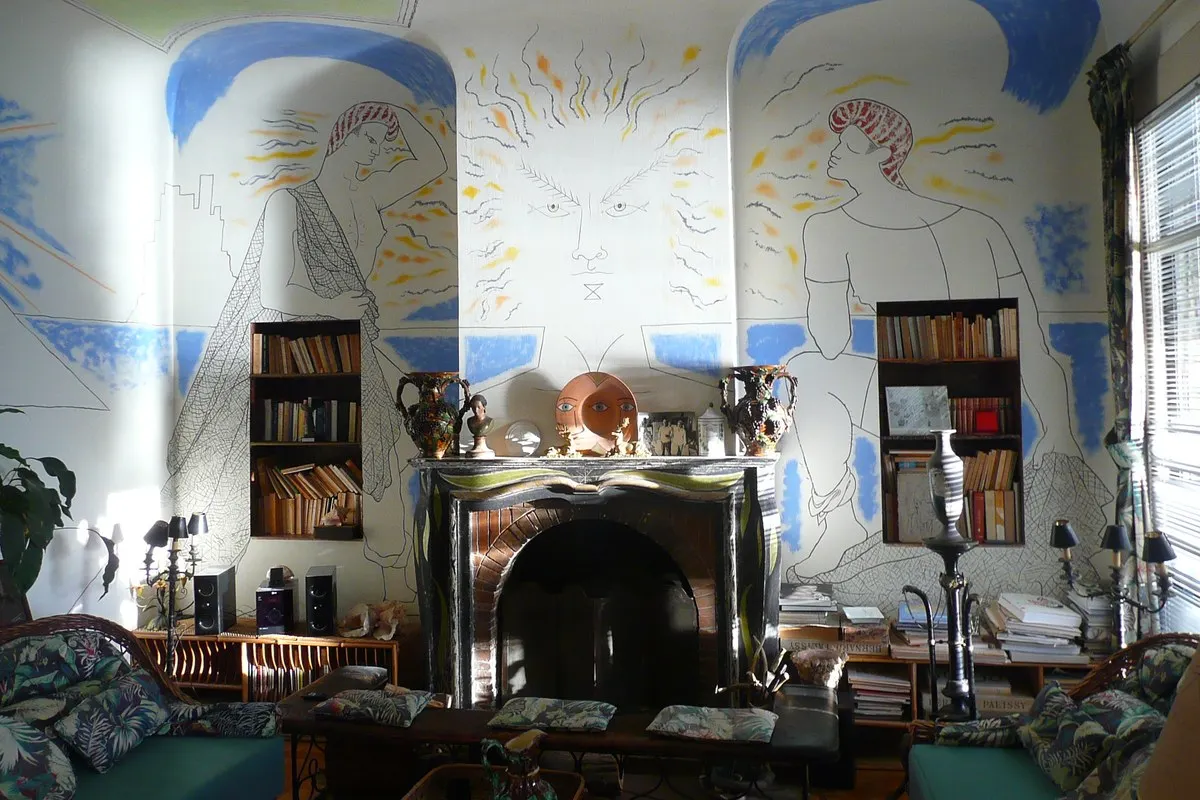
Most villas on Cap Ferrat are famous for who owned them. Santo Sospir is famous for who drew on it. In 1950, fresh from the shoot of Les Enfants Terribles, Jean Cocteau came to stay with his friend Francine Weisweiller at her house at the tip of the peninsula, found the white walls unbearable and asked if he might draw the head of Apollo above the living-room fireplace. He did not stop. Over the following years he covered the walls with gods and fishermen, sea urchins and fougasse loaves, some 200 'tattoos' in all, as he called them, and made the house the subject of his own short film. Picasso was among the visitors; Romy Schneider and Alain Delon, the owners say, spent their first romantic weekend here. The villa is now a registered historic monument, restored after its sale in 2016 to the Melia family – and the question most travellers ask is the hardest to answer: can you get in? In 2026 the honest answer is that Santo Sospir is a private house with no public opening hours.
Villa Santo Sospir
Sight · Cap Ferrat
© OpenStreetMap contributors · OpenFreeMap
- Address
- 14 avenue Jean Cocteau, 06230 Saint-Jean-Cap-Ferrat
- Open
- No public opening hours published (October 2026)
- Tickets
- None on sale
- Built
- Early 1930s
- Website
- santosospir.com
- Protected
- Historic monument (2007)
- Enquiries
- marina@santosospir.com
- Murals
- Jean Cocteau, from 1950 – some 200 'tattoos'
- Status
- Registered historic monument; Patrimoine du XXe siècle label
- Owners
- The Melia family, since 2016
The villa Jean Cocteau covered with murals from 1950 for Francine Weisweiller, a registered historic monument restored by the Melia family.
01The story
The house was built in the early 1930s and bought in the late 1940s by Alec Weisweiller, an American banker, for his wife Francine; Monaco Tribune tells the story of his promise during the occupation – if they survived, he would buy her a house. Francine, a Parisian socialite and patron of Yves Saint Laurent, had it decorated by Madeleine Castaing. She met Cocteau, through the actress Nicole Stéphane, while Jean-Pierre Melville was filming Les Enfants Terribles, the adaptation of Cocteau's novel, and in 1950 she invited him and his adopted son Édouard Dermit to Cap Ferrat. According to the owners' account, Cocteau came back every summer for nearly eleven years, until the friendship cooled in 1961. Francine lived at Santo Sospir until her death in 2003. Her daughter Carole allowed private visits on request, but heavy taxes eventually forced a sale, and in 2016 the house passed to the Russian property developer Ilya Melia and his family.
02What you see
Cocteau insisted he was not decorating the walls but tattooing their skin, and the technique matched the idea: an Italian assistant diluted his pigments in raw milk. The first image, Apollo above the fireplace, grew into a pantheon – Narcissus, Actaeon, Dionysus – woven together with the life of the coast: birds, sea urchins, fougasse bread, the fishermen of Villefranche across the bay. A winged angel holding a poppy is, Sotheby's notes, the only mural in the house painted in oil. In the dining room hangs the Aubusson tapestry of Judith and Holofernes that Cocteau designed, finished in 1953. Cocteau also filmed the house himself: his short film La Villa Santo-Sospir, from 1952, records him at work, and the villa appears again in Le Testament d'Orphée.
Insider tipPrivate house: no public opening hours or tickets in 2026.
03The restoration
Nothing had been invested in the villa for decades when the Melias took it over, Ilya Melia told Hello Monaco in 2019, and the restoration has been long and careful. The owners' own account names the team: the architect Marc Prigent, Jacques Grange for the interiors, the fresco conservator Florence Cremer and the landscape architect Madison Cox for the garden. The 1940s services were overhauled and the frescoes protected from humidity while the painted walls themselves were left untouched; the furniture and the tapestry were restored in Milan. The pandemic slowed the work, and the owners now describe it as nearly finished. In March 2026 the Paris auction house Piasa sold a collection of furniture and objects from the house. The villa is listed as a historic monument – since 2007, according to the tourist office – and carries the Patrimoine du XXe siècle label.
04How to visit
This is where many older guides are out of date. Under Carole Weisweiller, visits were possible on request. During the restoration the house was closed; in 2020 Monaco Tribune reported that visits were expected to resume in September 2021. As of October 2026 we could find no public visiting programme: the official tourist office listing, last updated in May 2026, gives no opening hours or prices, and the owners' website offers no tours or tickets – only an email address for enquiries. In 2019 Ilya Melia said the family wanted the house to remain private property rather than become “an ordinary museum”, while hosting events, mainly around art. Treat Santo Sospir as a private home: write to the owners if you have a serious reason to visit, and do not turn up at the gate expecting to be let in.
The owners also point out that any use of Cocteau's works, and any photographs featuring the villa, require prior approval from the Comité Jean Cocteau and from the family.
05Where to see Cocteau instead
The coast has other Cocteau addresses. Across the bay, the Nice tourist office points walkers on the coastal path from Nice on to the chapel Cocteau decorated in Villefranche-sur-Mer. In Menton, the seafront Musée Jean Cocteau has been closed since storm damage in 2018, and part of its collection is shown at the nearby Bastion. And Cocteau's own 1952 film of Santo Sospir remains the best way to see the rooms as he painted them.