In this story · 6 sections
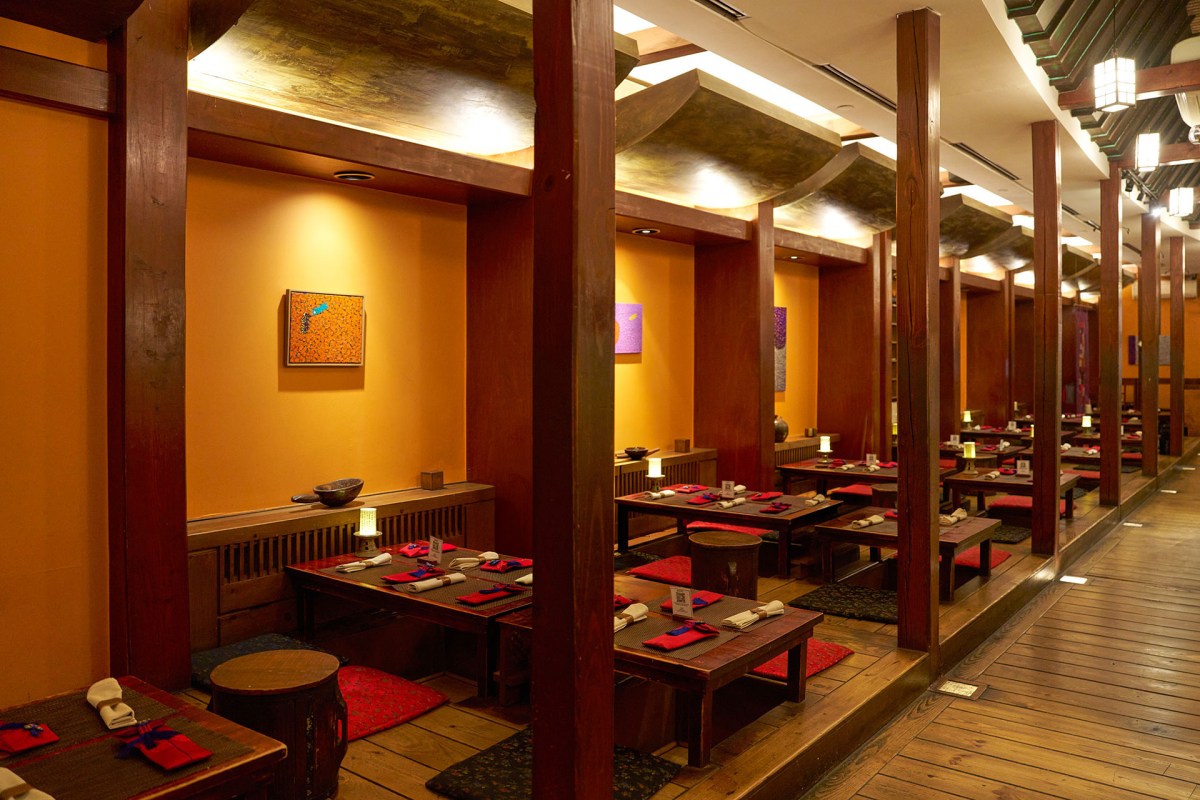
On a quiet stretch of East 32nd Street, at the eastern edge of Koreatown and steps from the Empire State Building, a heavy door opens onto a room that has barely changed in three decades. HanGawi, trading since 1994, asks every guest to remove their shoes before stepping onto its warm wooden floor — a small ritual that sets the tone for what follows: an entirely plant-based Korean menu built on stone-bowl rice, hand-wrapped ssam bap and pots of mountain tea, eaten at low tables with wells recessed beneath for Western legs. It was founded by Terri and William Choi at a time when Korean dining in the city meant barbecue smoke and meat-heavy banchan, and it set out to prove that vegetarian Korean cooking could be refined rather than austere. It holds one MICHELIN Bib Gourmand, the guide's distinction for carefully made food at a fair price, and remains one of the few New York dining rooms where a meal still feels closer to ceremony than service.
HanGawi
Restaurant · Koreatown / Murray Hill, Manhattan
© OpenStreetMap contributors · OpenFreeMap
- Address
- 12 E. 32nd St., New York, NY 10016
- Cooking
- Korean, Vegetarian
- Run by
- Terri & William Choi, founders
- MICHELIN Guide
- Bib Gourmand
- Price
- A moderate spend
- Open
- Mon–Fri 5–9.30pm; Sat–Sun 1–9.30pm (last seating)
- Setting
- Shoes-off dining, low tables with recessed wells
- Nearest station
- 33rd Street (4, 6 trains)
- Telephone
- +1 212-213-0077
- Website
- hangawirestaurant.com
Low tables with recessed wells, mahogany door and a menu of stone-bowl rice and ssam bap.
01The room and the setting
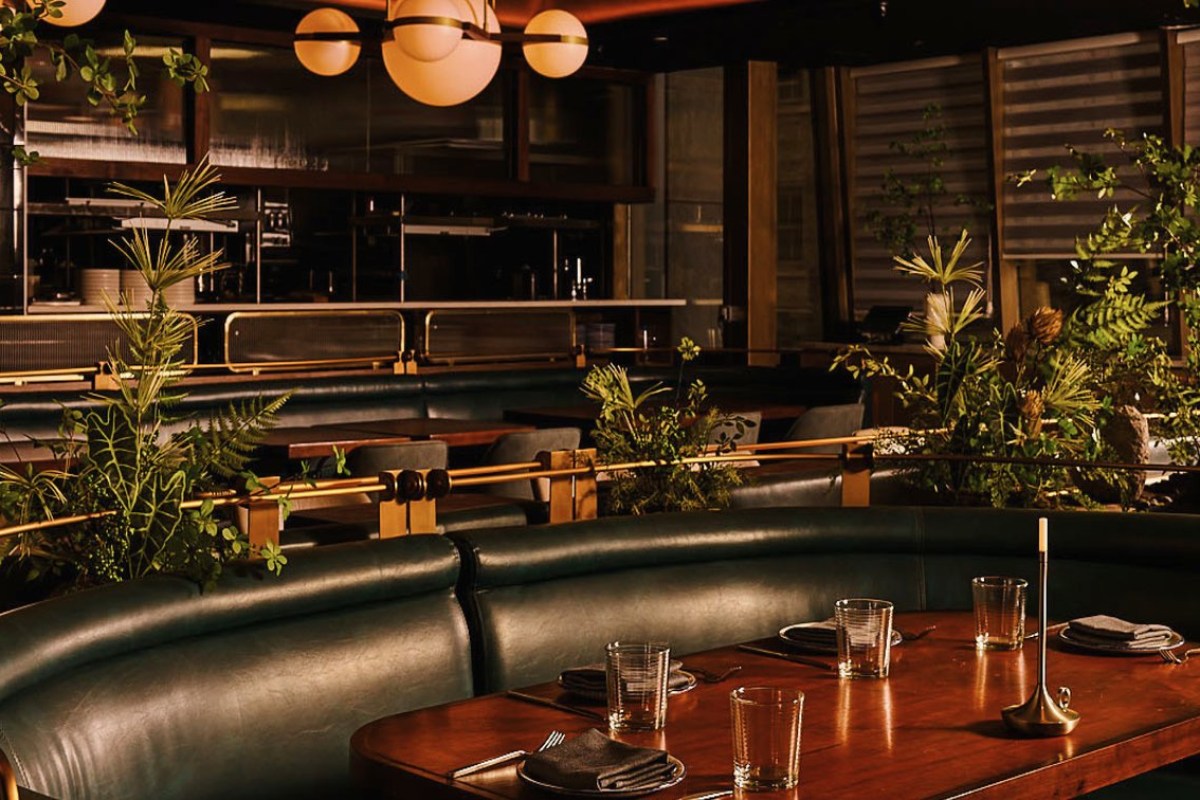
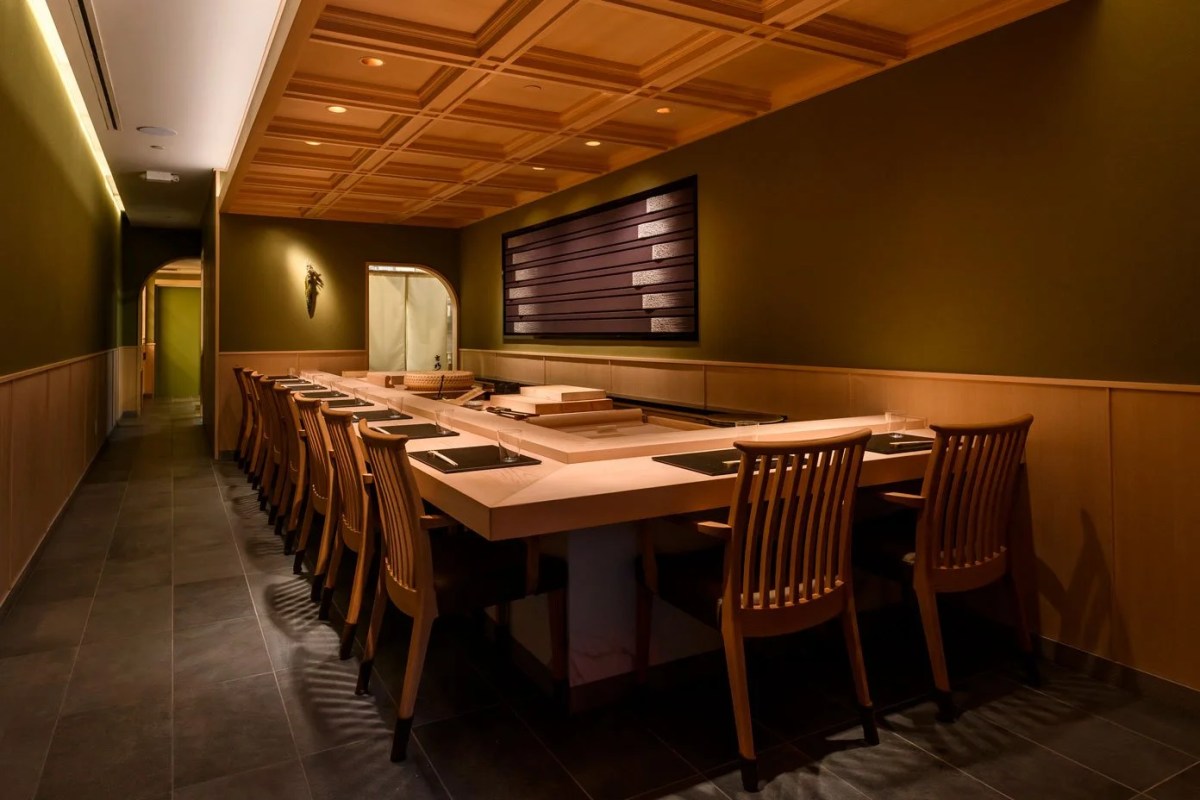
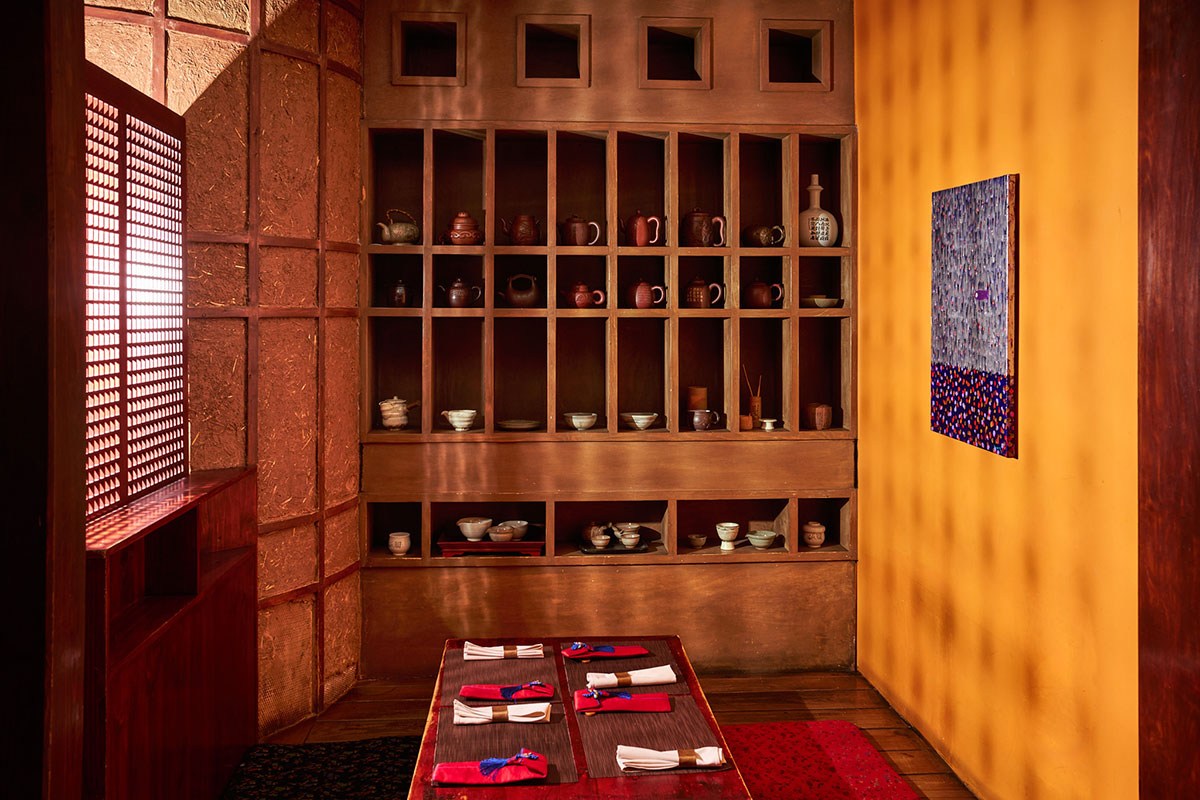
Beyond the street-level façade, the restaurant unfolds as a single hushed sequence: shoes off at the entrance, then low wooden tables set over sunken floor wells so guests can sit as if cross-legged while their feet rest below table height. The decor runs to dark timber, stone and copper, with antique Korean shoes, teapots and hats arranged along the corridor walls as if in a small museum of domestic objects. At Hangawi, dining feels less like a typical restaurant visit and more like entering a calm sanctuary dedicated to Korean plant-based cuisine, tea culture, and mindful eating.
One long-running guide to the restaurant describes the ritual plainly: diners take their shoes off at the door then sit on a pillow on the floor next to the table. The effect, repeated night after night since the nineties, is part of why HanGawi still reads as unusual rather than themed — it was built around this gesture of removal long before quiet, low-lit dining rooms became a style elsewhere in the city.
02The founders
Terri Choi, originally from Seoul, moved to New York in 1990, and with her husband William opened HanGawi a few years later out of a personal turn toward vegetarianism. When we created Hangawi more than thirty years ago, they have said, they were guided by the idea of dining with conscience, hoping guests could eat well while honouring the wellbeing of all living things.
Insider tipShoes off at the door; book ahead for weekend evenings; children under five not recommended.
That conviction made the restaurant's early years difficult: when it opened, a Korean-inspired plant-based menu was still an unfamiliar idea to New Yorkers, and several traditional ingredients were not yet sold in the city, so the Chois brought them in themselves from Korea to cook the dishes they had pictured. The same owners went on to open Franchia, a more casual Asian vegan-fusion restaurant drawing on Korean, Chinese and Southeast Asian cooking.
03The cooking
The kitchen works entirely without meat, fish or dairy, turning root vegetables, mountain greens, heirloom grains and herbal infusions into dishes that read as composed rather than substitute-driven — a sizzling stone bowl here, a tray of hand-wrapped lettuce parcels there. The current à la carte runs from appetisers such as vermicelli delight, made with Korean sweet potato noodles and wood-ear mushrooms, through a dedicated dumplings list, soups, porridges and salads, into a core of stone-bowl bibimbap, hot pots, tofu and mushroom dishes.
Beyond the à la carte, the kitchen also runs set menus: an Emperor's Tasting Menu for a minimum of two diners, a Weekend Mini Emperor's Lunch served only on Saturdays and Sundays between 1pm and 3.30pm, and — in autumn — a Matsutake Feast built around the wild pine mushroom prized in Korea and Japan for its fragrance. A minimum spend of $25 per person applies to à la carte orders, rising to $50 per person for groups of five to eight.
04What to order
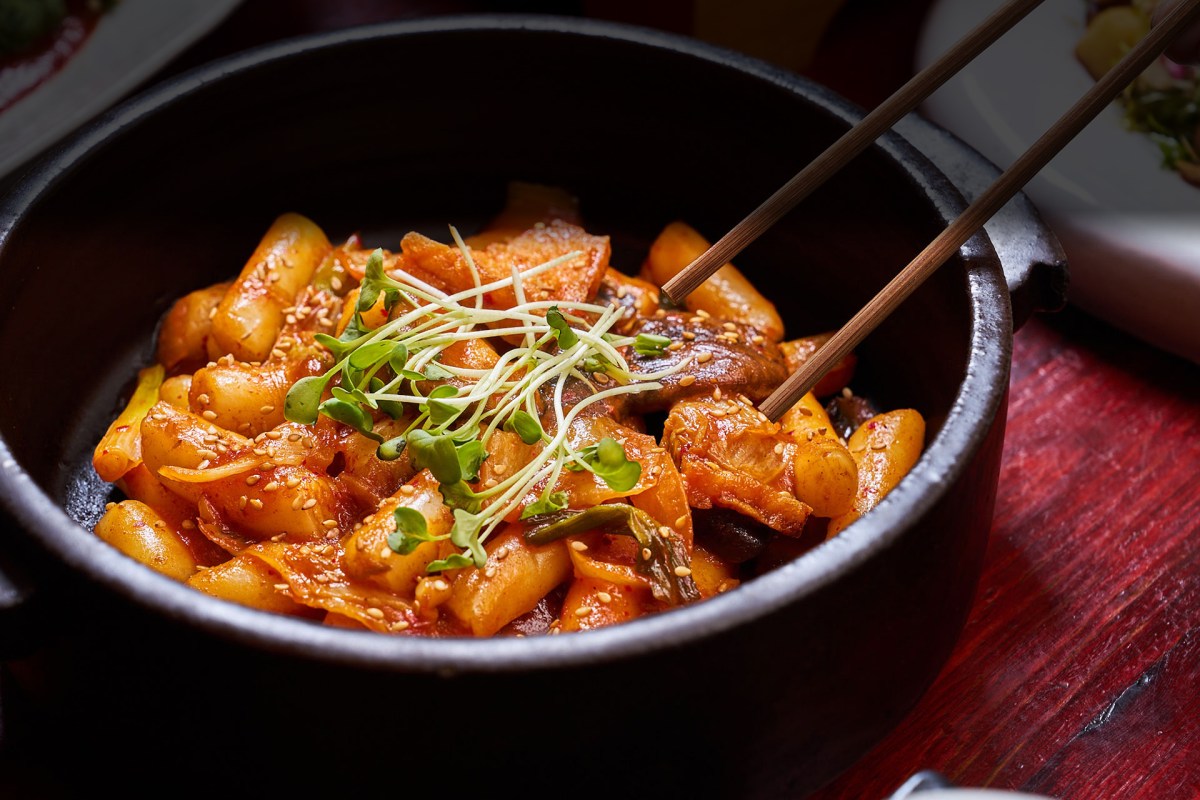
Signature dishes include the avocado stone bowl rice, served with vegetables, mushrooms and mountain greens with a miso sauce on the side, and the zen stone bowl rice, built on wild mountain greens and served with brown rice. The black truffle dumplings, stuffed with a variety of mushrooms, tofu and black truffle paste in a truffle-oil sauce, and the Korean pancakes platter of leek, kimchi, mushroom and zucchini fritters with mung beans, are both long-standing favourites on the appetiser list.
Heartier eaters might go for the spicy vegan Budae jjigae, a plant-based take on army stew loaded with beans, mock ham and sausage, dumplings, mushrooms and rice cakes in a spicy broth, or the ssam bab, a do-it-yourself wrap of Boston lettuce, perilla leaf, plant-based bulgogi, tofu, avocado and multigrain rice with ssamjang sauce. In autumn, the matsutake ssam bap repeats the format with sautéed matsutake mushrooms in place of the usual filling.
Don't miss
Don't miss
- 01
Zen stone bowl rice with wild mountain greens and brown rice
- 02
Black truffle dumplings in truffle-oil sauce
- 03
Ssam bab, the do-it-yourself lettuce and avocado wrap
- 04
A pot of royal green tea from Mt. Jilee
- 05
The seasonal Matsutake Feast, available fall through early winter
05Tea, soju and wine
Tea is treated with the same seriousness as the food: the house pours a royal green tea from Mt. Jilee, made from the season's first-picked leaves, alongside Korean green teas from later pickings, chrysanthemum, jasmine and citron infusions. A separate cocktail list builds on Jari Soju Gamuchi, a rice soju distilled from Chungju rice and aged through four seasons in earthenware pots, used in drinks named for Korean concepts such as meditation and reincarnation.
The wine side runs from Korean black raspberry wine and makgeolli rice wine to a short, considered list of Old World whites, reds and rosé, plus a run of Japanese sakes; corkage on bottles brought in is charged separately.
06When to go and booking
HanGawi seats for dinner Monday to Friday from 5pm, with last seating at 9.30pm, and for lunch and dinner on Saturdays and Sundays from 1pm, also with a 9.30pm last seating. The dress code is described by the restaurant as chic and casual, with one firm rule: shoes come off at the door, and socks are strongly recommended rather than required. Because of the low-table seating, the restaurant does not recommend bringing children under five.
The room is small and the ritual of removing shoes and settling into floor-level seating takes a few minutes, so arriving a little before a reservation, and booking ahead for weekend evenings, is worth doing. The restaurant sits at the eastern fringe of Manhattan's Koreatown, whose core runs along 32nd Street between Fifth and Sixth Avenues within sight of the Empire State Building, and the nearest subway stop is 33rd Street on the 4 and 6 lines.