Within a single walk along the Paseo del Prado lie Velázquez's Las Meninas, Goya's Black Paintings and Picasso's Guernica. How to see Madrid's three great museums without exhaustion, and in what order.
In this story · 5 sections
No city in the world concentrates great painting quite like Madrid. Along the Paseo del Prado, a tree-lined boulevard on the eastern edge of the old centre, stand three national museums that together cover European art from the twelfth century to the present: the Museo del Prado, the Museo Nacional Thyssen-Bornemisza and the Museo Reina Sofía. Locals call them the Golden Triangle of Art. In 2021 the Paseo del Prado and the neighbouring Buen Retiro park were inscribed together by UNESCO as a World Heritage site, the Landscape of Light. Seeing all three properly takes two days and a little strategy.
Museo Nacional del Prado
Museum · Paseo del Prado
© OpenStreetMap contributors · OpenFreeMap
- Address
- Calle de Ruiz de Alarcón 23, 28014 Madrid
- Museo del Prado
- Opened 1819; Velázquez, Goya, Bosch, El Greco
- Thyssen-Bornemisza
- Western painting from the 13th to 20th century
- Reina Sofía
- Opened 1992; Picasso's Guernica, Dalí, Miró
- UNESCO
- Paseo del Prado and Retiro, listed 2021
- Allow
- Two days
The finest collection of Spanish art, from Velázquez's Las Meninas to Goya's Black Paintings, based on the royal collection.
01Day one, morning: the Prado
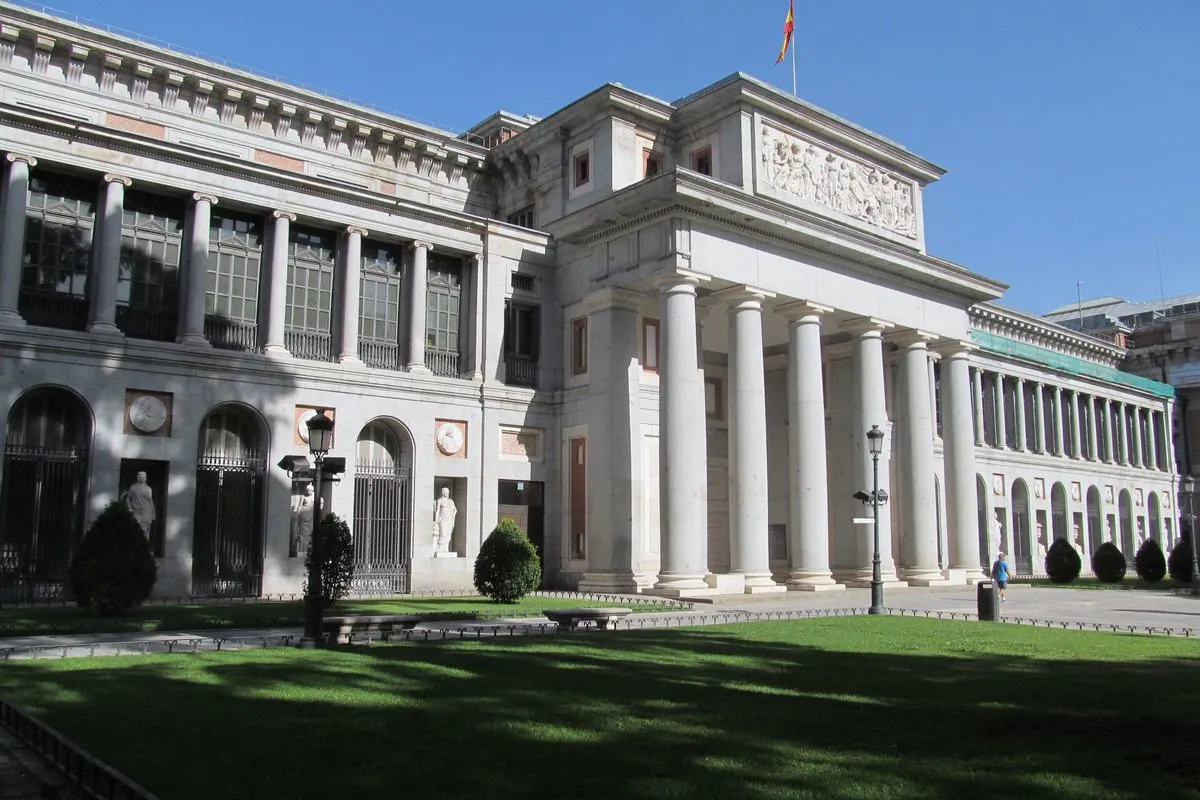
Start with the greatest. The Prado opened as a museum of painting and sculpture in 1819, built on the Spanish royal collection, and it holds the single best collection of Spanish art anywhere, along with one of the largest collections of Italian masters outside Italy. Around 7,600 paintings belong to the museum; roughly 1,300 works are usually on display in the main buildings. Arrive at opening with a ticket bought online.
Go first to Velázquez, and to Las Meninas, the enigmatic group portrait of the Infanta Margarita and her court, with the painter himself at his easel. Then Goya, the museum's most extensively represented artist: his royal portraits, The Third of May 1808 and, on the lower floor, the Black Paintings he made on the walls of his own house late in life, dark and haunting. Find time too for Hieronymus Bosch's The Garden of Earthly Delights, for El Greco's elongated saints, and for Titian and Rubens, whose works came to Spain through royal patronage.
Three hours is a sensible maximum. The museum offers free entry during the last two hours of each day, but expect queues then.
02Day one, afternoon: the Retiro
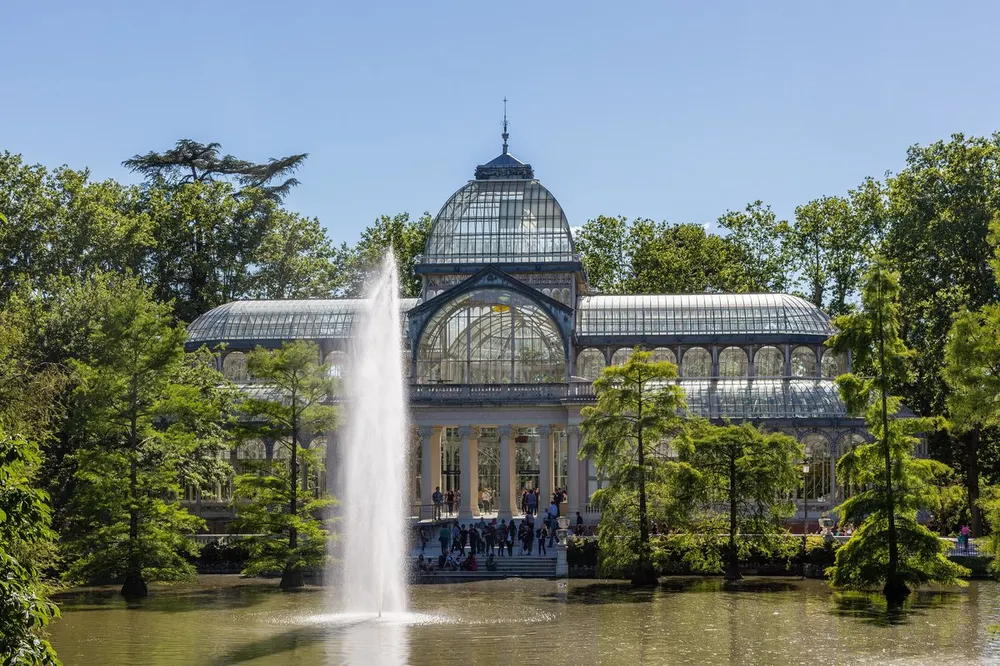
Rest your eyes in the Buen Retiro park, directly behind the Prado. Walk to the boating lake and to the Palacio de Cristal, the glass pavilion by the water, then take a long lunch in the neighbourhood of Jerónimos or in the streets of the Barrio de las Letras, the old literary quarter across the boulevard.
Insider tipFree entry in the last two hours of the day; book timed tickets otherwise.
03Day two, morning: the Thyssen-Bornemisza
The Thyssen, in a palace facing the Neptune fountain, is the most pleasurable of the three. Its core is the collection begun in the 1920s by Baron Heinrich Thyssen-Bornemisza and expanded by his son, once the second-largest private collection in the world after the British Royal Collection. It fills the gaps in the Prado and the Reina Sofía: Italian primitives, Dutch and German masters, the Impressionists and Post-Impressionists, German Expressionism and American painting of the twentieth century.
Because it is arranged chronologically from the top floor down, the Thyssen offers something close to a complete history of Western painting in a single morning, from Duccio and Ghirlandaio to Hopper and Rothko. The galleries are spacious and rarely overwhelming.
04Day two, afternoon: the Reina Sofía and Guernica
Walk south along the boulevard to the Reina Sofía, near Atocha station, Spain's national museum of twentieth-century art, inaugurated in 1992. It is devoted mainly to Spanish art, with strong holdings of Picasso, Dalí and Miró, and a busy programme of exhibitions.
Its most famous work is Picasso's Guernica of 1937, painted in response to the bombing of the Basque town during the Spanish Civil War. The vast black, white and grey canvas hangs with the studies Picasso made for it, and it remains one of the most powerful paintings of the twentieth century. Give it time, then step out into the museum's courtyard garden to recover.
05Where to stay and more Madrid
The streets around the Paseo del Prado and the Barrio de las Letras put all three museums within walking distance. For Madrid beyond the museums, read our Madrid guide (in Swedish), find our guide to Salamanca and the Retiro among the Metro Mode destinations, and browse our travel section in English.