In this story · 7 sections
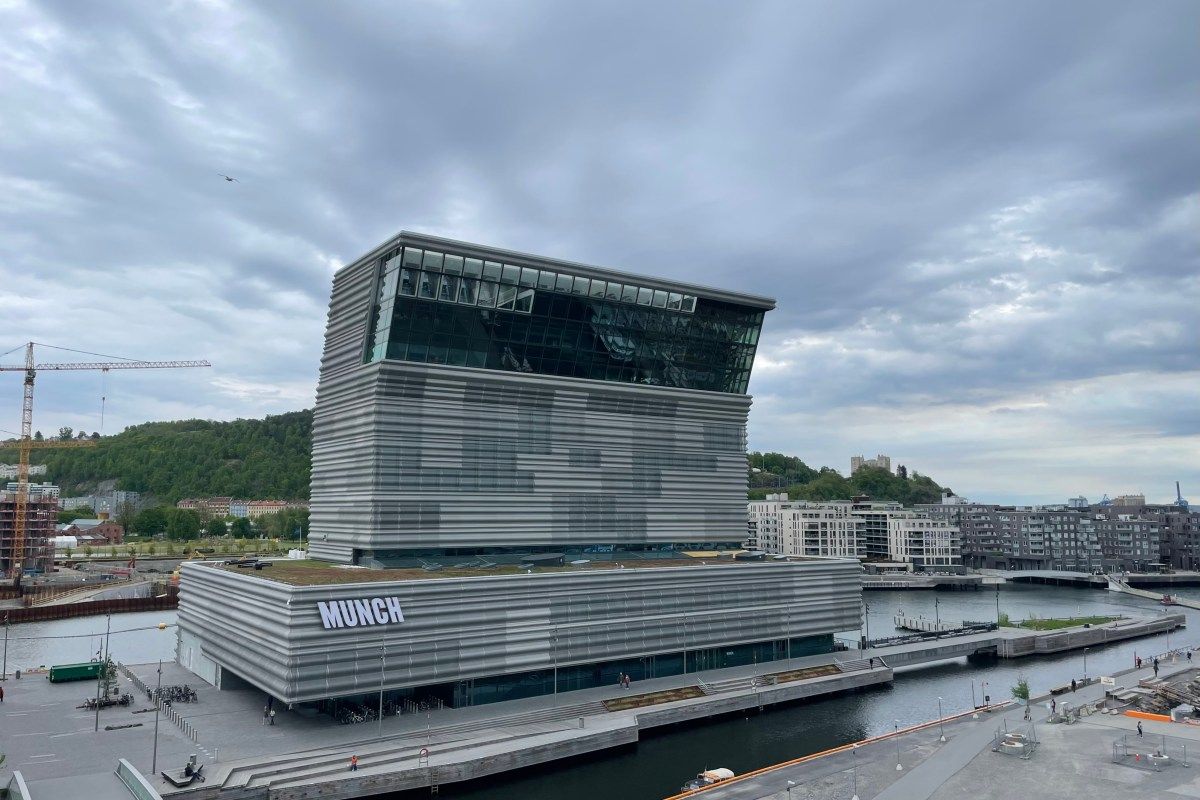
On Oslo's Bjørvika waterfront, a thirteen-storey tower wrapped in perforated aluminium leans twenty degrees toward the fjord, as though straining for a better look at the water beside it. This is MUNCH, which opened its doors on 22 October 2021 as the new home for the life's work of Edvard Munch, the Norwegian painter behind The Scream. When Munch died in 1944, his bequest to the municipality of Oslo became one of the largest collections by a single artist anywhere in the world, and it had first gone on show in 1963 in a low modernist building at Tøyen, timed to mark what would have been the painter's hundredth birthday. The move to Bjørvika, after a decade of political argument over cost and design, gave the collection a building to match its scale: thirteen floors, eleven galleries, and views across the Oslofjord from the top. It stands beside Snøhetta's Opera House, part of a waterfront remade by culture rather than shipping.
Munch Museum
Sight · Bjørvika
© OpenStreetMap contributors · OpenFreeMap
- Address
- Edvard Munchs plass 1, 0194 Oslo
- Open
- Sun–Tue 10–18, Wed–Sat 10–21 (Oct 2026)
- Tickets
- Adults 220 NOK; under 25: 100 NOK; 0–17 free (Oct 2026)
- Built
- Opened 22 October 2021 (predecessor opened 1963)
- Architect
- Juan Herreros / estudio Herreros, with LPO Arkitekter
- Website
- munch.no
- Style
- 13-storey tower, tilted 20° toward the fjord
- Collection
- Almost 28,000 artworks, 42,000+ museum objects
- Highlights
- The Scream, The Sun, Madonna, Munch's woodcuts
- Visitors
- 775,000 in 2025
- Nearest station
- Bjørvika tram/bus stop; 10 min walk from Oslo S
MUNCH opened in Bjørvika in October 2021, replacing the 1963 Tøyen museum, to house Edvard Munch's full bequest to Oslo.
01The story
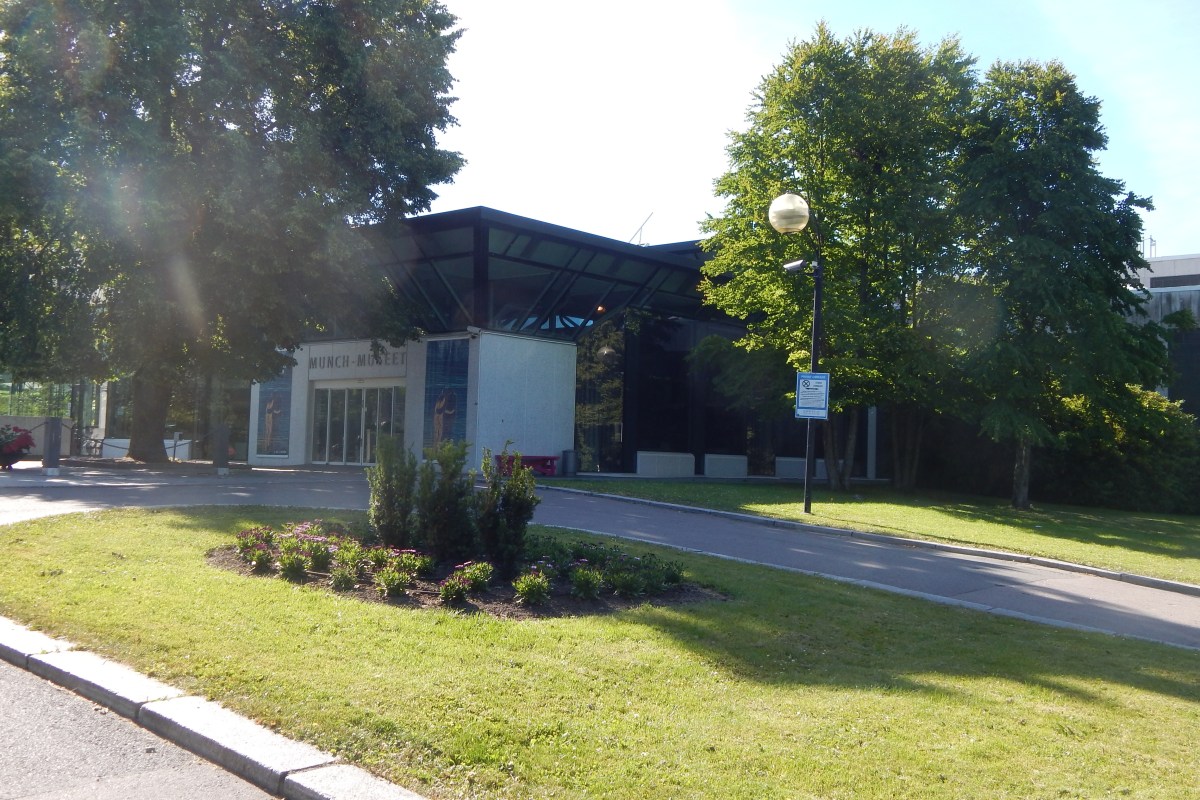
Edvard Munch never married, and when he died at his home in Ekely in January 1944 he left almost everything to the city that had often treated him with suspicion. His remaining works were bequeathed to the city of Oslo, which built the Munch Museum at Tøyen, opening it in 1963, a building designed by Gunnar Fougner and Einar Myklebust that served the collection for nearly sixty years. The idea of a museum had been under discussion even during Munch's lifetime, but the Tøyen site was not settled until 1951, and the building did not open until 1963 — one hundred years after Munch's birth.
A new building had been debated since the 1990s, and in 2009 an international competition produced a decisive winner: Spanish architect Juan Herreros and his studio Herreros Arquitectos, now estudio Herreros. The project then stalled for years over cost and politics — before the 2011 local election the Oslo Progress Party withdrew its support on economic grounds, and after the election the City Council voted to end the project, reviving the idea of folding the collection into the National Gallery instead. The museum was eventually built in Bjørvika, and after winning the 2009 competition, Estudio Herreros finally completed construction and opened the building's doors on 22 October 2021.
02What you see
The building itself is the first exhibit. Designed by Juan Herreros and Jens Richter of Estudio Herreros with Norwegian firm LPO Arkitekter, the tower tilts twenty degrees toward the waterfront of Bjørvika Bay, an angle that reads from the Opera House opposite as a deliberate, almost theatrical lean. The structure rises thirteen storeys and sixty metres, clad in dark perforated aluminium that catches the changing light off the fjord. The engineering nods to Norway's other industry: the tower was built using a slip-form method, a Norwegian technique developed for constructing oil platforms, poured upward in a continuous concrete climb rather than floor by floor.
Insider tipTimed tickets recommended; free entry first Wednesday evening monthly except July–September.
Inside, the museum comprises thirteen floors and eleven galleries, holding far more art at any one time than the old Tøyen building ever could. The collection behind the glass is vast: Edvard Munch's bequest to Oslo is one of the world's largest collections of work by a single artist, and the museum's holdings now run to almost 28,000 artworks and more than 42,000 unique museum objects — paintings, prints, drawings, photographs, letters and the contents of his studio. The scale of ambition shows in the numbers through the door too: in 2025 the museum recorded 775,000 visitors.
Don't miss
Don't miss
- 01
The Scream on floor 4 — one of eight versions, shown in rotation
- 02
Monumental, floor 6: Munch canvases up to fifty square metres
- 03
The woodcuts in Inntil, floor 7
- 04
Tracey Emin's sculpture The Mother on the quay outside
- 05
MUNCH Bar's rooftop terrace on the top floor
03The highlights
Everyone comes for one picture, and MUNCH makes a careful ritual of it. The museum holds eight finished versions of The Scream in total — a painting, a crayon drawing and six lithographs — and only ever shows one at a time in the collection exhibition Edvard Munch Infinite on the fourth floor, rotating painting, drawing and print through the day to limit the light each fragile surface receives. The other two rest in darkened storage until their turn comes round again.
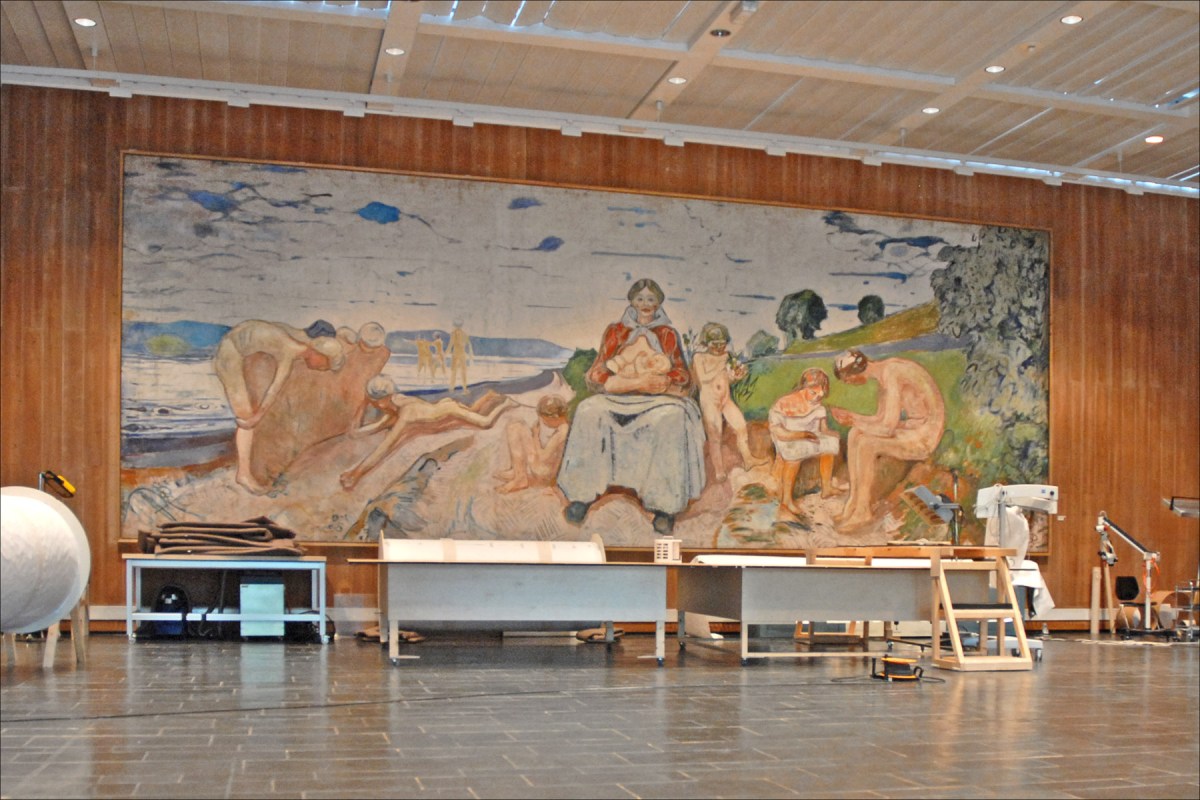
Beyond The Scream, the collection exhibitions spread Munch's career across several floors: Uendelig (Infinite) on floor 4 traces his best-known works, Monumental on floor 6 shows canvases of up to fifty square metres in a single soaring hall, Inntil on floor 7 is devoted to his woodcuts, and Skygger (Shadows) puts visitors close to the man himself and his years at Ekely. Horisonter, on floor 11, sets Munch beside the artists of his own time. Running alongside the permanent holdings in late 2026 is Katharina Grosse's Svart seng, a large-scale painting installation on floor 3, and Der strekene møtes, an exhibition drawn from Munch's extensive archive of drawings on floor 10.
04Visiting
In October 2026 MUNCH was open Sunday to Tuesday from 10:00 to 18:00, and Wednesday to Saturday from 10:00 to 21:00. Standard admission for adults was 220 NOK, with a reduced rate of 100 NOK for under-25s and free entry for children aged 0 to 17 and for museum members; timed entrance tickets are recommended in advance through the museum's own website. Free admission runs on the first Wednesday of every month from 18:00 to 21:00, except in July, August and September. An audio guide is available in Norwegian, English, German, French, Spanish, Japanese, Chinese and sign language.
05Getting there
MUNCH sits at Edvard Munchs plass 1, a ten-minute walk from Oslo Central Station, from where trains, the metro, trams and buses all converge. The nearest stop is Bjørvika for tram and bus, with a boat connection at Munch Bjørvika in summer; there is bicycle parking outside but no car parking at the museum itself, the closest facilities being at Sørenga and around Oslo Central Station.
06Around it
MUNCH stands at the heart of Bjørvika, the former container port that has become Oslo's newest cultural quarter. Close by are the Opera House designed by Snøhetta and the Deichman main library by Lund Hagem Architects and Atelier Oslo, so that a short walk along the water links three of the city's most debated pieces of contemporary architecture. The sculpture The Mother, by Tracey Emin, sits on Inger Munch's quay directly in front of the museum, facing the fjord it was made to look across.
07Making the most of a visit
Give at least half a day: the eleven galleries reward slow walking rather than a dash for The Scream alone, and the woodcut rooms are easy to pass by if you are moving fast. For food, the museum runs its own kitchens on three levels — MUNCH Kafé on the ground floor for coffee and sourdough bakes, MUNCH Restaurant for a full meal, and MUNCH Bar at the top of the building, serving drinks and small plates beside a rooftop terrace with a clear run of view across the Oslofjord. Arriving at opening time on a weekday, before the tour groups, is the surest way to see the fourth-floor Scream room with room to stand back from it.