In this story · 7 sections
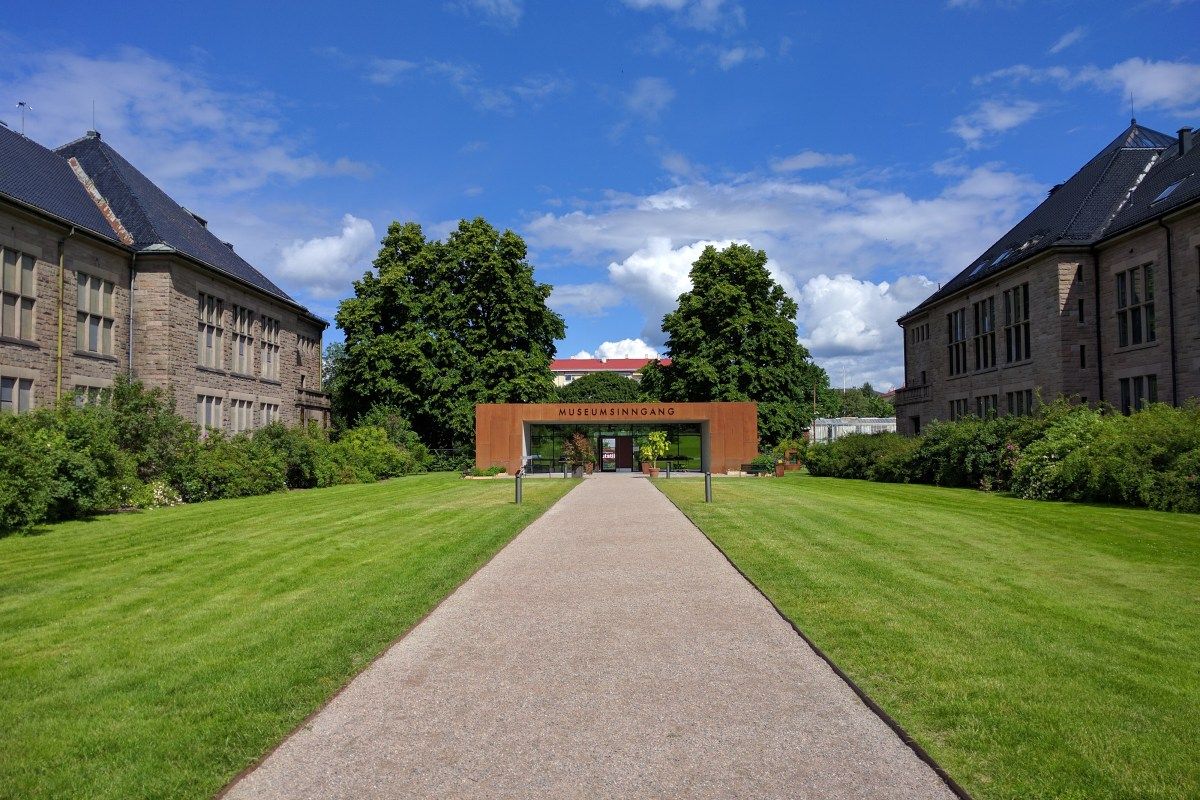
At the eastern edge of central Oslo, in the district of Tøyen, a row of Jugendstil-era halls stands inside Norway's oldest botanical garden. The Natural History Museum at the University of Oslo is Norway's oldest and largest museum of natural history. It traces its roots to the University Botanical Garden, which was founded near Tøyen Manor in 1814, the same year Norway drafted its constitution. The land had come to the university two years earlier, when King Frederik VI of Denmark gave the Tøyen estate as a gift to Norway's new university. The museum in its present form dates only to 1999, when the Geological Museum, Zoological Museum, Botanical Museum and Botanical Garden at Tøyen were merged into a single institution, whose collections now run to around six million objects — some 65 per cent of Norway's entire natural history holdings. Visitors come for dinosaur casts and crystal caves, for century-old glasshouses, and for a climate exhibition that treats hard data as something to be felt rather than just read.
Natural History Museum in Oslo
Sight · Tøyen, Grünerløkka
© OpenStreetMap contributors · OpenFreeMap
- Address
- Sars' gate 1, 0562 Oslo
- Open
- Tue–Sun 10–17 (Oct 2026); garden daily 07–17
- Tickets
- Annual pass 700 NOK; free with Oslo Pass
- Built
- Zoological Museum 1904–08; Geological Museum 1911–17
- Architect
- Holger Sinding-Larsen
- Website
- nhm.uio.no
- Style
- Jugendstil (Art Nouveau)
- Collection
- 6 million objects, 65% of Norway's natural history holdings
- Highlights
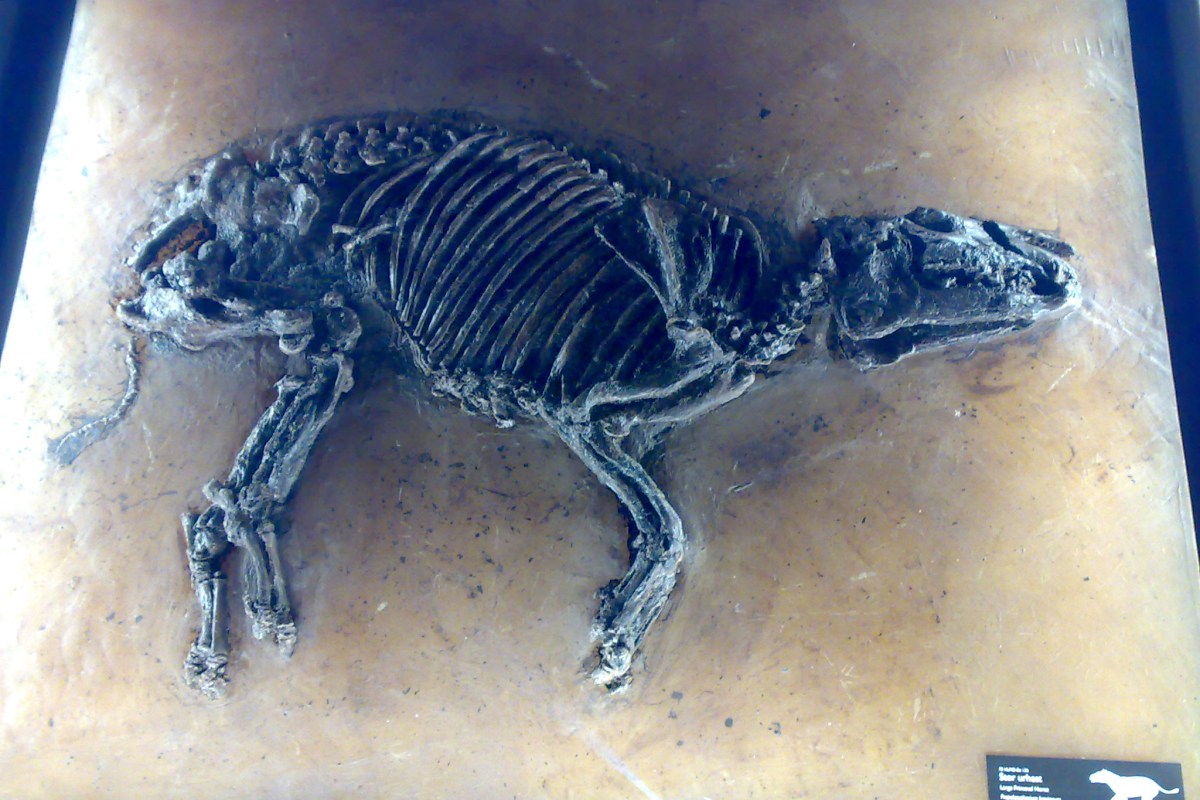
- T-rex cast "Stan"; Triceratops skull "Roar"; fossil "Ida"
- Nearest station
- Tøyen (T-bane)
Six million objects, dinosaur casts and a climate house fill Jugendstil halls built for Oslo University's zoology, geology and botany collections.
01The story
The university's original plan was to build its entire campus on the Tøyen grounds, but the scheme was soon shelved as unaffordably grand for the economics of the time. The Botanical Garden was laid out from 1814, and the first exhibition greenhouses went up in 1817–19; new glasshouses followed in 1876–78, and those are the ones still standing today.
Just before the university's centenary, the Storting voted funds for new buildings at Tøyen to house the natural science collections. One of the keenest advocates for the project was professor Waldemar Christopher Brøgger, who in 1906 became the university's first elected rector. The Zoological Museum went up in 1904–08 and opened to the public in 1910, the Botanical Museum in 1908–13, and the Geological Museum in 1911–17 — all designed by Holger Sinding-Larsen, then the state and university's building inspector, who drew everything himself, down to the display cabinets and furniture, in a disciplined Jugendstil.
02What you see
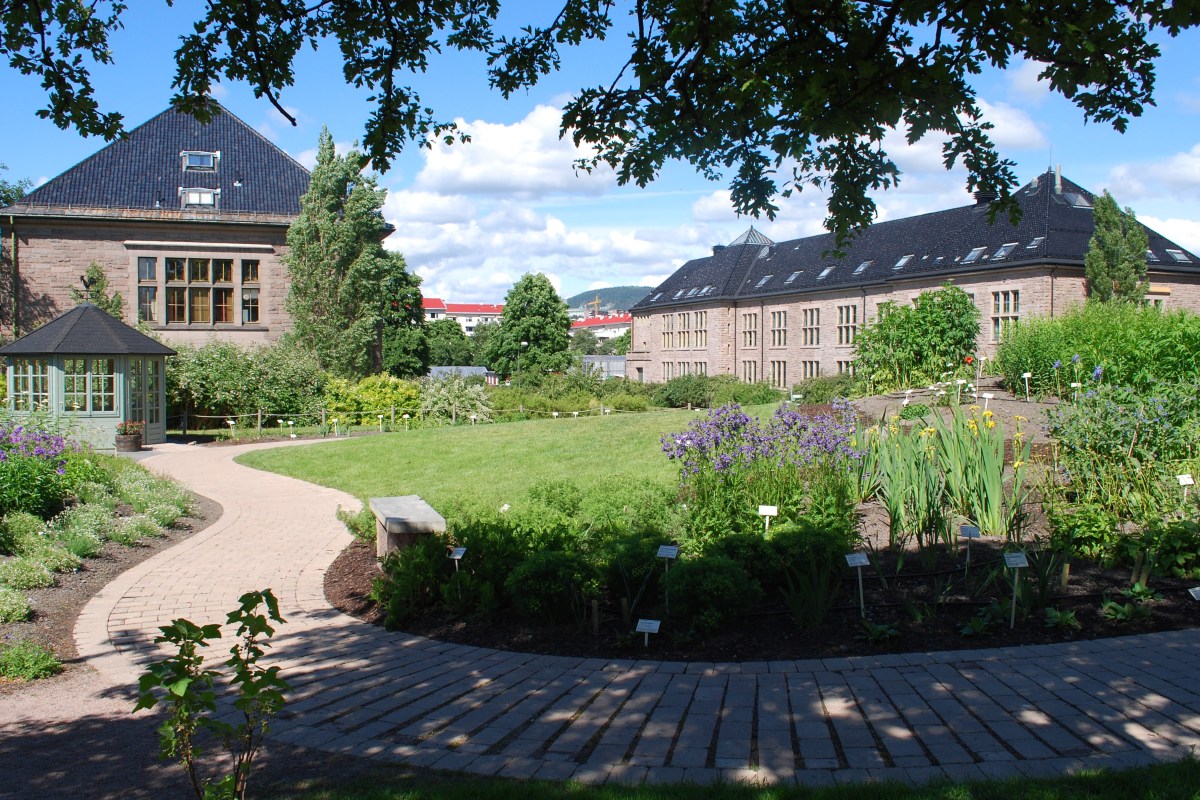
The original three buildings are no longer known by their old institutional names. For the university's 200th anniversary in 2011, the Zoological Museum was renamed Robert Colletts hus, the Geological Museum became Waldemar C. Brøggers hus, and the Botanical Museum was renamed Lids hus, after Johannes Lid, curator at the Botanical Museum from 1919 to 1956, and his wife Dagny Tande Lid, best known for their 1944 handbook Norsk flora. Alongside them stand Klimahuset, the newer climate building, and the greenhouses Victoriahuset and Palmehuset.
Insider tipGreenhouses closed after plant thefts; exhibitions open Tue–Sun 10–17, garden daily 07–17 (Oct 2026)
At the centre of the garden stands Tøyen hovedgård, the University of Oslo's oldest building. Restorers found that the timber in its oldest section dates from the early 1600s, making it probably the oldest timber building in Oslo and Akershus; it today houses temporary exhibitions and a café for staff and visitors.
The glasshouses are, for now, the one part of the museum visitors cannot walk through. Victoriahuset and Palmehuset have been temporarily closed after a string of thefts of rare, endangered plants from the collection, the third such theft discovered within a matter of weeks; the museum offers private guided tours of Victoriahuset instead, booked in advance.
Don't miss
Don't miss
- 01
Stan, the full-size Tyrannosaurus rex cast in Brøggers hus
- 02
Roar, the 67-million-year-old Triceratops skull
- 03
Zara and Zelda, two hadrosaurs unveiled in September 2026
- 04
The fossil Ida, over 47 million years old
- 05
The recreated Crystal Cave
03The highlights
The ground floor of Brøggers hus holds the dinosaurs, including Stan, a full-size Tyrannosaurus rex cast, and Roar, a genuine 67-million-year-old Triceratops skull donated by a private collector. The Svalbard ichthyosaur is on display here too. In September 2026, two hadrosaur skeletons discovered together on the Blackfeet Indian Reservation in North America joined the hall: named Zara and Zelda, the larger a fully grown adult of 7.5 metres and the smaller a younger individual of 3.5 metres, both around 74 million years old, offering researchers a rare look at growth within a single dinosaur family.
Elsewhere in the building, the fossil Ida, more than 47 million years old, gives a glimpse of an early primate relative. A recreated crystal cave lets its minerals change character entirely as the lights switch on and off. Klimahuset, the newest wing, opened in 2020 as the first building in the Nordic countries dedicated exclusively to climate and climate change, built with natural ventilation, locally sourced materials and solar panels. Its amphitheatre hosts regular talks and events.
04Visiting
In October 2026 the exhibitions and museum shop open Tuesday to Sunday from 10am to 5pm and are closed on Mondays, while the Botanical Garden itself is open every day from 7am to 5pm. The Victoriahuset and Palmehuset greenhouses remain closed. Entry to the garden is free, and several groups — UiO students, staff with up to three guests, and holders of the Oslo Pass — can visit the exhibitions free of charge too. For regular visitors, an annual pass costs 700 kroner and includes a 10 per cent discount in the museum shop and one free guest on every visit. A new temporary exhibition on the Amazon rainforest opens on 3 November 2026.
05Getting there
The museum's official address is Sars' gate 1, 0562 Oslo, and the garden is entered through four gates — one on Sars' gate, one on Jens Bjelkes gate and two on Monrads gate. The nearest tram stop is Lakkegata skole, the nearest bus stops are Sars gate and Helgesens gate, and the nearest T-bane station is Tøyen. The museum asks visitors to come by bicycle or public transport, since there is no dedicated visitor car park.
06Around it
The University of Oslo's other museums include the Historical Museum in the city centre, the Viking Ship Museum at Bygdøy, the Rosendal Barony in Hardanger, and the Museum of University and Science History at Blindern. The museum itself sits within the Grünerløkka borough at Tøyen, on Oslo's east side, with the wider Tøyen park running alongside the garden walls.
07Making the most of a visit
Start in Brøggers hus while energy is fresh — work through the dinosaurs on the ground floor, climb to the minerals, then drop down to the Crystal Cave, before crossing the courtyard to Colletts hus for the Norwegian wildlife dioramas, and finishing, time allowing, at Klimahuset. The basement of Brøggers hus holds the Natural History Library, with picture books, toy dinosaurs and fossils children can handle; picnics can be eaten at the café Handwerk Botaniske in the garden, or spread out on the lawn by Hagehuset.