 The Metro Mode 55
In this story · 6 sections
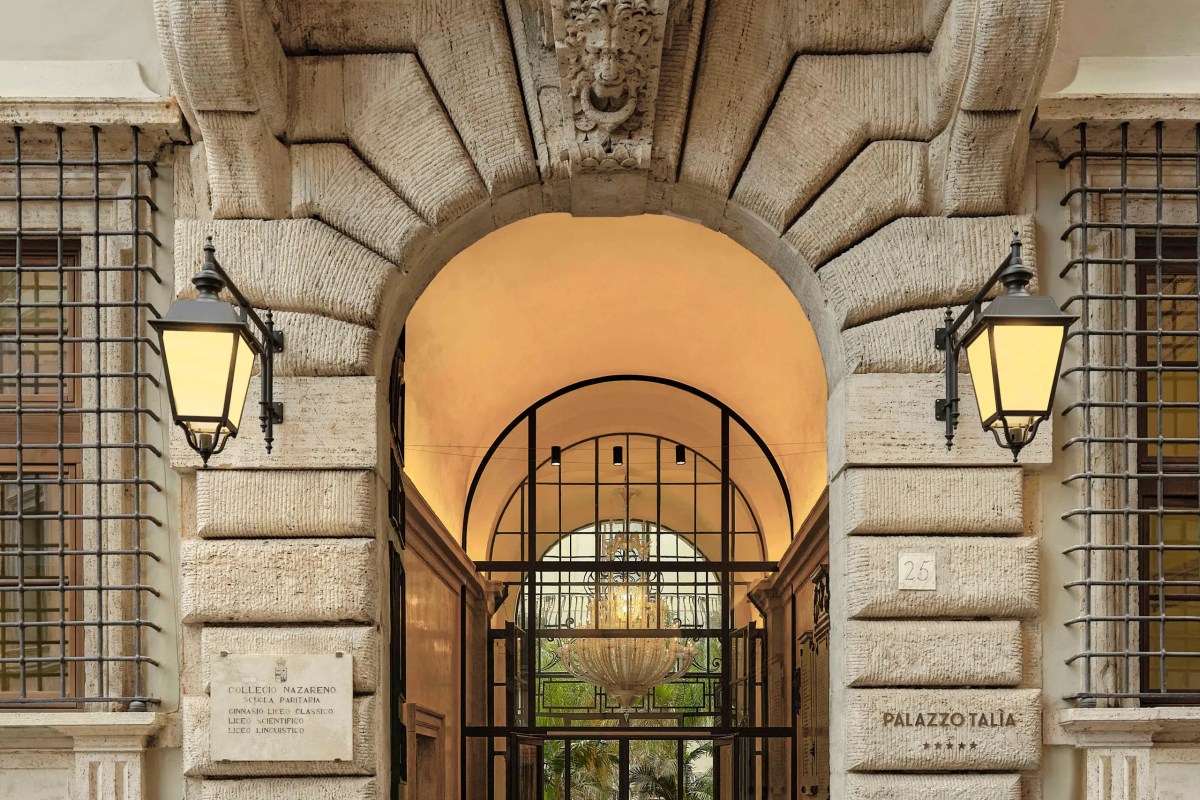
Largo del Nazareno is a square most visitors walk straight past on their way down to the Trevi Fountain, a few steps further downhill. Behind its stone portal, though, stands Palazzo Talìa, a sixteenth-century residence that spent nearly two centuries as one of Europe's most exclusive boarding schools before reopening in 2024 as a twenty-six-room hotel. The MICHELIN Guide gives it Two Keys, and the credentials behind the project are unusual even for Rome: its communal rooms were designed by Studio Luca Guadagnino, the film-maker's own studio, working on a hotel for the first time, while the guest rooms came from Mia Home Design Gallery and Laura Feroldi Studio. Cardinals, diplomats and the sons of the Italian aristocracy once studied under these frescoed ceilings as pupils of the Nobile Collegio del Nazareno; today the same vaulted hall hosts dinners and receptions instead of lessons. It sits close enough to the Spanish Steps and the Trevi Fountain to hear the crowds without seeing them.
Palazzo Talìa
Hotel · Rione Colonna, near the Spanish Steps
© OpenStreetMap contributors · OpenFreeMap
- Address
- Largo del Nazareno 25, 00187 Roma
- Opened
- 2024
- Rooms
- 26
- Restaurants
- Tramae
- Spa
- Wellness Centre – heated pool, sauna, Turkish bath, fitness room, two treatment rooms
- Telephone
- +39 06 692521
- Website
- palazzotalia.com
- MICHELIN Guide
- Two MICHELIN Keys
Twenty-six rooms in a 16th-century palace once home to the Nobile Collegio del Nazareno, redesigned by Studio Luca Guadagnino.
01The house
The site has been built on since antiquity, when the Aqua Virgo aqueduct ran beneath it near temples once dedicated to nymphs and muses. The palace itself rose in the sixteenth century as the residence of the humanist Angelo Maria Colocci, secretary to Pope Leo X de' Medici. By the seventeenth century it belonged to Cardinal Tonti, appointed titular archbishop of Nazareth and known for it as Cardinal Nazareno; on his death he left the building to San Giuseppe Calasanzio, founder of the Piarist fathers, to be run as a school for the children of poor families.
Over the following two centuries the school grew into the Nobile Collegio del Nazareno, educating the sons of the aristocracy alongside future politicians, cardinals and diplomats, and expanding with a theatre, classrooms, staircases, galleries and an indoor garden. Female students were admitted for the first time in 1970. After the collegio finally closed in 1999, the building fell into disrepair before being picked up by the hospitality-inclined Federici family, who commissioned a three-year renovation project and parted the curtains on it once more in 2024.
The shared spaces, part of the Small Luxury Hotels of the World portfolio, were reimagined by studiolucaguadagnino, the design studio of director Luca Guadagnino, known for his work behind the camera rather than the drawing board. What was once the school's assembly hall survives today as the Aula Magna, a 230 sqm space with ceilings soaring to eleven metres, eighteenth-century frescoes and gold-leaf detailing, its walls still lined with Roman marble busts.
02Rooms and suites
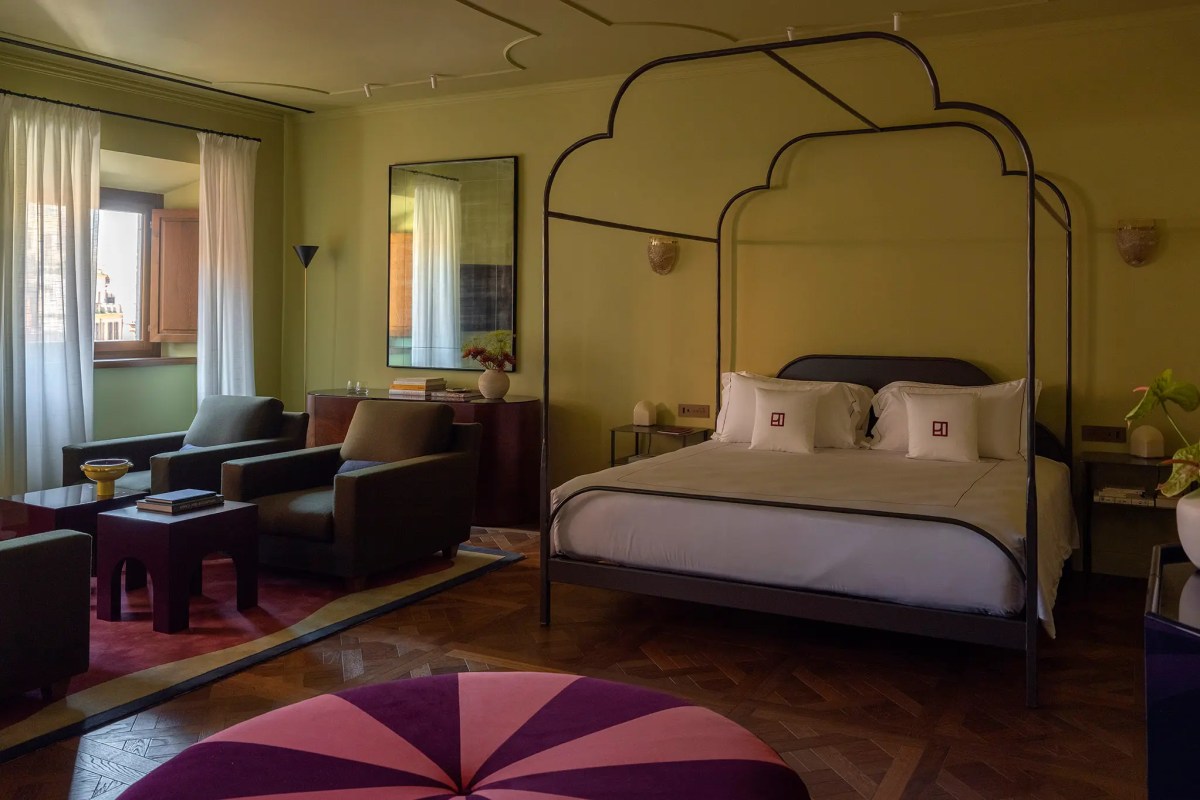
Twenty-six rooms are spread across two floors, overlooking either the quiet inner courtyard or the cobbled Via del Nazareno. The décor draws on the understated elegance of Rome's finest historic buildings, with marble, precious woods, mouth-blown mirrors and handcrafted maiolica tiles, and each room is individually decorated with four-poster beds, velvet upholstery and parquet flooring. No two are alike, a consequence of a building never designed to be a hotel.
Insider tipInside Rome's ZTL zone; nearest metro stops are Spagna and Barberini, both a short walk away.
Sizes climb in stages: Deluxe rooms run from 32 to 39 sqm, Junior Suites from 44 to 49 sqm with king-size beds and walk-in rainfall showers, and Grand Junior Suites from 59 to 65 sqm with four-poster or fabric headboards. The Patio Suites unfold over two floors with direct access to the inner courtyard, a ground-floor sitting room and a private bedroom above, while the Suites, from 46 to 68 sqm, look onto Via del Nazareno with their own choice of colours and materials.
The Terrace Suite, on the top floor, was designed by Studio Luca Guadagnino exclusively for Palazzo Talìa, with a living room warmed by a fireplace, a king-size bed and a 66-square-metre, plant-filled terrace overlooking the inner courtyard and the monumental complex of Sant'Andrea delle Fratte.
Grandest of all is the Talìa Suite, a 358-square-metre accommodation combining a Junior Suite and a Grand Junior Suite with the Aula Magna itself, complete with frescoes, ancient marbles and a wooden choir, sleeping up to six adults and two children.
03Where to eat
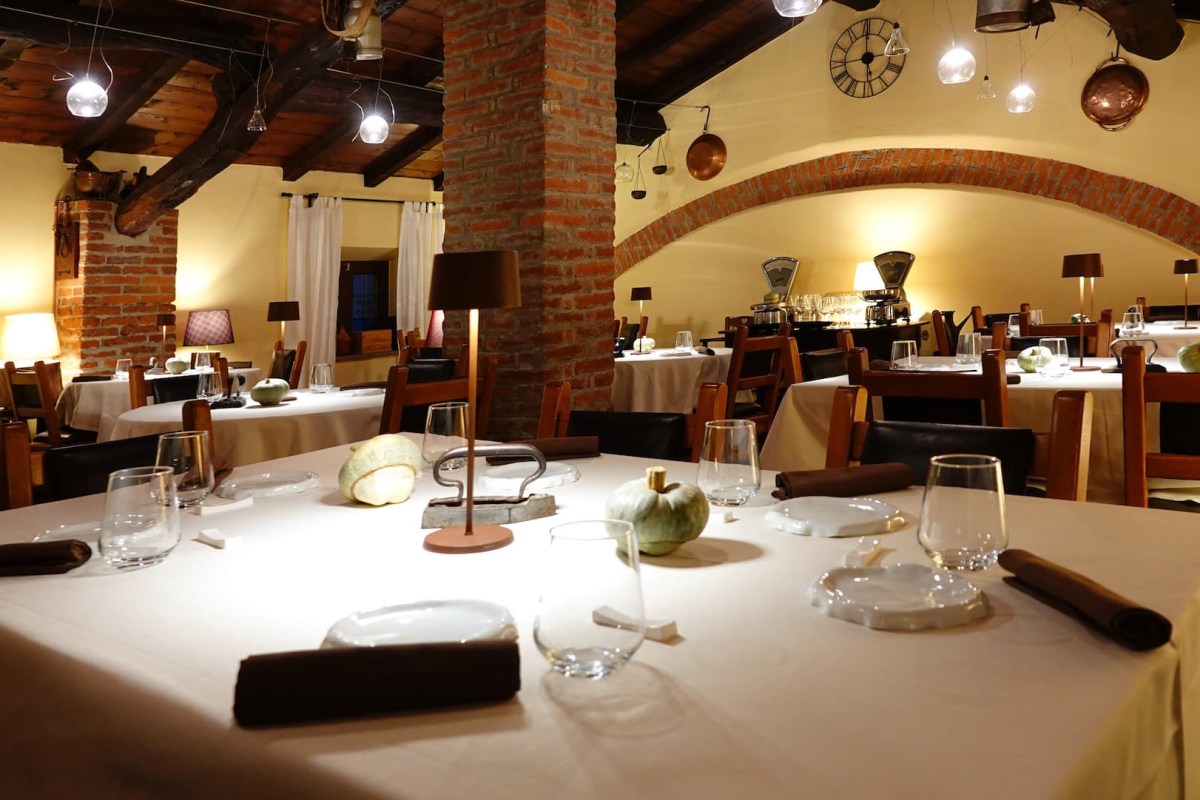
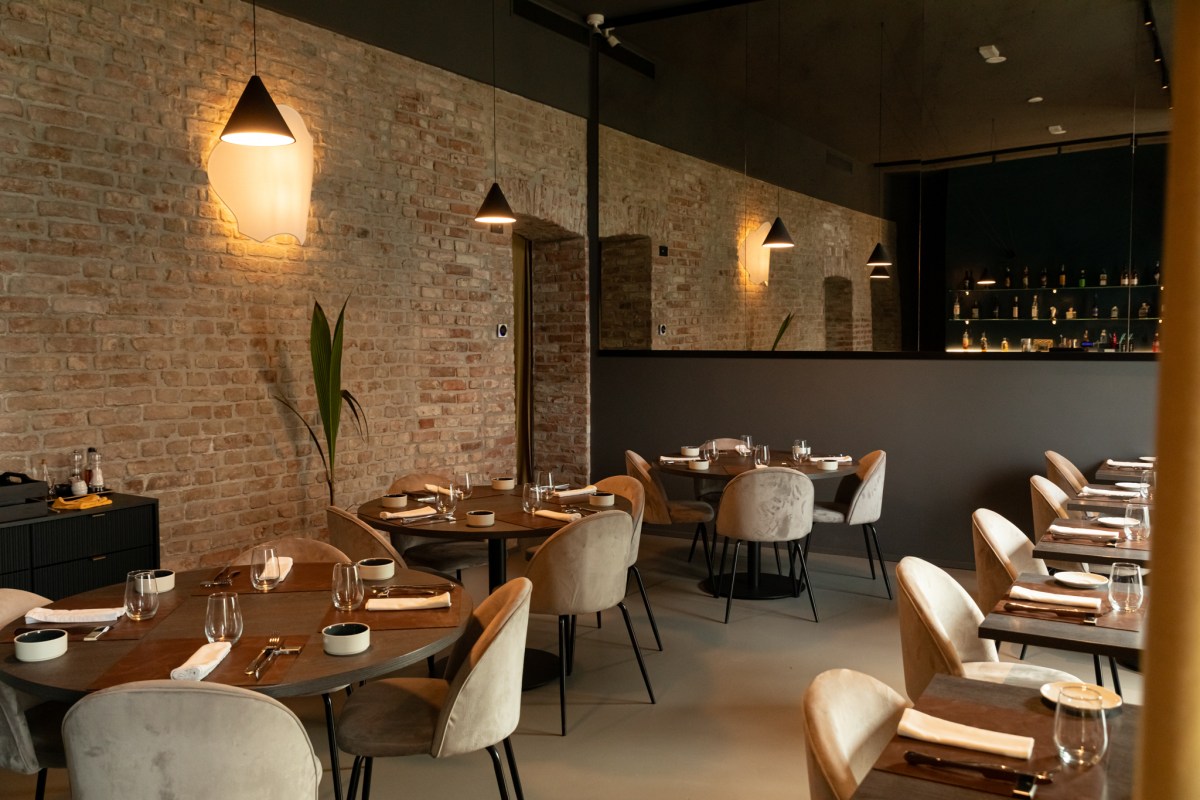
Tramae is run by chef Marco Coppola, originally from Sorrento, who lets quality seasonal ingredients take the lead, cooking traditional Roman, Neapolitan and Venetian dishes with produce from the surrounding countryside. The menu is framed as a modern take on the nineteenth-century Grand Tour, moving region by region across Italy rather than settling on Roman trattoria classics alone.
Expect spaghetti with clams as a signature, alongside a seasonal Roman fish soup for the winter menu, and, among the starters, a savoury maritozzo filled with prawn, tartare sauce and celery puntarelle. Breakfast runs from 7am to 11am, lunch from noon to 3pm and dinner from 7pm to 11pm, served in the frescoed dining room or out in the courtyard.
04The bar
Il Bar della Musa sits under grotesque-frescoed ceilings, its mirrored surfaces catching the historic paintwork above. Cocktails are overseen by bar manager Dario Araneo, who serves aperitifs and after-dinner drinks through formulas such as the Oyster Happy Hour, pairing fresh oysters with gin and tonic or the house Martini. A light food menu, developed with the Tramae kitchen, keeps the bar busy well past dinner.
05Spa and wellbeing
The Wellness Centre sits at the heart of the Palazzo next to the route of the Aqua Virgo, surrounded by ancient stone beneath barrel vaults, and includes a 33 sqm heated relaxation swimming pool, a sauna, a Turkish bath, a fitness room and two treatment rooms. A visit typically moves through an ice shower for circulation before finishing with an emotional shower, a multisensory experience combining lights, colours, aromas and water jets. The spa welcomes guests aged 14 and over.
06The neighbourhood
Palazzo Talìa stands in Rione Colonna, Rome's historic Colonna district, and a few steps from the Trevi Fountain, the Spanish Steps and Piazza Navona. The square outside is quiet by Centro Storico standards, yet the crowds at the fountain are a two-minute walk away. Around the corner, Rome's outpost of the Gagosian Gallery and the Art Nouveau courtyard of Galleria Sciarra, largely overlooked by tourists, offer a quieter counterpoint to the monuments.
Don't miss
Don't miss
- 01
Dinner or a drink in the Aula Magna, the former school hall with 18th-century frescoes and 11-metre ceilings
- 02
Chef Marco Coppola's spaghetti with clams and the savoury maritozzo at Tramae
- 03
A Martini under the grotesque-frescoed ceiling of Bar della Musa
- 04
The 33 sqm heated pool in the Wellness Centre, built along the route of the Aqua Virgo aqueduct
- 05
The Terrace Suite's 66 sqm terrace facing the complex of Sant'Andrea delle Fratte