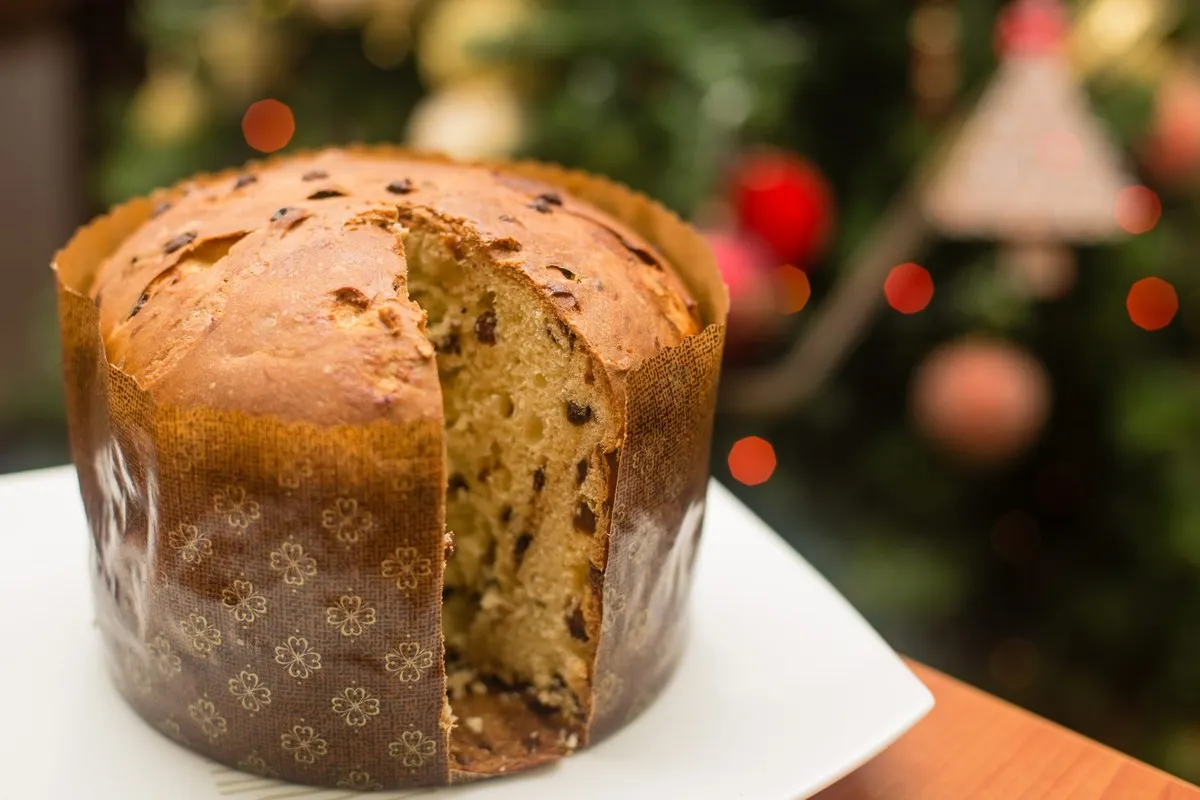
Panettone was born in Milan, and the city's old pastry houses still set the tone: Cova since 1817, Marchesi since 1824, Sant Ambroeus since 1936. Where to stand at the counter for a morning coffee, and where to buy a panettone to take home.
In this story · 6 sections
A Milanese pasticceria is a place to stand rather than sit. In the morning you take a coffee and a brioche at the counter; in the afternoon a pastry, or a box of them wrapped for a dinner invitation; and from November the windows fill with panettone, the tall, domed Christmas bread that the city regards as its own.
The oldest houses have survived wars, family quarrels and changes of owner – two of them now belong to the great luxury groups – and they remain the best places to understand how seriously Milan takes its sweets.
4 places
© OpenStreetMap contributors · OpenFreeMap
A Milanese invention
Italian accounts agree that panettone comes from Milan; the name comes from the Milanese dialect panattón, an augmentative of pan, bread. The best-known legend, set in the fifteenth century, tells of a nobleman who courted the daughter of a poor baker called Toni and paid for the best flour, eggs, raisins and candied citrus – hence pan di Tonio. The first firm record is less romantic: on 23 December 1599 the Borromeo college in Pavia paid for butter, raisins and spices so that its baker could make thirteen Christmas loaves for the students.
In the eighteenth century the Milanese writer Pietro Verri called it pan de ton, luxury bread, and the first printed recipe appeared in 1853, in Giovanni Felice Luraschi's Nuovo cuoco economico milanese. The modern shape is twentieth-century: in 1919 Angelo Motta began making panettone in quantity and gave it its tall dome and light crumb by letting the dough rise three times over almost twenty hours, and Gioacchino Alemagna followed around 1925. The pasticcerie below still make theirs by hand.
Cova, 1817
Cova is the oldest of the great names. Antonio Cova opened his café beside La Scala in 1817, and after the Second World War it moved to Via Montenapoleone, where its wood-panelled rooms and counter remain a fixture of the fashion district. LVMH has controlled the company since 2013, and there are now Cova shops from Monte Carlo to Tokyo, but the Milan original is the one to visit.
Marchesi, 1824
Marchesi was founded in 1824 in the Magenta district, and its original shop on Via Santa Maria alla Porta, a few minutes from The Last Supper, is still the most atmospheric. Angelo Marchesi, heir to the family, sold 80 per cent of the business to the Prada group for just under ten million euros. In 2015 Prada opened a second shop on Via Montenapoleone in the former premises of Venini, designed by the architect Roberto Baciocchi as a luxurious bomboniera, and there is a third in the Galleria Vittorio Emanuele II, as well as a shop in London's Mayfair.
Sant Ambroeus, 1936
Sant Ambroeus takes its name from the city's patron saint in Milanese dialect and has stood on Corso Matteotti, near Piazza San Babila, since 1936. The family of Dimitri Pauli took it over in the 1970s; SA Hospitality Group, founded in 2003 by Gherardo Guarducci with Pauli, built the name into a group of restaurants and cafés, and in 2022 the Milan original was restored and relaunched.
Taveggia and Cucchi
Two more belong on any list. Taveggia, on Via Visconti di Modrone near the Palace of Justice, reopened in May 2022 after a closure of several years, run by the team behind the Gamberini pastry shops in Bologna and Florence. Cucchi, on Corso Genova since 1936, is the neighbourhood institution of the Sant'Ambrogio and Porta Genova side of the city; the founder's granddaughters have recently passed it to a new family of owners.
How to buy panettone
Panettone appears in the windows in November and is eaten through Christmas and New Year. Buy it whole, in its paper case and wrapping, and keep it at room temperature; a slice is best slightly warmed. If you are in the city earlier in the year, the same houses sell colomba, the dove-shaped Easter cake made from a similar dough.
At a glance
Milan's historic pasticcerie
| Pasticceria | Founded | Address | Owned by |
|---|---|---|---|
| Cova | 1817 | Via Montenapoleone 8 | LVMH, since 2013 |
| Marchesi 1824 | 1824 | Via Santa Maria alla Porta 11a; Via Montenapoleone 9; Galleria Vittorio Emanuele II | Prada group |
| Sant Ambroeus | 1936 | Corso Matteotti 7 | SA Hospitality Group |
| Cucchi | 1936 | Corso Genova 1 | The Monti family |
| Taveggia | Reopened May 2022 | Via Visconti di Modrone | The Gamberini team |
Pasticceria Cova
Milan's oldest great pasticceria, since 1817
Founded beside La Scala in 1817 and on Via Montenapoleone since after the Second World War; part of LVMH since 2013.
Via Montenapoleone 8, 20121 Milano
Insider tipTake your coffee at the counter.
Pasticceria Marchesi
The original Marchesi shop, since 1824
Marchesi's historic shop in the Magenta district; the house now belongs to the Prada group, with further shops on Via Montenapoleone and in the Galleria.
Via Santa Maria alla Porta 11a, 20123 Milano
Insider tipCombine it with a visit to The Last Supper.
Sant Ambroeus
Corso Matteotti since 1936
The pasticceria named after the city's patron saint, restored and relaunched in 2022 by SA Hospitality Group.
Corso Matteotti 7, 20121 Milano
Insider tipOrder a slice of cake with your afternoon coffee.
Pasticceria Cucchi
A Corso Genova institution since 1936
A neighbourhood pasticceria and café on Corso Genova, founded in 1936.
Corso Genova 1, 20123 Milano
Insider tipA good stop between Sant'Ambrogio and the Navigli.