In this story · 7 sections
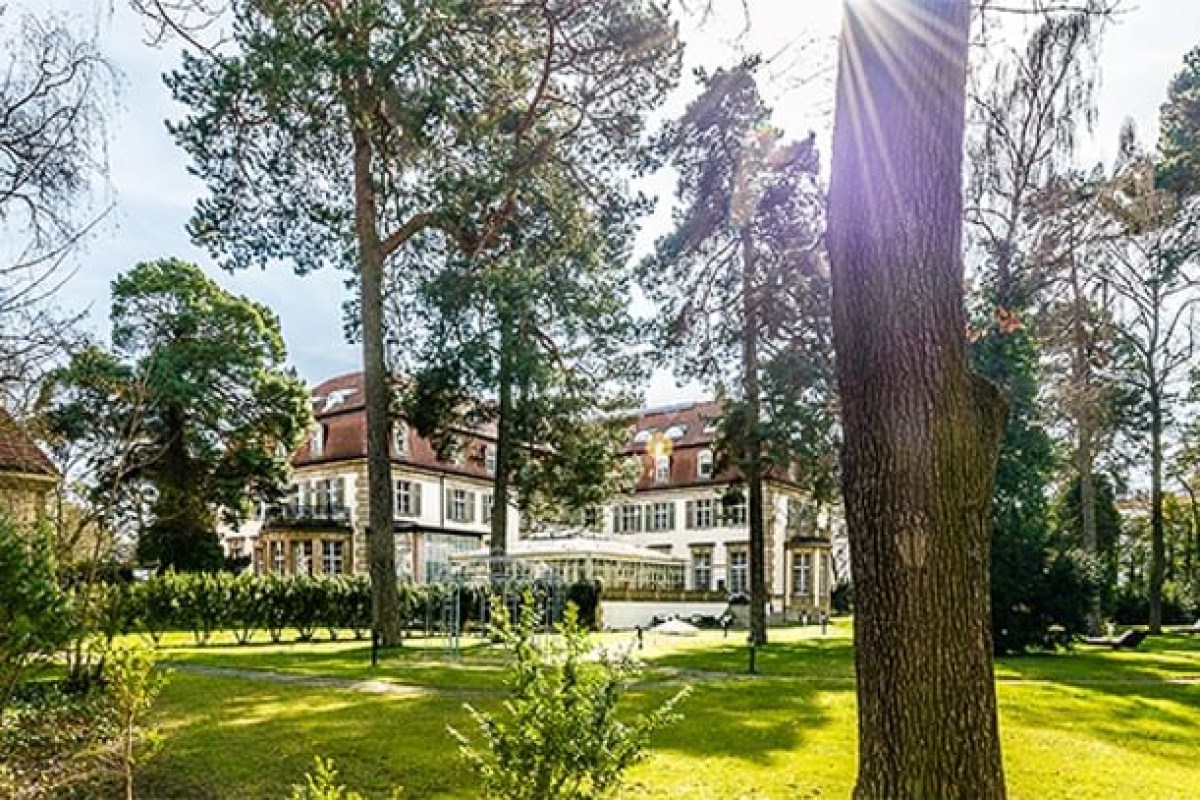
Behind a wrought-iron gate on a quiet, tree-lined avenue in Grunewald, Berlin's grandest villa district, Patrick Hellmann Schlosshotel gives almost nothing away: only a small, discreetly lit white sign separates it from the private mansions around it. It was one of them once. The house was raised between 1911 and 1914 for Walter von Pannwitz, a Munich lawyer, art collector and personal advisor to Kaiser Wilhelm II, who is said to have called in on his rides through the Grunewald forest. In the century since, the palace has been left empty for twenty years, served as the wartime Croatian embassy, and reopened in 1951 as a hotel that drew Robert Kennedy, Josephine Baker and the Rolling Stones, who famously wrecked some of its porcelain in 1965. Since 2015 it carries the name, and the unmistakable decorating hand, of German fashion designer Patrick Hellmann. The MICHELIN Guide now gives it Two MICHELIN Keys, its citation for an exceptional stay.
Patrick Hellmann Schlosshotel
Hotel · Grunewald
© OpenStreetMap contributors · OpenFreeMap
- Address
- Brahmsstrasse 10, 14193 Berlin
- Opened
- Palace built 1911–1914; hotel since 1951, redesigned by Patrick Hellmann since 2015
- Rooms
- 53
- Restaurants
- Catalina Restaurant
- Spa
- Indoor pool, hammam, Finnish sauna, gym, beauty salon
- Price from
- €180 (Residence room, read October 2026)
- Telephone
- +49 30 895 840
- Website
- schlosshotelberlin.com
- MICHELIN Guide
- Two MICHELIN Keys
Built for Kaiser Wilhelm II's personal lawyer, now redesigned room by room by Patrick Hellmann.
01The house
The scale of the commission was, even for Grunewald, exceptional. The house was commissioned in 1911 by the Munich-based celebrity lawyer and art collector Walter von Pannwitz, working with Nuremberg-born, Dresden-based architect German Bestelmeyer, though the client shaped every detail himself. The project marked his marriage to his former client Catalina Roth and was built to give the couple's art collections a suitable setting. The finished Italian Renaissance-style palace became the backdrop for lavish parties, and Kaiser Wilhelm II himself was a visitor on his rides through the forest.
Fortune turned after the First World War. Walter von Pannwitz fell ill and died in 1920 while travelling to his Argentine properties, after which the Grunewald palace stood largely uninhabited for more than twenty years. The house stood empty from 1920 to 1940, when it was sold to the German state and served, until the end of the Second World War, as the embassy of Croatia. After the war, the German housekeeper prevented Soviet troops from looting the abandoned embassy by raising the flag of allied Yugoslavia in the garden, which meant that the palace's original, opulent interior survived largely intact.
In 1951, restaurateur Wolfgang Gehrhus leased the building and turned it into a luxury hotel, which became a magnet for postwar glamour. Robert Kennedy, Josephine Baker, Peter Ustinov and Errol Flynn all stayed, as did Romy Schneider, who celebrated two of her weddings here, while Hildegard Knef wrote her first chansons under its roof and the Rolling Stones, during a 1965 stay, broke several valuable vases and porcelain figures. After Gehrhus died in 1984 the property fell into decline; in 1991 the city of Berlin sought a buyer, and a consortium of Berlin families bought the listed building and had it redesigned, with Karl Lagerfeld responsible for the interiors. It reopened in 1994 as the Schlosshotel Vier Jahreszeiten and changed hands and names several times over the following decade. The house became known across Germany again in 2006, when the German national football team was based here during the World Cup. In 2015, German fashion designer Patrick Hellmann took over and gave the hotel a complete makeover, dressing rooms and public spaces in the fabrics and finishes of his own ready-to-wear collections.
02Rooms and suites
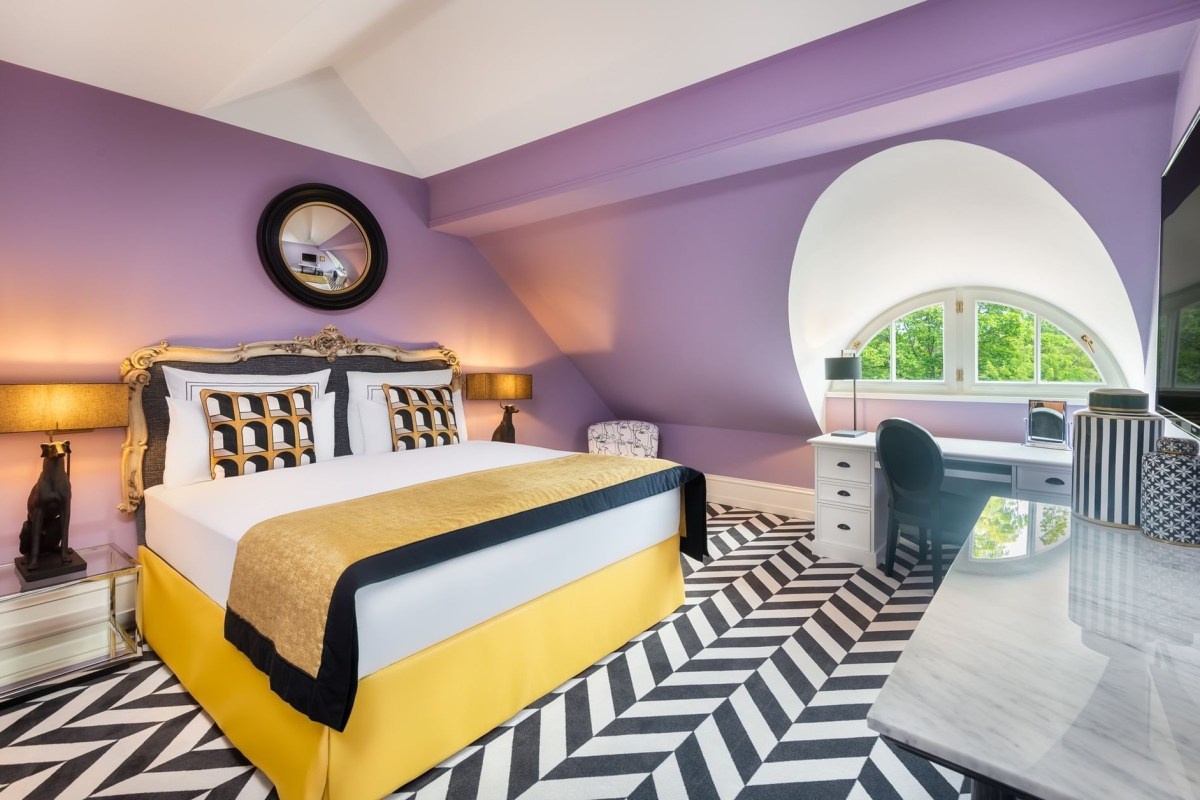
The house keeps its 53 rooms and suites spread across the palace and garden wings, each individually dressed rather than uniformly styled. Sumptuous carpets, ornamental headboards, velvet and embroidery define the rooms, with the Premium category showing Patrick Hellmann's touch most clearly, done out in either a New York or a Bohème mood. Fabrics drawn from Hellmann's own suit collections — velvet, silk and flannel — line the walls and upholstery, with the designer's PHC monogram embroidered onto doorknobs and cushions. Elsewhere the mood turns toward the Roaring Twenties, with black-and-white tuxedo tones, Art Deco lines and glossy tiled bathrooms.
Insider tipEight minutes by car from Kurfürstendamm; next to the Grunewald forest and lake.
Categories read like a small atlas of the building: Residences and Boutique Rooms of around 30 to 40 square metres look onto the garden, Premium Rooms and Junior Suites sit in the main palace, an Executive Suite runs to about 70 square metres, and a 95-square-metre Library Suite occupies the top floor under vaulted ceilings. At the top of the scale, a two-bedroom Kaiser Suite of roughly 200 square metres recalls the building's imperial connections.
03Where to eat
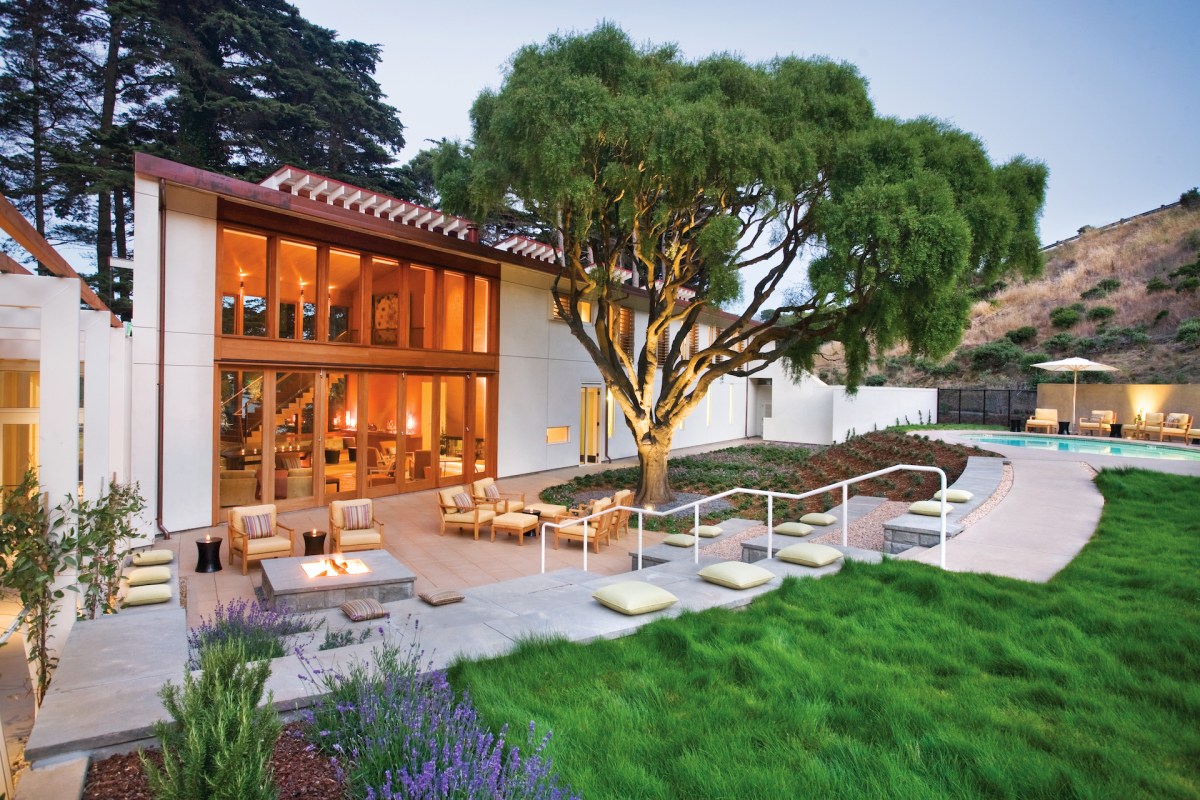
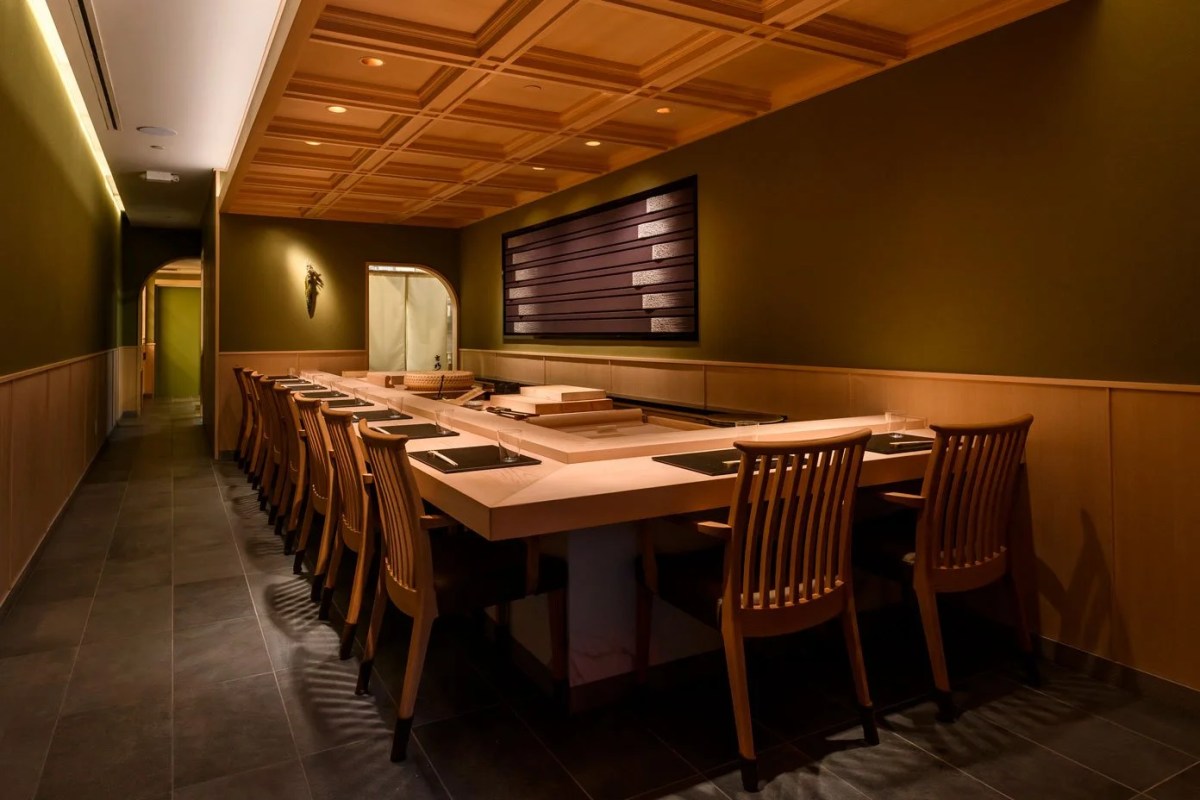
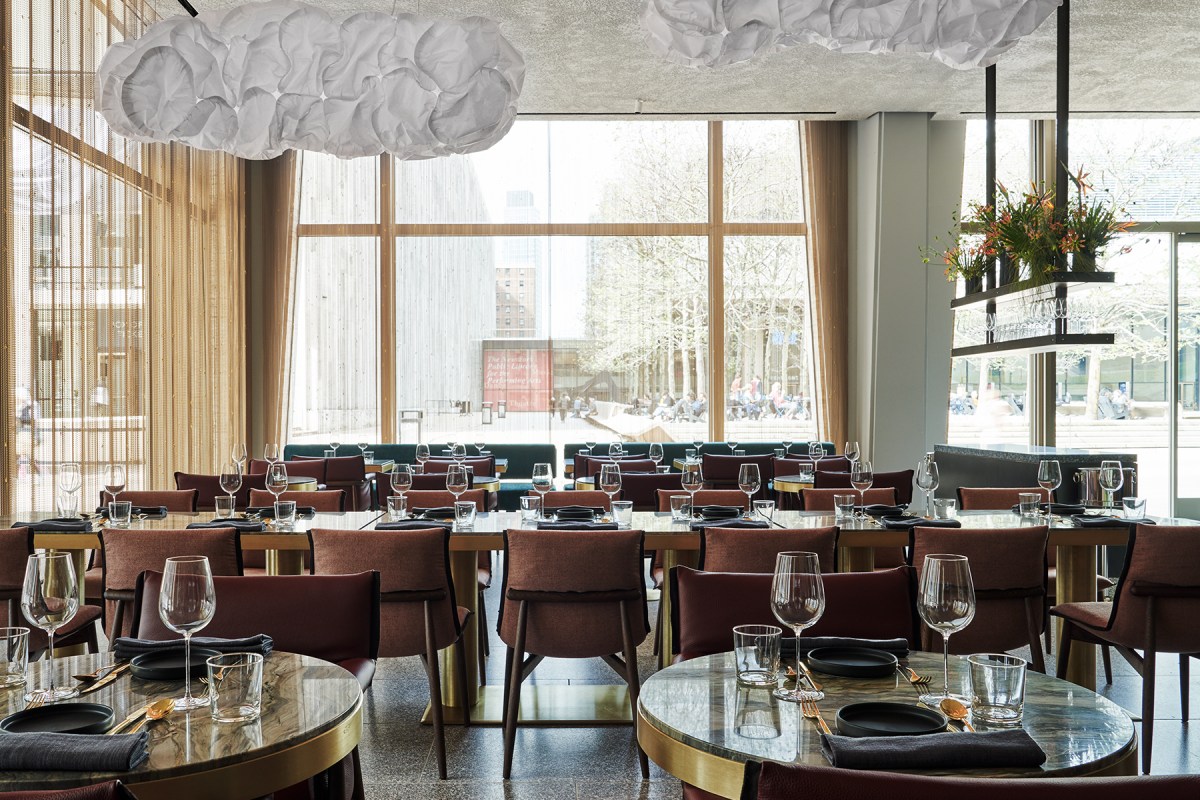
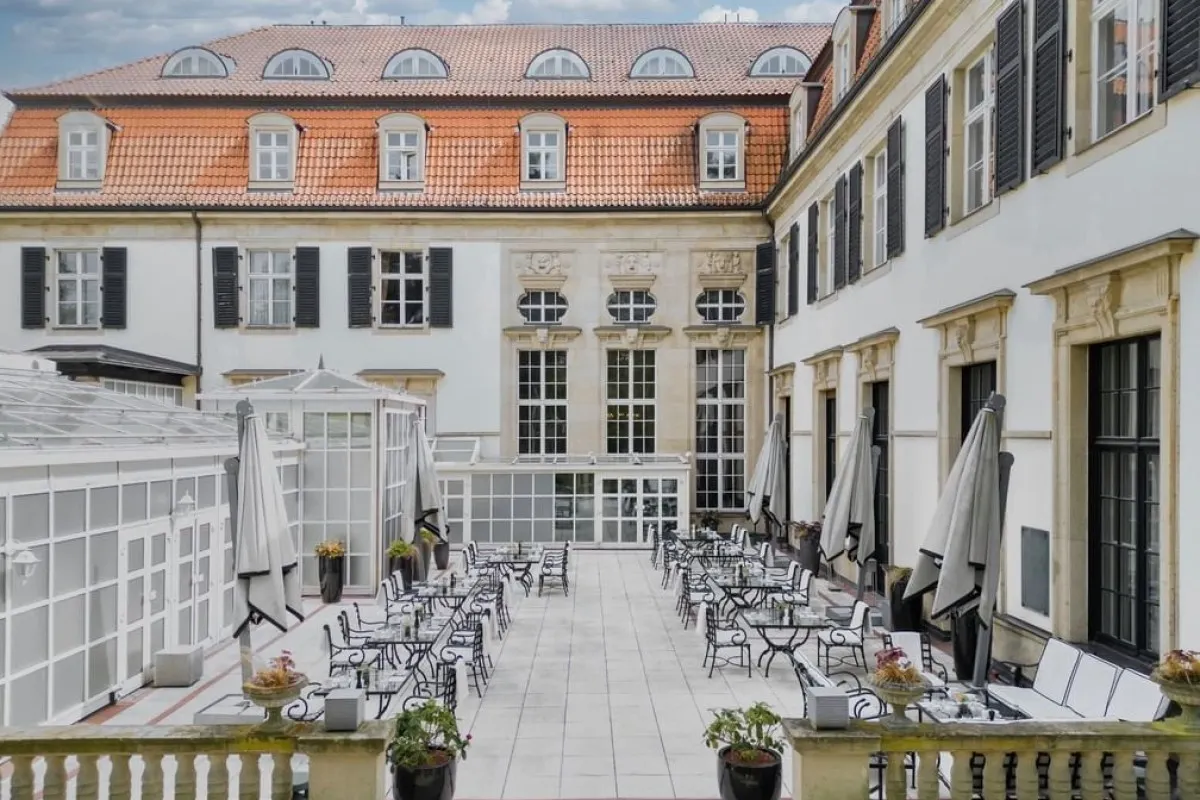
Dinner is served at Catalina, the hotel's restaurant inside the historic shell of the palace, which serves upscale international cuisine under coffered ceilings and chandeliers that have barely changed since the Gehrhus years. The large terrace looking onto the garden is the place to linger over a glass from a carefully curated list of wines from renowned estates. Breakfast is taken in the glass-walled winter garden overlooking the lawns — a room worth getting up early for, given its views over the manicured gardens from the sun-soaked conservatory.
04The bar
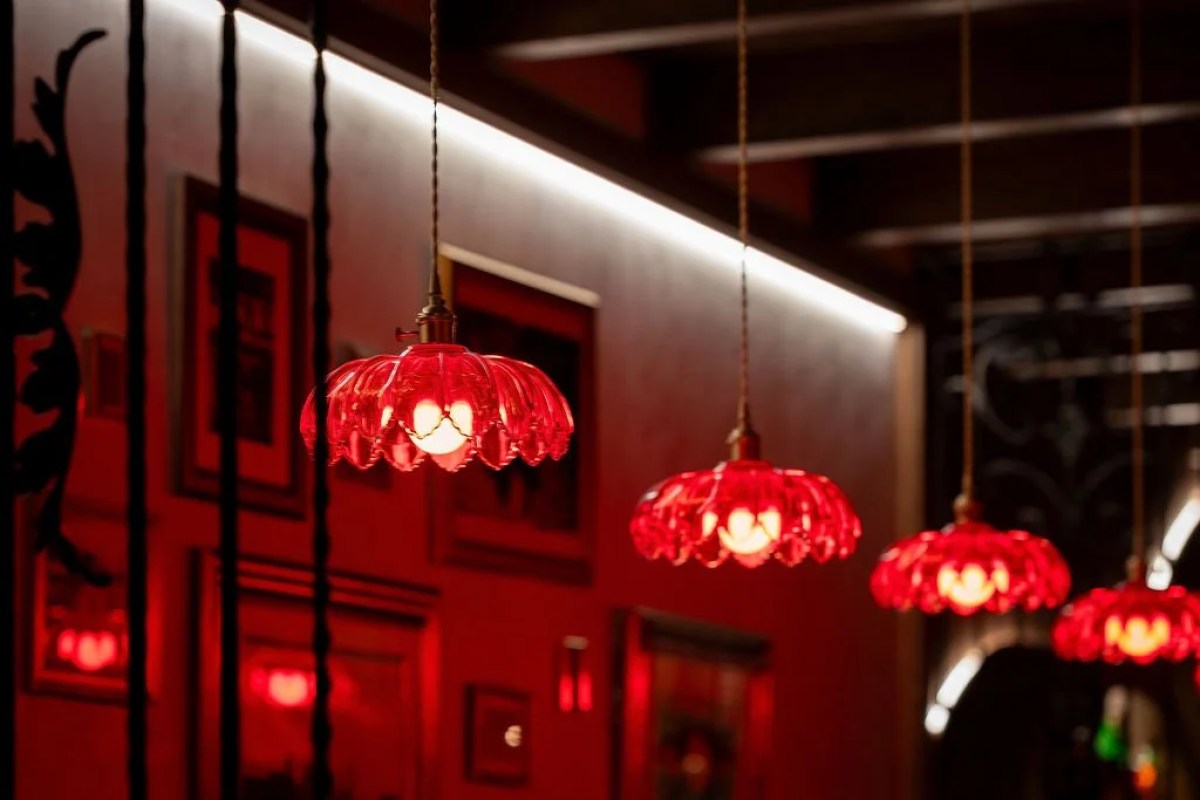
The hotel's bar carries its own small piece of fashion history: it once housed the first permanent GQ Bar in Western Europe, a collaboration born from Hellmann's own links to the magazine world. It trades today under the hotel's own initials as the PHC Bar, keeping the same black-lacquered counter and photographic artwork that made the room a minor Berlin landmark, alongside a Champagne Lounge for guests who prefer bubbles by the fireplace to cocktails at the bar.
05Spa and wellbeing
The spa sits in the basement and brings together a peaceful indoor pool, a hammam, a Finnish sauna, a beauty salon and a gym. Downstairs, the heated indoor pool looks out toward the pine trees of the Grunewald forest, a reminder that the hotel's 19th-century owners chose this plot for its proximity to wilderness rather than to the city centre.
06The neighbourhood
Grunewald is Berlin's most exclusive residential quarter, and the hotel sits only eight minutes by car from the Kurfürstendamm and the Berlin exhibition halls. It also sits close to the 7,413-acre Grunewald forest with its trees and lakes, about four miles from the Kurfürstendamm shopping strip and sights such as the Kaiser Wilhelm Memorial Church and Berlin Zoo. A car, or the hotel's own transfers, is the easiest way to move between the forest calm of Grunewald and the museums and nightlife of central Berlin.
07Making the most of a stay
Treat Grunewald itself as part of the programme: the lake and forest trails on the hotel's doorstep are made for a morning walk before breakfast in the winter garden. The hotel's largest meeting room holds up to 120 guests, making the palace's historic Musikzimmer a natural choice for private dinners or small conferences away from Berlin's convention district. For couples, the garden and terrace, used for weddings and receptions through the summer months, are worth timing a stay around if the season allows.
Don't miss
Don't miss
- 01
Breakfast in the glass-walled winter garden overlooking the lawns
- 02
A cocktail at the PHC Bar, once the first permanent GQ Bar in Western Europe
- 03
An hour in the basement spa's hammam before the heated pool
- 04
Dinner on the Catalina terrace with wine from the curated list
- 05
A walk into the neighbouring Grunewald forest and lake