The Douro line runs from Porto along the river for much of its length, and the little station at Pinhão is tiled with scenes of the harvest. A stop-by-stop itinerary for a train journey and two days in the village at the centre of the Cima Corgo.
In this story · 6 sections
Some journeys are better made slowly. The Douro railway leaves Porto's tiled São Bento station and, after an hour or so through the suburbs and hills, meets the river and stays beside it, threading tunnels and crossing bridges, with terraced vineyards rising on both banks. Its natural destination is Pinhão, a small riverside village at the heart of the Cima Corgo, the subregion where most of the great port quintas lie. This itinerary combines the train ride with two days in the village.
Estação de Pinhão
Railway station · Pinhão, Alijó
- Address
- Largo da Estação, 5085 Pinhão
- Line
- Ermesinde to Pocinho, about 160 km
- Trains
- From Porto São Bento, operated by CP
- Full journey
- About 3 h 20 min to Pocinho
- Best views
- Régua to Pinhão, right-hand side heading east
- Pinhão
- Heart of the Cima Corgo, tiled station
A small station decorated with azulejo panels showing the landscapes of the Douro and scenes of the harvest.
01Day 1, morning: São Bento to Régua
The Douro line runs for about 160 kilometres from the junction at Ermesinde to its eastern terminus at Pocinho; passenger trains operated by CP run from Porto São Bento, and the full journey takes about three hours and twenty minutes. Take a morning train and sit on the right-hand side, facing east. Before boarding, spend a few minutes in São Bento's entrance hall, lined with blue-and-white azulejos.
The first stretch is unremarkable, but after Márco de Canaveses the train reaches the Douro and the views open up. Peso da Régua, the main town of the lower valley and home to the Museu do Douro, makes a good stop if you want to break the journey.
02Day 1, midday: Régua to Pinhão
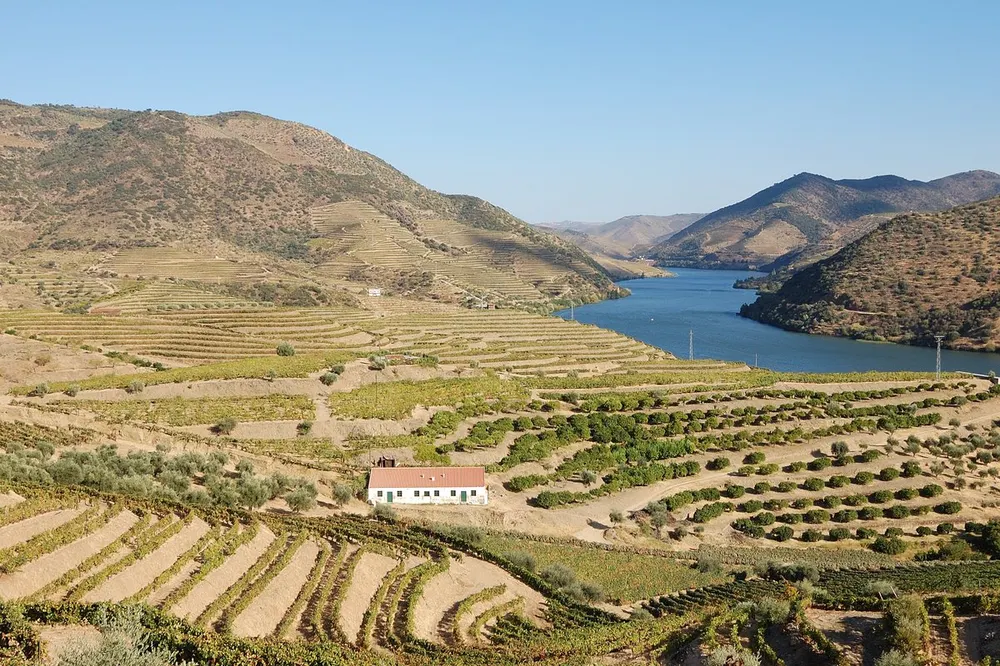
East of Régua the line runs right along the water, and this is the most beautiful section: the river broad and still, terraces climbing in every direction, quinta names painted on the hillsides. In summer a historic train, pulled by a vintage locomotive, also runs on this stretch on selected days; check the schedule if you would like to ride it. After about twenty-five minutes you reach Pinhão.
Insider tipCheck CP timetables; services are infrequent.
03Day 1, afternoon: Pinhão station and the village
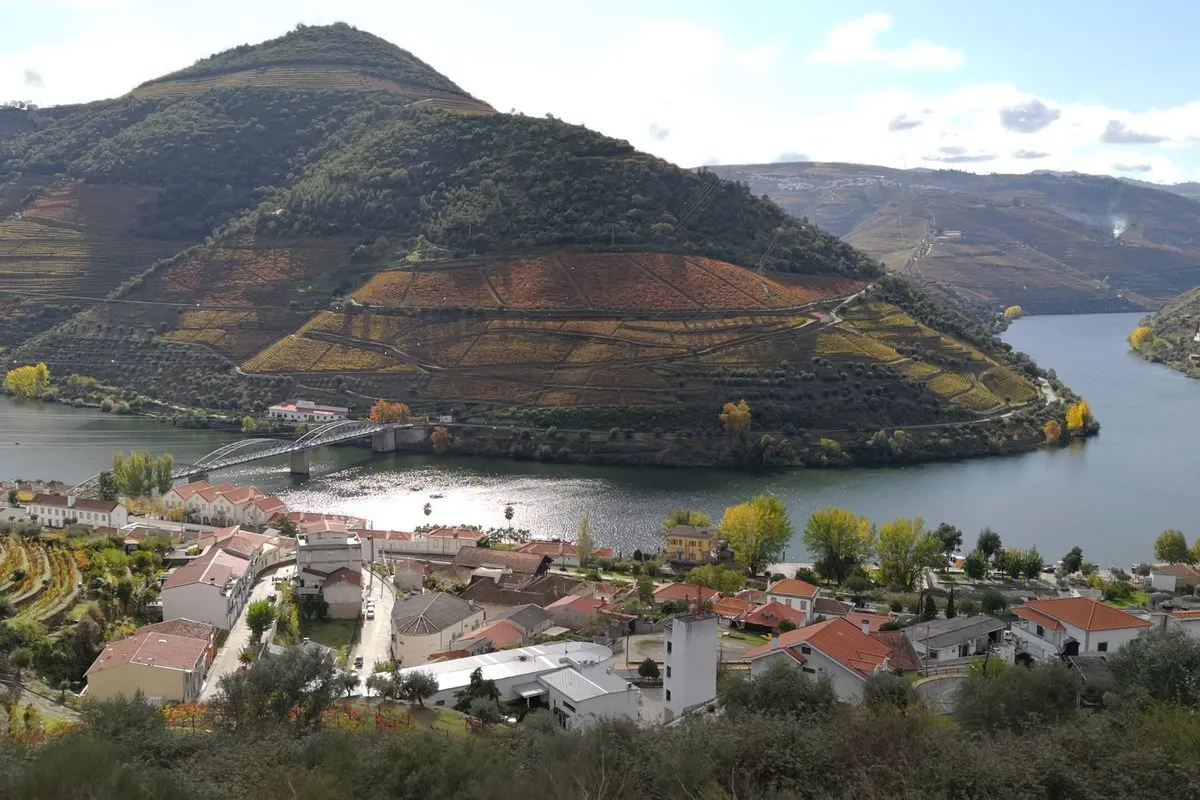
Pinhão's small station is famous for its azulejo panels, blue-and-white tiles depicting the landscapes of the Douro and scenes of the grape harvest, from picking to carrying baskets to the boats. Study them before you leave the platform. The village sits where the Pinhão river joins the Douro, a modest place of a few streets, a riverside promenade and a bridge, surrounded on all sides by vineyards. Check in, then take a short boat trip on the river in the late afternoon, when the light on the terraces is at its warmest.
04Day 2, morning: the viewpoint of Casal de Loivos
Start early with a drive or a taxi up the hillside to the village of Casal de Loivos, whose viewpoint looks down on Pinhão and a great bend of the Douro, with terraces folding away in every direction. It is one of the classic views of the valley. Morning mist often lies on the river and burns off as the sun rises.
05Day 2, afternoon: the quintas
Pinhão is surrounded by famous estates, several within walking distance of the station. Book a tour and tasting at one or two, ideally including lunch, and compare their ports with the region's increasingly fine unfortified Douro wines. Many quintas welcome visitors throughout the year, but September and October, during the harvest, are the most atmospheric months to come.
06Onwards to Pocinho, or back to Porto
From Pinhão the line continues east to Tua and on to Pocinho, through wilder, hotter country in the Douro Superior. The line once ran on to the Spanish border, but since 1988 Pocinho has been the end of the line. Ride to the terminus and back for the full experience, or return directly to Porto. For the wider region, find our Douro Valley guide and our guide to the port lodges of Gaia among the Metro Mode destinations, explore Metro Mode's world city guides, and browse our travel section in English.