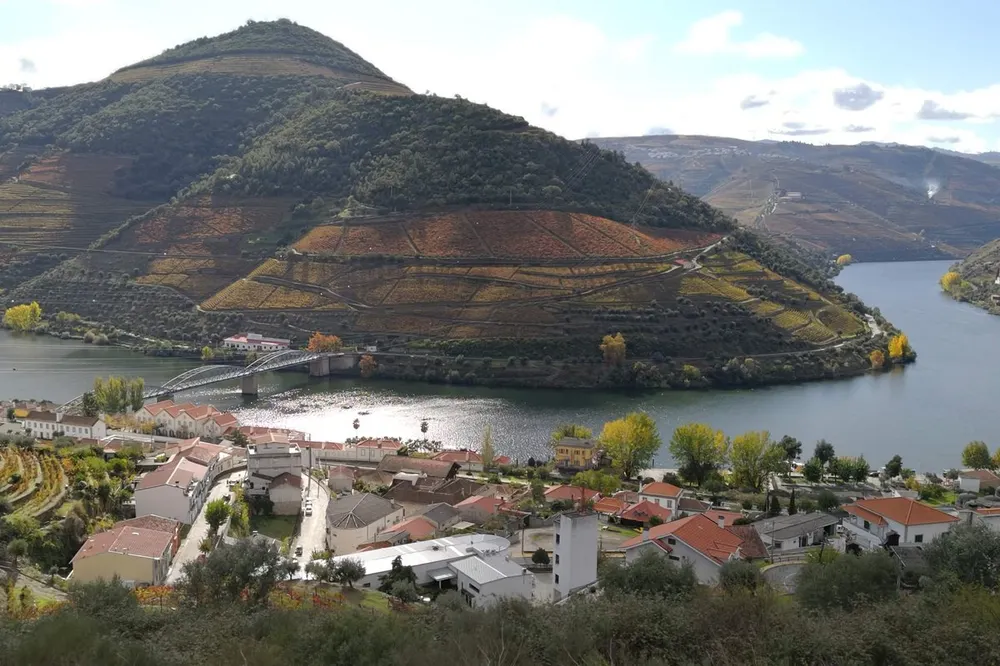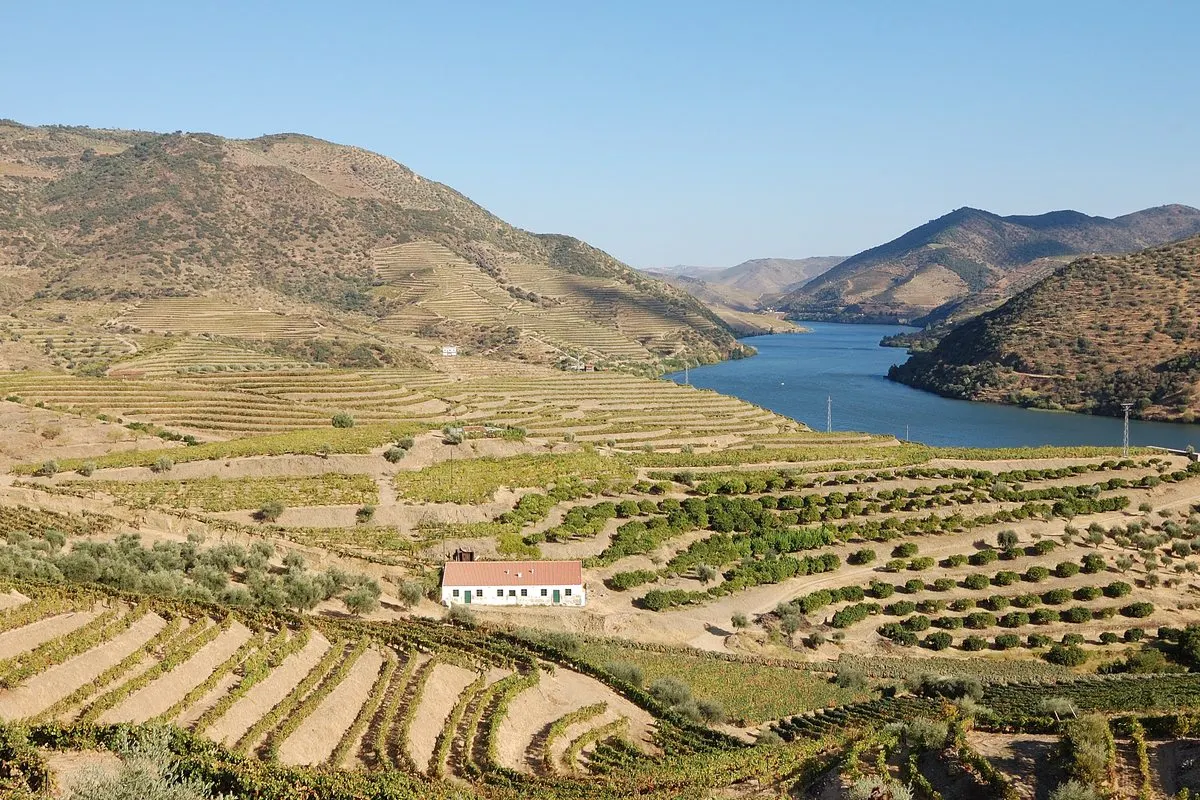
Upstream from Porto, the Douro winds between hills carved into terraces by hand over centuries. The world's first demarcated wine region is a UNESCO World Heritage landscape, and the quintas along the river now welcome visitors for tastings, lunches and long, quiet stays.
In this story · 6 sections
Two hours east of Porto, the Douro Valley is one of the most dramatic wine landscapes on earth. The river curves through steep hills of schist that generations of growers have carved into narrow terraces, held up by dry-stone walls and planted with vines from the water's edge to the ridgelines. Whitewashed quintas, the wine estates, sit among the vineyards with their names painted in large letters on the hillsides. It is the birthplace of port, and increasingly of fine unfortified wines too.
Museu do Douro
Museum · Peso da Régua
- Address
- Rua Marquês de Pombal, 5050-282 Peso da Régua
- Demarcated
- 10 September 1756
- UNESCO
- Alto Douro Wine Region, 2001
- Subregions
- Baixo Corgo, Cima Corgo, Douro Superior
- Key grapes
- Touriga Nacional, Touriga Franca, Tinta Roriz
- Best time
- September–October, the harvest
A riverside museum telling the story of the Douro, its landscape and its wines; a good first stop in the valley.
01The world's first demarcated wine region
Wine has been made here since at least late Roman times, and in the Middle Ages Cistercian monasteries tended vineyards in the valley. In the seventeenth century the vineyards expanded, and after the Methuen Treaty of 1703 opened the English market, port became the region's great product. To regulate its production and trade, a royal charter of 10 September 1756 defined the boundaries of the port region, making the Douro the first wine region in the world with a formal demarcation. In 2001 UNESCO inscribed the Alto Douro Wine Region as a World Heritage site, recognising a landscape shaped by two thousand years of winemaking.
02Three subregions
The valley is divided into three parts as you travel upstream. The Baixo Corgo, centred on Peso da Régua, is the greenest and wettest. The Cima Corgo, centred on the village of Pinhão, is the largest, with about 19,000 hectares of vineyards and most of the famous quintas. The Douro Superior, stretching east towards the Spanish border, is the hottest and wildest; it was here, at Quinta do Vale de Meão, that the grapes for Barca Velha, Portugal's most celebrated red wine, were first grown in 1952. Port vineyards are planted mainly on schist, while granite soils are used for table wines.
Insider tipCheck opening days before you go.
03Douro wines, not only port
The region holds Portugal's highest wine classification, and today it produces as much unfortified wine as port. These Douro wines range from fresh, elegant reds to rich, structured wines aged in new oak, and the whites from high-altitude vineyards can be superb. The native grapes, among them Touriga Nacional, Touriga Franca and Tinta Roriz, give both port and table wines their character. Many quintas now offer tastings of both.
04Visiting the quintas
The joy of the Douro lies in visiting the estates. Many quintas open for tours of their vineyards and cellars, with tastings on terraces above the river, and some serve long lunches of regional cooking paired with their own wines. Book ahead; this is a working agricultural region, not a theme park. Several estates also have rooms, from simple farmhouse quarters to luxurious country hotels, and staying a night or two on a quinta, waking to mist lifting from the river, is the best way to experience the valley.
In Peso da Régua, the Museu do Douro tells the story of the region and its wine, and makes a useful first stop. The road east from Régua to Pinhão along the river is one of the most beautiful drives in Portugal.
05Seeing the valley from the river and the rails
The Douro can be explored by car, by train and by boat. River cruises of a day or longer run from Porto and Régua, and smaller boats, including traditional rabelos, make short trips from Pinhão. The Douro railway line follows the river for much of its route, and it is one of the great train journeys of Europe; our separate guide covers it in detail.
06When to go
Spring brings green vines and wild flowers. Summers are very hot, especially in the upper valley. September and October are the most rewarding months: the harvest, the vindima, is under way, the air smells of fermenting grapes, and the terraces turn red and gold in autumn. Find our guides to Pinhão and the Douro railway and to the port lodges of Gaia among the Metro Mode destinations, explore Metro Mode's world city guides, and browse our travel section in English.