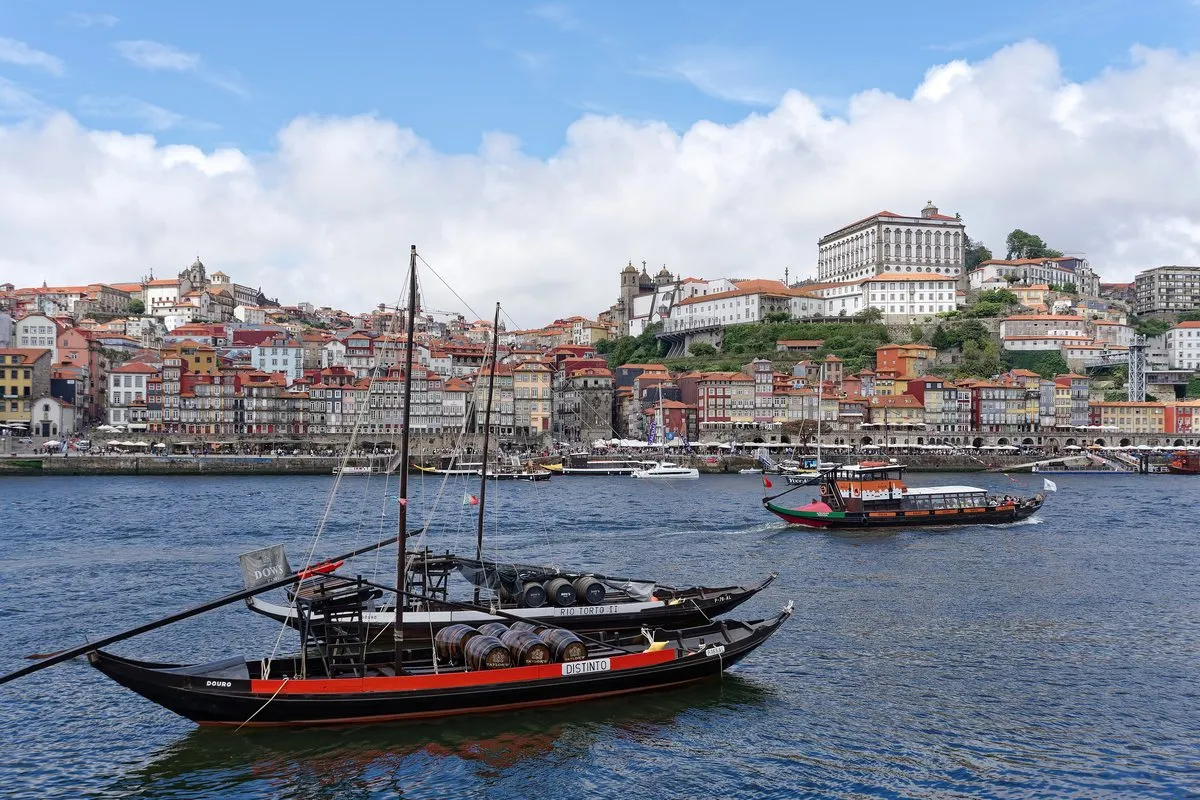
Porto rises from the Douro in tiers of tiled houses, Baroque towers and iron bridges. A walk through the UNESCO-listed old town, from the quays of Ribeira and the Dom Luís I Bridge up to São Bento station, the Clérigos tower and the Lello bookshop.
In this story · 6 sections
Porto is a city of gradients. From the river Douro its old town climbs in steep tiers of narrow houses faced with coloured tiles, punctuated by Baroque church towers and crossed by great iron bridges. The historic centre, together with the Dom Luís I Bridge and the monastery of Serra do Pilar across the river, is a UNESCO World Heritage site. This walk starts at the water and works uphill, which is the only sensible direction.
Livraria Lello
Bookshop · Centro
© OpenStreetMap contributors · OpenFreeMap
- Address
- Rua das Carmelitas 144, 4050-161 Porto
- Start
- Cais da Ribeira
- Finish
- Livraria Lello, Rua das Carmelitas
- Highlights
- Dom Luís I Bridge, Sé, São Bento, Clérigos
- Clérigos tower
- 75 m, completed 1763
- Time
- Half a day
Opened in 1906, with a carved wooden interior, a forked crimson staircase and a stained-glass skylight.
01Cais da Ribeira
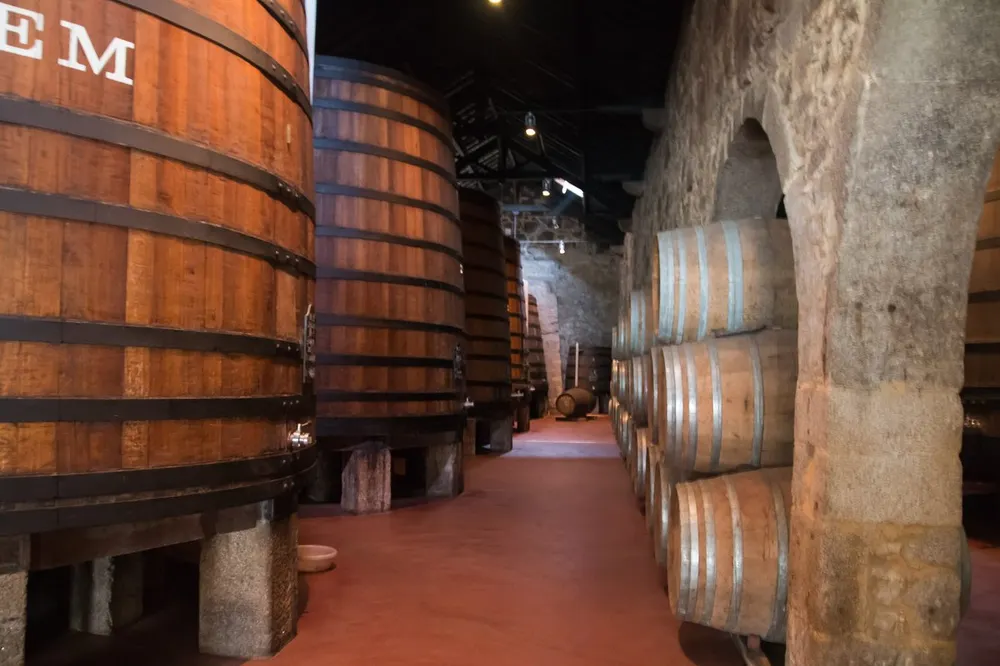
Begin on the quays of the Ribeira, the old riverside district. Tall, slender houses painted ochre, blue and red lean over the water, their balconies hung with washing, and the arcaded Praça da Ribeira opens onto the river. Moored along the opposite bank are rabelos, the flat-bottomed sailing boats that once carried barrels of wine down the Douro from the vineyards to the port lodges of Vila Nova de Gaia. Come early, before the terraces fill, when the light falls softly on the façades.
02The Dom Luís I Bridge
Upstream rises the Dom Luís I Bridge, a double-deck iron arch spanning the Douro between Porto and Gaia. It was designed by Théophile Seyrig, a former partner of Gustave Eiffel, and completed in the 1880s; at its construction its 172-metre span was the longest of its type in the world. The lower deck links the two waterfronts and is open to pedestrians, while the upper deck, high above the river, carries the metro and a footpath. Walk across the top for the most spectacular view of Porto, then return to continue the climb.
Insider tipTimed tickets only; book online and arrive at opening.
03The cathedral and São Bento
From the upper deck, a short walk leads to the Sé, Porto's fortress-like cathedral, on the highest point of the old town, with a terrace looking over the rooftops to the river. Descend from there to São Bento station, whose entrance hall is lined with some 20,000 blue-and-white azulejo tiles by Jorge Colaço depicting scenes from Portuguese history and rural life. Even without a train to catch, it is one of the city's essential sights.
04The Clérigos tower
Walk west uphill to the Clérigos Church, designed by the Italian architect and painter Nicolau Nasoni, who left an extensive body of work in northern Portugal in the eighteenth century. The church was built from 1732 to 1750, and its bell tower, completed in 1763, rises 75 metres and is visible from all over the city. Climb its narrow stairs for a 360-degree view across the terracotta roofs to the Douro and the Atlantic.
05Livraria Lello
A few steps away on Rua das Carmelitas stands Livraria Lello, among the oldest bookshops in Portugal and regularly named one of the most beautiful in the world. The brothers José and António Lello commissioned the engineer Francisco Xavier Esteves to build their new shop, which opened in 1906. Its neo-Gothic façade leads into a carved wooden interior where a forked crimson staircase sweeps up to a gallery beneath a large stained-glass skylight bearing the motto Decus in Labore. Entry is by timed ticket, and queues form early; book online and go at opening.
06Ending the walk
From Lello, the Jardim da Cordoaria and the elegant Rua de Cedofeita are close by. Or head back down towards the river for a glass of white port and tonic as the sun sets over the Douro. Across the bridge, the port lodges of Gaia await. Find our guide to them among the Metro Mode destinations, explore more of Metro Mode's world city guides, and browse our travel section in English.