Small bites on bread at a crowded bar, cider poured from the barrel, and three-starred tasting menus on the hills. A guide to eating in San Sebastián, from the etiquette of a pintxo crawl to the Basque kitchens that changed modern cooking.
In this story · 5 sections
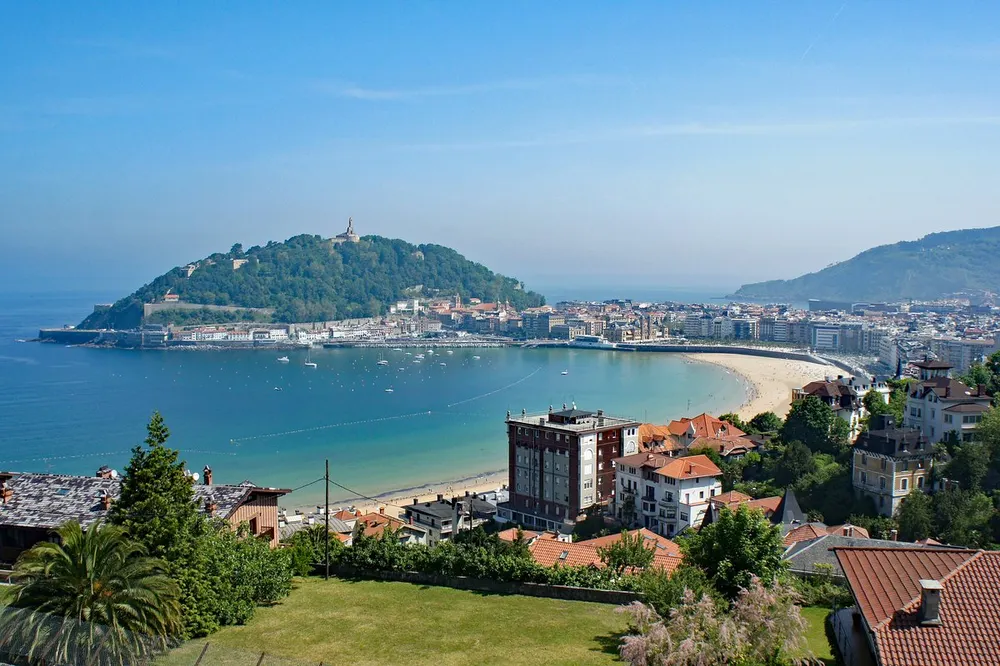
San Sebastián is a small city with an outsized appetite. Its old town has more bars per street than seems reasonable, its hills hold some of the most acclaimed restaurants in Europe, and its people treat eating together as a cornerstone of social life. To eat well here you need to understand two worlds: the casual, standing culture of the pintxo bar, and the tasting menus that put New Basque Cuisine on the world map.
Akelarre
Restaurant and hotel · Igeldo
- Address
- Padre Orcolaga Pasealekua 56, 20008 Donostia / San Sebastián
- Pintxo zones
- Parte Vieja; Gros
- What to drink
- Txakoli, zurito, Basque cider
- Classic pintxo
- The Gilda: anchovy, olive and guindilla
- Fine dining
- Arzak, Akelarre, Martín Berasategui
- Peak hours
- 13.00–15.00 and from 20.00
Founded in 1974, known for local seafood and views of the Bay of Biscay; three Michelin stars and a 22-room hotel since 2017.
01What a pintxo is
A pintxo, from the Spanish pincho, a spike, is a small bite traditionally fixed to a slice of bread with a toothpick. In the Basque Country and Navarre pintxos are part of the culture rather than a snack. They are related to tapas, but they come in individual portions and are always ordered and paid for separately from the drinks. On many counters they are laid out on trays along the bar; others are cooked to order from a menu chalked on a board, and these are often the best.
The classic is the Gilda: an anchovy, a green olive and a pickled guindilla pepper on a stick, salty, sharp and the ideal opener. Expect hake, salt cod, anchovies, stuffed peppers, croquettes and wedges of tortilla de patatas, alongside more elaborate creations with seafood or meat.
02How to do a pintxo crawl
The txikiteo, the bar crawl, is a social ritual. Friends move from one tavern to the next, at each one eating a pintxo or two and drinking a small glass: a txakoli, the young, slightly sparkling white wine of the Basque coast poured from a height, or a zurito, a small beer. Never settle in one bar for the evening. Catch the bartender's eye, say what you want, keep track of what you eat and pay as you leave.
Insider tipReserve well in advance; the restaurant has seasonal closures.
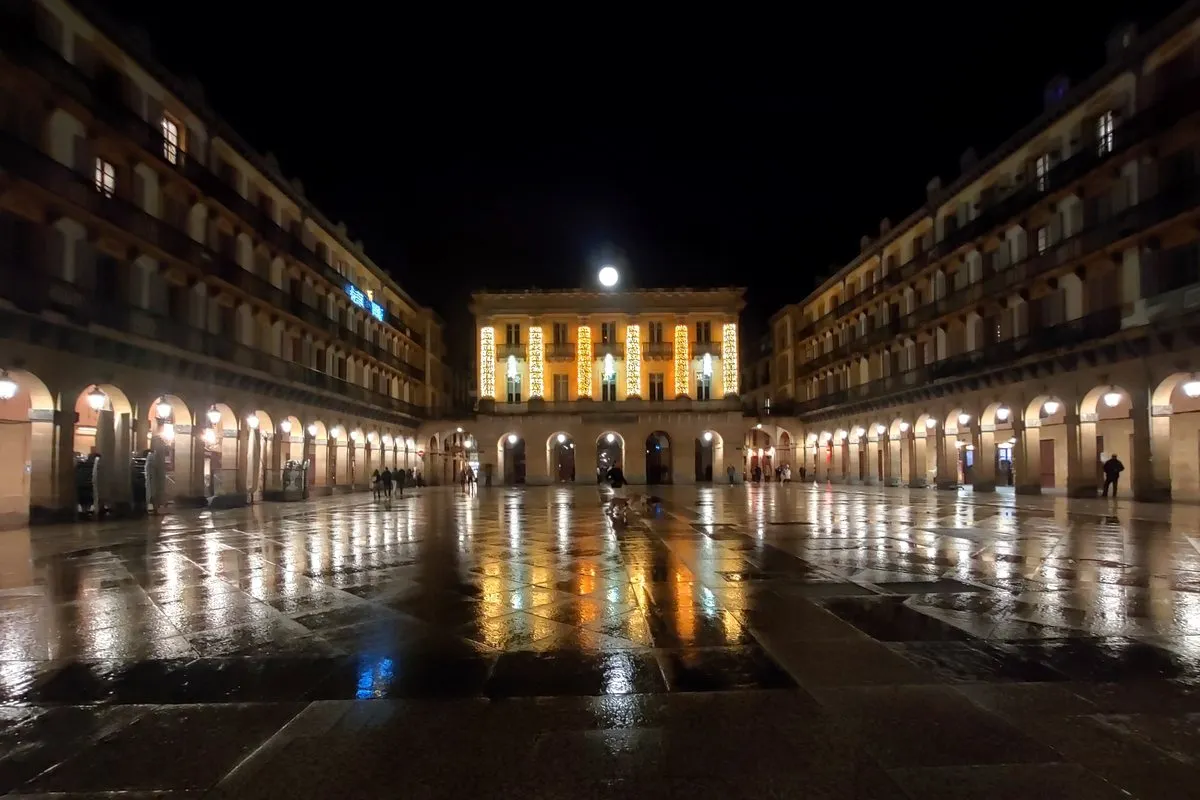
The best area is the Parte Vieja, the old town, especially the streets around the Plaza de la Constitución, with Gros across the river as a more local alternative. Peak hours are from about 13.00 to 15.00 and from 20.00 onwards. Arrive early for the hot pintxos made to order. At La Viña, on Calle 31 de Agosto, end with a slice of the burnt cheesecake that made the bar famous.
03Cider houses and gastronomic societies
In the hills just outside the city, the sidrerías, the Basque cider houses, open for the new season in the early months of the year. Diners stand by huge barrels and catch a thin stream of cider in their glasses at the cry of “txotx!”, between courses of salt-cod omelette, grilled steak and sheep's cheese with quince and walnuts. Meanwhile, behind closed doors in the old town, the private gastronomic societies, where members cook for one another, keep a deep culinary culture alive. They are members-only, but their spirit is everywhere.
04Arzak: the house that started it
In the 1970s a group of Basque chefs, inspired by French nouvelle cuisine, set out to modernise their region's traditional cooking. Juan Mari Arzak was at the centre of that movement. His restaurant occupies a house built in 1897 by his grandparents in what was then the village of Alza, first a wine inn and tavern, later a restaurant. Today he shares the kitchen with his daughter Elena Arzak. Above the dining room lie a cellar of more than 100,000 bottles and a test kitchen with some 1,500 ingredients, where the team develops around forty new dishes a year. Arzak has long held three Michelin stars.
05Akelarre and Martín Berasategui
On the slopes of Monte Igueldo, Akelarre was founded in 1974 by Pedro Subijana and is known for its local seafood and its views of the Bay of Biscay. It holds three Michelin stars and since 2017 has had its own hotel of 22 rooms, as well as a second restaurant named after the sculptor Jorge Oteiza, a regular guest. A few kilometres inland, in Lasarte-Oria, Martín Berasategui opened his eponymous restaurant in 1993; it gained a third Michelin star in 2001, and he now holds more Michelin stars across his restaurants than any other Spanish chef.
For the city itself, find our San Sebastián city guide among the Metro Mode destinations, browse our travel section in English, and read why Swedes are buying everyday homes in Spain (in Swedish).