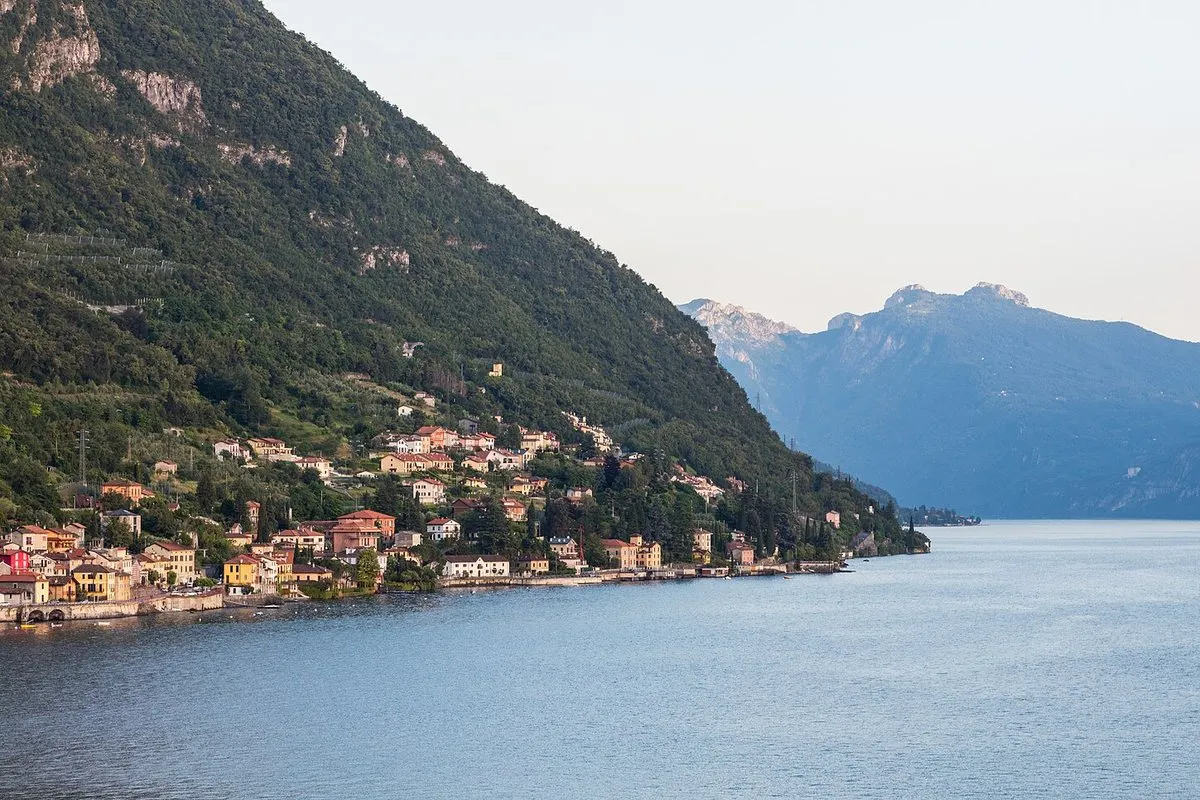
Varenna is the village where the train meets the boats on Lake Como. Here you'll find a botanical villa where Nobel laureates give lectures, a castle from the 12th century and a river that is only 250 metres long, which Leonardo da Vinci wrote about.
In this story · 7 sections
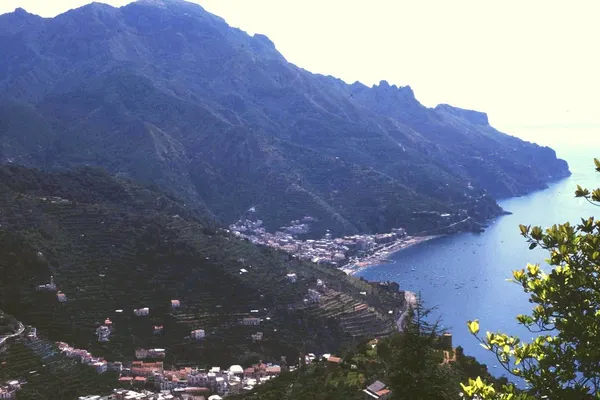
Varenna is a municipality on the eastern shore of Lake Como in the province of Lecco, approximately sixty kilometres north of Milan and twenty kilometres north-west of Lecco. According to tradition, the village was founded by fishermen in the year 769 and was allied with Milan. In 1126 it was destroyed by its rival Como, and in 1169 it received the refugees from Isola Comacina, who had suffered the same fate. On the other side of the lake lie Bellagio, Griante and Menaggio.
For those travelling by train, Varenna is the gateway to Lake Como. The Varenna-Esino-Perledo station is on the Lecco–Colico–Sondrio–Tirano line, with regional trains towards Lecco and Milan, and the ferries across to Bellagio take just under a quarter of an hour. But Varenna is worth more than a ferry stop. A walk from south to north takes a morning.
4 places
© OpenStreetMap contributors · OpenFreeMap
- 01FiumelatteRiver · Varenna
- 02Villa MonasteroVilla, museum and garden · Varenna
- 03Chiesa di San GiorgioChurch · Varenna
- 04Castello di VezioCastle · Perledo
- Distance to Milan
- Approximately 60 km
- Fiumelatte
- Around 250 m, flows March–October
- Villa Monastero
- Garden open since 1940
- Castello di Vezio
- Late 11th century, open since 1999
- Patron saint
- San Giorgio, 24 April
Fiumelatte: Italy's shortest river
Start south of the village, in Fiumelatte. The river of the same name flows out of a cave in the Grigna mountain massif and falls into Lake Como after only about 250 metres. The name, the milk river, comes from the milky-white colour of the water. The river is periodic: it usually dries up in mid-October and returns in the latter half of March, and is therefore called the river of the two Madonnas, after the Feast of the Annunciation on 25 March and the Feast of the Rosary on 7 October. The explanation is probably an unexplored underground cavity in the mountain that fills up at regular intervals.
Leonardo da Vinci studied the river while he lived in Lierna and described it in the Codex Atlanticus as Fiumelaccio, which falls from a height of more than a hundred cubits straight down into the lake with a tremendous roar. Pliny the Elder and Lazzaro Spallanzani also wrote about it, and in the 1600s it was among the things young noblemen were to see during their grand tour.
Villa Monastero: the garden and the physicists
Between Fiumelatte and the village lies Villa Monastero, today a museum, botanical garden and conference centre. A Cistercian convent was founded on the site at the end of the 12th century. It became wealthy, but shrank to six nuns and was closed by a papal bull in 1567. Two years later the property was bought by Paolo Mornico, who had made a fortune from iron mines in Valsassina, and turned it into a magnificent residence.
The villa acquired its present-day eclectic appearance from Walter Kees of Leipzig, who bought it in the 1890s and rebuilt it between 1897 and 1909. In 1936, the Milanese De Marchi family donated the villa to the public, and in 1940 the garden was opened. The park stretches along the lake towards Fiumelatte, with tall cypresses and many exotic plants.
The conference centre was established in 1953, and since then the international physics school Enrico Fermi has held summer courses here. Fermi himself taught, and by 2013 more than 34 Nobel laureates had lectured at the villa.
The village: San Giorgio and the lovers' walk
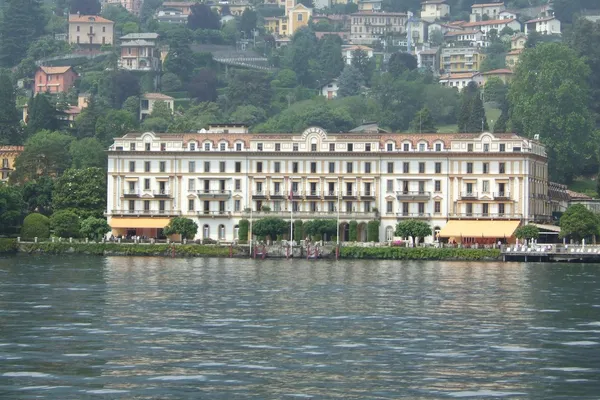
In the centre of the village stands the church of San Giorgio, on the square of the same name. San Giorgio is Varenna's patron saint, and the feast is celebrated on 24 April. Along the water runs the Passeggiata a lago, also known as the passeggiata degli innamorati, the lovers' walk, between the villas and the boat jetties. The village is also home to Villa Cipressi, another of Varenna's historic villas.
Varenna is also the birthplace of Giovanni Battista Pirelli, the engineer who founded the tyre company Pirelli in Milan in 1872.
Castello di Vezio: the castle above
Above the village, on the border with Perledo, lies the Castello di Vezio, a castle from the end of the 1000s or the beginning of the 1100s which was once connected by walls down to Varenna. The main tower has square merlons and overlooks the entire lake. During the First World War, underground rooms were built here as part of the Linea Cadorna, the defensive line against an invasion through Switzerland. In the area, graves from the Iron Age have been found.
The castle opened to the public in 1999 and is owned by the Greppi family from Milan. In the tower there is an exhibition about Lariosaurus, an extinct marine reptile from the Middle Triassic that was named after the lake after it was found in Perledo in 1830.
Across the lake: Menaggio
From Varenna, the ferries also go to Menaggio on the western shore, a municipality of around 2,900 inhabitants at the mouth of the valley towards Lake Lugano. The road from Menaggio to Porlezza was inaugurated in 1839, and between 1884 and 1939 a railway ran there. The steamboats Plinio and Lario were already operating on the lake in 1826, and the agreement for Menaggio's first jetty was concluded in 1858.
More to read
Take the ferry across to Bellagio, visit the lake's great gardens in Villa Carlotta and Balbianello, or stay at Villa d'Este in Cernobbio. All our city guides can be found at metromode.co.
Places
Fiumelatte
The milk-white river of around 250 metres that Leonardo da Vinci described.
Insider tipThe river normally flows from March to October
Villa Monastero
The former convent with its botanical garden along the lake and the Enrico Fermi physics school.
Chiesa di San Giorgio
The village church on Piazza San Giorgio. The patron saint's feast is on 24 April.
Castello di Vezio
The castle from the 1000s–1100s above Varenna, with an exhibition about Lariosaurus.