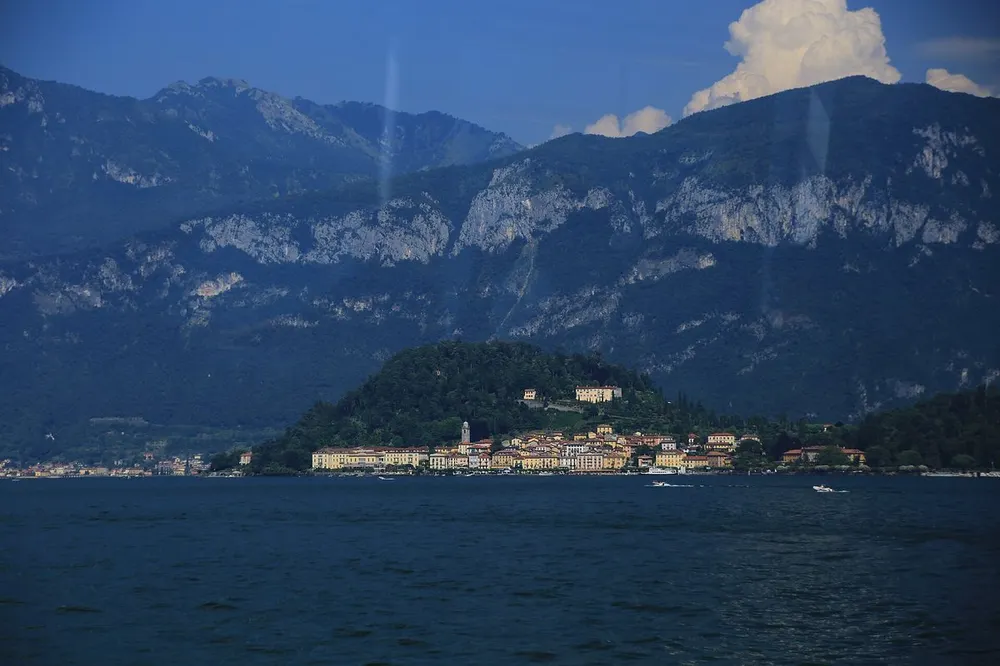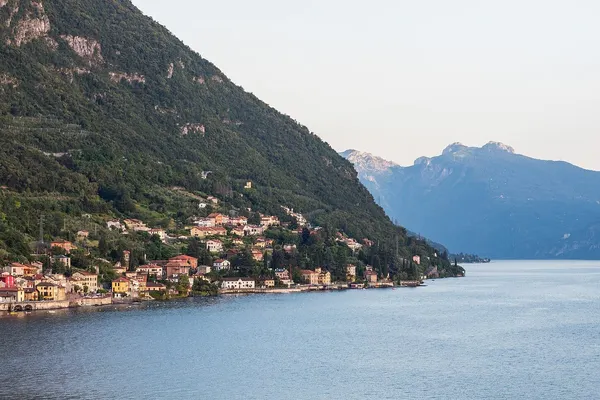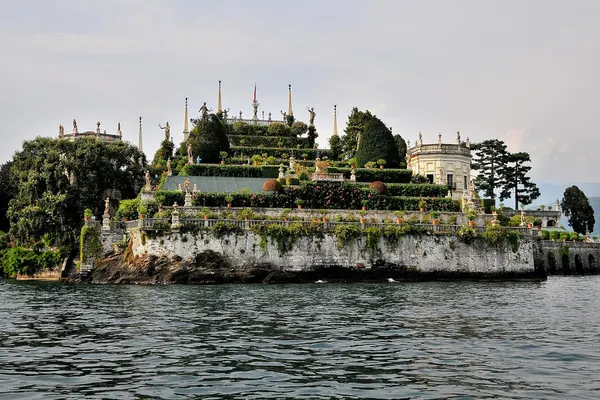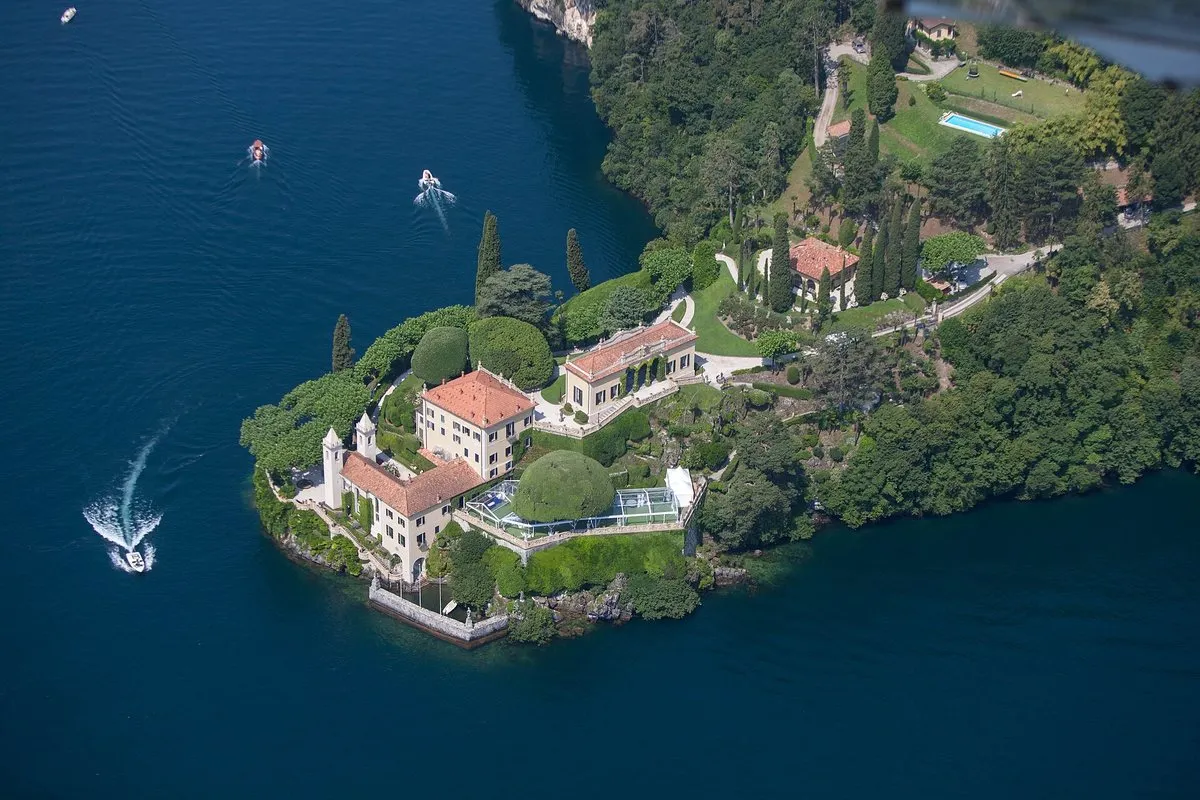
On the western shore of Lake Como, in Tremezzina, lie two of Italy's most visited villa gardens: Villa Carlotta with its azaleas and Canova sculptures, and Villa del Balbianello on a wooded promontory out in the lake.
In this story · 8 sections
The western shore of Lake Como opposite Bellagio is called Tremezzina, after the old municipality of Tremezzo. Since the 18th century this stretch of coastline has been one of Italy's most aristocratic, and two of its villas are still open to visitors: Villa Carlotta, an art collection with a botanical garden, and Villa del Balbianello, a terraced garden on a headland out in the lake.
They are close to each other, and together they offer one of the best days at the Italian lakes. Start with Villa Carlotta when the gates open and finish at Balbianello in the afternoon light.
3 places
© OpenStreetMap contributors · OpenFreeMap
Villa Carlotta: the silk merchant's summer house
Villa Carlotta started out as a country estate for the Clerici family, silk merchants from the area north of the lake who had become marquises in Milan. Senator Giorgio Clerici decided in 1690 to build on the family's land at Tremezzo, and the garden is first mentioned in 1699. The villa was completed in 1745 by his great-great-grandson Anton Giorgio Clerici, who then squandered almost the entire fortune on the Palazzo Clerici in Milan. The architect is unknown.
In 1801 the property was purchased by Giovanni Battista Sommariva, a banker who had risen from barber's apprentice to a position of power in Napoleon's government in northern Italy. When Napoleon chose Francesco Melzi d'Eril over him as vice-president in 1802, Sommariva withdrew and devoted himself to art. Melzi, meanwhile, was building his villa in Bellagio, directly across the lake, and the two competed in collecting.
The name came later. In 1843 Princess Marianne of the Netherlands, married to Prince Albert of Prussia, bought the villa, and in 1847 she gave it to her daughter Charlotte as a wedding gift when she married Georg II of Saxe-Meiningen. Charlotte died as early as 1855, 23 years old, but the house kept her name. Duke Georg had a keen interest in botany and filled the garden with rare plants. He was also a patron of Johannes Brahms, who visited the villa several times in the 1880s. Since 1927 the villa has been managed by the foundation Ente Villa Carlotta.
Canova, Thorvaldsen and Hayez
The villa sits at the top of a terraced garden with views towards Bellagio and the mountains. Two of the three floors are open, and the art is found mainly on the ground floor. Sommariva commissioned works by Antonio Canova, and here you will find the original plaster model for his Terpsichore, commissioned in 1811, and the marble sculpture Palamedes, which was broken when the Tiber flooded Canova's studio in Rome in 1805 and which he restored himself. Eros and Psyche is Adamo Tadolini's marble copy after Canova's model, and came to the villa in 1834.
The largest work is Bertel Thorvaldsen's frieze Alexander the Great's Entry into Babylon, originally made in stucco for the Quirinal Palace in Rome ahead of Napoleon's visit. Napoleon commissioned a version in marble, but after his fall the work stopped until Sommariva had it completed. The 33 marble plates came to the villa between 1818 and 1828, and the two last figures are a self-portrait of Thorvaldsen and a portrait of Sommariva. In the painting collection there is Francesco Hayez's Romeo and Juliet's Last Farewell, commissioned in 1823.
The garden: azaleas and bamboo
The botanical garden covers around eight hectares. Closest to the villa lies the Italian garden with clipped hedges and pergolas with orange and camellia trees. Up the slope, rhododendrons and 150 varieties of azaleas spread out, and it is these that make spring the villa's high season. Cedars, palms, giant sequoias and plane trees also grow here, along with a bamboo garden of 3,000 square metres with over 25 species. An old citrus house has been converted into a museum for agricultural tools.
Villa del Balbianello: the headland at Lenno
South of there, in Lenno, the wooded headland of Dosso di Lavedo juts out into the lake, about one and a half kilometres east of the island of Isola Comacina. At the very tip lies Villa del Balbianello. Here stood a Franciscan monastery dating from the 13th century, and the two towers that remain are the remnants of the monastery church's bell tower.
Cardinal Angelo Maria Durini, who had tried in vain to buy Isola Comacina, bought the headland in 1785 and turned the monastery into a summer villa in 1787. He also built the loggia, which offers views over two different parts of the lake. Under his nephew Luigi Porro Lambertenghi, the villa became a meeting place for Italian patriots and Carbonari, and the author Silvio Pellico was tutor to the family's sons until he was arrested by the Austrians in 1820. Later owners, the Arconati Visconti family, received Alessandro Manzoni and the artist Arnold Böcklin.
After more than thirty years of decline, the American businessman Butler Ames bought the villa in 1919 and saved the garden. In 1974 his heirs sold it to Count Guido Monzino, who led the first Italian expedition to Mount Everest. Monzino furnished the villa with 18th- and 19th-century English and French furniture, Beauvais tapestries and objects from his expeditions. When he died in 1988, he bequeathed the villa, most of the headland and an endowment for its upkeep to FAI, the Fondo per l'Ambiente Italiano. In 2019 the villa had more than 135,000 visitors, more than any other FAI property.
A garden on a mountain
The garden was difficult to create, as the headland is steep and rocky with very little soil. It rises up from the jetty, where large plane trees pruned as candelabras stand, to the broad balustrade with low hedges of laurel and box. The headland has its own microclimate: alpine flora grows on the north side, Mediterranean plants on the sunnier south side. The large holm oak is pruned like an umbrella, as Monzino wanted to see the top of Monte Legnone from his study, and the gardeners still tend it using climbing equipment.
The headland is also one of the lake's most filmed locations. Villa del Balbianello appears in A Month by the Lake from 1995, in Star Wars: Episode II – Attack of the Clones from 2002, where the house's façade was replaced with computer animation, and in Casino Royale from 2006.
Isola Comacina: the island between the villas
Between Balbianello and Argegno lies Isola Comacina, around 600 metres long and 200 metres wide. The strip of beach here is called Zoca de l'oli, the oil bay, and is one of the northernmost places in Italy where olives are grown. The island was bequeathed to King Albert I of Belgium, who gave it to the Italian state, and it today belongs to the Brera art academy in Milan. The Sunday closest to 24 June sees the feast of San Giovanni celebrated with a procession of boats and fireworks over the lake.
At a glance
The two villas in brief
| Fact | Villa Carlotta | Villa del Balbianello |
|---|---|---|
| Location | Tremezzo | Lenno |
| House completed | 1745 | 1787, in a monastery dating from the 13th century |
| Managed by | Ente Villa Carlotta, since 1927 | FAI, since 1988 |
| Garden | Botanical, approximately 8 hectares | Terraces on a rocky headland |
| Known for | Azaleas, Canova, Thorvaldsen | The loggia, the films, the view |
More from Lake Como and Italy
Across the water, plan your stay with our 48 hours in Bellagio. More lakes, coasts and cities can be found among Metro Mode's destinations.
Places
Villa Carlotta
Art collection featuring Canova and Thorvaldsen, and a botanical garden covering around eight hectares, opposite Bellagio.
Insider tipAzaleas bloom in spring
Villa del Balbianello
FAI's most visited property, on the Dosso di Lavedo headland. Known from Casino Royale.
Insider tipCheck access and opening hours at FAI before your visit
Isola Comacina
The island off Ossuccio, owned by the Brera Academy of Fine Arts. The feast of San Giovanni at the end of June.