In this story · 4 sections
In October 2011 Viennese coffee house culture was entered in Austria's national inventory of intangible cultural heritage, kept by the Austrian Commission for UNESCO. The inventory describes the coffee house as a place "where time and space are consumed, but only the coffee is found on the bill" – and that is the point. You can sit alone for hours over one cup, reading the newspapers the café provides, and nobody will hurry you.
Café Central
Café · Innere Stadt
- Address
- Herrengasse 14, Vienna
- Building
- Palais Ferstel
- Café Central
- Herrengasse 14
- Café Landtmann
- Universitätsring 4
- Café Sperl
- Gumpendorfer Straße 11
- Café Hawelka
- Dorotheergasse 6
- Demel
- Kohlmarkt 14
- Café Museum
- Operngasse 7
Vienna's most famous coffee house, once Peter Altenberg's postal address.
01From the siege of 1683 to the first coffee house
Legend says that after the Ottoman siege of Vienna in 1683, soldiers found sacks of coffee beans, which King Jan III Sobieski gave to the officer Jerzy Franciszek Kulczycki, who opened a coffee house at the Hof zur Blauen Flasche. Recent research credits instead the Armenian merchant Johannes Diodato (or Theodat), who opened Vienna's first coffee house in 1685.
02The rules of the Viennese café
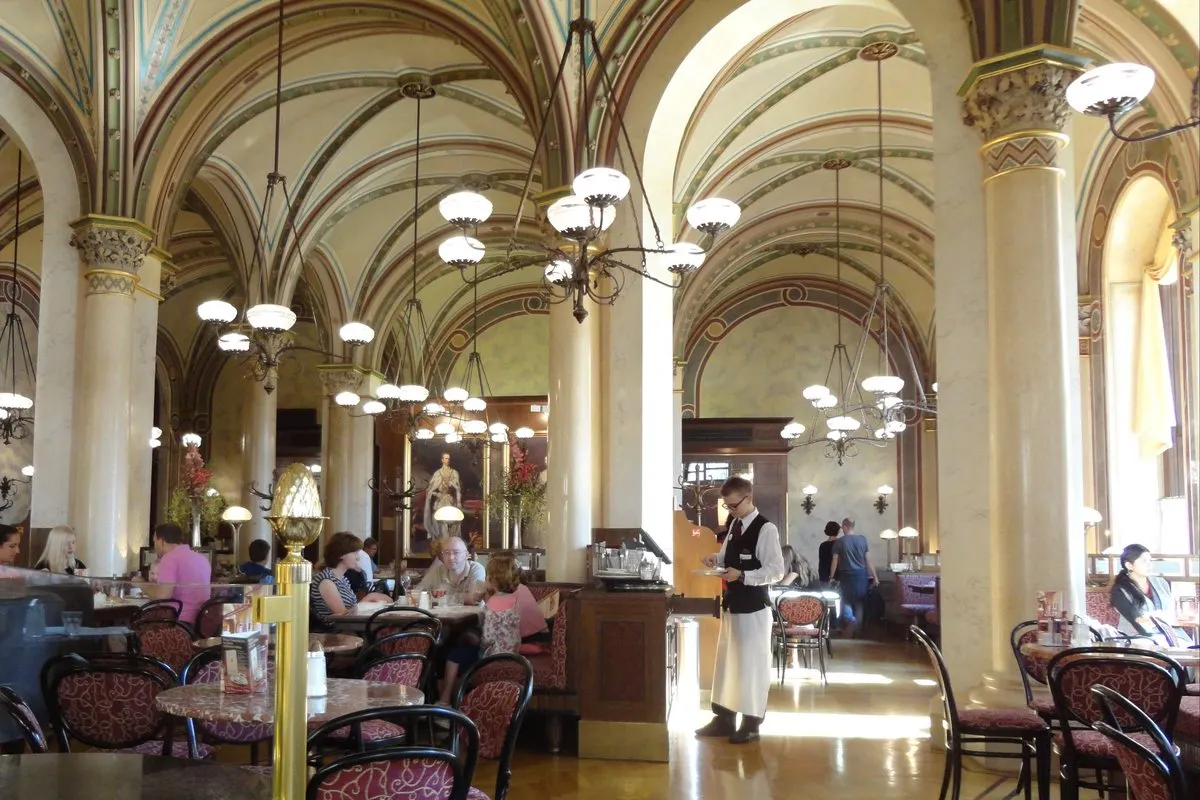
Coffee arrives with a glass of cold tap water, which the waiter often refills without being asked during a long stay. The furniture is part of the ritual: marble-topped tables, bentwood Thonet chairs, a newspaper table and historicist interiors. Most coffee houses also serve pastries and cakes as well as small savoury dishes.
03Café Central and the writers' cafés
Café Central, at Herrengasse 14 in the Palais Ferstel, is the most famous: the writer Peter Altenberg even had his post delivered there. Karl Kraus wrote much of his magazine Die Fackel in coffee houses, and Arthur Schnitzler, Stefan Zweig, Adolf Loos and Gustav Klimt were regulars of the city's cafés. Sigmund Freud frequented Café Landtmann at Universitätsring 4, and Leon Trotsky the now-closed Café Griensteidl.
04Sperl, Hawelka, Demel and more classics
Beyond the Central and the Landtmann, try Café Sperl at Gumpendorfer Straße 11, Café Hawelka at Dorotheergasse 6, Café Bräunerhof at Stallburggasse 2, Café Museum at Operngasse 7, Café Schwarzenberg on the Kärntner Ring and Demel at Kohlmarkt 14. Read Metro Mode's Vienna guide (in Swedish), browse Metro Mode Travel, and find more city guides among metromode.co's destinations.