Alfama survived the great earthquake of 1755 and kept its Moorish maze of stairways, tiny squares and laundry-strung lanes. A walk from the cathedral up to São Jorge Castle and its viewpoints, and back down for an evening of fado.
In this story · 5 sections
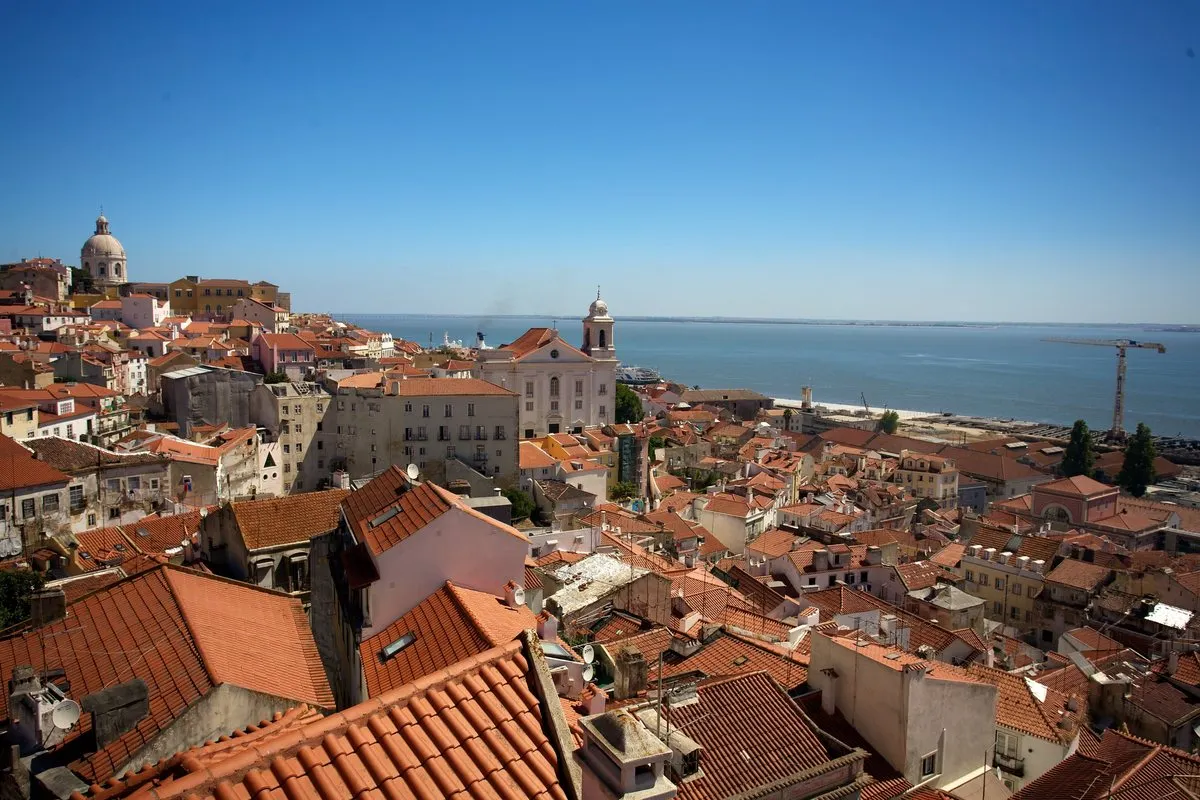
When the earthquake of 1755 levelled much of Lisbon, Alfama, built on the rock of the castle hill, largely survived. That is why Lisbon's oldest neighbourhood still looks the way it does: a labyrinth of steep alleys, stairways and small squares tumbling from São Jorge Castle down to the river, with tiled façades, washing on the balconies and the sound of fado drifting from doorways at night. Under Moorish rule, Alfama was the whole of the city; its name comes from the Arabic for hot springs. This walk climbs through it to the castle and comes down again.
Castelo de São Jorge
Castle · Alfama
© OpenStreetMap contributors · OpenFreeMap
- Address
- Rua de Santa Cruz do Castelo, 1100-129 Lisboa
- Start
- Lisbon Cathedral (Sé)
- Viewpoints
- Santa Luzia, Portas do Sol, the castle ramparts
- Castle
- Taken by the Portuguese in 1147
- Finish
- São Vicente de Fora and the National Pantheon
- Evening
- Fado, UNESCO intangible heritage since 2011
A hilltop fortress occupied since antiquity and taken by the Portuguese in 1147, with ramparts, gardens and views over the Tagus.
01Start at the cathedral
Begin at the Sé, Lisbon Cathedral, built between the twelfth and fourteenth centuries and the oldest church in the city. Its fortress-like Romanesque front, with two crenellated towers, reflects a time when the newly Christian city still needed defending. Tram 28, Lisbon's famous yellow tram, clatters past its door on its way up the hill.
02The miradouros: Santa Luzia and Portas do Sol
Climb the street beside the tram tracks to the Miradouro de Santa Luzia, a terrace with a bougainvillea-covered pergola and tile panels, built over remnants of the Moorish city walls. Below lies the jumble of Alfama's roofs, the domes of churches and the broad Tagus. A few steps further, the Miradouro das Portas do Sol, the Gates of the Sun, offers an even wider view. Nearby, the Museum of Decorative Arts occupies a seventeenth-century mansion furnished with Portuguese furniture, silver and textiles.
Insider tipTicketed; arrive early or late in the day to avoid queues.
03São Jorge Castle
Continue uphill to São Jorge Castle, crowning the highest hill in the old city. People have lived on this hill since at least the eighth century BC, and it was fortified in turn by Phoenicians, Carthaginians, Romans and Moors before the Portuguese took Lisbon in the siege of 1147. Since then it has served as a royal palace until the early sixteenth century, a barracks and the home of the national archive.
Today it is a national monument. Walk the ramparts and towers for panoramic views, wander the shaded gardens with their pine trees and peacocks, and visit the archaeological site where remains of Moorish houses and an Iron Age settlement have been excavated. Late afternoon, when the city turns gold, is the best time to be up here.
04São Vicente de Fora and the Pantheon
Descend east to the Monastery of São Vicente de Fora, a Mannerist church and monastery where the kings of the House of Braganza are buried, with cloisters lined in blue-and-white tiles and a roof terrace overlooking the river. Below it, the white dome of Santa Engrácia, a Baroque church begun in the seventeenth century, now serves as the National Pantheon for illustrious Portuguese figures. On Tuesdays and Saturdays, the Feira da Ladra flea market fills the square between them.
05Evening: fado in Alfama
Alfama is a heartland of fado, the melancholy song of Lisbon that UNESCO recognised as part of the Intangible Cultural Heritage of Humanity in 2011. The Museu do Fado, at the foot of the district, tells its story. After dark, seek out a small casa de fado, where the lights are dimmed, conversation stops and a singer accompanied by Portuguese guitar fills the room. Dinner is usually included or expected; book ahead and stay for several sets.
For the rest of the city, read our Lisbon guide (in Swedish), find our guides to Belém and the Baixa among the Metro Mode destinations, and browse our travel section in English.