In this story · 4 sections
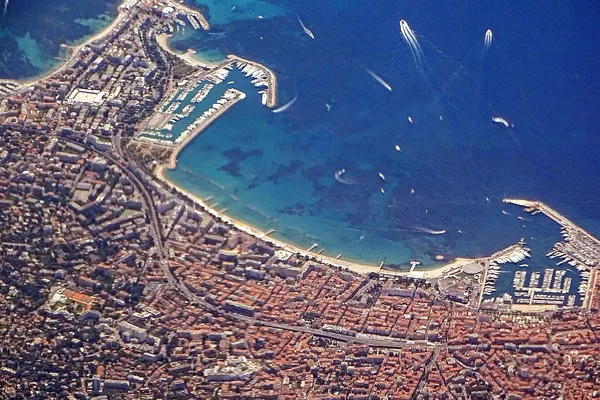
Beausoleil climbs the slopes above Monte-Carlo, framed by the Tête de Chien and Mont Agel. On the ground there is no visible border: the streets of the principality simply continue uphill into France, and the two form a single town. Its other neighbours are Peille, Roquebrune-Cap-Martin and La Turbie, from which it was carved.
For visitors, Beausoleil is a revelation: Belle Époque façades, steep stairways down to the casino quarter and a view over Monaco from above that the principality itself cannot offer.
2 places
© OpenStreetMap contributors · OpenFreeMap
Beausoleil in brief- 1894
- Monaco–La Turbie rack railway opens
- 1903
- Riviera Palace completed; its tramway opens
- 1904
- Commune of Beausoleil created
- 1932
- Rack railway closes after an accident
- 1989
- Riviera Palace listed as a historic monument
Born of Monaco's boom
Until the late 19th century the slopes above Monaco were part of La Turbie. The success of the Société des Bains de Mer drew workers, mostly from Italy, who needed homes, and in 1896 Camille Blanc, president of the SBM and later the first mayor, founded a property company for what was then called Monte-Carlo Supérieur. The new commune was created by law on 10 April 1904. It was to keep that name, but Monaco protested, and the invented, holiday-sounding name Beausoleil was chosen instead.
The Riviera Palace
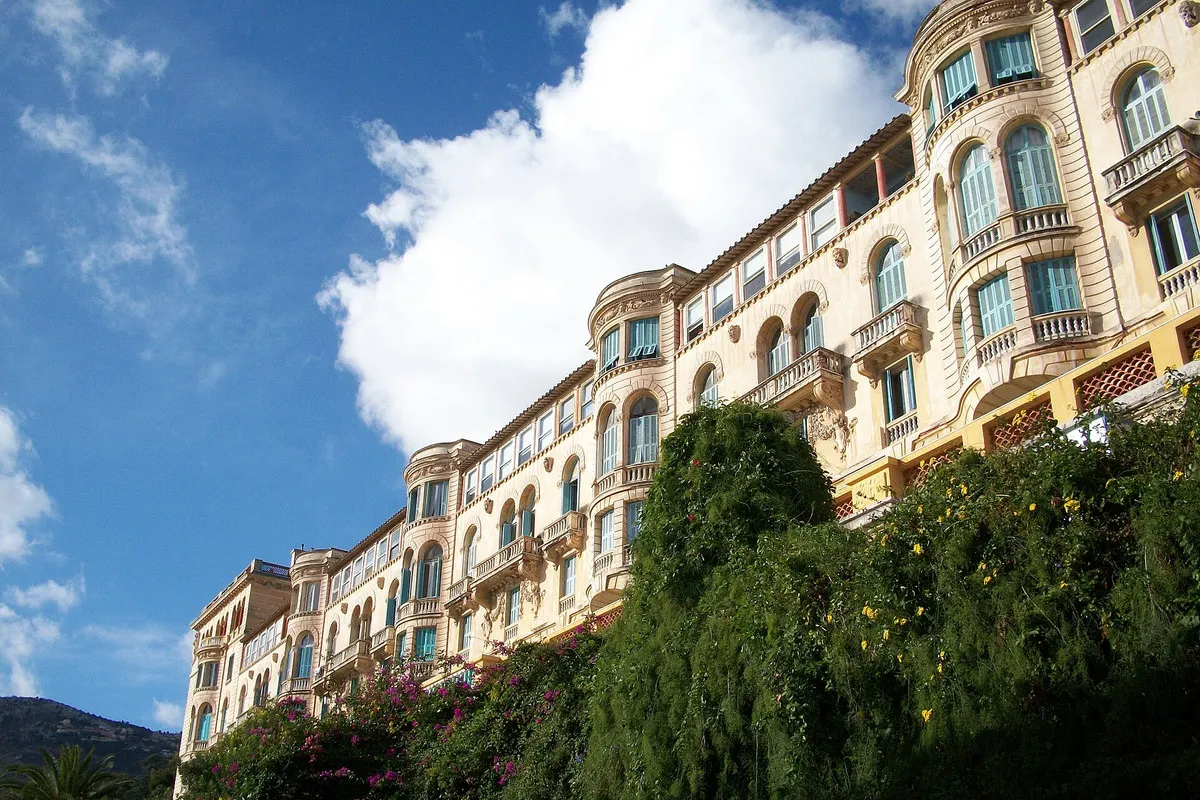
In 1898 the Compagnie internationale des grands hôtels et wagons-lits began building the Riviera Palace to plans by the architect Georges Chedanne. Finished in 1903, its south-facing façade is a long rhythm of windows, bow windows, balconies and balustrades, and its two-storey winter garden covered more than 900 square metres and rose 20 metres high. Standing 180 metres above the sea, it received, with the Hôtel de Paris below, the wealthy Russian, Austro-Hungarian and later English clientele of the Belle Époque. It has been listed as a historic monument since 14 December 1989.
A rack railway and a runaway tram
On 10 February 1894 a steam rack railway opened from Monaco to La Turbie, covering 2.66 kilometres in twenty minutes, with two stations in Beausoleil. It ran until 1932, when a train lost its grip on the climb and ran backwards down the slope, an accident that ended the line.
The Riviera Palace had its own electric rack tramway, opened on 23 February 1903 to carry guests down to the casino. The line was just 528 metres long, 95 of them in Monaco. Four days after it opened, a car derailed on the curve below the hotel and careered down the slope; the tram ran until August 1914.
Mont des Mules
Above the town, the Mont des Mules is a limestone outcrop of about ten hectares overlooking the principality. Its paths were laid out by touring clubs in the early 20th century, and its name probably comes from the mules of smugglers crossing between Monaco and La Turbie. On its slope lies a Ligurian hill fort of the Iron Age, some 200 metres across, beside the road to La Turbie.
Riviera Palace
Belle Époque palace hotel of 1903
Georges Chedanne's palace 180 metres above the sea, listed in 1989.
Avenue du Professeur-Langevin, 06240 Beausoleil
Insider tipAdmire the south façade from the street.
Mont des Mules
Walks and a Ligurian hill fort above Monaco
Ten hectares of limestone paths with views over the principality.
Mont des Mules, 06240 Beausoleil
Insider tipBring water; the climb is steep.
Neighbourhood and property data for Beausoleil is on VERA PI France, Monaco's districts on VERA PI Monaco, and more stories on metromode.co.