Djurgården takes its name from Johan III's djurgård, or deer park, of 1579, and has been at the monarch's disposal since the 15th century. Today the island is part of the Royal National City Park, with northern Europe's largest population of old oaks. Here is the history and nature behind Stockholm's green island.
In this story · 6 sections
Djurgården is just a short walk from Strandvägen in Stockholm, yet feels like another world entirely. On one side of Djurgårdsbron stand the facades of the stone city; on the other begins an island of oak meadows, villas, museums and waterside promenades. The area covers 279 hectares of land and 183 hectares of water, and the shore can be reached from almost anywhere on the island. For anyone wondering why Stockholm feels so green, Djurgården is the answer.
3 places
- 01Prins Eugens ekNature · Djurgården
- 02DjurgårdsstadenNeighbourhood · Djurgården
- 03Rosendals slottPalace · Djurgården
- 1579
- Johan III creates the deer park
- 1646
- Djurgårdsstaden is founded
- 1680
- Work begins on Karl XI's fence
- 1834
- The Djurgårdsbrunn Canal is completed
- 1897
- The General Art and Industry Exhibition
From Walmundsö to Johan III's deer park
The oldest traces of people on the island are a burial ground with eight visible mounds from the late Iron Age. The island's oldest known name was Walmunzø, recorded in 1286, and in the 1600s it was usually called Waldemarsön – a name that lives on in Waldemarsudde. The present name comes from the deer park that Johan III created on the island's north-western tip in 1579, with reindeer, elk and deer.
The area has been owned or held by the monarch since Karl Knutsson in the 1400s and is today managed by the Royal Djurgården Administration (Kungliga Djurgårdens Förvaltning). From 1680 Karl XI had the Djurgårdsgärdesgården built, a fence more than 20 kilometres long around the whole of Kungliga Djurgården, to keep deer and roe deer in and wolves, bears and poachers out. Between 1766 and 1862 visitors had to pay a fee to enter, although the fence itself was no longer maintained after 1829.
Gustav III, the diplomats' villas and Rosendal
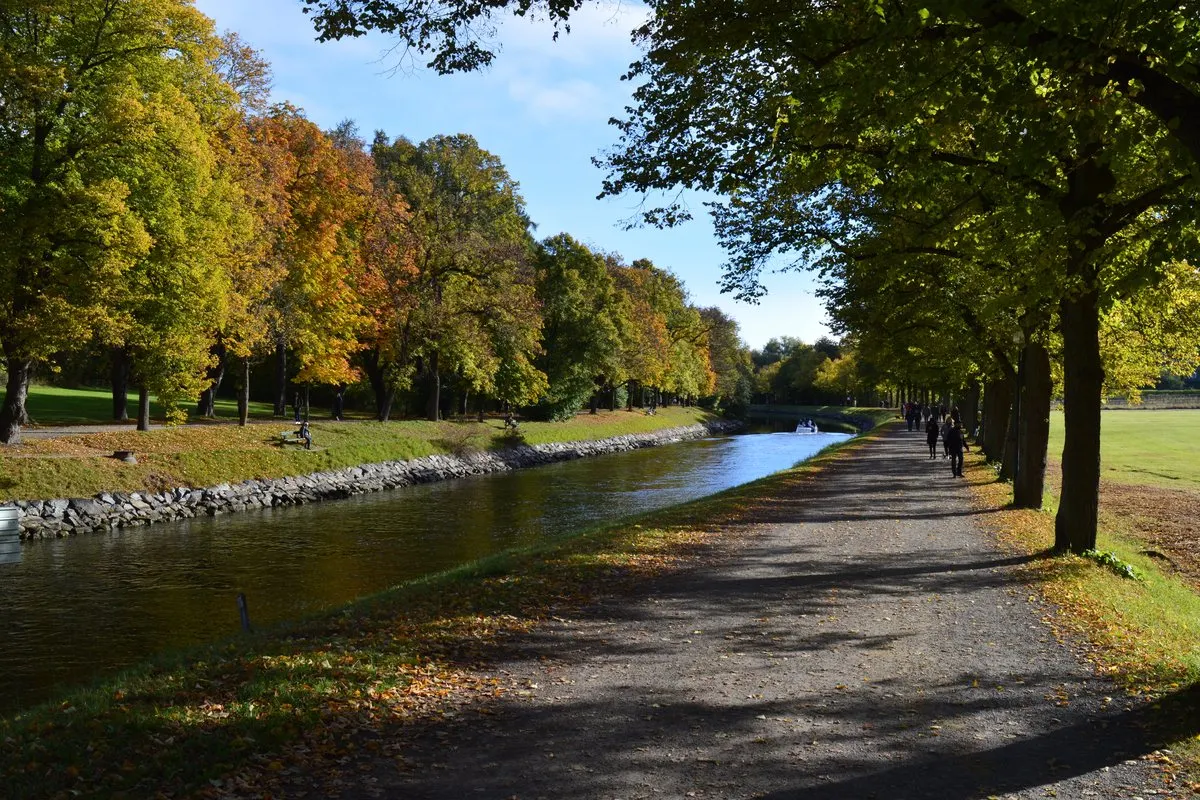
In the time of Gustav III, Djurgården became a popular pleasure ground, and foreign diplomats were allowed to build villas on exclusive plots such as Listonhill and Nedre Manilla. The 1820s brought a royal era, when Karl XIV Johan built the summer palace of Rosendal. It was also on his initiative that the Djurgårdsbrunn Canal was dug; it was completed in 1834, after land uplift had reduced the old waterway to an unusable trickle.
In the 1820s, on the initiative of Israel af Ström, Sweden's northernmost stand of beech was also planted, north of Villa Listonhill. It survives today as Djurgården's beech wood, Djurgårdens bokskog.
Djurgården's oaks – northern Europe's largest population
Djurgården is known for its sturdy oaks, originally intended as ship timber for the navy. Of the 8,221 trees counted in 1808, 888 were marked for felling, but many of the sturdiest were spared, and in 1830 34,000 new ones were planted. In the 1920s the botanist Rutger Sernander listed 83 oaks with a girth of at least five metres, estimated to be around 400 years old. Djurgården still has northern Europe's largest stand of ancient oaks, according to Wikipedia.
The largest living one is Prins Eugens ek, Prince Eugen's Oak, in the park north of Prins Eugens Waldemarsudde: 21 metres tall, with a trunk girth of 920 centimetres. Bellmanseken outside Hasselbacken is the oak under which, according to tradition, Carl Michael Bellman wrote Fredman's Epistle No. 25.
Djurgårdsstaden and Galärvarvet
In 1646 Queen Kristina took the initiative to build a hospital and housing for sailors on the island's south-western tip. This was the beginning of Djurgårdsstaden, which later became home to the workers at the Djurgården shipyard, in operation from 1735 to 1979. Ahead of the 1897 exhibition it was proposed that the "unsightly wooden shacks" be demolished, but the plan was never carried out, and today Djurgårdsstaden is an idyllic quarter of 18th-century wooden houses.
From 1722 the north-western part of the island was home to the navy's Galley Yard, Galärvarvet, where the archipelago fleet's galleys, built on Venetian lines, were kept in sheds on land. In the 1870s a large dry dock was built, which today houses the Vasa Museum. In 1969 the operations moved to Muskö and the area became a park.
The exhibitions that shaped the island
Three major Stockholm exhibitions were held on Djurgården: the General Art and Industry Exhibition of 1897, with Ferdinand Boberg as architect, the Art Industry Exhibition of 1909 and the Stockholm Exhibition of 1930. The Biological Museum is among the buildings that survive from 1897, and Liljevalchs art gallery opened in 1916. A large part of the island is today taken up by the open-air museum Skansen and the Gröna Lund amusement park.
How to explore Djurgården
Cross Djurgårdsbron from Strandvägen and follow Djurgårdsvägen, or take the waterside promenade along Djurgårdsbrunnsviken towards Rosendal. If you'd like a ready-made day plan with museums and dinner, you'll find it in A day on Djurgården in My Stockholm. Also see Djurgården and Djurgårdsvägen at VERA PI, and the area page for Djurgården.
Prins Eugens ek
Djurgården's largest living oak
21 metres tall, with a trunk girth of 920 centimetres.
The park north of Prins Eugens Waldemarsudde
Djurgårdsstaden
18th-century wooden houses
The sailors' quarter founded by Queen Kristina in 1646.
Djurgårdsstaden, Stockholm
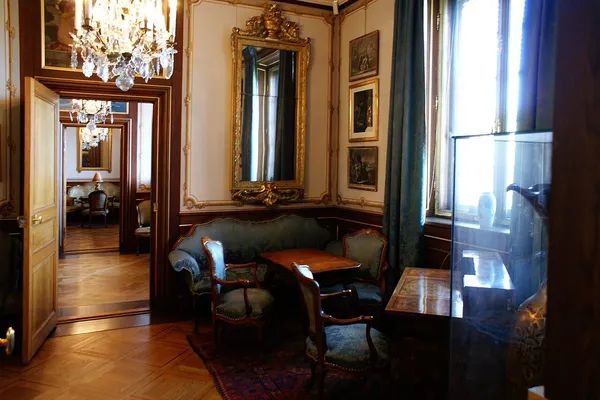
Rosendals slott
Karl XIV Johan's summer palace
Built in the 1820s.
Rosendalsvägen, Stockholm