A king's son who chose to be a painter, a palace by Ferdinand Boberg and a garden of poplars, sculpture and flowers above the water. Waldemarsudde is one of the most personal places in Stockholm – and one of the most beautiful.
In this story · 5 sections
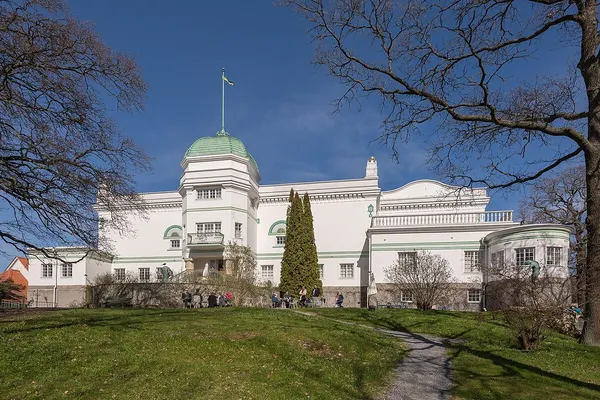
On a point of land on the southern shore of Djurgården, looking out over the water of Saltsjön, stands the house of a prince who would rather paint than rule. Prins Eugens Waldemarsudde was the home of Prince Eugen, son of King Oscar II and an internationally recognised artist, and since 1948 it has been a museum of his life, his work and the art he collected. The palace, its gallery and the garden were planned together as one whole, and the prince's rooms are still kept much as he left them.
Prins Eugens Waldemarsudde
Museum · Djurgården
© OpenStreetMap contributors · OpenFreeMap
- Address
- Prins Eugens väg, Stockholm
- Location
- Prins Eugens väg, southern Djurgården
- Palace
- Ferdinand Boberg, completed 1905
- Gallery
- 1913, extended 1945
- Museum opened
- Summer 1948
- Collection
- Around 7,000 works, mainly Swedish art
- Run by
- Independent foundation since 2017
Boberg's palace of 1905 with the prince's rooms, art collection and a sculpture garden above the water.
01A prince who chose painting
Prince Eugen (1865–1947) grew up partly at nearby Rosendal Palace and liked to visit Waldemarsudde. In 1892 he rented a gabled room in the Old House there, where he wanted to paint and, in his words, "have a few beautiful days with golden evening light". Seven years later, having asked to be released from the obligation to carry on the timber business then run on the point, he bought the whole estate.
He soon decided to build a permanent home and chose Ferdinand Boberg as his architect. He turned what had been an industrial site into a landscaped park and filled both park and house with works, mostly by Swedish artists. When he died in 1947 he became the first member of the Swedish royal family to be cremated, and his urn was buried by the shore behind the Old House. He left the whole estate and its collections to the Swedish state. The museum opened to the public in the summer of 1948, and since 2017 it has been run by an independent foundation with state support.
02Boberg's palace
The main house, which in Eugen's day was simply called the Palace, was completed in 1905 – Boberg's first commission for a private palace, followed soon after by Ernest Thiel's villa, today the Thiel Gallery. The north front is closed and castle-like under a mansard roof, its only decoration the arms of Närke, the prince's duchy, with Carl Milles's diabase eagles flanking the entrance since 1910. The south side is quite different: a patrician villa with large windows facing the water. Above the terrace door is a sundial carved in stone with the inscription "Sole, sole gaudio" – the sun, the sun is my joy.
Insider tipLeave time for the garden.
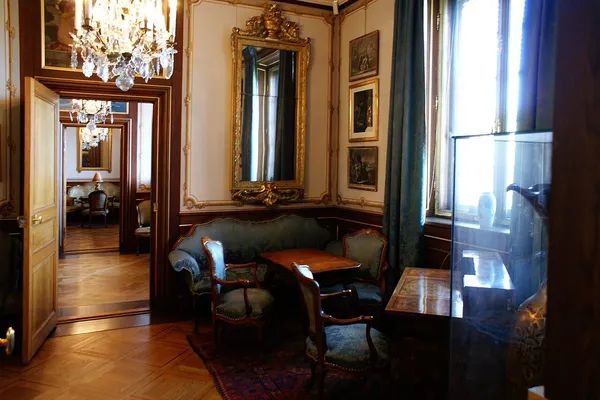
The ground floor holds the reception rooms, library and study, arranged to the prince's wishes and largely preserved as they were in his lifetime, as his will requested. The Great Drawing Room behind the south terrace was what the prince called "the living room", a new idea at the time. It has Empire-style chairs designed by Carl Malmsten, overdoors by Georg Pauli depicting the four arts, and on the walls Ernst Josephson's "Strömkarlen" of 1884, Anders Zorn's portrait of Queen Sophia and Oscar Björck's Oscar II. Next door are the flower room and the dining room with views over the water. The kitchen, once a model of its kind with tiled walls and a great wood-fired range, has been part of the restaurant since the 1970s.
The private rooms were on the first floor, along with rooms for the court marshal and adjutant and the prince's studio with its tall north-facing windows. It still holds his preparatory work for the frescoes in the Prince's Gallery at Stockholm City Hall. The two upper floors are now exhibition spaces.
03The gallery
In 1913 the prince added a separate gallery for his ever-growing collection, a close collaboration between Boberg and Eugen, advised by Alfred Lichtwark, the art historian and director of the Hamburger Kunsthalle. Boberg designed it in German Jugendstil, with a four-sided roof lantern for even light, warm-air ventilation and motorised blinds, and an underground passage linking it to the house. In 1945 the gallery was extended eastwards with two more rooms to the prince's own design. The collection today numbers around 7,000 works, mainly Swedish painting but also sculpture, drawings, prints and medals.
04A garden for a prince who loved flowers
"After art, I believe flowers are my greatest joy," the prince wrote in a letter in 1901. He sought out parks and gardens on his travels and particularly admired the gardens of the Alhambra. At Waldemarsudde he planted poplars along the water, which reminded him of the cypresses of southern Europe, and laid out terraces with outdoor rooms, paths and viewpoints. Sculpture is everywhere: a cast of the Nike of Samothrace on the terrace outside the drawing room, Rodin's "The Thinker" on the wall above the water, and the original bronze of Antoine Bourdelle's "Hercules the Archer".
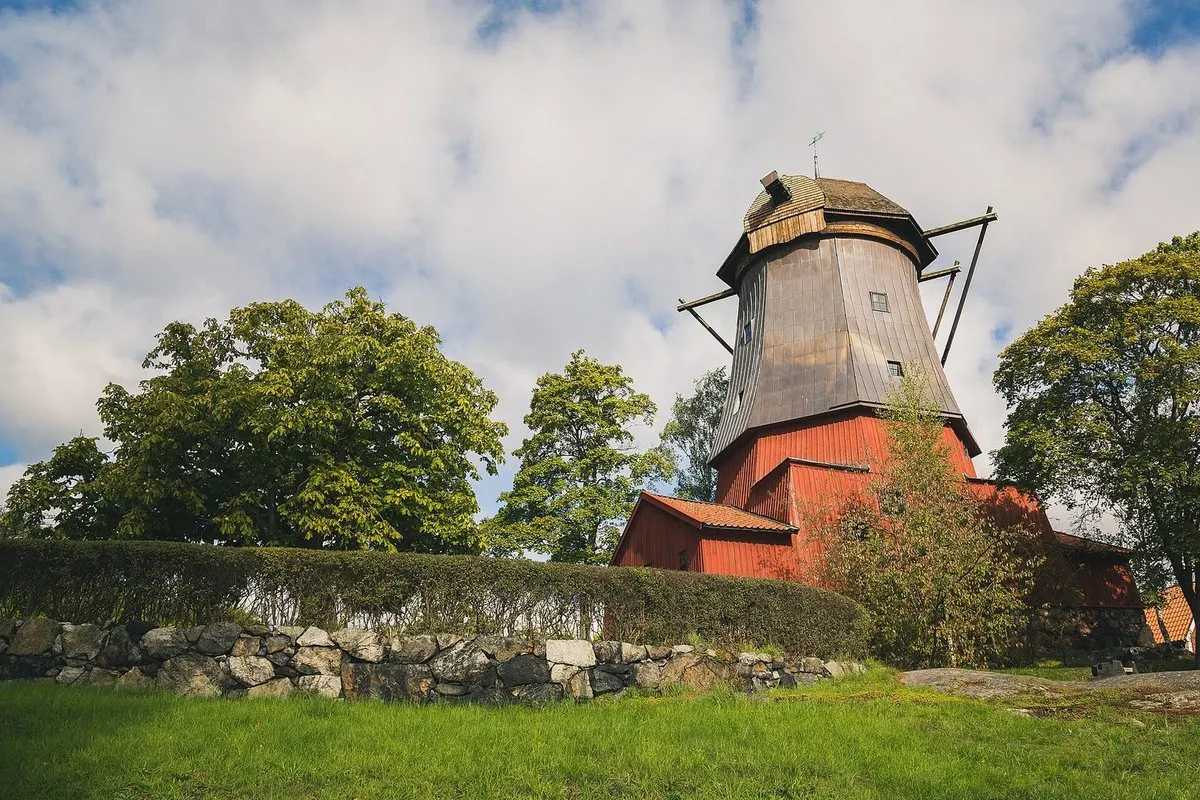
The grounds hold older treasures too. The Old House, also called the Yellow House, dates from the eighteenth century, and since 1965 it has housed displays on the prince's life and the earlier history of the point. The octagonal Round Temple of 1904 stands on a rock near the water, by tradition designed by the prince himself. The oil mill, built in the 1780s, is probably the best-preserved eighteenth-century oil mill in the world. And Prince Eugen's Oak is considered the largest living oak on Djurgården.
05Visiting
Waldemarsudde lies on Prins Eugens väg on southern Djurgården. Allow time for both the house and the garden, and check opening hours and current exhibitions before you go. Read about the road in VERA PI's guide to Prins Eugens väg, explore Djurgården with VERA PI, follow our plan for a day on Djurgården and find your way with Metro Mode's Stockholm map. In the garden, point your phone at the house with Metro Mode Camera.