In this story · 7 sections
Long before the word wellness was coined, Europe had its spa hotels. They were built where the water was: beside a hot spring in a Swiss gorge, above the thermal waters of Bath, on the Lichtentaler Allee in Baden-Baden, beside the casino terraces of Monte-Carlo. What sets them apart from a hotel with a spa is the order of things. Here the water came first and the hotel followed, and the best of them still feel like places one goes to be restored rather than merely to stay.
These six are chosen for that lineage: each is tied to a natural source or a long bathing tradition, and each is a serious hotel in its own right.
6 places
© OpenStreetMap contributors · OpenFreeMap
- 01Brenners Park-Hotel & SpaSpa hotel · Baden-Baden, Germany
- 02Grand Resort Bad RagazSpa hotel · Bad Ragaz, Switzerland
- 03The Gainsborough Bath SpaSpa hotel · Bath, England
- 04Terme di SaturniaSpa resort · Manciano, Tuscany
- 05Thermes Marins Monte-CarloSpa · Monte-Carlo, Monaco
- 06Hotel GellértSpa hotel (reopening) · Budapest, Hungary
Brenners Park-Hotel & Spa, Baden-Baden
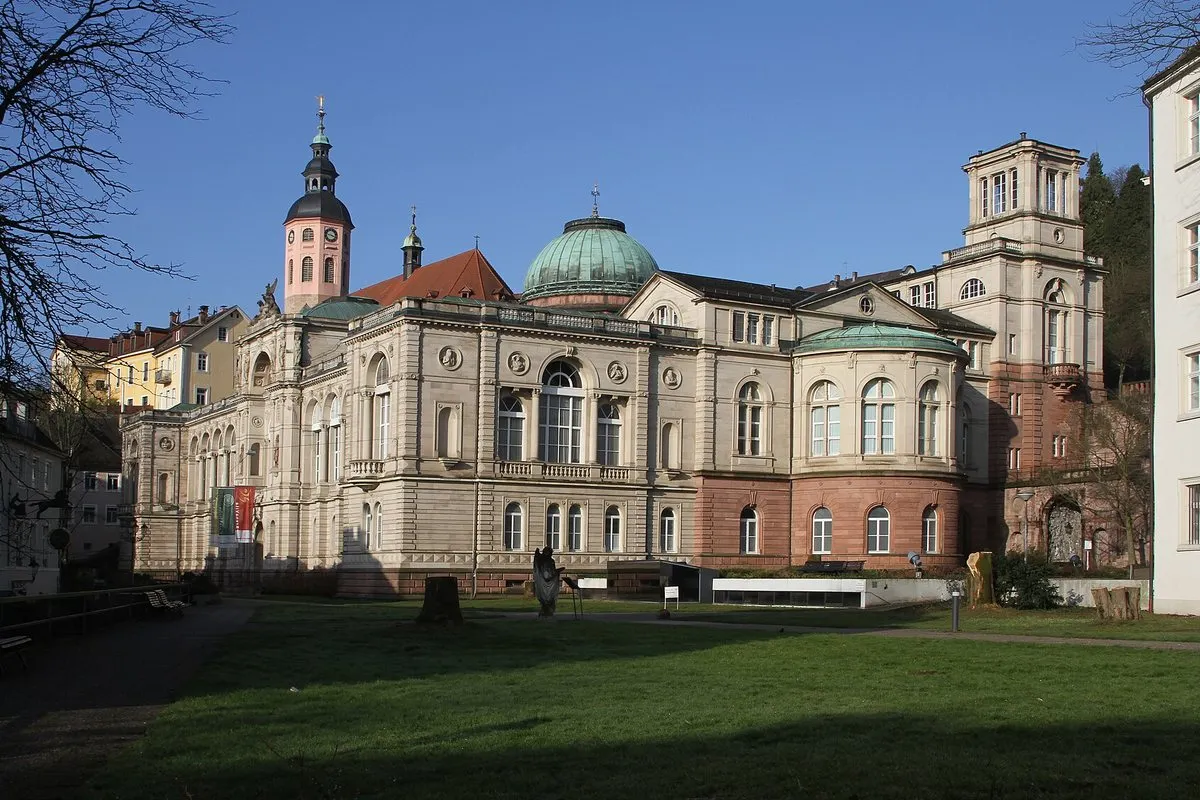
Baden-Baden made its name with water and gambling, and when Germany banned casinos from 1872 the town turned to the water: the neo-Renaissance Friedrichsbad, built between 1869 and 1877, was its answer. That same year, 1872, the court tailor Anton Alois Brenner bought a hotel on the Lichtentaler Allee at auction. It was then called Stéphanie-les-Bains. The Oetker family took a stake in the 1920s and bought it outright in 1941.
Brenners has hosted a long line of statesmen – preliminary talks for the Franco-German friendship treaty were held here in 1962 – but its modern identity is the Villa Stéphanie, the historic villa in the grounds that opened as a destination spa in 2015. The hotel reopened in 2025 after a two-year renovation.
Grand Resort Bad Ragaz, Switzerland
In 1242, according to tradition, hunters from the Abbey of Pfäfers found a spring of 36.5 °C water in the Tamina Gorge, and the monks recognised its healing effect. After the abbey was dissolved in 1838, the water was piped down to Bad Ragaz, and in 1868 the architect Bernhard Simon bought the former monastery estate and founded a spa there. His Grand Hotel Quellenhof opened on 10 July 1869. The Tamina thermal bath followed in 1872 and is described as Europe's first indoor thermal pool. Today the resort combines two grand hotels, the Quellenhof and the Hof Ragaz, with a medical centre and a public thermal bath fed by the same gorge.
The Gainsborough Bath Spa, England
Bath's springs are the only naturally hot, mineral-rich waters in Britain, and a royal charter of 1590 made the city the guardian of them. The Gainsborough, opened in 2015 by YTL Hotels, is the only hotel in the United Kingdom with its own natural thermal spa. It occupies three listed buildings with Georgian facades, designed inside by Champalimaud Design, and has 99 rooms. Its Spa Village is a self-guided Roman-style circuit of thermal pools, sauna, steam room and ice alcove. Nearby, the public Thermae Bath Spa, reopened in 2006, has an open-air rooftop pool over the city.
Terme di Saturnia, Tuscany
In the southern Maremma, sulphurous water at around 37.5 °C rises near the village of Saturnia. The resort says the rain that feeds it falls on Monte Amiata and travels underground for about 40 years before it surfaces. Legend credits the springs to a thunderbolt hurled by Jupiter that missed Saturn. Terme di Saturnia opened in 1919 and has grown around the source into a five-star spa resort with natural hot-spring pools, a medical spa and golf. From the pools, the water runs on through meadows to the Saturnia waterfalls.
Thermes Marins Monte-Carlo, Monaco
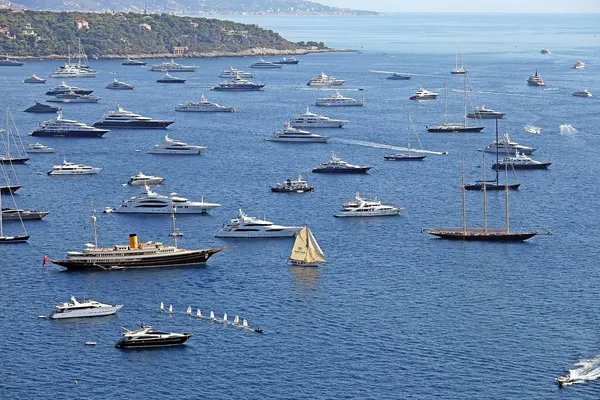
Monaco's bathing history begins with the Établissement des Bains by the port. A new spa was inaugurated by Prince Albert I on the Casino terraces on 3 March 1908, a few metres from the Hôtel de Paris; it was destroyed by bombing in the Second World War. The present Thermes Marins Monte-Carlo opened in April 1995 after two years of works, spread over 6,600 square metres on four floors. In 2014 the Société des Bains de Mer began redesigning two of its floors. More on the city at vpios.com/monaco.
Hotel Gellért, Budapest – the one to wait for
Budapest's Art Nouveau Hotel Gellért opened on 26 September 1918, as the Austro-Hungarian Empire collapsed around it. Its thermal bath was added in 1934 in place of the glass-domed Winter Garden. The hotel closed for renovation in December 2021 and is scheduled to reopen in 2027 as the Mandarin Oriental Gellert, which is why it belongs on this list a year early.
How to choose
Think about what the water is for. Bad Ragaz and Saturnia have medical centres attached; Brenners and the Gainsborough are grand hotels with a spa at their heart; Monte-Carlo pairs the sea with a casino town. For retreats where the programme matters more than the spring, see our separate guide to Europe's wellness retreats, and browse more hotels in our travel section and on metromode.co.
Brenners Park-Hotel & Spa
The Brenner family's hotel from 1872, Oetker-owned since 1941, with the Villa Stéphanie spa.
Insider tipReopened in 2025 after a two-year renovation.
Grand Resort Bad Ragaz
Two grand hotels, a medical centre and the Tamina thermal bath, fed by 36.5 °C water from the gorge.
Insider tipThe Quellenhof opened in 1869.
The Gainsborough Bath Spa
The only UK hotel with a natural thermal spa, in three listed Georgian-fronted buildings.
Insider tip99 rooms. Thermae Bath Spa is nearby.
Terme di Saturnia
A five-star resort around a 37.5 °C sulphurous spring, open since 1919.
Insider tipThe water flows on to the Saturnia waterfalls.
Thermes Marins Monte-Carlo
6,600 square metres over four floors, opened in 1995.
Insider tipRun by the Société des Bains de Mer.
Hotel Gellért
The Art Nouveau landmark on the Danube, opened in 1918, with its 1934 thermal bath.
Insider tipClosed since December 2021; scheduled to reopen in 2027 as Mandarin Oriental Gellert.