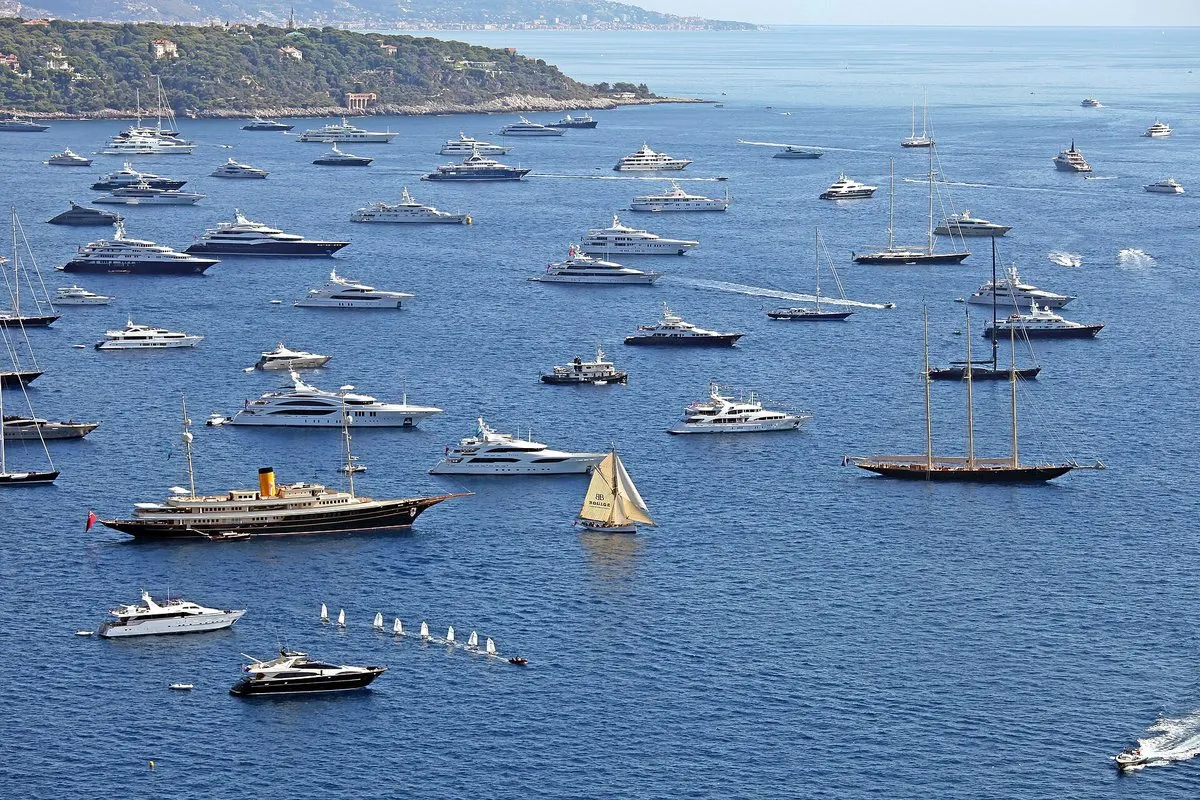
The French Riviera's year, month by month: citrus floats in February, clay-court tennis in April, cinema in May, Formula 1 at the turn of June, jazz under the pines in July and superyachts and classic sail at summer's end.
In this story · 7 sections
The French Riviera does not have one season but several, and the coast between Menton and Saint-Tropez keeps a calendar that is remarkably stable from year to year. Carnival in late winter, sport in spring, film and motor racing at the start of summer, music in July, boats at the end. Knowing the rhythm is the difference between arriving to a closed town and arriving to the week everyone has been waiting for – or, just as usefully, choosing to avoid it.
7 places
© OpenStreetMap contributors · OpenFreeMap
- 01Jardins BiovèsFête du Citron · Menton
- 02Place MassénaNice Carnival · Nice
- 03Monte Carlo Country ClubMonte-Carlo Masters · Roquebrune-Cap-Martin
- 04Palais des Festivals et des CongrèsCannes Film Festival · Cannes
- 05Port HerculeMonaco Grand Prix and Monaco Yacht Show · Monaco
- 06Pinède GouldJazz à Juan · Juan-les-Pins, Antibes
- 07Vieux PortLes Voiles de Saint-Tropez · Saint-Tropez
February: carnival in Nice, citrus in Menton
The year starts in earnest with the Nice Carnival, held each February and sometimes into early March, depending on where the Christian calendar places carnival. Its roots are old: the Count of Provence wrote of passing "the joyous days of carnival" in Nice in 1294. The modern form – parades, satirical floats, masked balls – dates from 1873, when a committee led by the local artist Alexis Mossa reinvented the event. Each year has a theme, and the floats are still built in papier-mâché. Alongside the parades come the flower battles on the Promenade des Anglais.
Further east along the coast, Menton answers with its Fête du Citron, also in February. The town's carnival began in 1875, when hoteliers proposed a winter parade to entertain their guests; Queen Victoria attended the 1882 edition. The citrus theme came later. In 1928 Menton was still the continent's leading lemon producer, and that year a private citrus exhibition was staged in a garden for guests of the Hôtel Riviera Palace. Today the floats and sculptures are made from lemons and oranges, and the Jardins Biovès, re-laid with citrus motifs from 1936, are the festival's heart. France added the festival to its inventory of intangible cultural heritage in 2019.
April: clay courts above Monaco
Spring brings the Rolex Monte-Carlo Masters, one of the nine ATP Masters 1000 tournaments, played on clay at the Monte Carlo Country Club each April. The club sits just over the border in Roquebrune-Cap-Martin. The tournament itself goes back to 1896, when it began as the Monte-Carlo International; until 1905 it was played on courts beneath the Hôtel de Paris. Rafael Nadal won the singles title a record eleven times, eight of them in consecutive years between 2005 and 2012.
May: the Cannes Film Festival
The Cannes Film Festival is the coast's most famous fortnight. It was conceived in 1939, partly as a French answer to Venice, but war intervened and the first festival was held in 1946. It takes place each year, usually in May, at the Palais des Festivals et des Congrès on the Croisette, and it is an invitation-only industry event: the screenings themselves are for accredited guests. For everyone else, Cannes in May means a town at its busiest, with hotels and restaurant tables in high demand. Travellers who simply want to enjoy Cannes may prefer another month.
Late May or early June: the Monaco Grand Prix
Soon after the festival, Monaco closes its streets for the Grand Prix, held on the Circuit de Monaco in late May or early June. The race has been run since 14 April 1929 and was part of the first Formula 1 World Championship in 1950. It forms the Triple Crown of Motorsport with the Indianapolis 500 and the 24 Hours of Le Mans, and it is the only Grand Prix exempt from the minimum race distance that applies to every other round. Ayrton Senna won it six times, five in a row from 1989 to 1993. Only two Monégasque drivers have ever won at home: Louis Chiron in 1931 and Charles Leclerc in 2024.
For the city itself, out of race season, see our guide on vpios.com/monaco.
July: Jazz à Juan under the pines
Jazz à Juan in Juan-les-Pins is one of Europe's oldest jazz festivals, first held in 1960 as the Festival Européen de Jazz. In its early years it booked the great American names – Charles Mingus in 1960, Ray Charles and Count Basie in 1961, Miles Davis in 1963 – and in 1966 Ella Fitzgerald and Duke Ellington shared the stage. The concerts are held in the Pinède Gould, the pine grove by the beach; the 2026 edition, the 65th, ran from 9 to 19 July. Along the Boulevard Édouard Baudoin, behind the stage, more than fifty musicians have left their handprints in ceramic tiles.
Antibes, next door, is at its best once the festival crowds have gone: our guide to Antibes after summer explains why.
September: superyachts in Monaco, classic sail in Saint-Tropez
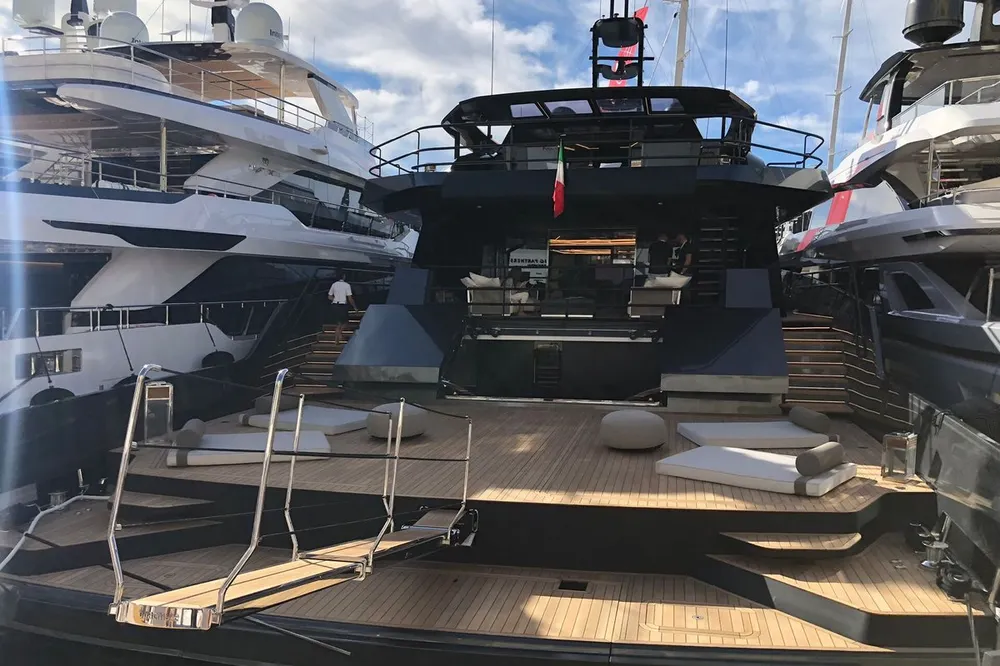
The season ends on the water. The Monaco Yacht Show, founded in 1991 and now organised by the British events company Informa, fills Port Hercule with around 125 yachts and more than 580 exhibitors over four days in September. It is a trade show above all, focused on yachts from about 20 metres upwards, and it is billed as Europe's largest in-water display of large yachts. Brokers list the 2027 edition for 22 to 25 September.
Les Voiles de Saint-Tropez is the gentler coda. It began in late September 1981 as an informal challenge between two yachts, Pride and Ikra, finishing in front of Club 55 – its director Patrice de Colmont is regarded as the founder of what became La Nioulargue. After a fatal collision in 1995 ended that event, the Société Nautique de Saint-Tropez revived it in 1999 as Les Voiles de Saint-Tropez. Around 300 boats now take part, in roughly equal numbers of classic and modern yachts.
How to use the calendar
Each of these events has two sides. For those attending, they are reasons to go, and they reward planning: hotels, restaurant tables and transfers should be booked early. For those who are not, they are dates to steer around. The weeks between the big moments – early June after the Grand Prix, and the end of September once the boats have left – are often the calmest. For more on where to stay along the coast, browse our travel section and the Riviera city guides at verapi.fr.
Jardins Biovès
The gardens at the heart of Menton's lemon festival each February, re-laid with citrus motifs from 1936.
Insider tipFebruary. Floats and sculptures are made from lemons and oranges.
Place Masséna
Nice's central square.
Insider tipCarnival: February, sometimes into early March.
Monte Carlo Country Club
Clay courts that host the ATP Masters 1000 tournament each April.
Insider tipApril. The club lies just across the border from Monaco.
Palais des Festivals et des Congrès
The festival's home on the Croisette.
Insider tipUsually May. Screenings are invitation-only.
Port Hercule
Monaco's harbour, home to the Monaco Yacht Show each September.
Insider tipGrand Prix: late May or early June. Yacht Show: four days in September.
Pinède Gould
The pine grove by the beach where Jazz à Juan stages its concerts.
Insider tipJuly. The 2026 edition ran from 9 to 19 July.
Vieux Port
Saint-Tropez's old harbour.
Insider tipAround 300 boats take part, organised by the Société Nautique de Saint-Tropez.