In this story · 4 sections
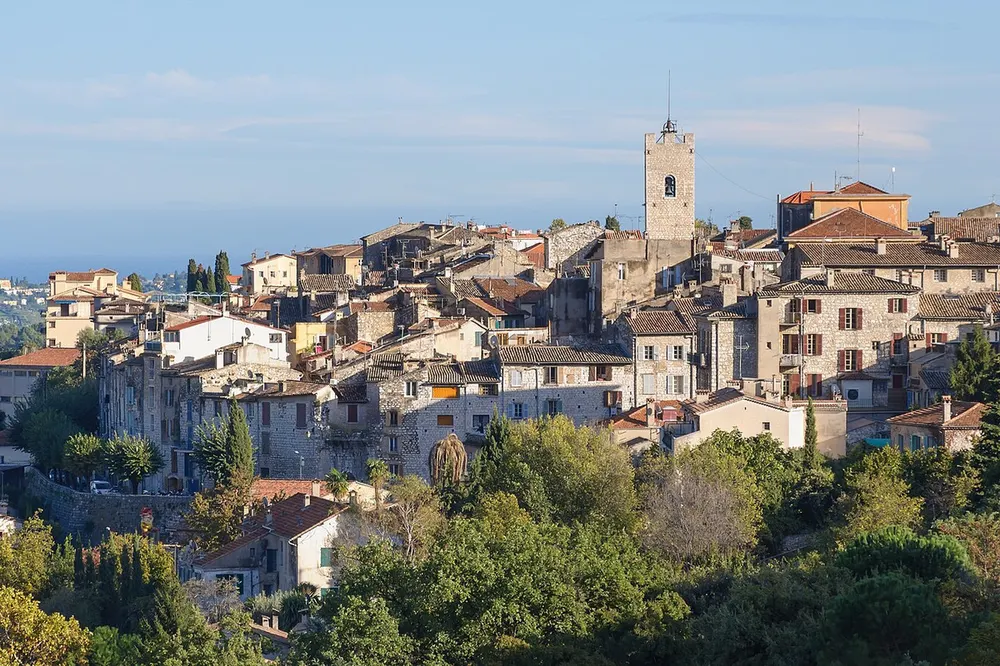
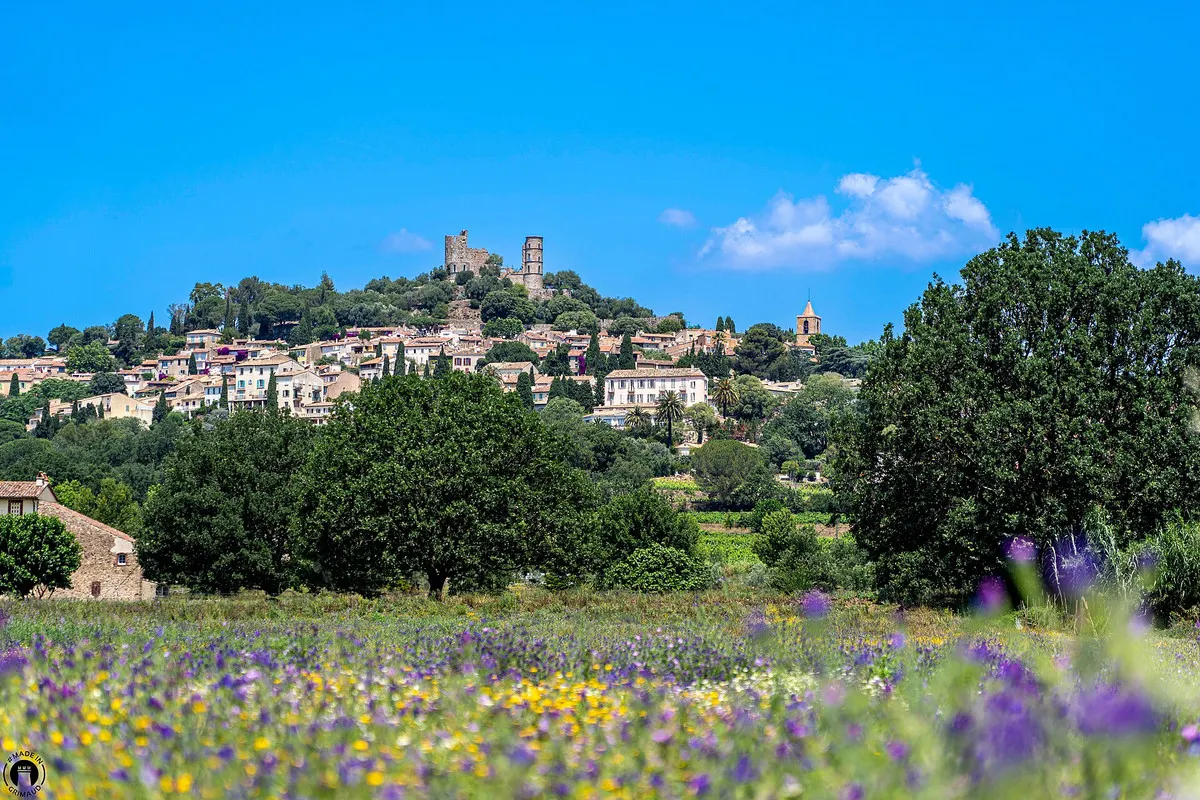
Grimaud sits where the hills of the Massif des Maures begin, at the head of the Gulf of Saint-Tropez. The commune runs from sea level on the gulf to almost 514 metres at the Sommet des Trois Confronts, and takes in the lagoon town of Port Grimaud on the shore. But its historic heart is the old village on its peak, 4 kilometres from Cogolin and 13 from Saint-Tropez, crowned by the ruins of a castle.
It is the perfect antidote to the gulf in high summer: an hour among stone lanes, a windmill and a view that takes in the whole bay.
4 places
© OpenStreetMap contributors · OpenFreeMap
- 01Château de Grimaudsee · Vieux village
- 02Église Saint-Michelsee · Vieux village
- 03Moulin Saint-Rochsee · Vieux village
- 04Pont des Féessee · Grimaud
- Early 11th century
- A single tower
- 13th–14th centuries
- The keep is built
- 15th century
- Western building added
- 17th century
- Last enlargement with round towers
- 1996
- Classified as a historic monument
A name, a forgery and the Moors
For centuries people believed the name came from Gibelin de Grimaldi, rewarded with the lordship around 975 for fighting the Saracens. In the 18th century historians showed that the charter was a fake and that Gibelin was a 15th-century invention, unconnected to the Grimaldis of Monaco. The real history is just as vivid: in 972 Count William of Provence, known as the Liberator, drove the Moors out of their base in the Freinet after 90 years of occupation.
In the 11th century a Castrum de Grimaldo, named after a landowner, appears in the charters of the Abbey of Saint-Victor in Marseille. Plague and brigandage later thinned the population, which drew in around the castle hill and, in the second half of the 14th century, built the rampart that still stands. In the 19th century Grimaud lost ground to seafaring Saint-Tropez.
The castle of the Freinet
In the Middle Ages the castle was the seat of the lordship of the Freinet, covering roughly today's cantons of Grimaud and Saint-Tropez. It began in the early 11th century as a single tower; the keep went up in the 13th and 14th centuries, the western building in the 15th, and the round towers in the 17th. King René of Anjou gave it to his friend Jean Cossa, who enlarged and embellished it. Now a ruin, it has been classified as a historic monument since 27 December 1996, and an open-air theatre inside its walls hosts summer events.
Mills, a church and a fairy bridge
Below the castle, the Rue des Templiers leads through the old village to the church of Saint-Michel, built of granite and limestone and described as the oldest church still in use in the former Freinet. The Moulin Saint-Roch is the survivor of four windmills which, with nine water mills, once made the village self-sufficient in flour and olive oil. Nearby are the chapels of Saint-Roch and the Penitents.
Water came to the village by gravity from three kilometres away, through the hills. The last trace of that system is the Pont des Fées, the fairy bridge, a short walk north of the centre.
And Port Grimaud below
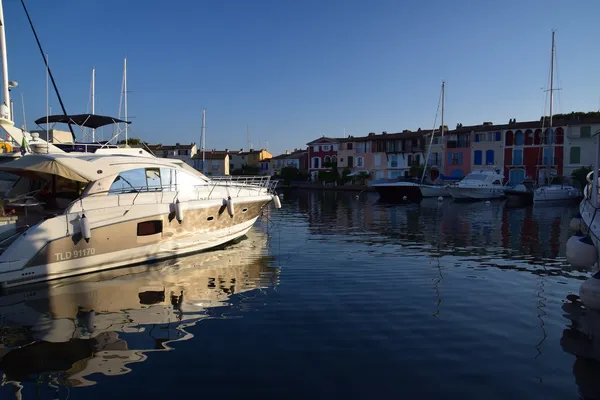
On the shore, the architect François Spoerry built Port Grimaud from 1966 on former marshland: a car-free lagoon town with twelve kilometres of quays. In summer a boat links it with the port of Saint-Tropez. Its supposed twinning with Venice, celebrated in July 1970, was in fact one of Spoerry's jokes.
Château de Grimaud
Castle ruins above the gulf
The seat of the medieval lordship of the Freinet, with an open-air theatre.
Chemin du Château, 83310 Grimaud
Insider tipGo at the end of the day for the light over the gulf.
Église Saint-Michel
The granite church of old Grimaud
Built of granite and limestone, still in use.
Passage de l'Église, 83310 Grimaud
Insider tipReached via the Rue des Templiers.
Moulin Saint-Roch
The village's surviving windmill
One of four windmills that once ground the village's flour.
Chemin du Moulin Saint-Roch, 83310 Grimaud
Insider tipA short climb with a wide view.
Pont des Fées
The remains of the village aqueduct
The last trace of the water supply that came from three kilometres away.
Pont des Fées, 83310 Grimaud
Insider tipCombine with the walk to the windmill.
Neighbourhood and property data for Grimaud is on VERA PI, and more from the gulf is on metromode.co.