For more than two centuries it was closed to the public: first the king's furniture store, then the French Navy's headquarters. Restored and opened in 2021, the Hôtel de la Marine is now one of the most rewarding interiors in Paris.
In this story · 4 sections
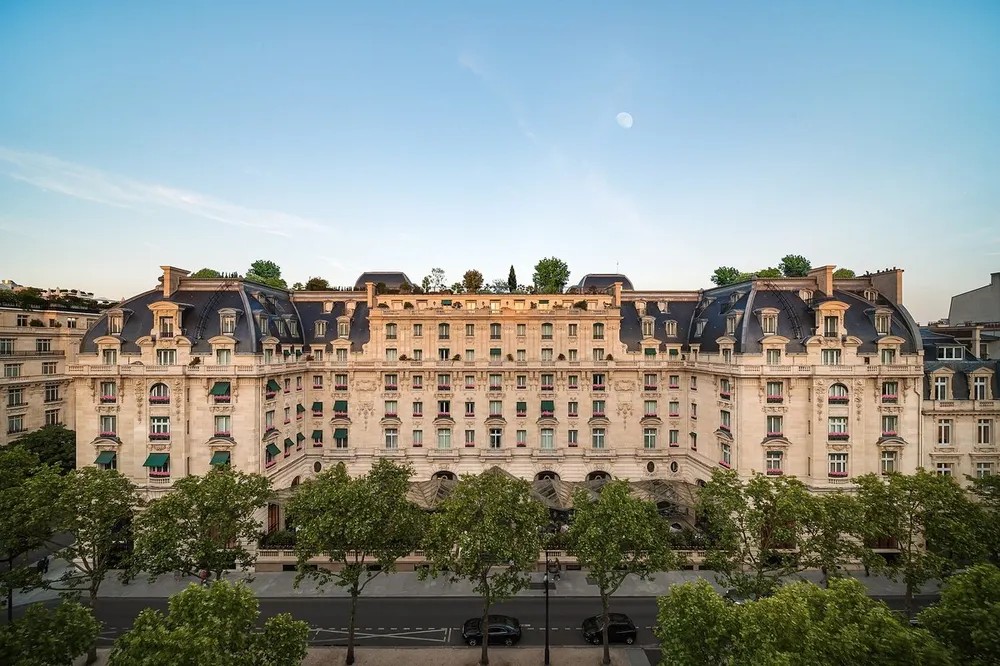
Thousands of people cross Place de la Concorde in Paris every day without a glance at the long colonnaded façade on its northern side. For most of its history there was no reason to: the Hôtel de la Marine was an administrative building, closed to the public. Since its restoration it has become one of the city's most satisfying visits, a rare chance to walk through eighteenth-century rooms that feel lived in rather than staged.
Hôtel de la Marine
Historic monument · 8th arrondissement
© OpenStreetMap contributors · OpenFreeMap
- Address
- 2 place de la Concorde, 75008 Paris
- Architect
- Ange-Jacques Gabriel
- Built
- 1757–1774
- Restored
- 2015–2021
- Managed by
- Centre des monuments nationaux
- Don't miss
- The intendant's apartment and the loggia
The former royal Garde-Meuble and Navy ministry, restored with period apartments, gilded salons and a loggia over the square.
01The king's furniture store
The building was designed by Ange-Jacques Gabriel, Louis XV's chief architect, and built between 1757 and 1774 on the newly created Place Louis XV. Its twin across rue Royale now houses the Hôtel de Crillon. Gabriel's building was given to the Garde-Meuble de la Couronne, the office responsible for furnishing every royal residence, and it held tapestries, furniture, arms and the crown jewels. It contained workshops, a chapel, a library, stables and apartments for the officials who ran it.
Its most famous night was a crime. In September 1792, in the chaos of the Revolution, thieves broke in and made off with the crown jewels, among them the great blue diamond of Louis XIV. After the Revolution the building became the Ministry of the Navy, which stayed for more than two hundred years. The decree abolishing slavery in the French colonies was drafted here in April 1848, and the Foundation for the Remembrance of Slavery has been based in the building since 2019.
02The intendant's apartments
When the Navy left in 2015, the Centre des monuments nationaux undertook a restoration that lasted until 2021. Its centrepiece is the apartment of Marc-Antoine Thierry de Ville-d'Avray, intendant of the Garde-Meuble from 1784 to 1792. The rooms have been returned to their appearance on the eve of the Revolution, down to the silks, the colours and the arrangement of furniture, with bedrooms, a dining room, a bathroom and small private cabinets.
Insider tipTimed tickets; book ahead at weekends and in high season.
What makes these rooms memorable is their domestic scale. Unlike the state apartments of Versailles, they show how a senior official of the court actually lived and worked: the desk where he handled the royal inventory, the corridors used by servants, the dressing rooms. The audio guide is unusually good and worth taking.
03Gilded salons and the loggia
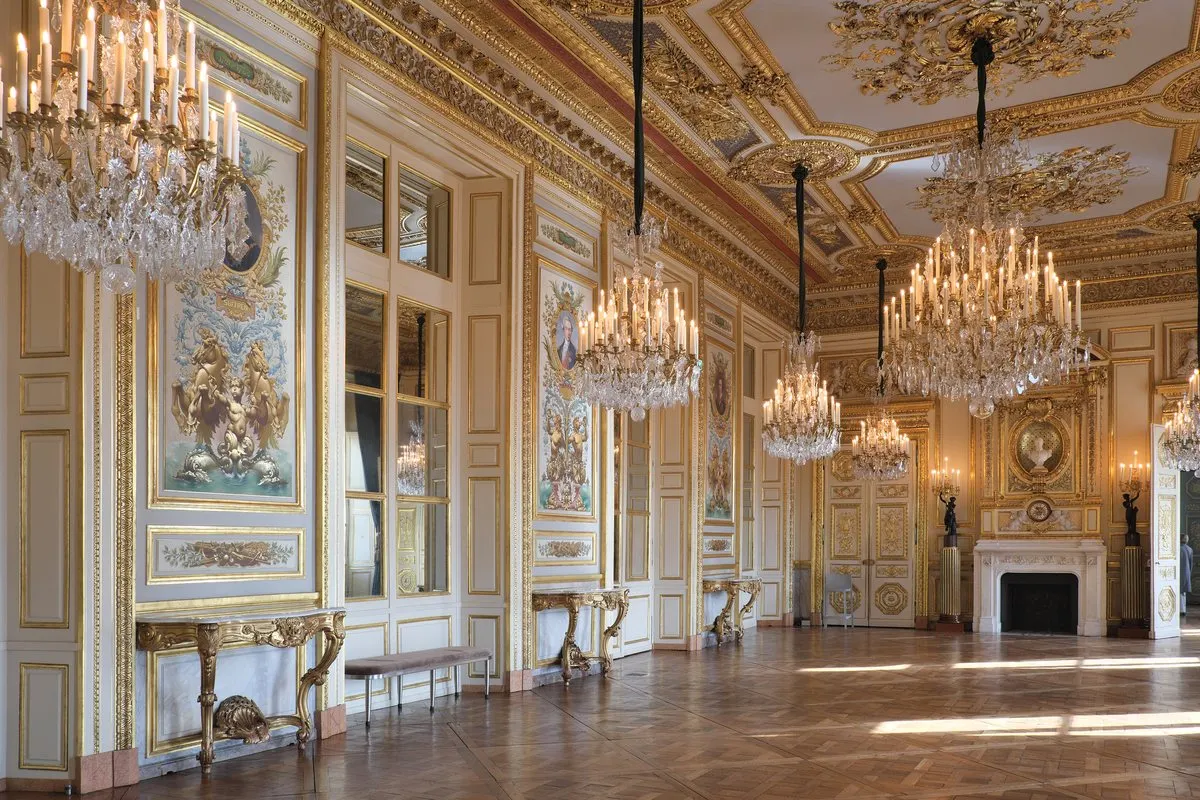
The tour continues through the grand reception rooms redecorated in the nineteenth century, when the ministry entertained in high style. The Salon des Amiraux and the adjoining salons are a cascade of gilding, mirrors and chandeliers, and they hosted, among other events, a ball for Napoleon's coronation in 1804.
The finale is the loggia, the long colonnaded gallery behind the façade. Step out and the whole of Place de la Concorde opens before you: the obelisk, the fountains, the Tuileries, the Seine and the Assemblée nationale beyond. In 1989 President Mitterrand invited foreign leaders here to watch the parade marking the bicentenary of the Revolution. It remains the finest balcony in Paris.
04The Al Thani Collection
A separate set of galleries presents works from the Al Thani Collection, assembled by Sheikh Hamad bin Abdullah Al Thani. The rotating displays bring together objects from many cultures and periods, from antiquity to the modern era, and are shown in quiet, carefully lit rooms. A combined ticket is usually offered with the historic apartments.
Afterwards, walk up rue Royale towards the Madeleine or turn into rue du Faubourg Saint-Honoré for the fashion houses. Our guide to the 8th arrondissement maps the surrounding streets.