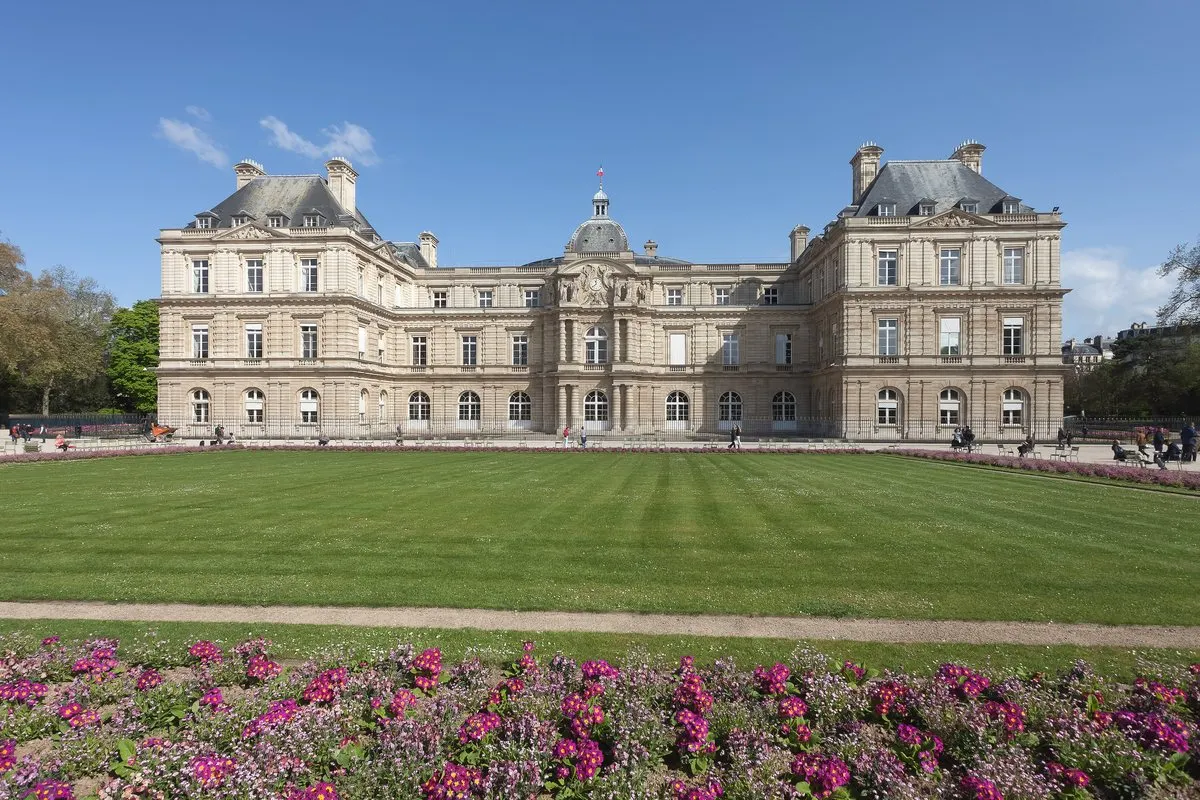
Laid out for a queen in 1612 and now looked after by the French Senate, the Jardin du Luxembourg is where the Left Bank comes to read, sail toy boats and do very little. A guide to its fountains, terraces and quieter corners.
In this story · 5 sections
Every city has a park, but Paris has the Jardin du Luxembourg, and the difference is a matter of manners. In the 6th arrondissement, between Saint-Germain-des-Prés and the Latin Quarter, this formal garden is where students revise, grandparents watch children sail wooden boats and older Parisians read the paper on the famous green metal chairs, pulled into exactly the patch of sun they prefer. Locals call it “le Luco”.
Jardin du Luxembourg
Garden · 6th arrondissement
© OpenStreetMap contributors · OpenFreeMap
- Address
- Rue de Médicis / rue de Vaugirard, 75006 Paris
- Created
- From 1612, for Marie de' Medici
- Size
- 23 hectares
- Owner
- The French Senate
- Highlights
- Medici Fountain, Grand Bassin, orchard, puppet theatre
- Area
- 6th arrondissement
Lawns, terraces and tree-lined walks around the Luxembourg Palace, with the Medici Fountain and the Grand Bassin.
01A Florentine queen's garden
The story begins with Marie de' Medici, widow of Henri IV and regent for the young Louis XIII. Homesick for Florence, she decided in 1611 to build a palace in imitation of the Pitti Palace, bought the Hôtel du Luxembourg and commissioned the architect Salomon de Brosse. In 1612 she had two thousand elm trees planted and set gardeners, notably Tommaso Francini, to work on a park in the Italian manner she had known as a child.
The palace now houses the French Senate, which also owns the garden. That explains the immaculate maintenance, the guards who blow whistles at closing time and the sense that this is a public garden run with the care of a private estate.
02The Grand Bassin and its toy sailboats
At the heart of the garden, in front of the palace, lies the octagonal Grand Bassin. On fine days children rent small wooden sailboats and push them off with sticks, a scene that has hardly changed in a century. Around the basin, raised balustraded terraces are lined with statues of French queens, saints and illustrious women, about twenty figures in all, standing on pedestals among the flower beds.
Insider tipOpening and closing times follow the daylight and change through the year.
From the terraces you get the classic view: palace, fountain jet and parterre, with the dome of the Panthéon rising beyond the trees to the east. Take a chair here at the end of the afternoon and you will understand why people return daily.
03The Medici Fountain
In the northeast corner, close to the palace, the Medici Fountain is the garden's most romantic spot. Built around 1620 as a grotto in the Italian style, it stands at the end of a long, shaded basin beneath plane trees. It is cooler and calmer than the main parterre, and on a hot day the benches along the water are the most sought-after seats in the garden.
04Statues, an orchard and a puppet theatre
The garden holds around seventy sculptures, many added in the nineteenth century: monuments to writers and artists, a work by Zadkine, and a small model by Bartholdi of his Statue of Liberty, which tends to surprise American visitors. Beyond the formal centre, the paths become more English in spirit, with lawns, groves and corners to find.
In the southwest corner there is an orchard of old apple and pear varieties, trained into careful shapes, and the Théâtre des Marionnettes, a puppet theatre that has entertained Parisian children for generations. The garden also has an apiary, tennis courts and a bandstand where concerts are held in the warmer months. The Orangerie, used for temporary exhibitions, and the Musée du Luxembourg on the rue de Vaugirard side are worth checking for current shows.
05Where to enter and where to go afterwards
The gates on boulevard Saint-Michel bring you in by the Medici Fountain; the western side, along rue Guynemer, is quieter and leads naturally towards Saint-Sulpice and Saint-Germain. Leave by that side for a walk through the streets of the 6th arrondissement, or follow the garden south towards Montparnasse. More cities are collected among the Metro Mode destinations.