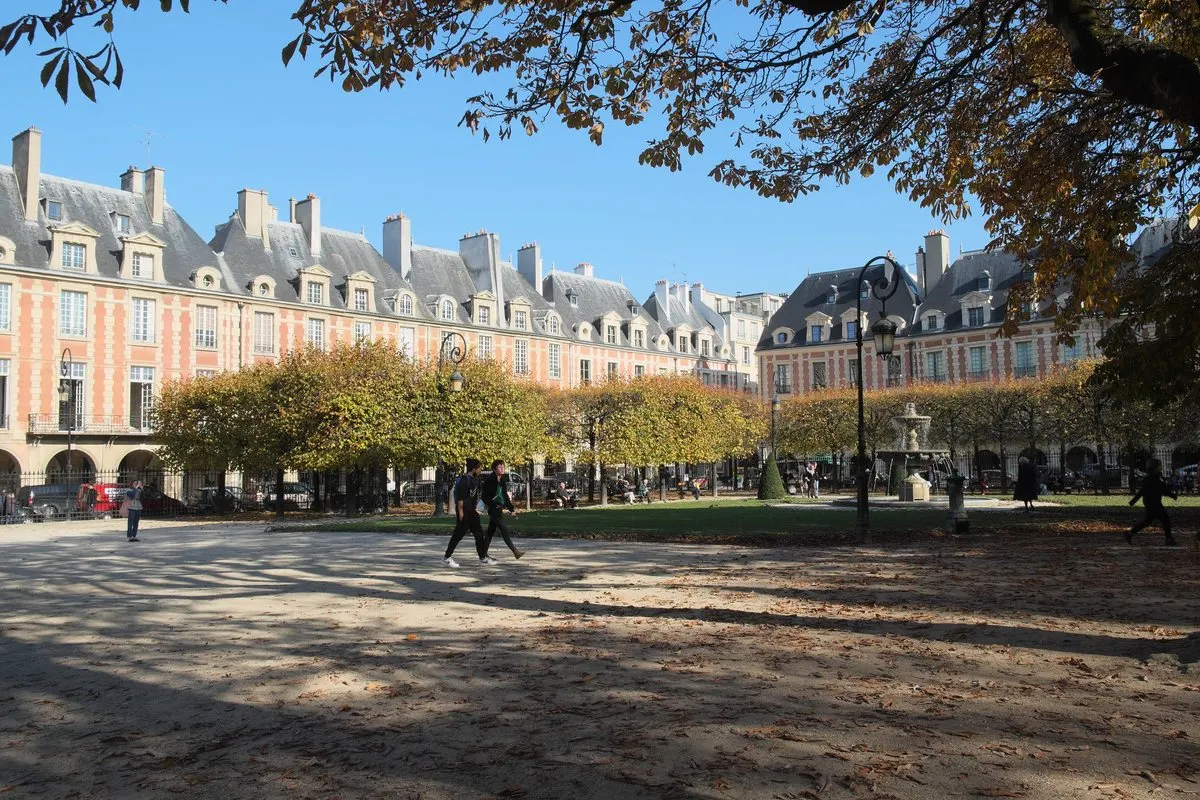
Place des Vosges, 17th-century mansions, Picasso, Carnavalet and streets open on Sundays. Le Marais in Paris is the district where the nobility once lived, was then forgotten, and later became the city's most vibrant quarter. Here's our guide.
In this story · 8 sections
- From the Knights Templar to the Place Royale
- Place des Vosges: Paris's oldest planned square
- Hôtel de Sully: the shortcut to the square
- Musée Carnavalet: Paris's own history
- Musée Picasso at Hôtel Salé
- Rue des Francs-Bourgeois and rue des Rosiers
- Musée Cognacq-Jay and the small museums
- How to walk through the Marais
Le Marais means the swamp, and that was what the area on the right bank of Paris once was. The district, which stretches across parts of the 3rd and 4th arrondissements, became the aristocracy's favourite address in the 1600s, fell into obscurity after the revolution, and is today one of the city's most sought-after areas, with galleries, museums and restaurants in old city mansions. Here is a portrait of the district and the places you shouldn't miss.
5 places
© OpenStreetMap contributors · OpenFreeMap
From the Knights Templar to the Place Royale
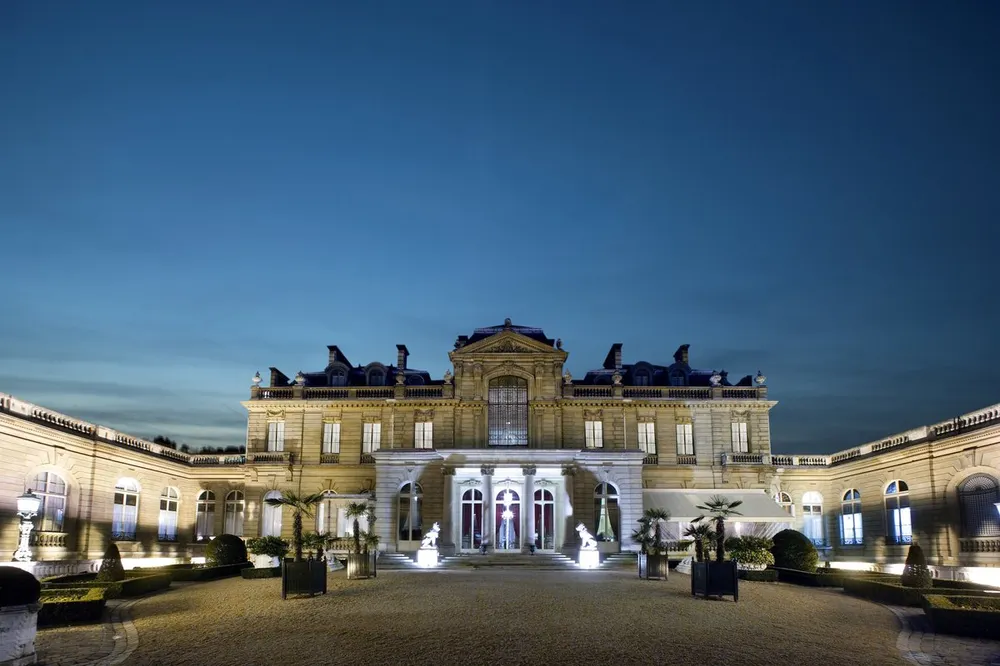
In 1240, the Templars built a fortified church just outside the city walls in the northern Marais, and the monasteries followed. During the 1300s kings lived here, and after Henry IV had the Place Royale, today's Place des Vosges, laid out in 1605, the Marais became the favourite quarter of the French nobility. Then the large town palaces were built – Hôtel de Sens, Hôtel de Sully, Hôtel Carnavalet and Hôtel de Soubise among others. In the late 1700s the nobility moved to Faubourg Saint-Germain on the left bank, and after the revolution the quarter fell into disrepair. It has since been transformed again.
Place des Vosges: Paris's oldest planned square
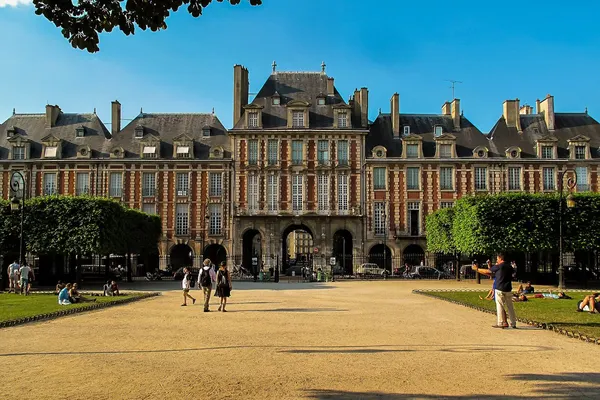
Henry IV built Place Royale between 1605 and 1612 on the site of the demolished Hôtel des Tournelles. The square is square-shaped, 140 by 140 metres, and was inaugurated in 1612 with a great carousel to mark the engagement between Louis XIII and Anne of Austria. What was new was that all the house façades were built identically: red brick with corner chains in stone, arches on square pillars and steep roofs of blue slate. The King's and Queen's pavilions rise above the roofline on the north and south sides. The square can be found on VERA PI's page about Place des Vosges.
Place des Vosges is one of five royal squares in Paris, together with Place des Victoires, Place Dauphine, Place Vendôme and Place de la Concorde. In the south-western corner is L'Ambroisie, which held three stars in the Guide Michelin from 1988 to 2026.
Hôtel de Sully: the shortcut to the square
The Hôtel de Sully at 62 rue Saint-Antoine was built in 1624–1630 with a garden and orangery, and the site was chosen to provide access to Place Royale. The house is usually attributed to the architect Jean Androuet du Cerceau and was later purchased by the Duke of Sully, Henri IV's minister. Today it is the seat of the Centre des monuments nationaux. Walk through the courtyard and garden and you will come out at Place des Vosges.
Musée Carnavalet: Paris's own history
Musée Carnavalet is the museum of the history of Paris, housed in two neighbouring mansions. Hôtel Carnavalet was begun after 1544 by Pierre Lescot and Jean Goujon, who were then called away to the Louvre, and was rebuilt by François Mansart in the 1650s. Madame de Sévigné, known for her letters on the everyday life of the nobility, lived here from 1677 until her death in 1696. The city bought the house in 1866 on the advice of Haussmann, and the museum opened in 1880. After a major renovation, it reopened in 2021 with new rooms, and the collection then comprised 625,000 objects.
Musée Picasso at Hôtel Salé
On rue de Thorigny stands Hôtel Salé, built 1656–1659 for Pierre Aubert, a tax collector who had grown rich on the salt tax – hence the name, the salted house. Today it is the Musée Picasso Paris, with more than 5,000 works and tens of thousands of archive items from the artist's own collections, a large part of which were donated by the family after his death. Balzac attended school in the building when it was a school after 1815.
Rue des Francs-Bourgeois and rue des Rosiers
Between the museums runs rue des Francs-Bourgeois, the neighbourhood's main street with shops and town houses, which crosses rue Vieille-du-Temple. Rue des Rosiers, the street of rose bushes, lies at the heart of the Jewish quarter, known in Yiddish as the Pletzl, the little place. Since the Sabbath falls on Saturday, shops and cafés here are exempt from Paris's opening hours regulations and are open on Sundays and public holidays – when the street is at its most lively.
Musée Cognacq-Jay and the small museums
At Hôtel de Donon, the collection built up between 1900 and 1925 by Théodore-Ernest Cognacq and Marie-Louise Jaÿ, founders of the department store La Samaritaine, is on display. They wanted to show the art as in a lived-in home, without the conventions of a museum. The house is one of several smaller museums in the neighbourhood that can be fitted into an afternoon.
How to walk through the Marais
Start on rue Saint-Antoine, walk through Hôtel de Sully to Place des Vosges and then north to Carnavalet and Musée Picasso. Finish on rue des Rosiers. The whole neighbourhood can be found on VERA PI's page about the 3rd arrondissement and 4th arrondissement. From the Marais it's a few minutes to Île Saint-Louis – continue with our walk across Paris's islands.
Place des Vosges
Henri IV's square, dating from 1612
Paris's oldest planned square, with uniform façades in brick and stone.
Hôtel de Sully
Shortcut to the square
Town palace from 1624–1630 with courtyard and garden.
62 rue Saint-Antoine, 75004 Paris
Musée Carnavalet
Paris history
Madame de Sévigné's house, a museum since 1880.
23 rue de Sévigné, 75003 Paris
Musée Picasso Paris
Hôtel Salé
More than 5,000 works by Picasso in a palace from 1656–1659.
Rue de Thorigny, 75003 Paris