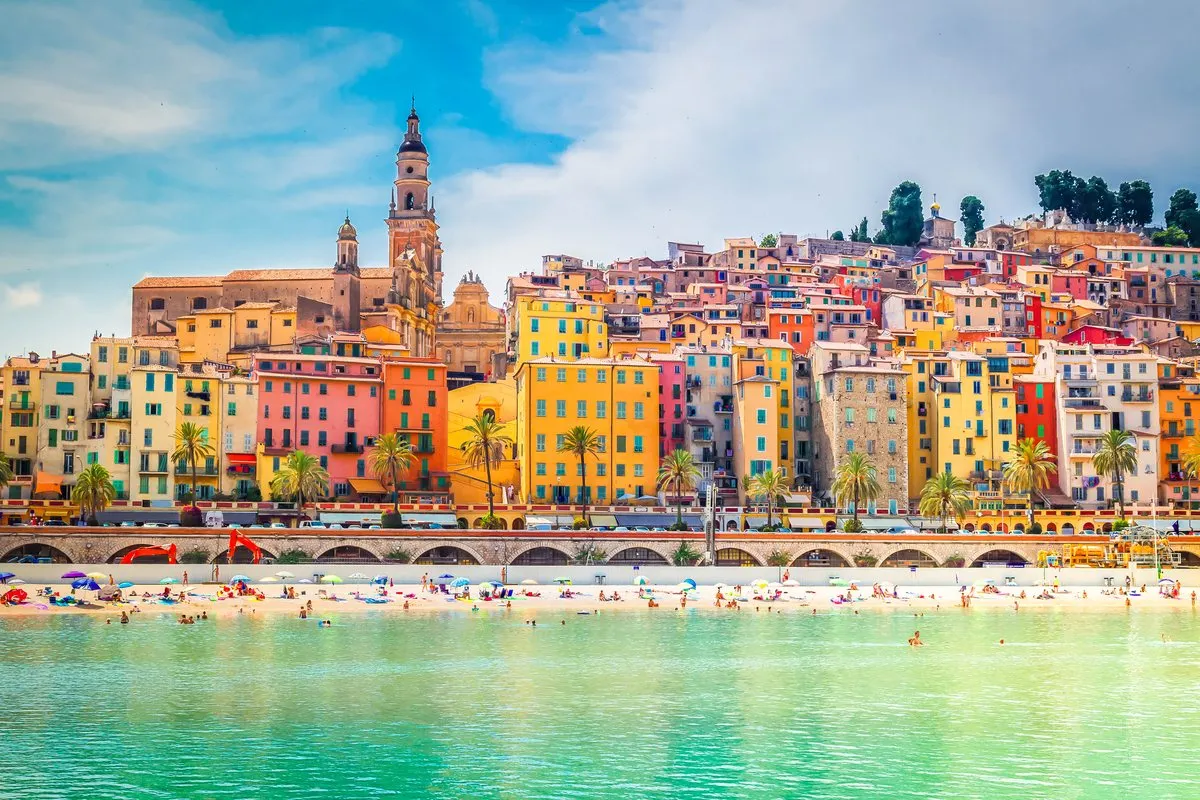
At the Italian border, sheltered by the foothills of the Alps, lies the mildest town on the Riviera. Menton was built as a winter resort for Europe's aristocracy – and it is still between November and March that the town is at its most beautiful.
In this story · 6 sections
It's January and the temperature hovers around ten degrees. On the Promenade du Soleil, people sit on the benches with their faces turned to the sun, and behind them the old town climbs in layers of ochre, pink and lemon yellow towards the basilica's bell tower. Menton, France's last town before Italy, has always been a winter town. It was here that Europe's aristocracy came when northern Europe was grey and cold, and it is still in the months when the rest of the Riviera shuts up shop that Menton is at its best.
The explanation is geographical. Mont Agel shields the town from the westerly winds, and the steep foothills of the Alps keep out the cold from the north. The result is a microclimate where the thermometer rarely drops below zero and the lemons ripen in the middle of winter. More about the municipality can be found on VERA PI's page about Menton.
7 places
© OpenStreetMap contributors · OpenFreeMap
- 01Basilique Saint-Michel-ArchangeChurch · Old town
- 02Musée Jean Cocteau – collection Severin WundermanMuseum · Centre
- 03Jardins BioèsPark · Centre
- 04Jardin Serre de la MadoneGarden · West Menton
- 05Le Val RahmehGarden · Garavan
- 06Fontana RosaGarden · Garavan
- 07Les ColombièresGarden and historic monument · Garavan
From lemon state to spa town
Menton has always been a border town. For centuries it lay between the County of Nice and the Republic of Genoa, and for a long time it belonged to the Principality of Monaco. In 1848, Menton and its neighbour Roquebrune broke away from Monaco, at least partly because of a tax on lemon exports, and declared themselves free towns. After the 1860 referendum they became French, and Napoleon III paid four million francs in compensation to the Prince of Monaco.
What changed the town was a book. In 1861, the English doctor James Henry Bennett published Winter and Spring on the Shores of the Mediterranean, and soon tuberculosis sufferers from all over Europe were coming here to breathe the mild air. British and Russian aristocrats followed and built the hotels, villas and palaces that still define the town today. During the First World War, many of the hotels became hospitals for wounded soldiers. Among the town's more unexpected residents was William Webb Ellis, the man who according to legend invented rugby, who lived here in his old age and is buried in the old cemetery.
The old town and the Saint-Michel basilica
The old town climbs from the harbour in steps and alleyways. Rue Longue, the town's old main street, follows the Roman road Via Julia Augusta, which once linked Piacenza with Arles. In the midst of the labyrinth stands the Basilique Saint-Michel-Archange, built in 1619 by the Genoese architect Lorenzo Lavagna. The church's Baroque façade faces a small piazza laid in a black-and-white stone pattern, and from the steps below you have one of the town's finest views over the sea.
Continue onwards and upwards to the Cimetière du Vieux-Château, the cemetery on the site of the Vento family's 13th-century castle. Here English, Russian and French winter guests rest side by side, and the view along the coast towards Italy is breathtaking.
Cocteau's Menton
Jean Cocteau spent a great deal of time in Menton and left his mark all over the town. In the 1950s he painted the wedding room in the town hall, turning it into a single large work of art – one of the Riviera's most unexpected rooms. Down by the harbour stands the Bastion, a small fortress that the Princes of Monaco built out in the water in 1636 to defend the harbour. Cocteau decorated it, and today it is a museum.
Right next door, between the beach and the covered market, the Musée Jean Cocteau opened in 2011 with the Severin Wunderman Collection, one of the largest collections of Cocteau's work. The low white building with its organic pillars was designed by the architect Rudy Ricciotti and is worth a visit for its architecture alone.
The market and the lemons
Les Halles, the covered market in Belle Époque style, was built in 1898 by the local architect Adrien Rey. It opens early every morning, and in and around the hall more than thirty stalls sell vegetables, fruit, olive oil and – of course – lemons. The town is so associated with the fruit that it has given its name to its own ceramic tradition, Palissy majolica with lemon motifs.
The highlight comes in February, when the Fête du Citron, the lemon festival, is held, with a new theme every year. In the Jardins Bioès, the park in the centre of town, giant sculptures are built and dressed in lemons and oranges, and parades with marching bands and decorated floats wind through the streets.
The gardens – Menton's true treasure
The microclimate has made Menton a world-class garden town. The Jardin Serre de la Madone, in the valley west of the centre, was created by the English garden designer Lawrence Johnston, the man behind Hidcote in England, and is one of the Riviera's most famous gardens. To the east, in the Garavan district near the border, lies Le Val Rahmeh, created in 1905 by the Englishman Sir Percy Radcliffe and named after his wife. It is today a botanical garden with subtropical plants.
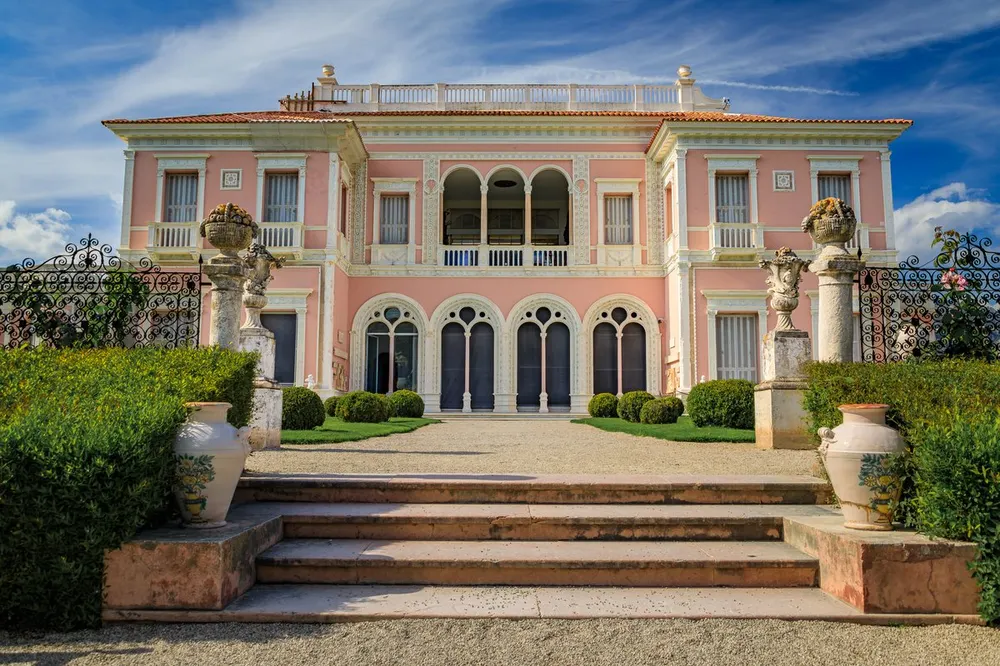
In the same neighbourhood is Fontana Rosa, which the Spanish author Vicente Blasco Ibáñez built in 1922 and whose garden is now open to the public, and Les Colombières, where the illustrator and author Ferdinand Bac created a house and garden on several levels. Les Colombières is a historic monument. Katherine Mansfield also lived near Garavan, in the Villa Isola Bella, which today hosts New Zealand writers on an annual fellowship.
Food at the border
Menton is also home to one of the world's most talked-about restaurants. Mirazur, with views over the sea at the Italian border, has three stars in the 2026 Michelin Guide. If you want to continue the journey, Roquebrune-Cap-Martin is a few minutes away and Monaco is a short train ride west. You'll find more destinations along the coast at metromode.co.
At a glance
Menton's gardens at a glance
| Garden | Created by | District |
|---|---|---|
| Serre de la Madone | Lawrence Johnston | Gorbio valley, west |
| Le Val Rahmeh | Sir Percy Radcliffe (1905) | Garavan |
| Fontana Rosa | Vicente Blasco Ibáñez (1922) | Garavan |
| Les Colombières | Ferdinand Bac | Garavan |
Basilique Saint-Michel-Archange
Baroque church from 1619
Designed by the Genoese architect Lorenzo Lavagna, with a piazza in black-and-white stone and a view over the sea.
Place Honoré II, Menton
Musée Jean Cocteau – collection Severin Wunderman
Cocteau in Rudy Ricciotti's building
The museum opened in 2011 between the beach and the market, with one of the largest collections of Cocteau's work.
Quai de Monléon, Menton
Jardins Bioès
The heart of the lemon festival
The park where the lemon festival's giant sculptures are built every February.
Jardin Serre de la Madone
Lawrence Johnston's Riviera garden
One of the Riviera's most famous gardens, created by the man behind Hidcote.
Le Val Rahmeh
Botanical garden in Garavan
Created in 1905 by Sir Percy Radcliffe and named after his wife Rahmeh.
Fontana Rosa
Blasco Ibáñez's garden
The villa the Spanish author built in 1922; the garden is open to the public.
Les Colombières
Ferdinand Bac's terraced garden
House and garden with frescoes and modernist furniture by Ferdinand Bac.